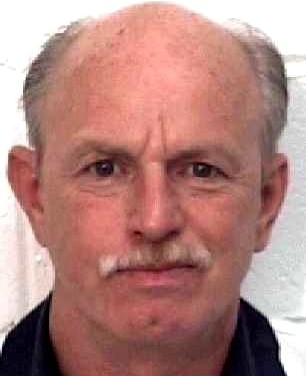
Norman Lee Newsted
Murderer Brian Kevin Rosenfeld
Murderer · USA · 1985
Brian Kevin Rosenfeld Brian Kevin Rosenfeld was sentenced to three concurrent l…
23 victims
Brian Kevin Rosenfeld
Murderer · USA · 1985
Brian Kevin Rosenfeld Brian Kevin Rosenfeld was sentenced to three concurrent l…
23 victims
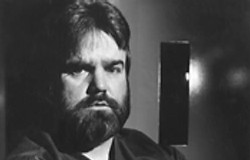 Marvin Gray
Murderer · USA · 1975
Marvin Gray was convicted killer who claimed responsibility for 23 slayings and…
23 victims
Marvin Gray
Murderer · USA · 1975
Marvin Gray was convicted killer who claimed responsibility for 23 slayings and…
23 victims
 Yahweh ben Yahweh
Murderer · USA · 1980
Yahweh ben Yahweh was born and legally named Hulon Mitchell Jr. (October 27, 19…
23 victims
Yahweh ben Yahweh
Murderer · USA · 1980
Yahweh ben Yahweh was born and legally named Hulon Mitchell Jr. (October 27, 19…
23 victims
 Russell Ellwood
Murderer · USA · 1991
Russell Ellwood was a former taxi driver. Authorities suspected him of killing…
20 victims
Russell Ellwood
Murderer · USA · 1991
Russell Ellwood was a former taxi driver. Authorities suspected him of killing…
20 victims
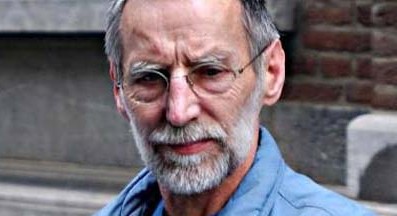 Michel Fourniret
Serial killer · France / Belgium · 1987
Michel Fourniret (born Sedan, 4 April 1942) was a French serial killer who conf…
10 victims
Michel Fourniret
Serial killer · France / Belgium · 1987
Michel Fourniret (born Sedan, 4 April 1942) was a French serial killer who conf…
10 victims
 Rick Forsyth
Mass murderer · USA · 1993
Defendant: Rick Forsyth (Rick Wayne Forsyth) Victims: Jolene Forsyth (age 39) a…
6 victims
Rick Forsyth
Mass murderer · USA · 1993
Defendant: Rick Forsyth (Rick Wayne Forsyth) Victims: Jolene Forsyth (age 39) a…
6 victims
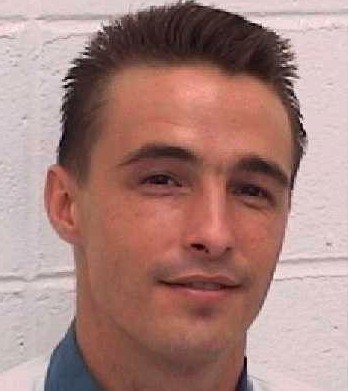 J. W. Ledford
Murderer · USA · 1992
J. W. Ledford Jr. was convicted of the malice murder of Dr. Harry Buchanan John…
1 victim
J. W. Ledford
Murderer · USA · 1992
J. W. Ledford Jr. was convicted of the malice murder of Dr. Harry Buchanan John…
1 victim
 John Frank Hickey
Serial killer · USA · 1883
John Frank Hickey, “The Postcard Killer,” was one of the first known and captur…
3 victims
John Frank Hickey
Serial killer · USA · 1883
John Frank Hickey, “The Postcard Killer,” was one of the first known and captur…
3 victims
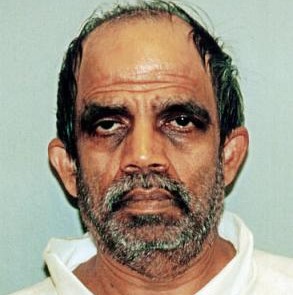 Biswanath Halder
Murderer · USA · 2003
Biswanath Halder was an alumnus of Case Western Reserve University (CWRU) who w…
1 victim
Biswanath Halder
Murderer · USA · 2003
Biswanath Halder was an alumnus of Case Western Reserve University (CWRU) who w…
1 victim
- Gender
- male
- Country
- USA
- Location
- Tulsa, Oklahoma, USA
- Date of birth
- 1954
- Age at first offence
- 30
- Characteristics
- robbery
- Victim profile
- Lawrence Donnell Buckley, 26 ( taxi driver )
- Method of murder
- Shooting
- Date(s) of murder
- February 20, 1984
- Years active
- 1984
- Date of arrest
- —
- Status
-
Executed
Executed by lethal injection in Oklahoma on July 8, 1999
Timeline
- February 20, 1984 — Norman Lee Newsted arrived at Tulsa International airport, hailed a taxi driven by Larry Donnell Buckley, and asked to be driven to an address he believed was his sister’s.
- February 20, 1984 — After trouble locating the address, Buckley stopped at a gas station to ask for directions; Newsted purchased a pack of cigarettes and a beer.
- February 20, 1984 — They stopped at Calvary Temple of God church to ask for directions; Newsted asked to use the telephone and made a call; witnesses saw Newsted leave the building and saw the taxi driver under an awning at the church.
- February 20, 1984 — Two loud noises were heard shortly thereafter.
- February 20, 1984 — Newsted’s sister arrived to pick him up; Newsted said Buckley had pulled a knife and attempted to rob him and that he shot the taxi driver.
- February 21, 1984 — The church pastor discovered Buckley’s cab partially submerged in a creek near the church parking lot; Buckley was found dead from two gunshot wounds to the back of the head.
- June 15, 1984 — The state Pardon and Parole Board denied clemency after a hearing.
- May 16, 1984 — The State filed a Bill of Particulars announcing its intention to seek the death penalty and listing the aggravating circumstances.
- June 3, 1986 — The Oklahoma Court of Criminal Appeals affirmed Newsted’s conviction and death sentence in NEWSTED v. STATE, Case Number F-84-474 (decided 06/03/1986).
- 1986 — Newsted’s conviction and sentence were affirmed on direct appeal; Newsted v. State, 720 P.2d 734; certiorari was denied in Newsted v. Oklahoma, 479 U.S. 995.
- 1991 — The United States Supreme Court again denied certiorari in Newsted v. Oklahoma, 501 U.S. 1259.
- November 26, 1991 — Newsted filed a petition for writ of habeas corpus and a motion to hold it in abeyance pending exhaustion of state remedies.
- April 22, 1996 — Newsted filed an amended petition for a writ of habeas corpus alleging ten claims for relief.
- October 15, 1998 — The United States Court of Appeals for the Tenth Circuit decided NORMAN LEE NEWSTED v. GARY E. GIBSON, Warden, Oklahoma State Penitentiary, reversing the conditional grant of the writ and remanding for entry of an order denying the petition.
- July 8, 1999 — Norman Lee Newsted was executed by lethal injection in Oklahoma.
Background
Norman Lee Newsted was condemned for the February 20, 1984, killing of taxi driver Lawrence Donnell Buckley, 26.
The offence
On the evening of February 20, 1984, Newsted arrived at Tulsa International airport. He hailed a taxi cab driven by Buckley and asked to be taken to an address Newsted believed was his sister’s house. When they were unable to locate the address, they stopped at a gas station to ask for directions.
Newsted purchased a pack of cigarettes and a beer. A cashier saw no money in Newsted’s billfold when he pulled it out, though Newsted paid for the purchases.
Newsted and Buckley next stopped at Calvary Temple of God church to ask for directions. Newsted asked to use the telephone and made a call. Witnesses saw Newsted leave the building, and they saw the taxi cab driver under an awning at the church. Soon thereafter, witnesses heard two loud noises.
Newsted’s sister soon arrived at the church to pick up her brother. Newsted’s pants were wet, and he explained that the cab driver had pulled a knife and attempted to rob him. Newsted said he shot the taxi cab driver.
After Newsted and his sister arrived at her house, the sister left with her children and later called police. Newsted maintained that he shot Buckley in self-defense.
The next morning, a pastor at the church discovered the taxi cab partially submerged in a creek near the church parking lot. Buckley was found in the cab, dead from two gunshot wounds to the back of the head.
Evidence showed that Newsted took Buckley’s wallet. Investigators said Newsted was arrested at his sister’s home with Buckley’s empty wallet nearby. Evidence showed Newsted had $40.00 in his possession at the time of his arrest. At trial, Newsted testified and repeated that he shot Buckley when Buckley attempted to rob him with a knife.
Investigation
Police located Newsted at his sister’s house and arrested him based on their investigation and information that he was wanted by Utah authorities in connection with a mass murder there.
Arrest
Police arrested Newsted at his sister’s house.
Newsted told police that he shot Buckley only after Buckley pulled a knife and attempted to rob him. Investigators reported that Buckley’s empty wallet was nearby when Newsted was arrested.
Trial
Charges, verdict, and recommended sentence
Newsted was charged, tried, and convicted in the District Court of Osage County, Oklahoma, Case No. CRF-84-26, for the offense of Murder in the First Degree. He was sentenced to death, with the jury assessing his punishment at death. The judgment and sentence were imposed in accordance with the jury’s verdict.
A federal appellate description stated that Newsted was charged with the premeditated or felony murder of Buckley. The jury found him guilty of first degree murder in the guilt/innocence phase and, following the sentencing phase, recommended imposition of the death penalty.
Guilt/innocence and sentencing evidence
At the church, witnesses had seen Newsted leave the building and saw the taxi cab driver under an awning at the church, and they heard two loud noises shortly thereafter.
During trial, testimony included that Newsted purchased cigarettes and a beer after stopping at a gas station, and that a cashier saw no money in Newsted’s billfold when he pulled it out.
In the sentencing phase, the State alleged, and the jury found, two aggravating circumstances:
- That Newsted was previously convicted of a felony involving the use or threat of violence to the person.
- The existence of a probability that Newsted would commit criminal acts of violence that would constitute a continuing threat to society.
For the first aggravating circumstance, the State supported it with evidence that Newsted had been previously convicted in Nevada upon a plea of guilty for robbery and use of a deadly weapon in the commission of a crime, and second degree kidnapping. Copies of the preliminary hearing transcript for those cases were submitted to support that the crimes were of a violent nature.
For the second aggravating circumstance, the State offered proof linking Newsted to an unadjudicated offense in Utah that resulted in the death of three people.
Opening statement issue
Newsted claimed the trial court unduly restricted his opening statement to the jury by sustaining objections made by the prosecutor. The trial court had disallowed defense counsel’s arguments on the merits of the case that exceeded the proper scope of an opening statement. The appellate court concluded this proposition was without merit.
Jury instructions and related appellate issue in state appeal
In one assignment of error, Newsted alleged the trial court erred in failing to instruct the jury that it was required to unanimously find that Newsted committed murder in the first degree either with malice aforethought or while committing robbery with a dangerous weapon.
The information alleged Newsted did “with premeditated design and malice aforethought . . . or in the alternative . . . while . . . committing the crime of robbery with a dangerous weapon, although without a premeditated design to effect death” kill Buckley. The appellate court concluded that failure of the jury to indicate the basis of its finding of guilt was not error and held the assignment of error without merit.
Notice of aggravating evidence and Burks notice issue
Newsted contended that he was entitled to a preliminary hearing on the allegations contained in the Bill of Particulars filed by the State, arguing that failure to provide a preliminary hearing deprived the District Court of jurisdiction to impose the death sentence. The appellate court disagreed and held that a preliminary hearing on aggravating circumstances alleged by the State was not required.
Newsted also contended that no disclosure was made by the State of the evidence intended to be used to support the aggravating circumstance that Newsted constituted a continuing threat to society, and he argued the Bill of Particulars was not timely filed.
The appellate court described the surrounding facts:
- On May 16, 1984, the State filed its Bill of Particulars listing the intent to prove the two aggravating circumstances and listing detailed information for prior convictions supporting the first aggravating circumstance.
- For future dangerousness, the Bill recited “[t]hat from past behavior of the defendant” the aggravating circumstance would be proven.
- On June 18, 1984, the State filed a “Notice of State's Intention to Introduce Evidence of Other Crimes” (the so-called “Burks notice”), listing in detail the unadjudicated offense in Utah and advising admissibility “to ‘prove lack of mistake or accident and motive for killing.’”
- The State did not offer the Utah killings in the first stage of trial; instead, evidence was presented in the punishment phase to support future dangerousness.
The appellate court agreed that the Bill of Particulars contained insufficient notice of evidence intended to support the future dangerousness allegation, but concluded that there was no unlawful prejudice because the Burks notice contained detailed information and defense counsel appeared familiar with the facts and was able to limit damaging effect through cross-examination.
The appellate court also rejected the argument that the Bill of Particulars was not timely filed, holding it was timely in the context of the case.
Mitigating evidence instructions issue
Newsted argued that instructions offered in the punishment phase did not provide particularized guidance for the jury’s consideration of mitigating evidence. The appellate court disagreed, holding that specific standards for balancing aggravating and mitigating circumstances were not constitutionally required and that the instructions properly allowed the jury to consider mitigating circumstances and required that the death sentence could not be imposed unless aggravating circumstances clearly outweighed mitigating circumstances.
Punishment-phase unanimous verdict and dismissal argument
Newsted asserted that if the jury could not reach a unanimous verdict as to punishment within a reasonable time, they would be dismissed and the judge would enter a sentence of life imprisonment. The appellate court held this argument had previously been rejected and was without merit.
Mandatory sentence review and affirmance
The appellate court conducted mandatory sentence review and found:
- No indication the sentence of death was imposed under the influence of passion, prejudice, or arbitrary factor; the trial judge reported the jury had been instructed to avoid such influence and the judge found the jury was not so influenced.
- Evidence supported both aggravating circumstances.
- The sentence was proportionate after comparison with previous cases.
The appellate court affirmed the judgment and sentence.
Appeals
Oklahoma Court of Criminal Appeals
The Oklahoma Court of Criminal Appeals affirmed Newsted’s conviction of Murder in the First Degree and his death sentence in *NEWSTED v. The opinion included discussion of multiple assignments of error, including unanimity of factual basis for alternative first-degree murder theories, limitations on opening statement, notice of aggravating evidence including Burks notice, instructions on mitigating evidence, and jury/punishment deliberation dismissal.
United States Supreme Court certiorari denials
Newsted’s conviction and sentence were affirmed on direct appeal in Newsted v. State, 720 P.2d 734, and certiorari was denied in Newsted v. Oklahoma, 479 U.S. 995 (1986).
After post-conviction relief proceedings, the United States Supreme Court again denied certiorari in Newsted v. Oklahoma, 501 U.S. 1259 (1991).
Federal habeas proceedings and Tenth Circuit decision
After exhausting state remedies, Newsted filed a 28 U.S.C. § 2254 habeas petition. The federal district court conditionally granted the writ on two issues, ordering that the writ would issue unless the Oklahoma Court of Criminal Appeals granted a new appeal within six months of the date of the order. The state appealed and Newsted cross-appealed.
The federal district court had granted a stay pending the resolution of these appeals.
The Tenth Circuit reversed the grant of the writ and remanded for entry of an order denying the petition in its entirety.
Heat of passion manslaughter instruction issue
Newsted argued that appellate counsel was constitutionally ineffective for failing to raise the issue that the trial court did not give a heat of passion manslaughter instruction. The Tenth Circuit held Newsted suffered no prejudice from the failure to raise that issue, concluding that under Walton the evidence would not have supported giving such an instruction and that the jury would have convicted Newsted of first degree murder even if such an instruction had been given.
Instructions on mitigating circumstances issue
Newsted also argued that the district court erred in concluding that jury instructions on mitigating circumstances violated Mills and McKoy. The Tenth Circuit held that its decision in Duvall directly controlled the merits and required upholding the validity of the instructions.
The Tenth Circuit reproduced jury instructions given in the penalty phase, including:
- “Mitigating circumstances are those which, in fairness and mercy, may be considered as extenuating or reducing the degree of moral culpability or blame. The determination of what are mitigating circumstances is for you as jurors to resolve under the facts and circumstances of this case. Instruction No. 7”
- “If you unanimously find that one or more of the aggravating circumstances existed beyond a reasonable doubt, the law requires that you reduce such findings to writing by stating specifically what aggravating circumstances existed, if any. This finding must be made a part of your verdict. You must indicate this finding by checking the box next to such aggravating circumstances on the appropriate form furnished you, and such verdict must be signed by your foreman. The law does not require you to reduce to writing the mitigating circumstances you find, if any. Instruction No. 8”
- “If you unanimously find that one or more of the aggravating circumstances existed beyond a reasonable doubt, unless you also unanimously find that such aggravating circumstance or circumstances outweigh the finding of one or more mitigating circumstances, the death penalty shall not be imposed. Instruction No. 10”
Brady-related claims
Newsted cross-appealed multiple claims involving alleged Brady violations. The Tenth Circuit addressed:
- Statements by Cynthia Brosemer (participated in the Cedar City, Utah robbery and related events). The Tenth Circuit affirmed the district court’s conclusion that, while the statements were Brady statements and were not turned over, there was no reasonable probability the result of the sentencing phase would have been different.
- Statements about the knife found at the crime scene and whether it was open. The Tenth Circuit affirmed the conclusion that no Brady violation occurred in connection with Sergeant Hunt’s beliefs or statements about the knife.
- A police report suggesting a struggle (supplementary offense report description of Buckley’s shirt tear and possible struggle signs). The Tenth Circuit agreed it was a Brady violation but affirmed that it caused no prejudice because forensic evidence included testimony that abrasions could have resulted from an “altercation” or “scuffle,” and it concluded no reasonable probability of a different result.
- Cumulative effect of errors. The Tenth Circuit held cumulative error analysis did not apply to the combination of non-errors and non-prejudicial errors.
Notice of evidence to be used at sentencing
Newsted argued due process violations from failure to provide notice that the State intended to rely on Utah homicides at sentencing or to call Officer Houchen and Ms. Brosemer as witnesses. The Tenth Circuit described Oklahoma’s statutory requirements and rejected the argument that Newsted suffered prejudice from inadequate notice, agreeing that the defense had no prejudice given knowledge and ability to cross-examine, and that Newsted was not genuinely surprised by the State’s use of the Utah evidence in the penalty phase.
Ineffective assistance of trial counsel
Newsted argued trial counsel was constitutionally ineffective for failing to investigate or present mitigating evidence in the penalty phase. The Tenth Circuit agreed counsel’s complete failure to prepare any mitigating evidence constituted ineffectiveness, but held there was no prejudice because the aggravation was powerful and because Newsted indisputably killed Buckley. The Tenth Circuit also noted that Newsted declined to testify in the penalty phase and that counsel introduced an exhibit and argued it as mitigating evidence. The Tenth Circuit affirmed denial of relief.
Final federal disposition
The Tenth Circuit concluded by reversing the conditional grant of the writ and remanding for entry of an order denying the petition in its entirety.
Sentencing
Newsted was sentenced to death.
During the sentencing phase, the jury found two aggravating circumstances: a previous felony involving the use or threat of violence to the person, and a probability that Newsted would commit criminal acts of violence that would constitute a continuing threat to society.
The appellate court affirmed that the jury could not impose the death sentence unless it found that aggravating circumstances clearly outweighed any mitigating circumstances it might find.
Outcome
Newsted was executed by lethal injection in Oklahoma on July 8, 1999.
Aftermath
After a June 15 hearing, the state Pardon and Parole Board denied clemency.
Buckley’s survivors stated they hoped the execution would bring closure to “15 years of pain, anger and grief,” and said: “Larry will always be in our prayers and hearts and only now will he rest in peace.”
The federal appellate background also noted that Newsted became the fourth condemned inmate to be put to death that year in Oklahoma and the 17th overall since Oklahoma resumed capital punishment in 1990.
Other details
Prior conviction and evidence of other crimes referenced in sentencing
The Oklahoma Court of Criminal Appeals described evidence supporting aggravating circumstances as including:
- A previously convicted Nevada plea of guilty for robbery and use of a deadly weapon in the commission of a crime, and second degree kidnapping.
- Copies of preliminary hearing transcripts for those crimes.
- Evidence linking Newsted to an unadjudicated offense in Utah resulting in the death of three people.
Defense theory
Newsted maintained that he shot Buckley in self-defense after Buckley attempted to rob him, including by pulling a knife. He also admitted taking Buckley’s wallet.
People and roles included in the case narrative
- Lawrence Donnell Buckley — taxi driver and homicide victim (age 26).
- Newsted’s sister — arrived at the church to pick up Newsted and later called police.
- The church pastor — discovered the cab partially submerged in a creek the next morning.
- A cashier at the gas station — saw no money in Newsted’s billfold when he pulled it out.
- Prosecutor and defense counsel — made opening statement arguments and sidebar comments referenced during appellate review.
- Trial judge — instructed the jury to avoid any influence of passion, prejudice, or other arbitrary factor when imposing sentence.
- Officer Houchen and Cynthia Brosemer — were witnesses during the sentencing phase in the federal habeas discussion.
- Sergeant Roy Hunt — had retired and signed statements referenced in the knife-related Brady discussion.
- Det. Cpl. G. V. Moreland — prepared a supplementary offense report describing signs of a possible struggle.
- Barry Rouw — prepared a report that Sergeant Hunt signed regarding the knife being open.
- Dr. M. F. Merchant — performed the autopsy and testified about abrasions could have been from “an altercation” or a “scuffle.”
Spotted an error, or have more information about this case?