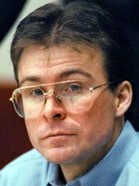
Robert James Acremant
Murderer Brian Kevin Rosenfeld
Murderer · USA · 1985
Brian Kevin Rosenfeld Brian Kevin Rosenfeld was sentenced to three concurrent l…
23 victims
Brian Kevin Rosenfeld
Murderer · USA · 1985
Brian Kevin Rosenfeld Brian Kevin Rosenfeld was sentenced to three concurrent l…
23 victims
 Russell Ellwood
Murderer · USA · 1991
Russell Ellwood was a former taxi driver. Authorities suspected him of killing…
20 victims
Russell Ellwood
Murderer · USA · 1991
Russell Ellwood was a former taxi driver. Authorities suspected him of killing…
20 victims
 Robert Martines Perez
Murderer · USA · 1994
Name: Robert Martines Perez · Other name used in proceedings: Robert Martinez P…
15 victims
Robert Martines Perez
Murderer · USA · 1994
Name: Robert Martines Perez · Other name used in proceedings: Robert Martinez P…
15 victims
 Billy Frank Vickers
Murderer · USA · 1993
Billy Frank Vickers Vickers was executed by lethal injection in Texas on Januar…
14 victims
Billy Frank Vickers
Murderer · USA · 1993
Billy Frank Vickers Vickers was executed by lethal injection in Texas on Januar…
14 victims
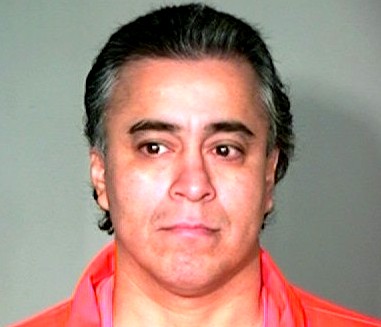 Angel Mayora Medrano
Murderer · USA · 1987
Angel Mayora Medrano was a defendant in a case involving rape. Medrano was at a…
1 victim
Angel Mayora Medrano
Murderer · USA · 1987
Angel Mayora Medrano was a defendant in a case involving rape. Medrano was at a…
1 victim
 William Tahl
Murderer · USA · 1965
Name: William Tahl William Tahl clashed with authority for the first time at ag…
3 victims
William Tahl
Murderer · USA · 1965
Name: William Tahl William Tahl clashed with authority for the first time at ag…
3 victims
 Gregory Edward Wright
Murderer · USA · 1997
Gregory Edward Wright was the defendant. · Donna Duncan Vick was the victim, de…
1 victim
Gregory Edward Wright
Murderer · USA · 1997
Gregory Edward Wright was the defendant. · Donna Duncan Vick was the victim, de…
1 victim
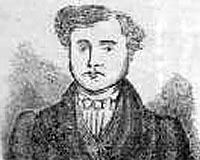 John Mapp
Murderer · United Kingdom · 1867
Name: John Mapp Catherine Lewis was the eldest of the five children of farm lab…
1 victim
John Mapp
Murderer · United Kingdom · 1867
Name: John Mapp Catherine Lewis was the eldest of the five children of farm lab…
1 victim
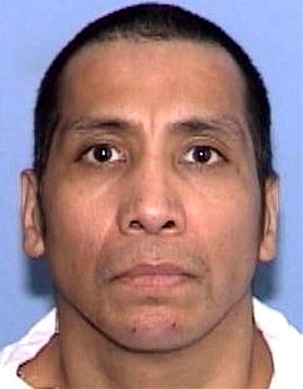 Luis Cervantes Salazar
Murderer · USA · 1997
Luis Cervantes Salazar was executed by lethal injection in Texas on March 11, 2…
1 victim
Luis Cervantes Salazar
Murderer · USA · 1997
Luis Cervantes Salazar was executed by lethal injection in Texas on March 11, 2…
1 victim
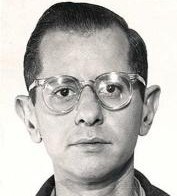 Harvey Glatman
Serial killer · USA · 1957
Harvey Murray Glatman (October 10, 1927 – September 18, 1959) was an American s…
3 victims
Harvey Glatman
Serial killer · USA · 1957
Harvey Murray Glatman (October 10, 1927 – September 18, 1959) was an American s…
3 victims
- Gender
- male
- Country
- USA
- Location
- Oregon/California, USA
- Date of birth
- May 9, 1968
- Age at first offence
- 27
- Characteristics
- kidnapping, robbery
- Victim profile
- Scott George / Roxanne Ellis, 53, and Michelle Abdill, 42
- Method of murder
- Shooting
- Date(s) of murder
- October 3/December 4, 1995
- Years active
- 1995
- Date of arrest
- December 13, 1995
- Status
-
Sentenced to death
Sentenced to death in Oregon 1997; sentenced to death in California 2002
Case record: Robert James Acremant
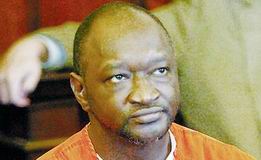
Robert James Acremant was 29 years old when he pleaded guilty last year to aggravated murder, kidnapping and robbery in the Dec. 4, 1995, slayings of Roxanne Ellis, 53, and Michelle Abdill, 42. He told police he killed the Medford women Dec. 4, 1995, in a botched attempt to rob their property management company.
Timeline
- Dec. 4, 1995 — Roxanne Ellis, 53, and Michelle Abdill, 42, were killed in Medford.
- Oct. 3, 1995 — A Visalia man, Scott George, was killed.
- Oct. 1995 — Acremant admitted killing a Visalia, Calif., man.
- Dec. 12, 1995 — Acremant came to Taryn Sweeney’s Visalia home threatening to kill her and her mother because he wanted her mother’s jewelry.
- May 1995 — Acremant left his $50,000-a-year Roadway Express job to start a software company.
- 1991 — Acremant went to work for a Southern California branch of Roadway Express, a worldwide trucking company.
- 2 years beginning in 1992 — Wally Blodgett supervised Acremant for two years at Holloman Air Force base.
- late 1980s — Acremant served in the Air Force at Holloman Air Force Base in New Mexico and studied during his military service.
Background
During his military service, Acremant worked 12-hour days and studied every night, earning his bachelor’s degree in two years. Sidney Pierce, who served in the Air Force with Acremant for three years at Holloman Air Force Base in New Mexico in the late 1980s, testified in the sentencing phase of Acremant’s double-murder trial that he had “a great deal of admiration for Bob.” Pierce said: “The drive he had is just something you don't see.”
Acremant’s friends during his military service and others including a registered nurse, Alan Savoy (a third-year medical student), and Sergio Borrego (an FBI special agent) testified that they admired Acremant’s ambition and work ethic and expected great things from him.
Pierce described Acremant’s habits. Pierce said that Acremant “didn't chase women.” Pierce recalled an occasion when Acremant and others watched the movie “Scarface” and Acremant agreed with Al Pacino’s character, who said: “When you get money, you get power. And when you get power, you get women.”
Pierce also testified that instead of drinking with other Air Force enlisted men, Acremant and a small group of friends would go hiking when they needed time away. Pierce testified that when a picture of one of these trips was shown in the courtroom, Acremant smiled; the photo showed Acremant standing next to a rock formation with his backpack loaded down with a sleeping mat and sunglasses shading his eyes.
Pierce testified about Acremant’s response to arguments. Pierce said: “Bob wasn't physically violent, he was the intellectual type.” Pierce said that when arguments arose, Acremant would go to the library and find information in a book and then show the person. Pierce said: “He would go to the library and find it in a book, and then show the person.”
Savoy testified that Acremant worked extra hours to cover for those who did not. Savoy said: “He had a great reputation for being a hard worker,” and added: “For being there. For being solid.”
Borrego testified about studying with Acremant while they were both in the Air Force. Borrego said: “We both pushed each other to study.”
After Acremant left the Air Force, he earned his master’s degree and worked for a Southern California branch of Roadway Express, a worldwide trucking company, in 1991.
Wally Blodgett, Acremant’s superior for two years beginning in 1992, testified that Acremant was “extremely motivated” and “focused.” Blodgett said: “Bob was an extremely motivated, focused individual.” Blodgett further said: “He was one of the most competent, conscientious individuals I've ever worked with.”
After two years, Blodgett recommended Acremant’s promotion to an efficiency expert position in which Acremant tried to improve the efficiency of terminals in the district. District manager Ralph Santarelli became Acremant’s boss. Santarelli testified that Acremant “did a great job and was in no danger of being fired or laid off.” Santarelli said he was steadily promoted.
Acremant left his $50,000-a-year job in May 1995 to start a software company, which failed. Santarelli testified that Roadway Express would have rehired Acremant if he had asked for his job back.
The offence
Acremant pleaded guilty to aggravated murder, kidnapping and robbery in the Dec.
In addition to the admitted murders of Ellis and Abdill, Acremant admitted killing Scott George, a Visalia man, and faced a trial in California that also could end up in a death sentence. The videotape shown in court involved Visalia detective Steve Shear interviewing Acremant about the George murder on Oct. 3, 1995. The video included Shear telling Acremant: “I think there's a sexual angle to it, Bobby.” Shear also said: “I think you got sexual issues that pushed you over the edge.”
Acremant repeatedly denied any sexual connection to the killings. He said: “You're so wrong,” at one point. He explained: “Just driving along, I reached down, pulled (the gun) out and that was it.” He said: “Just driving along, I reached down, pulled (the gun) out and that was it,” and added: “Just driving along, I reached down, pulled (the gun) out and that was it,” he explained; he described the murder as something that happened, and said: “Just driving along, I reached down, pulled (the gun) out and that was it.”
Acremant also threatened a family friend and was described as using a firearm during that incident. Family friend Taryn Sweeney, age 22, testified that on Dec. 12, 1995, Acremant came to her Visalia home threatening to kill her and her mother because he wanted her mother’s jewelry. Sweeney testified that Acremant was handcuffing her to the bed when a girlfriend came to the door and Acremant allowed her to answer it. Sweeney said: “I ran.” She said: “I was screaming, `He's going to kill me. He's going to kill you. He's going to kill my mother.'” Sweeney testified that she escaped with only a bump on her head and that Acremant hit her with the butt of his gun.
Investigation
During the George murder case, a videotape of Visalia detective Steve Shear interviewing Acremant was presented in court. On the videotape, Shear told Acremant: “I think there's a sexual angle to it, Bobby,” and said: “I think you got sexual issues that pushed you over the edge.” Acremant repeatedly denied any sexual connection and said he did not even know that George was bisexual.
The questioning included Acremant being asked by District Attorney Mark Huddleston whether Acremant was in the room during testimony by George’s best friend.
Arrest
A videotaped interview was conducted after Acremant’s capture in December 1995. During that interview, Acremant cried as he talked to his father.
Trial
Acremant pleaded guilty last year to aggravated murder, kidnapping and robbery in the Dec.
At the sentencing trial, Acremant faced a possible death sentence. The sentencing trial began last week, and the jury was to decide if Acremant would die by lethal injection for the murders.
Pierce testified as part of the sentencing phase. Savoy testified about Acremant’s work ethic and reliability. Borrego testified that he and Acremant pushed each other to study.
During court testimony about the George murder, George’s best friend Manuel Demello testified that Acremant pretended to help the family find George after he disappeared. When asked by District Attorney Mark Huddleston if Acremant was in the room, Demello replied: “Yes sir.” Demello then thrust a finger in Acremant’s direction and said: “That thing right there.”
Kenneth Acremant testified for the prosecution and described what Acremant said when he learned his father had turned him in to police. Kenneth Acremant testified: “My son made a comment that if he could get out of jail he would put a bullet in my head.” Kenneth Acremant also testified: “The phone fell off the arm chair and disconnected.”
Kenneth Acremant also testified that father and son’s eyes never met during his testimony, and described how Acremant glanced up only occasionally.
In addition to the threat testimony from Taryn Sweeney, the court heard evidence described as being made in letters. Kenneth Acremant said they included many threats and accusations made in letters. Kenneth Acremant testified that he tried to get his son barred from writing him the letters, but police said they couldn't help him.
Sentencing
After the conclusion of the sentencing trial, a jury was to decide if Acremant would die by lethal injection for the murders.
Acremant was serving 22 1/2 years in prison on the kidnapping and robbery convictions.
Appeals
Acremant’s status included sentences in both Oregon and California, indicating death sentences were imposed in those jurisdictions.
Outcome
Acremant was sentenced to death in Oregon in 1997. He was sentenced to death in California in 2002.
Aftermath
Kenneth Acremant testified about a family heirloom and later changes in the relationship after the killings. Kenneth Acremant remembered when his first-born son was making it big in the corporate world and said he gave his son a treasured family heirloom: a diamond ring that Kenneth Acremant had kept since he was 16.
Kenneth Acremant testified that after Acremant killed three people and lost all his money, Acremant left the ring at his father’s home. Kenneth Acremant testified: “When I seen the ring -- and knowing what I heard from police -- I thought it was good-bye. The end.” Kenneth Acremant testified: “It was like, `Here Dad. I love you. Good-bye.'”
Kenneth Acremant testified about tenderness turning after Acremant learned his father called police after spotting Acremant’s rented U-Haul. Acremant’s attorney Ralph Monson said: “He cut himself off from the outside world except Kenny (Acremant Jr., his brother).” Monson said he “said rotten things.”
Kenneth Acremant agreed “with a solemn ‘yes’ to each statement” presented by Monson.
In November 1996, Acremant sent a letter to his father apologizing for what he had said. Monson asked Kenneth Acremant whether he had been able to rebuild a relationship with his son. Kenneth Acremant testified: “To a degree, yes.” Monson asked: “Still a ways to go?” Kenneth Acremant answered: “Yes.”
Spotted an error, or have more information about this case?