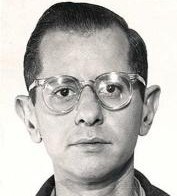
Harvey Glatman
Serial killer Richard Kuklinski
Serial killer · USA · 1949
Richard “Iceman” Kuklinski was sentenced to life in prison in 1988. He died in…
100 victims
Richard Kuklinski
Serial killer · USA · 1949
Richard “Iceman” Kuklinski was sentenced to life in prison in 1988. He died in…
100 victims
 Ottis Toole
Serial killer · USA · 1961
Ottis Elwood Toole (sometimes misspelled as “Otis”) was an American serial kill…
65 victims
Ottis Toole
Serial killer · USA · 1961
Ottis Elwood Toole (sometimes misspelled as “Otis”) was an American serial kill…
65 victims
 Juan Vallejo Corona
Serial killer · USA · 1960
Juan Vallejo Corona was a native of Mexico, born in 1934. He moved to Yuba City…
25 victims
Juan Vallejo Corona
Serial killer · USA · 1960
Juan Vallejo Corona was a native of Mexico, born in 1934. He moved to Yuba City…
25 victims
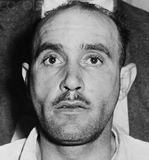 Raymond Fernandez
Serial killer · USA · 1947
Raymond Martinez Fernandez was executed by electrocution at Sing Sing prison in…
17 victims
Raymond Fernandez
Serial killer · USA · 1947
Raymond Martinez Fernandez was executed by electrocution at Sing Sing prison in…
17 victims
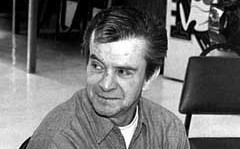 Carroll Edward Cole
Serial killer · USA · 1948
Carroll Edward Cole, also known as “Eddie,” was born in Sioux City, Iowa on May…
15 victims
Carroll Edward Cole
Serial killer · USA · 1948
Carroll Edward Cole, also known as “Eddie,” was born in Sioux City, Iowa on May…
15 victims
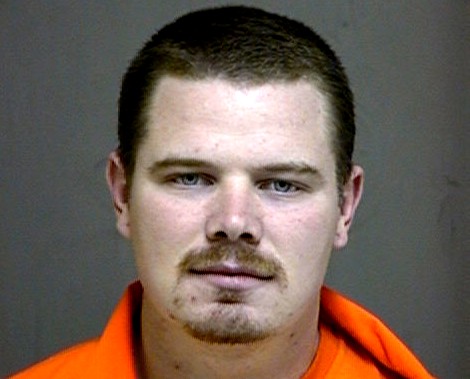 Patrick Wade Bearup
Murderer · USA · 2002
Patrick Wade Bearup — convicted of killing Mark Mathes. · Mark Mathes (40) — ki…
1 victim
Patrick Wade Bearup
Murderer · USA · 2002
Patrick Wade Bearup — convicted of killing Mark Mathes. · Mark Mathes (40) — ki…
1 victim
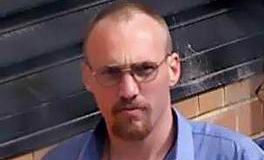 Robert Joe Wagner
Serial killer · Australia · 1992
Robert Joe Wagner (born 28 November 1971 in Parramatta, New South Wales) was an…
10 victims
Robert Joe Wagner
Serial killer · Australia · 1992
Robert Joe Wagner (born 28 November 1971 in Parramatta, New South Wales) was an…
10 victims
 Eleanor Jarman
Murderer · USA · 1933
Eleanor Jarman was born in 1904. She was the youngest of eight children born to…
1 victim
Eleanor Jarman
Murderer · USA · 1933
Eleanor Jarman was born in 1904. She was the youngest of eight children born to…
1 victim
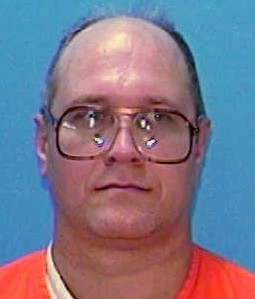 Thomas Michael Overton
Murderer · USA · 1991
Defendant: Thomas Michael Overton (born 11/05/55) DOB: 11/05/55 Age: Sixteen ju…
2 victims
Thomas Michael Overton
Murderer · USA · 1991
Defendant: Thomas Michael Overton (born 11/05/55) DOB: 11/05/55 Age: Sixteen ju…
2 victims
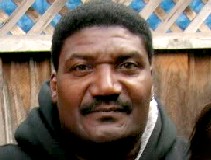 Shareef Allman
Murderer · USA · 2012
Shareef Allman was a 47-year-old truck driver who worked at Lehigh Hanson's Per…
3 victims
Shareef Allman
Murderer · USA · 2012
Shareef Allman was a 47-year-old truck driver who worked at Lehigh Hanson's Per…
3 victims
- Gender
- male
- Country
- USA
- Location
- Riverside/San Diego Counties, California, USA
- Date of birth
- October 10, 1927
- Age at first offence
- 30
- Characteristics
- rape, sadist, torture
- Victim profile
- Judy Ann Dull, 19 / Shirley Ann Bridgeford, 24 / Ruth Mercado, 24
- Method of murder
- Ligature strangulation
- Date(s) of murder
- 1957 - 1958
- Years active
- 1957–1958
- Date of arrest
- October 27, 1958
- Status
-
Executed
Executed by asphyxiation-gas in California on September 18, 1959
Case overview
Harvey Murray Glatman (October 10, 1927 – September 18, 1959) was an American serial killer active during the late 1950s.
Background
Glatman was born in the Bronx and raised in Colorado. He exhibited antisocial behavior and sadomasochistic sexual tendencies from an early age. As a teenager, he was an amateur burglar and sex offender. He broke into women's apartments so he could tie them up, molest them and take pictures as souvenirs.
In 1945, he was caught in one such act and charged with attempted burglary. Less than a month later, while still out on bail awaiting trial, he kidnapped another woman and molested her before letting her go. The woman went to the police, and Glatman went to prison for eight months.
Once out of prison, Glatman moved to Albany, New York. In 1947, he was arrested for a series of muggings. He received a 5–10 year prison sentence in Sing Sing Correctional Facility, where prison psychiatrists diagnosed him as a psychopath. He was nevertheless a model prisoner and was granted an early release in 1956.
The offence
In 1957, Glatman moved to Los Angeles, California and began trolling modeling agencies looking for women to satisfy violent sexual urges. He contacted women with offers of work for pulp fiction magazines, took them back to his apartment, tied them up and raped them, and took pictures while doing so. He then strangled them and buried them in a nearby desert plot.
Glatman was also a suspect in the slaying of "Boulder Jane Doe", a victim whose corpse was discovered by hikers near Boulder, Colorado in 1954. The identity remained a mystery for 55 years. In October 2009, the Sheriff’s Office was notified by Dr. Terry Melton, of Mitotyping Technologies in State College, Pennsylvania, that the lab made a match between "Jane Doe's" DNA profile and that of a woman who thought the unidentified murder victim might be her long-lost sister. The positive identification of "Boulder Jane Doe" was an 18 year old woman from Phoenix, Arizona, named Dorothy Gay Howard. Glatman was in Colorado at the time and was driving a 1951.
Investigation
Sergeant Pierce Brooks of the LAPD pioneered the field in a scholastic way, laying the foundation of what would become the study of serial killers. Dr. Robert D. Keppel, in his book [Signature Killers], referred to Brooks as his "mentor" and praised Brooks’s groundwork. Keppel praised Brooks for being one of the first people to talk about catching repetitive killers by examining their behavior at crime scenes. Brooks’s recognition included the idea that some killers left a reiterating "signature" or "calling card" at scenes of their crimes. His documentation led to what became the FBI's VICAP program, tracking subtle nuances left behind by such murderers.
Arrest
Glatman’s arrest followed his planned murder of Lorraine Vigil.
Encounter with Lorraine Vigil
On October 27, Glatman arrived late afternoon at the Diane Studio, a modeling agency on Sunset Boulevard. Harvey came wanting to rent a model's time, but he wanted Diane herself. Diane, the owner, was familiar with the man known as Frank Johnson and rejected him because of his unkempt hair and repugnant body odor. Diane pretended to be too busy to accommodate him, but offered studio space and the use of one of her particular models if the girl would accept.
Diane phoned Lorraine Vigil, who had signed on the previous week, and Vigil accepted an arrangement that Harvey would pick her up at eight. Diane called Vigil again to warn her: "Be careful with this loser. He's not a professional and is, er, rather creepy - you know what I mean?" Vigil promised to take care and thanked Diane for the advice.
With Diane's alert signal still ringing in her ears, Vigil got into Harvey's old Dodge that night. She instructed him to go the correct direction: "The studio's not this way." Harvey said: "Oh...didn't I tell you? I've been pre-empted by another client. We're going to my private studio instead." Vigil asked "Are you sure?" and he responded: "Cross my heart," and giggled.
Vigil asked where they were going: "Listen, I have a right to know-" and Harvey "Shuttup!" He then swung the car into a dangerous turn, crossed lanes, and Vigil slammed against the door panel. As she tried to sit up, she saw the road marker: "Tustin Ranch Road." The car slowed and stopped on the side of the road just below the off ramp.
Vigil screamed: "Are you trying to kill us?" Harvey ordered: "Hold out your arms." Vigil said: "What?" Harvey responded: "I said hold out your arms. You're getting on my nerves. I'm going to tie you up and shut you up!" He then whipped out a gun and watched her recoil. When she tried to flee by grabbing the door handle, he grabbed her, yanked her into him, and wrapped her body while trying to coil rope around her arms. Vigil fought, and she and Harvey’s hands wrapped the gun barrel. The pistol exploded and a bullet seared through a section of Vigil's skirt, skimming her thigh.
Vigil kicked at the door handle, pushed herself out, and landed on gravel. Harvey was behind her, with his hands on her sweater, trying to haul her back inside. At that moment, police sedan headlights appeared. Vigil ran to the car and realized she still held the attacker's pistol. She dropped it, fell at their feet sobbing, and police emerged.
Highway Patrolman Tom Mulligan later testified: "He had a lunatic stare. I'll never forget that wild look he had in his eyes."
Vigil’s assault tied into the subsequent police grilling of Glatman, who was exhausted after hours of being interrogated.
Interrogation
Glatman was questioned by multiple plainclothesmen in the Orange County jail in Santa Ana. Sergeants Pierce Brooks and Elmer Jackson were there from the LAPD. Captain Jim Bradford and Detective John Lawton from the Sheriff's Office also were present.
The men demanded information about Ruth Mercado, Shirley Bridgeford, and Judith Ann Dull. Brooks reminded him: "You fit the description of the punk who took away Bridgeford." Brooks asked: "What the hell did you do to her, where is she?" Bradford urged: "And tell us where Judy Dull is, Harvey." Bradford said: "You killed her, you know you killed her."
Lawton pressed: "Tell us about the rope we found in your car, and the switchblade in your pocket, and the pop gun you held on Miss Vigil tonight!" Lawton asked: "Did you strangle the others with that rope, did you stab'em, or did you shoot'em?" Bradford said: "You have a record in Colorado and in New York, too, Harvey." Jackson shouted: "You like to harass women, don't you, Harvey?" Jackson demanded: "Speak up, SOB, 'cause we know you did it!"
Jackson said: "We know you're the one...glasses, rumpled hair, rumpled clothes, and even a camera in your car! Yeah, a camera!" Brooks echoed: "Camera!" Brooks asked: "The guy who killed Mercado was supposed to have been a photographer - are you a photographer, Harvey? Is that how you lured all these girls to their death? You shot'em with your camera then with your .32?"
Glatman later said during interrogation: "ALL RIGHT, I KILLED'EM, KILLED'EM ALL...." Brooks asked about the toolbox. Glatman said: "The toolbox?" He responded: "The one in my house with the pictures...the dead girls...that's where I hid them...the pictures...in my toolbox...You know what I mean, you're just playing with me now."
Police then dispatched to the Glatman apartment to find the evidence and bring it back. Later that evening, Glatman admitted what he had done. The account described his testimony as including detailed methodology caught in black and white photographs, depicting stages of his crimes.
Trial
Mandatory recorded statements
A recording session took place at the County Sheriff's building. Lieutenant Tom Isbell and Sergeant Robert Majors conducted the session, explaining the reasons. Sergeant Robert Majors prefaced the dialogue:
"Harvey, before you make any statement here that will be recorded on this tape, I would like you to know that everything you say is being recorded...and that everything you say here can be held against you in your prosecution for murder. Do you understand that?"
Glatman nodded and said: "Yes, sir."
Over the next four hours, Glatman addressed each murder at a time and related a story of killings and the planned murder of Lorraine Vigil. He stated dates, addresses, deeds, and details. He confessed that he craved sex with the women and that when the sex was through he needed to kill them.
Psychiatric examination and attorney strategy
Glatman’s mother, Ophelia, visited him in California. At 69 years old, she was allowed to see him on November 12. When surrounded by the press, she said: "He is not a vicious man - he is sick."
Attorney Willard Whittinghill pursued an insanity strategy that would require psychiatric examination by county psychiatrist C. E. Lengyel. After Lengyel’s diagnosis, the summary of the report filed on Friday, December 12 stated:
"This individual shows no evidence of a psychosis. He knows right from wrong, the nature and quality of his acts, and he can keep from doing wrong if he so desires."
The narrative then states: "Amen."
Grand jury and penalty phase
Don Keller prepared for an upcoming San Diego grand jury hearing by accruing witnesses to testify regarding murders in San Diego County: Ruth Mercado and Shirley Bridgeford. Relatives of Bridgeford testified about her leaving the house the evening Harvey came to pick up his date and that she was never seen alive again.
The grand jury returned two counts of murder in the first degree.
Harvey Glatman’s final day in court began Monday, December 15, 1985, in Department 4 of Superior Court. The proceeding was described as not a trial per se; he had already filed a guilty plea, but California law required a separate penalty phase before sentence. The options described were death or life imprisonment. Presiding was William T. Low.
Witnesses included Lorraine Vigil, the only survivor of Glatman’s designs. Lawmen testified about the finding of bones and remnants, the catch of Harvey trying to drag Vigil into the car to make a fourth victim, and the photographs found in his toolbox. The prosecution then played his taped confession, and the account states the courtroom reacted in silence with various observers crossing themselves, weeping, and staring into the void.
Judge Low asked defense counsel Whittinghill if he had anything to add, and Whittinghill answered with "No, Your Honor."
Judge Low then imposed the death penalty. He stated:
"I sat here and listened to those recordings, the manner in which these women were killed...I never heard anything like it and I hope I never hear anything like it again. The torment, the suffering these women must have endured during the night and in the desert...it must have been horrible."
He then said: "At this time I, having found the defendant guilty of first-degree murder, I will impose the death penalty on him. I think that is the only proper judgment that should be pronounced in this particular case...Mr. Glatman...may God have mercy on your soul."
Sentencing
The death penalty was imposed at the penalty phase described as the proceedings in Department 4 of Superior Court with Judge William T. Low.
Outcome
Glatman was transferred to Death Row at San Quentin Prison as Prisoner Number A-50239. His cell was apart from the rest of the inmate population. The narrative states that the space he was given would later be shared in later years by Charles Manson and Richard "The Night Stalker" Ramirez.
His execution was set for early September 18, 1959, when he was led into San Quentin's "green room" to inhale cyanide. The procedure began at 10 a.m. The chamber door was locked at 10:01, he was strapped in place by 10:02, and sodium cyanide pellets were dropped a minute later. The narrative describes timing of pulse and visible effects and states that by 10:12 a.m., September 18, 1959, the lady killer expired. The status is therefore recorded as executed by asphyxiation-gas in California on September 18, 1959.
Aftermath
Timeline
- October 27 — Glatman arrived at the Diane Studio late afternoon and arranged to pick up Lorraine Vigil.
- 1945 — Glatman was caught breaking into women's apartments so he could tie them up, molest them and take pictures; he was charged with attempted burglary.
- 1947 — Glatman was arrested for a series of muggings in Albany, New York.
- 1954 — The corpse of "Boulder Jane Doe" was discovered by hikers near Boulder, Colorado.
- 1956 — Glatman was granted an early release from prison.
- 1957 — Glatman moved to Los Angeles, California and began seeking women through modeling agencies.
- 1959 — Glatman was executed by asphyxiation-gas in California on September 18, 1959.
- November 12 — Ophelia visited her son at age 69 and told reporters: "He is not a vicious man - he is sick."
- Friday, December 12 — County psychiatrist C. E. Lengyel filed the report summarizing no evidence of psychosis.
- Friday, December 15, 1985 — Glatman’s final day in court began in Department 4 of Superior Court for the penalty phase.
Other details
Glatman was described as attempting to murder Lorraine Vigil in a car after leaving the Diane Studio area, including searching for her in connection with police responding to the scene.
The narrative described a process of locating the bodies of victims after his arrest. It states that he led officers from the San Diego Freeway to Escondido, then east on 78 to the desert and San Vallecito's foothills. It states he showed where he had raped and killed Shirley Bridgeford and that a tan coat and scattered bones were found. It states most of the skeleton had been chewed on or carried away by animals, but there would be enough for forensic identification.
The narrative describes that at a later location, scouring an area produced a skeleton almost intact with tufts of hair still clinging to the skull. Glatman said the name Angela Rojas, but detectives knew she was really Ruth Mercado.
It also states that when Glatman was brought to the site where he slew Judith Ann Dull, investigators found shreds of clothing, and it describes that investigators learned a skeleton of an unknown woman had been found there earlier by hikers and that forensic odontologists re-examined bones and made positive identification.
The narrative includes a quote attributed to Diane Studio’s warning to Vigil and to multiple interrogators demanding answers about other girls and evidence in his car.
The narrative uses multiple nicknames for Glatman, including "The Lonely Hearts Killer" and "the mad dog." It also describes him being cuffed and hurried under armed patrol to the San Diego County Courthouse, and it states he was not immediately jailed and was instead required to lead police to where bodies were abandoned.
It also describes Dr. Robert Keppel interpreting photographs found in Glatman's toolbox, and Keppel explained in Signature Killers that the images showed "a sequence of terror by re-creating the entire psychological arc of the crime" and described phases including photographing victims with a look of innocence, then presenting a sexually terrorized victim with an impending slow and painful death, then depicting the victim's final position after strangling.
Spotted an error, or have more information about this case?