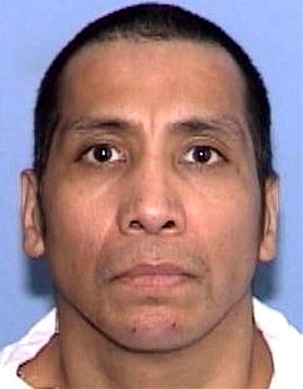
Luis Cervantes Salazar
Murderer Russell Ellwood
Murderer · USA · 1991
Russell Ellwood was a former taxi driver. Authorities suspected him of killing…
20 victims
Russell Ellwood
Murderer · USA · 1991
Russell Ellwood was a former taxi driver. Authorities suspected him of killing…
20 victims
 Robert Martines Perez
Murderer · USA · 1994
Name: Robert Martines Perez · Other name used in proceedings: Robert Martinez P…
15 victims
Robert Martines Perez
Murderer · USA · 1994
Name: Robert Martines Perez · Other name used in proceedings: Robert Martinez P…
15 victims
 Billy Frank Vickers
Murderer · USA · 1993
Billy Frank Vickers Vickers was executed by lethal injection in Texas on Januar…
14 victims
Billy Frank Vickers
Murderer · USA · 1993
Billy Frank Vickers Vickers was executed by lethal injection in Texas on Januar…
14 victims
 Richard Harold Anderson
Murderer · USA · 1972
Richard Harold Anderson (W/M) was the defendant in a Florida capital case. His…
2 victims
Richard Harold Anderson
Murderer · USA · 1972
Richard Harold Anderson (W/M) was the defendant in a Florida capital case. His…
2 victims
 Martha Wise
Murderer · USA · 1924
Martha Wise (born 1885; died June 28, 1971), also known as “the Borgia of Ameri…
3 victims
Martha Wise
Murderer · USA · 1924
Martha Wise (born 1885; died June 28, 1971), also known as “the Borgia of Ameri…
3 victims
 Jason Wayne Rose
Murderer · USA · 1988
Jason Wayne Rose was a state prisoner who appealed the denial of his 28 U.S.C.…
1 victim
Jason Wayne Rose
Murderer · USA · 1988
Jason Wayne Rose was a state prisoner who appealed the denial of his 28 U.S.C.…
1 victim
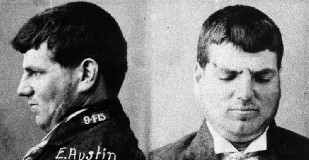 Ernest Austin
Murderer · Australia · 1913
Ernest Austin died on 22 September 1913. He was the last person executed by Que…
1 victim
Ernest Austin
Murderer · Australia · 1913
Ernest Austin died on 22 September 1913. He was the last person executed by Que…
1 victim
 Johnny Williamson
Murderer · USA · 1985
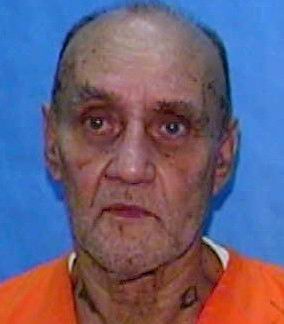
Johnny Williamson (born 10/25/42) was convicted in the Third Judicial Circuit,…
1 victim
Johnny Williamson
Murderer · USA · 1985
Johnny Williamson (born 10/25/42) was convicted in the Third Judicial Circuit,…
1 victim
 Lydia Trueblood
Murderer · USA · 1915
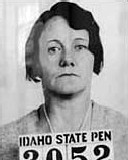
Lydia Trueblood was born in 1915. She was convicted in Idaho in 1921 and died o…
6 victims
Lydia Trueblood
Murderer · USA · 1915
Lydia Trueblood was born in 1915. She was convicted in Idaho in 1921 and died o…
6 victims
- Gender
- male
- Country
- USA
- Location
- Bexar County, Texas, USA
- Date of birth
- August 31, 1970
- Age at first offence
- 27
- Characteristics
- rape, attempted rape
- Victim profile
- Martha Sanchez (female, 28)
- Method of murder
- St abbing with knife
- Date(s) of murder
- October 11, 1997
- Years active
- 1997
- Date of arrest
- Same day (surrenders)
- Status
-
Executed
Executed by lethal injection in Texas on March 11, 2009
Case overview
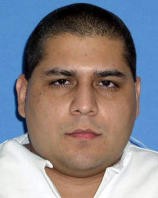
Luis Cervantes Salazar was executed by lethal injection in Texas on March 11, 2009. He was convicted of capital murder for the 1997 murder of Martha Sanchez at the victim’s home in San Antonio.
Timeline
- March 11, 2009 — Luis Cervantes Salazar was executed by lethal injection in Texas.
- December 20, 2007 — The Fifth U.S. Circuit Court of Appeals affirmed the denial of federal habeas relief and denied relief.
- June 23, 2008 — The U.S. Supreme Court denied certiorari review.
- September 27, 2005 — A U.S. district court denied federal habeas relief, but granted a certificate of appealability.
- February 12, 2003 — The Texas Court of Criminal Appeals denied Salazar’s application for state habeas relief.
- (Early morning) October 11, 1997 — Salazar entered Martha Sanchez’s home through a window, stabbed Martha Sanchez and stabbed her 10-year-old stepson Erick in the chest.
- May 1991 — An eighteen-year-old mentally challenged high school student testified that Salazar raped her after she had gone to his house for lunch.
- Jan. 31, 1988 — A convenience store robbery occurred.
- Feb. 2, 1988 — Two convenience store robberies occurred.
- (Earlier in) 1997 — Oscar Ochoa testified that Salazar approached Martha Sanchez in her home and asked if he could borrow some sugar, “but not that kind of sugar,” and Ochoa confronted Salazar and ordered him to stay away.
- September 1997 — Salazar moved out of his house and took up residence at 122 Ashland in San Antonio.
- April 11, 1994 — Salazar entered a guilty plea to a lesser charge of misdemeanor assault with bodily injury and received a two-year probated sentence.
- (Around) 3:00 a.m. to 4:00 a.m. — Salazar testified he left a friend’s home after smoking marijuana and snorting cocaine and drinking beer and liquor.
- 12:30 a.m. — Oscar Ochoa called home from work while working the “graveyard” shift.
The offence
In the early morning hours of October 11, 1997, Luis Salazar entered Martha Sanchez’s home through a window. He grabbed a knife from the kitchen and entered Sanchez’s bedroom, where he began stabbing Sanchez in the chest.
Martha Sanchez was 28 years old. She had husband Oscar Ochoa, ten-year-old stepson Erick, two-year-old daughter Brianna, and four-month-old son Timothy in the home.
Erick testified that he woke up to his mother’s scream: “Luis, why are you doing this? Leave me alone!” Erick went into his mother’s bedroom and saw Salazar stabbing her. Erick attempted to grab the knife, but Salazar stabbed the boy in the chest. Erick told his mother to get help; he went to the nearby home of Sylvia Montenegro.
Sylvia Montenegro testified that she answered her door to find Erick bleeding from his chest and begging frantically for help. Erick told her that someone had broken into the home and stabbed both him and his mother. Erick identified Salazar as the attacker. Sylvia called 911 and sent her future son-in-law Adrian to the Sanchez home to investigate. Adrian removed the two youngest children, Brianna and Timothy, safely from the home. He entered the home again, checked Martha’s pulse, and realized she was dead. An EMS unit arrived, confirmed Martha’s death, and transported Erick to University Hospital.
Salazar fled the scene but later telephoned 9-1-1 to turn himself into police. Police arrested him without incident and informed him of his rights.
Physical evidence and injuries
Physical evidence showed that Martha Sanchez suffered stab wounds to the heart, lungs, and aorta, causing her death. The medical examiner testified that Sanchez’s death was not immediate and it took several minutes for her to die. The medical examiner also testified that Sanchez suffered contusions and skin abrasions on the outer thigh and contusions on the inner thigh.
Although the medical examiner testified that Martha Sanchez suffered no genital injuries, no sperm was present, and her clothes had not been removed, the medical examiner concluded that the pattern of bruises and scratches indicated an attempted sexual assault. The medical examiner testified to specific details about the age, size, and placement of bruises and abrasions, and provided reasons supporting the conclusion.
Evidence indicated that the telephone lines outside the home had been cut and the interior of the home was in shambles. No fingerprints were found on the front windows. Investigators found a cordless phone under Martha’s left arm and the bloody kitchen knife on a coffee table near Martha’s bedroom.
The medical examiner testified that the bruise pattern on Martha’s legs was consistent with a person wrapping his hands around her knees and legs in a forcible attempt to separate her legs. The medical examiner also testified that the bruise pattern on Martha’s legs, mud on Martha’s inner thigh, and fingernail abrasions on her thighs were inconsistent with Salazar’s version of events. The medical examiner pointed to ten different contusions and a “scratch abrasion” that formed this pattern and placed particular importance on four contusions on the inside of her knee and thigh.
Assault and intent evidence at trial
The prosecution presented evidence that Martha Sanchez’s injuries indicated an attempted sexual assault. Salazar’s intent to commit a sexual assault on the night of the murder was an important issue at trial.
At trial, Salazar did not deny stabbing Sanchez and the woman’s son, Erick.
Investigation and arrest
After Salazar telephoned 9-1-1 to turn himself in, police arrested him without incident and informed him of his rights.
At the time of arrest:
- Six .38 caliber bullets were found in Salazar’s pants.
- The gun was not found that night, but a .38 caliber revolver was recovered near the scene of the arrest.
One police officer testified that after Salazar was arrested, he looked at the officer and said: “You are wearing a vest, you are wearing a bullet proof vest.” The officer testified that he was wearing a vest, and Salazar responded: “You know, if you had walked up to that car when we were going to stop, I would have shot you.”
Trial
Charges
Salazar was charged with a single count of capital murder committed during the course of committing or attempting to commit aggravated sexual assault and burglary.
Guilt and sentencing
Although a number of lesser-included offenses were included in the jury charge, Salazar was convicted of capital murder as charged in the indictment and sentenced to death. The Texas Court of Criminal Appeals affirmed the conviction and death sentence on direct appeal.
In his trial testimony, Salazar admitted stabbing Martha Sanchez to death after entering her house without consent. He also testified that he:
- found Martha attractive,
- desired to have intercourse with her, and
- had recently propositioned her. He also admitted that he told his wife before the murder that violence made him feel good and that he had dreamed of killing people.
Salazar claimed he entered the home by mistake. He testified that on the evening of October 11, he and his brother went to a friend’s home in San Antonio, where they smoked marijuana and snorted cocaine, and they drank beer and liquor. He testified he left the friend’s home between 3:00 a.m. and 4:00 a.m., went to a local taco bar, and was unable to find a ride home. He said he then decided to go to his old home on Future Street, where his mother-in-law still owned the property and where he kept some personal belongings.
Salazar testified that although he intended to go to the home at 254 Future, he mistakenly approached Sanchez’s home at 250 Future, and because he no longer had his key to the home at 254 Future, he decided to enter through the window. Inside, he claimed he heard a noise, walked out of the kitchen, bumped into a person he could not see, became frightened, and began stabbing the unknown person. He further testified that he felt a pain in his arm, realized someone was behind him, and began stabbing that person as well. He testified he then heard the victim say “Run!” or “run Erick!” and that he subsequently realized he was in the wrong home and left the house.
Salazar testified that his state of mind during the incident was similar to a black-out. He stated he did not remember Martha screaming “Luis, why are you doing this to me?” and did not remember Brianna crying or Erick telling him to leave Martha alone. He denied cutting the telephone lines at 250 Future and denied trying to rape Martha, while offering no explanation for bruises and abrasions on her legs.
The defense called no witnesses other than Salazar and rested after Salazar’s testimony.
Medical examiner testimony and defense challenges
The prosecution elicited testimony from the medical examiner that the pattern of contusions on Martha Sanchez’s body indicated an attempted sexual assault contemporaneous with her death. The medical examiner’s opinion about the contusions pattern was not expressed in the autopsy report, and defense counsel attempted unsuccessfully to keep this testimony from the jury.
Defense counsel attempted to discredit the medical examiner’s opinion on cross-examination but did not consult with an independent pathologist or call rebuttal witnesses to refute the medical examiner’s testimony.
Prior criminal history
On April 11, 1994, Salazar entered a guilty plea to a lesser charge of misdemeanor assault with bodily injury and received a two-year, probated sentence for the sexual assault of an eighteen-year-old mentally-challenged high school student.
The prosecution presented evidence of Salazar’s prior sexual assault. In testimony at his trial, an eighteen-year-old mentally challenged high school student testified that Salazar raped her after she had gone to his house for lunch in May 1991.
Salazar was indicted on four counts of aggravated robbery arising from the three convenience store robberies committed on Jan. 31, 1988 and Feb. 2, 1988. Salazar pled guilty to all four charges and received deferred adjudication probation.
Procedural history, appeals, and habeas corpus
State habeas relief
Salazar’s application for state habeas relief was denied by the Texas Court of Criminal Appeals on February 12, 2003.
Federal habeas proceedings
A U.S. district court denied federal habeas relief on September 27, 2005, but granted a certificate of appealability.
The Fifth U.S. Circuit Court of Appeals affirmed the district court’s decision and denied relief on December 20, 2007.
The U.S. Supreme Court denied certiorari review of this decision on June 23, 2008.
Federal habeas issues
The district court denied Salazar’s habeas petition under § 2254 on all grounds but granted a certificate of appealability (COA) on the issue of whether Salazar’s trial counsel rendered ineffective assistance by failing to provide rebuttal expert testimony regarding the bruise pattern on Martha Sanchez’s body, which the medical examiner testified was consistent with attempted sexual assault.
On appeal, Salazar primarily confined his argument to the scope of the COA. He also argued that trial counsel was ineffective for failing to investigate and present evidence rebutting the prosecution’s evidence that phone lines at the Sanchez residence were cut or disabled shortly before the murder, but the argument was not considered because it exceeded the scope of the COA.
Ineffective assistance litigation details
At the evidentiary hearing on Salazar’s state habeas application, a forensic pathologist named Dr. Radelat testified on Salazar’s behalf and concluded that the bruise pattern on Martha Sanchez’s body did not indicate an attempted sexual assault.
Salazar argued that Dr. Radelat’s testimony would have rebutted the medical examiner’s testimony that the bruises indicated an attempted sexual assault, and he argued he was prejudiced by counsel’s failure to investigate and retain a forensic pathologist.
The federal court noted that, at trial, Salazar admitted stabbing Martha Sanchez to death after entering her house without consent and also admitted that he told his wife before the murder that violence made him feel good and that he had dreams about killing people. The prosecution also presented evidence that Martha Sanchez was afraid of Salazar and evidence of a prior sexual assault on an acquaintance (despite Salazar’s guilty plea to a lesser charge). The federal court also described evidence including that the telephone lines had been cut before Salazar went into the house, that his muddy footprints led directly from the point of entry to the kitchen where he obtained two knives used as murder weapons, and that the only signs of struggle were in Martha’s bedroom where her blood was found.
The federal court stated that Dr. Radelat’s opinion did not provide an explanation for the conclusion beyond the apparent age of one large abrasion, and did not contradict other medical examiner findings regarding location, appearance, or freshness of scratches, bruises, and abrasions other than stating they were of “various ages.” The federal court also stated Dr. Radelat did not offer an alternative explanation for how bruising and abrasions may have occurred, and did not explain whether they were consistent with Salazar’s version of events. The federal court reasoned that there was no reasonable probability that Dr. Radelat’s testimony would have given jurors a reasonable doubt regarding Salazar’s guilt. The federal court further stated that even if the testimony could have raised a reasonable doubt regarding the attempted sexual assault predicate, the capital murder conviction would likely have been sustained on the attempted burglary predicate.
Outcome
In the death chamber, Salazar did not acknowledge the crime or address the victim’s family members who were present as witnesses, and he laughed several times. He recited the Lord’s Prayer. He said: “My heart is going ba-bump, ba-bump, ba-bump,” and “Hah, hah!” He also spoke about his family, saying he loved his children Roxanne, Roseanne, Melissa and Louis, and that he missed them, and said “I will take them with me in my heart.” He died about nine minutes after he was administered a lethal mix of drugs.
After the execution, the victim’s family read a prepared statement in which Robert Sanchez said: “Eleven years ago, Louis Salazar made the decision to kill our lovely Deanie,” and “Salazar had an easy death. He got to just go to sleep. For those thinking it is cruel, cruel is leaving three children without their guiding light.”
Other details
Victim and family details mentioned
Martha Sanchez’s stepson Erick was 10 years old at the time of the 1997 attack. Martha’s daughter Brianna was two years old at the time of the attack. Martha’s son Timothy was four months old at the time of the attack.
In addition, the case included testimony about a babysitter, Nicole Ponce, who was Martha Sanchez’s 19-year-old niece, and she testified she served as a babysitter and spent the night at the home on numerous occasions. She testified that on several occasions Salazar would call late in the evening asking for Martha’s company, and that Martha refused to speak with Salazar.
Locations named
Martha Sanchez lived at 250 Future Street in San Antonio at the time of the attack. Salazar’s residence was described as 122 Ashland in San Antonio around September 1997. Salazar testified about intending to go to 254 Future. Salazar was arrested after authorities approached him and evidence described the arrest occurring at 9127 Port Victoria.
Spotted an error, or have more information about this case?