
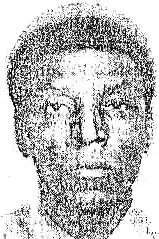
Aubrey Dennis Adams
Murderer Ervil LeBaron
Murderer · USA · 1972
Ervil Morrell LeBaron (1925 to August 16, 1981) was the leader of a polygamous…
35 victims
Ervil LeBaron
Murderer · USA · 1972
Ervil Morrell LeBaron (1925 to August 16, 1981) was the leader of a polygamous…
35 victims
 Brian Kevin Rosenfeld
Murderer · USA · 1985
Brian Kevin Rosenfeld Brian Kevin Rosenfeld was sentenced to three concurrent l…
23 victims
Brian Kevin Rosenfeld
Murderer · USA · 1985
Brian Kevin Rosenfeld Brian Kevin Rosenfeld was sentenced to three concurrent l…
23 victims
 Marvin Gray
Murderer · USA · 1975
Marvin Gray was convicted killer who claimed responsibility for 23 slayings and…
23 victims
Marvin Gray
Murderer · USA · 1975
Marvin Gray was convicted killer who claimed responsibility for 23 slayings and…
23 victims
 Yahweh ben Yahweh
Murderer · USA · 1980
Yahweh ben Yahweh was born and legally named Hulon Mitchell Jr. (October 27, 19…
23 victims
Yahweh ben Yahweh
Murderer · USA · 1980
Yahweh ben Yahweh was born and legally named Hulon Mitchell Jr. (October 27, 19…
23 victims
 Tyler Hadley
Homicide · USA · 2011
Tyler Hadley was convicted of killing his parents, Mary Jo Hadley and Blake Had…
2 victims
Tyler Hadley
Homicide · USA · 2011
Tyler Hadley was convicted of killing his parents, Mary Jo Hadley and Blake Had…
2 victims
 Luis Reyes
Murderer · USA · 1996
Name: Luis Reyes (Luis E. Reyes) · Date of birth: 02/08/1977 · Race: White · Ge…
2 victims
Luis Reyes
Murderer · USA · 1996
Name: Luis Reyes (Luis E. Reyes) · Date of birth: 02/08/1977 · Race: White · Ge…
2 victims
 Frederick Smallwood
Murderer · USA · 1995
Frederick B. Smallwood (also known as Frederick B. Smallwood, Sr.) was convicte…
1 victim
Frederick Smallwood
Murderer · USA · 1995
Frederick B. Smallwood (also known as Frederick B. Smallwood, Sr.) was convicte…
1 victim
 Allen Nicklasson
Murderer · USA · 1994
Allen Nicklasson · late August 1994 — Dennis Skillicorn, Allen Nicklasson, and…
3 victims
Allen Nicklasson
Murderer · USA · 1994
Allen Nicklasson · late August 1994 — Dennis Skillicorn, Allen Nicklasson, and…
3 victims
 Donald Dufour
Serial killer · USA · 1982
Donald Dufour On the afternoon of July 15, 1982, a postman working Henry Balch…
5 victims
Donald Dufour
Serial killer · USA · 1982
Donald Dufour On the afternoon of July 15, 1982, a postman working Henry Balch…
5 victims
- Gender
- male
- Country
- USA
- Location
- Marion County, Florida, USA
- Date of birth
- ???
- Characteristics
- rape
- Victim profile
- Trisa Gail Thornley (female, 8)
- Method of murder
- Strangulation
- Date(s) of murder
- January 23, 1978
- Years active
- 1978
- Date of arrest
- —
- Status
-
Executed
Executed by electrocution in Florida on May 4, 1989
Case record: Aubrey Dennis Adams
Background
Aubrey Dennis Adams, Jr. was tried in a Florida court and was convicted of first degree murder in 1978. After the jury’s recommendation, the trial judge imposed the death sentence. Adams appealed unsuccessfully, including direct appeals and subsequent petitions in state court seeking post-conviction and habeas corpus relief.
Adams was executed by electrocution in Florida on May 4, 1989.
The offence
In March 1978, the body of an eight-year-old girl, Trisa Gail Thornley, was discovered in a remote wooded area near Ocala, Florida. The conviction for the young girl’s murder was based on circumstantial evidence and incriminating statements Adams made to investigating officers.
In a written statement, Adams admitted that he offered the victim a ride home from school, she accepted, and he drove in another direction. Adams remembered “being stopped somewhere and she was screaming and I put my hand over her mouth and she quit breathing.”
Adams verbally admitted removing the victim’s clothes, using rope to tie her hands, and placing plastic bags over her body. When asked if he had any type of sexual relations with the victim, Adams said he thought he had tried but could not do it or could not bring himself to do it.
The testimony of the officers indicated that Adams had difficulty remembering the details of the killing when questioned.
Timeline
- March 1978 — The body of an eight-year-old girl was discovered in a remote wooded area near Ocala, Florida.
- January 23, 1978 — Adams was charged with first degree murder in that on this date in Marion County, Florida, he did unlawfully, from a premeditated design to effect the death of Trisa Gail Thornley, kill and murder Trisa Gail Thornley in violation of Florida Statute 782.04.
- 1978 — Adams was convicted of first degree murder in a Florida court; following the jury’s recommendation, the trial judge imposed the death sentence.
- June 17, 1985 — The United States Court of Appeals, Eleventh Circuit decided Adams’s appeal from the district court’s denial of his federal habeas petition and affirmed.
- Sept. 18, 1984 — The district court denied Adams’s federal habeas petition in Adams v. Wainwright, No. 84-170-Civ-Oc-16 (M.D.Fla.).
- May 4, 1989 — Adams was executed by electrocution in Florida.
Investigation
Adams’s conviction was based on circumstantial evidence and incriminating statements he made to investigating officers. Physical evidence found near the body was similar to evidence found in Adams’s home and automobile.
Trial
Charges and indictment framework
The indictment charged Adams with premeditated murder. Felony murder was not alleged.
During the guilt-innocence proceedings, the verbal charge given the jury during the guilt-innocence proceedings listed, as “murder in the first degree,” both premeditated murder and felony murder. The felony-murder portion was defined as killing during the commission of, or an attempt to commit, “rape, 3 ... abominable and detestable crime against nature or kidnapping....”
The Florida statute prohibiting abominable and detestable crimes against nature had been declared unconstitutional before Adams’s trial. The jury returned a general verdict finding Adams guilty of murder in the first degree, without specifying whether the crime was premeditated or whether it simply occurred while Adams was committing or attempting to commit one of the enumerated felonies.
Jury instructions quoted
The trial court’s instructions included the following language:
The Defendant, Aubrey Dennis Adams, Jr., is charged with the crime of first degree murder in that on January the 23rd, 1978, in Marion County, Florida, he did unlawfully, from a premeditated design to effect the death of Trisa Gail Thornley ... kill and murder Trisa Gail Thornley ... in violation of Florida Statute 782.04. The charge of premeditated murder includes the lesser charges of: One, second degree murder; two, third degree murder; and, three, manslaughter. The Defendant has entered his plea of not guilty. The effect of this plea is to require the State to prove each material allegation of the Indictment beyond and to the exclusion of every reasonable doubt before the Defendant may be found guilty. The killing of one human being by another is called homicide. Every homicide falls within one of these four classes: One, justifiable homicide; two, excusable homicide; three, murder in the first, second or third degree; and, four, manslaughter. The circumstances of each case determine whether a homicide is justifiable, excusable, murder or manslaughter. Justifiable homicide and excusable homicide are lawful. Murder and manslaughter are unlawful and constitute violations of the criminal laws. The essential elements of unlawful homicide, together with other matters that must be proved beyond and to the exclusion of every reasonable doubt before there can be a conviction in this case, are as follows: One, Trisa Gail Thornley is, in fact, dead; two, such death was caused by the criminal act or agency of another; and, three, the death was caused by the Defendant, Aubrey Dennis Adams, Jr. These four classes of homicide must now be defined to you so that you can properly understand them. The first class that I made reference to: The killing of a human being is justifiable homicide and lawful when... The second class: Excusable homicide is... Homicide is excusable and lawful if it is committed by accident and misfortune in the heat of passion, upon any sudden and sufficient provocation, or upon a sudden combat, without any dangerous weapon being used.... A sudden and sufficient provocation is... The heat of passion is... A dangerous weapon is... The third class: Murder in the first degree, is the unlawful killing of a human being when perpetrated from a premeditated design to effect the death of the person killed or any human being. A premeditated design to kill is ... The question of premeditated design is a question of fact to be determined by the Jury... ***** The killing of a human being in committing, or attempting to commit any arson, rape, robbery, burglary, abominable and detestable crime against nature or kidnapping is murder in the first degree, even though there is no premeditated design or intent to kill. If a person kills another while he is trying to do or commit any arson, rape, robbery, burglary, abominable and detestable crime against nature or kidnapping, or while escaping from the immediate scene of such crime, the killing is in the perpetration of or in the attempt to perpetrate such arson, rape, robbery, burglary, abominable and detestable crime against nature or kidnapping and is murder in the first degree.
The trial court’s instructions also included a summary that:
To summarize: The essential elements of an unlawful homicide which must be proved beyond a reasonable doubt in this case before there can be a conviction of any offense are as follows: One, that Trisa Gail Thornley is, in fact, dead; two, that the killing was wrongful and by the means stated in the Indictment; three, that Trisa Gail Thornley was killed by the Defendant; and, four, that the killing was neither justifiable or [sic] excusable homicide. If the elements are established, then it will be necessary for you to determine the degree of the unlawful homicide. If the Defendant, in killing the deceased, acted from a premeditated design to effect the death of the deceased, or some other human being, he should be found guilty of murder in the first degree. (emphasis added). If the killing was not from a premeditated design to effect the death of any human being, but was in the perpetration of an act imminently dangerous to another, evincing a depraved mind, regardless of human life, the Defendant should be found guilty of murder in the second degree. If the killing took place while the Defendant was engaged in the commission of a felony other than arson, rape, robbery, burglary, the abominable and detestable crime against nature or kidnapping, the Defendant should be found guilty of murder in the third degree. (emphasis added). If the killing was by the act, procurement or culpable negligence of the Defendant and was not murder in any degree or justifiable or excusable homicide, the Defendant should be found guilty of manslaughter. Of course, if any one of the essential elements of any unlawful homicide has not been proved beyond a reasonable doubt, the Defendant should be found not guilty.
Mental competence to stand trial and be sentenced
A pretrial motion by the defense sought an order allowing a private psychiatrist to enter the prison and examine Adams. At a subsequent pretrial hearing on the State’s motion for a separate psychological examination, Adams’s attorney asserted that he knew of no evidence having been presented to the court to suggest incompetency and that, absent such evidence, it would be improper for the court to order an additional examination. The State’s motion was denied. Adams did not claim mental incompetency or allege an insanity defense at trial.
In the presentence report, defense counsel was attributed with the statement that Adams had been unable to recall the details of the crime and this had impaired Adams’s assistance in his defense. Adams later proffered a psychological evaluation made after his conviction that purported to demonstrate that he suffered from catathymic amnesia, a mental disorder that prevented him from recalling traumatic experiences.
On motion for post-conviction relief, the Supreme Court of Florida summarily held that Adams’s claim of mental incompetence was procedurally barred because he failed to argue the claim in direct appeals to the state courts. No evidentiary hearing was held in state court to determine whether Adams was mentally incompetent at the time of trial and sentencing. The district court also denied the claim, citing procedural default or waiver and finding insufficient evidence to raise a legitimate doubt as to mental competence, without holding an evidentiary hearing.
The district court relied on the trial transcript and other documentary evidence.
Sentencing
At the sentencing phase, the instructions listed statutory aggravating factors that the jury could properly consider in reaching an advisory verdict. One aggravating factor was that the killing had occurred during the commission of, or an attempt to commit, rape or kidnapping. The jury’s advisory verdict recommended a sentence of death but did not specify which aggravating factor(s) a majority of the jurors found to exist beyond a reasonable doubt.
The trial court later specifically found that three aggravating factors had been proved:
- the murder occurred during the commission of, or an attempt to commit, rape or kidnapping;
- the murder was committed for the purpose of avoiding or preventing a lawful arrest; and
- the murder was especially heinous, atrocious, or cruel.
The court imposed the death sentence after the jury’s recommendation.
Appeals
Direct appeals and state post-conviction and habeas
Direct appeals proved unsuccessful. The case included:
- Adams v. State, 412 So.2d 850 (Fla.), with cert. denied, 459 U.S. 882 (1982).
- Adams v. State, 456 So.2d 888 (Fla. 1984).
Federal habeas petition and Eleventh Circuit decision
Adams appealed from the district court’s denial of his federal habeas petition in Adams v. Wainwright, No. 84-170-Civ-Oc-16 (M.D.Fla. Sept. 18, 1984). The United States Court of Appeals, Eleventh Circuit, affirmed.
Issues raised on appeal
Adams’s appeal included claims that:
- he had mental incompetence to stand trial and be sentenced;
- the felony-murder instruction during guilt-innocence was erroneous; and
- the trial court failed to define the elements of underlying felonies in the instructions. The appeals court also addressed an ineffective assistance of counsel claims array, alleging counsel failed to investigate and present evidence of mental incompetency, failed to object to instructions, and failed to present mitigation and objections regarding sentencing instructions and aggravating factors.
Felony-murder instruction and general verdict
Adams argued that a conviction could not be upheld where a jury was instructed that a guilty verdict could be returned on any of several grounds and one ground was constitutionally invalid, citing Stromberg v. California. The appeals court concluded it was not impossible to determine on which ground the conviction rested, stating that the jury was instructed to consider only premeditated murder as murder in the first degree under the circumstances of the trial.
Failure to define elements of underlying felonies
Adams contended that the incomplete instruction infected the guilt-innocence phase by depriving him of the right to have the jury decide whether each element of the underlying felonies was proved beyond a reasonable doubt. The appeals court held that, because the jury considered and found only premeditated murder, the incomplete instruction did not deprive Adams of his due process rights regarding the jury’s determination of guilt or innocence. The appeals court similarly addressed an analogous claim for the sentencing phase, concluding the incomplete instruction did not infect the entire sentencing proceeding so as to violate due process.
Aggravating factor: avoiding lawful arrest
The trial court had found as an aggravating factor that the murder was committed to avoid or prevent lawful arrest. The trial court’s supporting facts were:
- actual or attempted kidnapping and rape had been proven, implying Adams had reason to fear arrest; and
- the murder prevented the victim from later identifying Adams. The Florida Supreme Court added that:
- the victim knew Adams and could have identified him if permitted to live; and
- Adams had hidden the victim’s body.
The district court concluded the aggravating factor was not found simply because the body was hidden, but rather because evidence supported the finding that death was preceded by kidnapping and rape and that the victim was murdered to prevent discovery and conviction for those felonies.
Adams argued that Doyle v. State required a different result. The appeals court concluded Doyle did not make the aggravating factors mutually exclusive in every case and held that the two aggravating factors could coexist if both were proven beyond a reasonable doubt. The appeals court stated that Adams’s written confession stated he put his hand over the victim’s mouth to silence her screaming, and she quit breathing, and that kidnapping involved transportation from one location to another and entailed deliberate acts to avoid detection that resulted in the victim’s death.
Ineffective assistance of counsel
The appeals court reviewed an array of ineffective assistance of counsel claims under Strickland v. Washington and affirmed denial of habeas corpus relief. The claims included failures:
- to adequately investigate and present evidence of mental incompetency;
- to object to a jury instruction listing lesser degrees of homicide for which no evidence had been presented;
- to develop and present mitigation evidence of mental condition;
- to object to a sentencing instruction about life imprisonment recommendations;
- to object to sentencing instructions listing aggravating factors not supported by evidence; and
- to object to a sentencing instruction omitting that a tie vote would mandate a recommendation of life imprisonment.
The appeals court affirmed the denial, stating it found no professional conduct that was unreasonable under the circumstances together with a reasonable probability that the result would have been different.
Outcome
The United States Court of Appeals, Eleventh Circuit, affirmed the denial of Adams’s federal habeas petition. Adams’s death sentence remained in place.
After the affirmance, Adams was executed by electrocution in Florida on May 4, 1989.
Other details
At the pretrial hearing regarding psychological examinations, Adams’s attorney stated:
The petitioner's family intended to engage a psychiatrist "to examine [the petitioner] prior to the filing of any suggestions of competency and sanity, if the same were appropriate."
In the written confession and oral admissions, Adams described:
- being stopped somewhere and the victim screaming, followed by Adams “put[ting] my hand over her mouth and [her] quit breathing”;
- removing the victim’s clothes;
- using rope to tie her hands; and
- placing plastic bags over her body.
Adams also stated that when asked about sexual relations with the victim, he thought he had tried but could not do it or could not bring himself to do it.

Spotted an error, or have more information about this case?