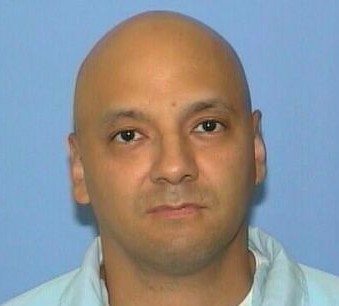
Andrew Urdiales
Serial killer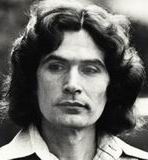 Rodney Alcala
Serial killer · USA · 1977
Rodney James Alcala (born August 23, 1943) was also known as Rodrigo Jacques Al…
100 victims
Rodney Alcala
Serial killer · USA · 1977
Rodney James Alcala (born August 23, 1943) was also known as Rodrigo Jacques Al…
100 victims
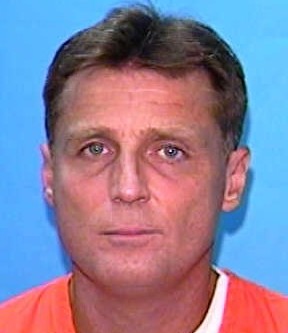 Glen Edward Rogers
Serial killer · USA · 1993
Glen Edward Rogers was a spree killer whose cross-country rampage in 1994-95 le…
70 victims
Glen Edward Rogers
Serial killer · USA · 1993
Glen Edward Rogers was a spree killer whose cross-country rampage in 1994-95 le…
70 victims
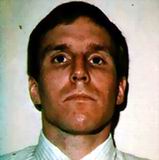 Michael Swango
Serial killer · USA · 1981
Michael Swango (Joseph Michael Swango) was a physician and American serial kill…
60 victims
Michael Swango
Serial killer · USA · 1981
Michael Swango (Joseph Michael Swango) was a physician and American serial kill…
60 victims
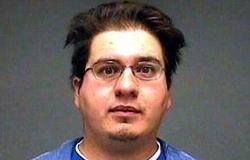 Efren Saldivar
Serial killer · USA · 1989
Efren Saldivar (born 30 September 1969) was an American serial killer who murde…
50 victims
Efren Saldivar
Serial killer · USA · 1989
Efren Saldivar (born 30 September 1969) was an American serial killer who murde…
50 victims
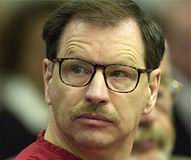 Gary Ridgway
Serial killer · USA · 1982
Gary Leon Ridgway Ridgway was born 18-February-1949 in Salt Lake City, UT. He w…
49 victims
Gary Ridgway
Serial killer · USA · 1982
Gary Leon Ridgway Ridgway was born 18-February-1949 in Salt Lake City, UT. He w…
49 victims
 Charles Cullen
Serial killer · USA · 1984
Charles Cullen (born February 22, 1960) was a former nurse and the most prolifi…
45 victims
Charles Cullen
Serial killer · USA · 1984
Charles Cullen (born February 22, 1960) was a former nurse and the most prolifi…
45 victims
 Tracy Garrison
Murderer · USA · 2001
Tracy Garrison was convicted of first degree murder in 2004. She was sentenced…
1 victim
Tracy Garrison
Murderer · USA · 2001
Tracy Garrison was convicted of first degree murder in 2004. She was sentenced…
1 victim
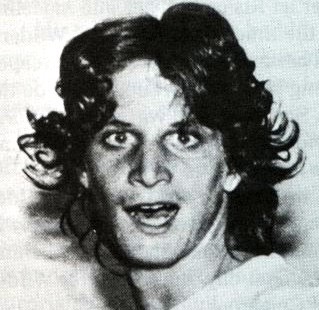 Ricky Kasso
Homicide · USA · 1984
Ricky Kasso (March 1967 - July 7, 1984) was a juvenile. Ricky Kasso was the son…
1 victim
Ricky Kasso
Homicide · USA · 1984
Ricky Kasso (March 1967 - July 7, 1984) was a juvenile. Ricky Kasso was the son…
1 victim
 Dmitry Vinogradov
Mass murderer · Russia · 2012
Dmitry Vinogradov was held in prison awaiting trial. · 7 November 2012 — A gunm…
6 victims
Dmitry Vinogradov
Mass murderer · Russia · 2012
Dmitry Vinogradov was held in prison awaiting trial. · 7 November 2012 — A gunm…
6 victims
 Crystal Mangum
Murderer · USA · 2011
Crystal Gail Mangum (born July 18, 1978) was an African American woman known fo…
1 victim
Crystal Mangum
Murderer · USA · 2011
Crystal Gail Mangum (born July 18, 1978) was an African American woman known fo…
1 victim
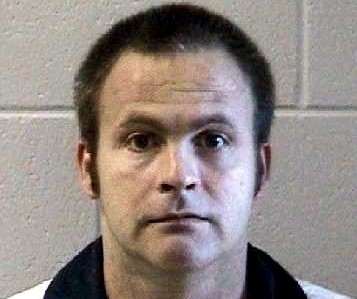 William Lipham
Murderer · USA · 1985
Name: William Anthony Lipham Age: 33 Lipham was sentenced to death on February…
1 victim
William Lipham
Murderer · USA · 1985
Name: William Anthony Lipham Age: 33 Lipham was sentenced to death on February…
1 victim
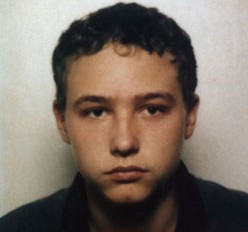 Joshua Phillips
Homicide · USA · 1998
November 3, 1998 — Maddie Clifton vanished from her Jacksonville, Fla., neighbo…
1 victim
Joshua Phillips
Homicide · USA · 1998
November 3, 1998 — Maddie Clifton vanished from her Jacksonville, Fla., neighbo…
1 victim
- Gender
- male
- Country
- USA
- Location
- Illinois/Indiana/California, USA
- Date of birth
- J une 4, 1964
- Age at first offence
- 22
- Characteristics
- rape, torture, convicted rapist, abuse, mentally ill
- Victim profile
- Women (mostly prostitutes)
- Method of murder
- St abbing with knife / Shooting
- Date(s) of murder
- 1986 - 1996
- Years active
- 1986–1996
- Date of arrest
- April 23, 1997
- Status
-
Life imprisonment
Sentenced to death in Illinois on September 3, 2002; commuted to life in prison without the possibility of parole on January 10, 2003
Case record: Andrew Urdiales
Background
Andrew Urdiales was in the Marines. While he was in the Marines, he was called “Corporal Urinalysis.” He was described as having an “odd twitch,” and he was said to have been unable to carry on even small talk with business owners at stores and restaurants he frequented near the Southest Side home he shared with his parents at 9709 S. Commercial Ave. in Chicago, IL.
Urdiales was described as a loner and an average student who graduated from Thornridge High School in Dolton IL in 1982 with the title “social outcast.” Though he had few friends, he attended a high school reunion and told a former schoolmate that he had killed 2 prostitutes in California.
Urdiales joined the Marines not long after high school and was stationed in Souther California. He enlisted in the U.S. Marine Corps “with fantasies of learning to defend himself and to destroy -- not out of patriotism,” said Dr. Dorothy Otnow Lewis, a psychiatry professor at Yale and New York universities and co-author of “Guilty by Reason of Insanity,” who testified during his first trial.
Urdiales later confessed to killing 5 women while in California, and raping and abducting another woman. He was promoted several times while serving in the military, until at the rank of Corporal his men refused to take orders from him and he was eventually demoted.
During his time in the military, Urdiales fell in love with a 15-year-old girl whom he impregnated. He was afraid of her parents and of any military discipline. They agreed she would have an abotion.
“I loved her and still love her,” Urdiales told Dr. Lewis, “but the law and the state of California and the righteous and the Marine Corps might not see it that way.”
Urdiales was given an honorable discharge from the Marines. Afterward, he later sought psychatric help from a Chicago vetran’s hospital.
During his trial, family members and Dr. Lewis testified that mental illness ran rampant on both sides of his family, that he had been physically and emotionally abused by his parents, sexually abused by his sister and a male cousin, and that he had been picked on insessantly in school and later in the service.
Prosecution experts said he was “brain-damaged” and suffered from Tourette’s syndrome. They also said he heard voices, which were sometimes delivered “in code” and led him to “go on missions” when he could crack the code.
Urdiales returned to the Chicago area permanently in 1996, just months after killing his last victim in California, and became a security guard.
The offence
Urdiales killed at least 8 women and abducted and raped a 19-year-old girl before finally being caught and confessing in 1997.
Lori Uylaki (April 14, 1996)
On April 14th, 1996, Urdiales killed Lori Uylaki, 25, of Hammond. He dumped her body in Wolf Lake, which straddles the border of Illinois and Indiana. The account states that he shot and stabbed her.
Cassandra “Cassie” Corum (July 13, 1996)
On July 13th, Andrew Urdiales ran into Cassandra Corum, 21, of Hammond at a bar on Michigan Avene in Hammond. The two rode in his pickup truck to Wolf Lake and had sexual intercourse.
Corum said something that made Urdiales mad. During his trial, he could not remember what. Urdiales said he started hitting Corum in the face with his fist and open hand. Corum became afraid and started to panic. He took out his handcuffs and forced them on her, handcuffing her hands behind her back.
He tore her clothes off and taped her mouth with duct tape, then headed south on Interstate 55. Urdiales exited about 100 miles south of Chicago and drove to a park. He shut off the lights and removed the handcuffs and duct tape. Corum, who was still naked, got out of the truck.
“Andrew Urdiales said Cassie walked to the back of the truck and turned to face him to say something,” testified a detective.
“Andrew fired his gun and hit her in the face. Urdiales said he was still angry with her for fighting with and biting him, so he got his knife and stabbed her. He did not remember how many times, the knife did not have much blood on it, so Urdiales put it back in the truck.”
Urdiales carried Corum to a bridge and dropped her into the Vermilion River. Cassandra Corum’s best friend Donica Coffman, who testified, said she dated Urdiales and remembered him as being “a nice guy.”
The account also states that when Corum turned up missing, Urdiales cried and helped her pass out missing person posters.
Lynn Huber (Aug. 2, 1996)
Not one to sit idly by, Urdiales headed to the Northside of Chicago where he picked up Lynn Huber, 22, of Chicago on Aug. 2, 1996. Urdiales saw Huber walking with a plastic garbage bag full of clothes and asked her if she needed a ride.
They rode in Urdiales’ pickup truck to the El tracks at 1036 W. Irving Park Road. An arguement insued. Urdiales grabbed her by the hair and pushed her to the ground. He then grabbed his gun and fired several times, hitting her only once.
Urdiales said he put her and her clothes in his truck and drove south because “that seemed like the right way to drive,” Recalled the detective who took his confession. He also said “Urdiales remembered feeling frustrated and driving with the window open”.
When he got to Wolf Lake, Urdiales took off her clothes and stabbed her multiple times before pushing her into the water. After throwing the clothes Huber was wearing in a Dumpster and leaving the garbage bag full with the Salvation Army, Urdiales drove to his Southeast Side home and went to sleep.
Attempted or other linked conduct in Illinois and Indiana
On November 14th, 1996, Urdiales was stopped by Warren Fryer, a Hammond Indiana patrolman, for being parked outside a known drug house at 831 Becker St., with a well-known prostitute. Fryer called for backup.
As the officers approached the pickup truck Fryer described Urdiales’ demeanor as “cooperative, average” and said he noticed “nothing unusual.” After Urdiales explained he served in the Marines, Fryer spotted the revolver and yelled “gun” in a loud, stern voice, he said. Another patrolmen grabbed the gun, it was a snub-nosed, chrome-plated .38 special, fully loaded with six shells.
Police explained Urdiales did not have the permit required to possess the gun in Indiana. He was subsequently arrested and the gun confiscated.
Before police towed Urdiales’ truck, they found a sleeping bag and gym bag containing duct tape. Fryer added “The interior of the bed and cap were spotlessly clean. They were as clean as you would wash the outside of your car.”
Under cross-examination, Fryer said the truck and cab “looked as clean as if they had come out of the showroom... unusual for the norm.”
Almost six months later, on April 1, 1997, Fryer responded to a complaint about a man and a woman fighting at the American Inn, at 4000 Calumet Avenue, in Hammond. While Urdiales complained to another officer of an alleged theft, Patricia Kelly, a known Hammond prostitute involved in the dispute, made a statement about being taken to the back of Urdiales’ pick-up truck and being handcuffed and engaging in anal sex.
“She said, ‘This guy’s kind of kinky. He wants to take me in the back of his pick-up truck, handcuff me and (engage in anal sex)’.”
Fryer, who by then knew of the murders of Uylaki and Huber, said “My immediate response was, 'Jeez, Patricia, don't do that. We're finding girls up there dead.' ”
When Fryer returned to the Hammond Police Department at the end of his shift, he conducted a computer search of the city’s records on Urdiales, including the Nov. 14th seizure of his gun, and prepared a supplemental report he forwarded to detectives.
Assistant State’s Attorney Alison Perona, who prosecuted the Wolf Lake murders, described Urdiales as a “savage, predatory, cunning killer” who was caught by a “combination of bad luck and good police work.”
“The woman said Andrew wanted her to go to Wolf Lake, let him tie her up and have sex with her,” Perona said. “The officer immediately made the connection -- sex, bondage, lake.”
On April 7, 1997, Chicago Detective Don McGrath received word of the American Inn incident from the Hammond, Indiana police detectives. They also turned the gun over to him, which he took to gun expert Robert Smith. Smith confirmed it was the same gun used to kill the three women.
On April 22, 1997, McGrath and his partner, Detective Raymond Krakausky, set up surveillance in an alley about a half-block south of Urdiales’ parent’s home. Urdiales emerged about 9am, headed to his job as a security guard. McGrath and Krakausky approached him, and told him they were interested in the November 1996 case in which Urdiales’ .38-caliber revolver was seized. Urdiales said the case had been resolved, but agreed to come to Chicago’s Area 2 police headquarters.
At first Urdiales said he did not recognize photos of Huber, Uylaki or Corum. McGrath asked him where he got his revolver, and Urdiales said he bought it in Calumet City for $300 about five years earlier. He also said he had maintained control of it since he had it.
McGrath told Urdiales the bullets used in all three murders were traced to his gun. Urdiales took his security badge off, loosened his tie and started to untie his shoe laces. He said: “I guess I'm not going to be going to work today.”
Investigation
Police explained Urdiales did not have the permit required to possess the gun in Indiana after the November 14th, 1996 stop. His truck was towed. Officers found a sleeping bag and gym bag containing duct tape.
Fryer described his truck and cab as unusually clean.
Fryer also forwarded a supplemental report to detectives after performing a computer search that included the gun seizure.
On April 7, 1997, Hammond detectives turned the gun over to Chicago Detective Don McGrath, who took it to gun expert Robert Smith. Smith confirmed the gun was the same weapon used to kill the three women.
On April 22, 1997, McGrath and Detective Raymond Krakausky set up surveillance in an alley about a half-block south of Urdiales’ parent’s home and approached him as he went to his job as a security guard.
McGrath told Urdiales the bullets used in all three murders were traced to his gun, and Urdiales responded by removing items and stating he was not going to go to work.
Trial
Conviction for murders of Lori Uylaki and Lynn Huber (2002)
Urdiales was convicted in the murders of Lori Uylaki and Lynn Huber in 2002. He was given the death penalty, which was later commuted by Governor Ryan along with all other death row sentences shortly after the ruling.
The account states he was convicted of the murders of Lori Uylaki and Lynn Huber in 2002.
Conviction for murder of Cassandra Corum (2004)
In April 2004, Urdiales was tried and convicted in Pontaic County, IL for the murder of Cassandra Corum. The account describes his trial proceedings in connection with the Interstate 55 transport and killing near the Vermilion River.
A written confession to Corum’s murder was presented to the jury during the trial.
Urdiales was sentenced to death by a Livingston County jury for the 1996 murder of 21-year-old Cassandra Corum of Hammond, Ind.
Judge Harold Frobish rejected Urdiales’ insanity defense and his attempt to plead guilty but mentally ill. During the proceedings, Judge Frobish stated and the account recounts that he found no error when the court and state pointed out Urdiales was not insane.
During the hearing, defense attorneys included Charles Schiedel and Daniel Schuster, appointed to handle Urdiales’ appeal before the Appellate Court asked Frobish that Urdiales not be retrained in the courtroom. Schuster said: “We object to Mr. Urdiales being handcuffed. Because he needs to be able to write.”
Judge Frobish ordered correctional center officers present in the courtroom to free Urdiales’ right hand from the handcuffs.
Judge Frobish described an incident at trial where Urdiales had his hands free and he cleared off the defense table and spilled water.
Judge Frobish stated: “There was no error made by the court here or when the state pointed out in closing arguments at the trial Mr. Urdiales was not insane. The defense is dead wrong on this issue,”
Judge Frobish also explained that in advance of trial he gave counsel and the state a list of questions for potential jurors, including questions about insanity as a defense and the ability to find him not guilty by reason of insanity if he were found insane.
Frobish stated: “Question number 20 was 'do you have any views on insanity as a defense?' A follow-up question was 'in this case if the defendant has said he was insane could you find him not guilty by insanity?' This document was read to the jury after being approved by the defense and state. Jurors were selected one person at a time,”
He further said: “The defendant also offered to plead guilty by insanity when the jury was deliberating. I asked his defense attorneys why he wanted to plead guilty when the jury was deliberating and the attorneys told me that he was making the offer over their objections,”
Judge Frobish stated: “What the defense is really trying to do here is to have it both ways. First you wanted an insanity defense and now you want it excluded.”
The hearing involved insanity-related documents. Claire Labbe of the Illinois Attorney General’s office asked that the trial record be supplemented to include documents dealing with the possibility of an insanity defense by Urdiales.
Schuster stated: “This document was not presented to the jury, it is not in the common law transcript and was not filed with the circuit clerk's office. We ask the court today to defer on this and let the state Supreme Court order it be released,”
Frobish stated: “This court is the best place to decide this issue because this court handled the document,”
Labbe stated: “I am persuaded by the state to release this document and also the proceedings from today's hearings.”
Sentencing
Urdiales was sentenced to death in Illinois on September 3, 2002. The account says he was given the death penalty in 2002 for the murders of Lori Uylaki and Lynn Huber, and it was commuted.
Urdiales was also sentenced to death by a Livingston County jury for the 1996 murder of 21-year-old Cassandra Corum of Hammond, Ind.
A physician testifying for the defense said the cortex of Urdiales’ brain is smaller than the normal brain and that he has lost a lot of brain tissue. The state maintained that Urdiales does not have an organic brain disorder but instead suffers from Tourette’s Syndrome and an unspecified personality disorder. Psychiatrist Dr. Park Dietz said Urdiales is simply a sexual sadist who hates women.
Appeals
In September 2006, Urdiales challenged his death sentence with a mental illness claim. The account describes that his attorney argued his death sentence should be overturned and he should have been found guilty but mentally ill.
The Illinois Supreme Court upheld the serial killer’s death sentence in a ruling involving the death of the eighth woman, Cassandra Corum of Indiana, who was shot and stabbed to death in 1996. The court found that the judge did nothing wrong when he concluded that Urdiales was not mentally ill.
The Illinois Supreme Court noted that defense witnesses did not agree on what illness Urdiales supposedly suffered and that his crime involved careful planning.
The account also states that Gov. Rod Blagojevich ordered the Corrections Department not to conduct any executions, continuing the moratorium begun by Ryan.
Outcome
Urdiales was originally condemned to die for two of the murders, and then-Gov. George Ryan commuted his sentence because of flaws in the state’s death penalty system.
He was described as serving a life sentence after commutation and was later sentenced to death again for Corum’s murder.
Aftermath
The account states that Urdiales confessed to killing eight women in Illinois and California between 1988 and 1996.
The account states that Urdiales was extradited to California after the appeals process is complete to face trial for the murders of five other women and an abduction and rape.
It also states that he was housed on Death Row at the Pontiac Correctional Center.
Timeline
- April 12, 1996 — A veteran’s hospital psychologist urged Urdiales to “become more open about expressing anger.”
- April 14, 1996 — Urdiales killed Lori Uylaki, 25, of Hammond, and dumped her body in Wolf Lake.
- July 13, 1996 — Urdiales ran into Cassandra Corum, 21, of Hammond at a bar on Michigan Avene in Hammond; they went to Wolf Lake.
- Aug. 2, 1996 — Urdiales picked up Lynn Huber, 22, of Chicago; he took her to the El tracks at 1036 W. Irving Park Road and later killed her.
- November 14, 1996 — Warren Fryer stopped Urdiales in Hammond, Indiana; Fryer seized a snub-nosed .38 special and duct tape was found in Urdiales’ truck.
- April 1, 1997 — Fryer responded to an American Inn incident involving Patricia Kelly and Urdiales.
- April 7, 1997 — Chicago Detective Don McGrath received word of the American Inn incident and the gun was turned over to him.
- April 22, 1997 — McGrath and Detective Raymond Krakausky set up surveillance and approached Urdiales at about 9am; Urdiales made statements including “I guess I'm not going to be going to work today.”
- 2002 — Urdiales was convicted in the murders of Lori Uylaki and Lynn Huber and received the death penalty.
- September 3, 2002 — Urdiales was sentenced to death in Illinois.
- January 10, 2003 — The death sentence was commuted to life in prison without the possibility of parole.
- April 2004 — Urdiales was tried and convicted in Pontaic County, IL for the murder of Cassandra Corum; he was sentenced to death by a Livingston County jury.
- February 18, 2007 — The Illinois Supreme Court upheld Urdiales’ serial killer death sentence.
- September 15, 2006 — Urdiales argued his death sentence should be overturned because he should have been found guilty but mentally ill.
- April 29, 2006 — Urdiales was sentenced to death by a Livingston County jury for the 1996 murder of Cassandra Corum.
- April 28, 2006 — Technicalities from the 2004 trial were addressed in Livingston County Circuit Court regarding potential insanity documents in the appeal.
Other details
Marines, medical and psychological testimony
During his trial, Dr. Dorothy Otnow Lewis testified. Prosecution experts described Urdiales as hearing voices “in code” that led him to “go on missions” when he could crack the code.
The account also states that on April 12th, 1996, a veteran’s hospital psychologist urged him to “become more open about expressing anger,” just two days before he killed a woman.
A physician testifying for the defense said that the cortex of Urdiales’ brain is smaller than the normal brain, and that he has lost a lot of brain tissue.
Psychiatrist Dr.
Confession and reported statements
Urdiales confessed in 1997.
In connection with the Corum investigation, a written confession was presented to the jury during the trial.
Additional alleged crimes listed in the account
The account included a list of crimes Urdiales had confessed to or was linked to, including:
- Late 1980s — Urdiales confessed to the murder of a prostitute in San Diego sometime between 1987 and 1989; evidence described the victim as a white female in her late 20s or early 30s; Urdiales told police he shot her.
- July 17, 1988 — Cathedral City, Calif., police found Julie McGhee, 30, a local prostitute, shot in a remote area; evidence found at the scene matched Urdiales’ confession; murder charges were pending.
- April 15, 1989 — Palm Springs police found Tammie Erwin, a 19-year-old prostitute, dead of gunshot wounds.
- Date unknown, 1991 — Orange County Sheriff’s Police investigated the murder of a student at Saddleback Community College in Mission Viejo; the victim had no known history of prostitution and had been stabbed.
- March 11, 1995 — Palm Springs police found Denise Maney, a 32-year-old prostitute, dead of several wounds, possibly from a knife or a gun.
- Sept. 28, 1992 — Desert Hot Springs, Calif. kidnapped and raped 19-year-old Jennifer Asbenson after she took a ride to work from a stranger.
- April 14, 1996 — Lori Uylaki, 25, shot and stabbed, dumped in Wolf Lake on the Illinois/Indiana border.
- July 13, 1996 — Cassandra “Cassie” Corum, 21, found in the Vermillion River in Livingston County, Ill.; she was shot.
- Aug. 2, 1996 — Lynn Huber, 22, found dead in Wolf Lake; killed by gun shot wounds and stabbed.
Charges and status in later accounts
The account described that Urdiales was appealing a death sentence in Illinois and that he would be extradited to California after appeals were complete. It also described that authorities planned consolidated handling by Orange County prosecutors in California. The account stated that evidence presented in Cook County trials revealed Urdiales was raped by his sister numerous times as an adolescent. It stated defense witnesses testified a fall down the stairs as an infant while in the arms of his sister may have resulted in brain damage. It stated prosecution experts disputed that claim and described him as having “reduced mental capacity” and as a sexual sadist who hates women but is not insane.
Other legal matters mentioned alongside the appeals discussion
Along with the Urdiales ruling, the account described other Illinois Supreme Court decisions: allowing a lawsuit against the parent company of a refinery where two workers died in a fire, and holding that the state Corrections Department wrongly charged indigent prisoners a copayment for health care. It also stated that two justices dissented on the copayment issue and said the department’s policy was a reasonable way to interpret the law.
Spotted an error, or have more information about this case?