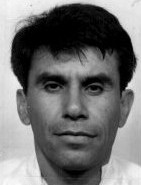
Raymond Deleon Martinez
Spree killer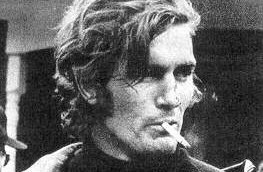 Paul John Knowles
Spree killer · USA · 1974
Paul John Knowles (April 17, 1946 – November 18, 1974) was an American spree ki…
35 victims
Paul John Knowles
Spree killer · USA · 1974
Paul John Knowles (April 17, 1946 – November 18, 1974) was an American spree ki…
35 victims
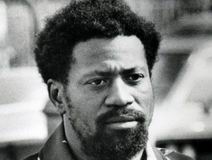 Bobby Joe Maxwell
Spree killer · USA · 1978
Name: Bobby Joe Maxwell Sex: M Race: B Type: T Motive: PC-nonspecific Method of…
11 victims
Bobby Joe Maxwell
Spree killer · USA · 1978
Name: Bobby Joe Maxwell Sex: M Race: B Type: T Motive: PC-nonspecific Method of…
11 victims
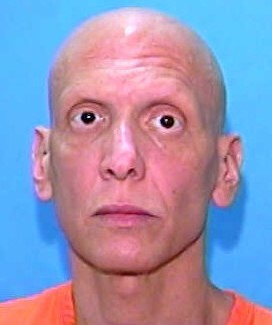 Manuel Pardo
Spree killer · USA · 1986
Manuel Pardo, Jr. was a former police officer who was convicted of nine counts…
9 victims
Manuel Pardo
Spree killer · USA · 1986
Manuel Pardo, Jr. was a former police officer who was convicted of nine counts…
9 victims
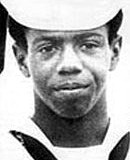 Mark Essex
Spree killer · USA · 1973
Mark James Robert Essex was a Navy veteran who engaged in a shooting and arson…
9 victims
Mark Essex
Spree killer · USA · 1973
Mark James Robert Essex was a Navy veteran who engaged in a shooting and arson…
9 victims
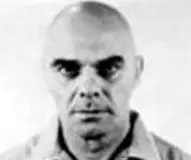 Joe Morgan
Murderer · USA · 1946
Joe Morgan (10 April 1929 – 9 November 1993) was described as “the Godfather” o…
2 victims
Joe Morgan
Murderer · USA · 1946
Joe Morgan (10 April 1929 – 9 November 1993) was described as “the Godfather” o…
2 victims
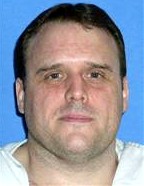 Patrick Bryan Knight
Murderer · USA · 1991
Patrick Bryan Knight (also known as “Dead Man Laughing”). Walter Werner and Mar…
2 victims
Patrick Bryan Knight
Murderer · USA · 1991
Patrick Bryan Knight (also known as “Dead Man Laughing”). Walter Werner and Mar…
2 victims
 Gian Luigi Ferri
Mass murderer · USA · 1993
Gian Luigi Ferri was identified as a 55-year-old businessman and real estate sp…
8 victims
Gian Luigi Ferri
Mass murderer · USA · 1993
Gian Luigi Ferri was identified as a 55-year-old businessman and real estate sp…
8 victims
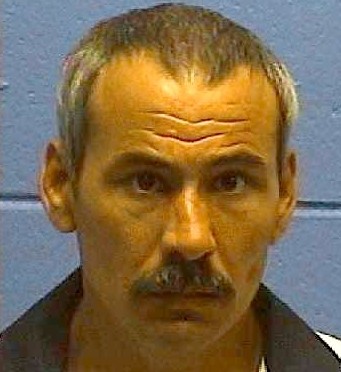 Mark Anthony Pruitt
Murderer · USA · 1986
Mark Anthony Pruitt was sentenced to death on September 18, 1987.
1 victim
Mark Anthony Pruitt
Murderer · USA · 1986
Mark Anthony Pruitt was sentenced to death on September 18, 1987.
1 victim
 Lydia Sherman
Murderer · USA · 1864
Lydia Sherman was also known as “The Derby Poisoner.” She was born in 1824 in B…
10 victims
Lydia Sherman
Murderer · USA · 1864
Lydia Sherman was also known as “The Derby Poisoner.” She was born in 1824 in B…
10 victims
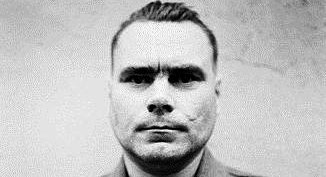 Josef Kramer
Homicide · Germany · 1944
Josef Kramer (November 10, 1906 – December 13, 1945) was the Commandant of the…
Josef Kramer
Homicide · Germany · 1944
Josef Kramer (November 10, 1906 – December 13, 1945) was the Commandant of the…
- Gender
- male
- Country
- USA
- Location
- Harris County, Texas, USA
- Date of birth
- July 2, 1946
- Age at first offence
- 37
- Characteristics
- robbery, arguments
- Victim profile
- Moses Mendez (bar customer) / Herman Chavis (bar owner) / His sister Julia Martinez and her boyfriend Guillermo “Willie” Chavez Martinez / Tracey Pelkey (prostitute)
- Method of murder
- Shooting
- Date(s) of murder
- July 11-15, 1983
- Years active
- 1983
- Date of arrest
- —
- Status
-
Sentenced to death
Resentenced to death on October 12, 1989 after his conviction was reversed following his earlier death sentence on March 15, 1984
Case record: Raymond Deleon Martinez
Status and sentencing history
Raymond Deleon Martinez was convicted and sentenced to death for the 1983 murder of Herman Chavis. His conviction was reversed. In 1989, Martinez was again convicted and sentenced to death. He was sentenced to death on October 12, 1989.
Background
Raymond DeLeon Martinez was convicted of capital murder in Texas state court and sentenced to death. He later filed a petition for a writ of habeas corpus under 28 U.S.C. § 2254 in the United States District Court for the Southern District of Texas, Houston Division. The district court denied the petition and, sua sponte, denied Martinez a certificate of appealability ("COA"). Martinez then filed a Request for the Issuance of a Certificate of Appealability with the United States Court of Appeals for the Fifth Circuit.
Martinez was scheduled for execution Tuesday, March 28, 2006, after a stay of execution issued by the Texas Court of Criminal Appeals.
The offence
Victims and location
The capital murder involved the July 13, 1983 murder of Herman Chavis during the course of a robbery at the Long Branch Saloon in Houston, owned and operated by Herman Chavis and his wife, Pauline Chavis Smith.
Entry and robbery events
On July 13, 1983, Martinez, accompanied by two other men, entered the Long Branch Saloon. The men were described as ordering beers and standing at the bar. Smith recognized the three men from the previous Monday and Tuesday nights, when they came in, purchased beer, took only one sip, and left.
The men ordered three Miller Lite beers and stood at the bar. Soon thereafter, one of the men locked the front door, produced a revolver, and told everyone to "hit the floor." Martinez also brandished a revolver and threatened a patron.
Martinez grabbed the barmaid, shoved the revolver into her ribs, and demanded the money from the cash drawer. Martinez was seen reaching into the drawer, although it was later determined that he took no money.
Fatal shooting and cause of death
After a verbal exchange between Chavis and the men, Martinez pointed his gun at Chavis. Several shots were fired. Chavis later died of a gunshot wound to the back of the head and a gunshot wound through the back that lodged in his right arm.
Witness conversation recorded at the scene
Long Branch owner Herman Chavis asked, “What are you trying to do?” One of the gunmen asked, “Are you the owner?” Chavis responded, “Yes.”
Investigation
No separate investigation narrative beyond the trial evidence summary was provided in the material.
Trial
Indictment, conviction, and sentence
August 24, 1983 — Martinez was indicted for the capital murder of Herman Chavis. March 6, 1984 — Martinez was convicted of capital murder. March 15, 1984 — Martinez was sentenced to death.
After his conviction reversal, the material stated these events:
October 2, 1989 — Martinez’s retrial began. October 6, 1989 — Martinez was convicted of capital murder. October 12, 1989 — Martinez was sentenced to death.
Facts presented to the jury
On this date, the men ordered three Miller Lite beers and stood at the bar. One of the men locked the front door, produced a revolver, and told everyone to "hit the floor." Martinez also brandished a revolver and threatened a patron. A verbal exchange between Chavis and the men ensued, after which Martinez pointed his gun at Chavis. Several shots were fired. Chavis later died of the described gunshot wounds.
Punishment phase: extraneous offences and prior convictions
At the punishment phase of Martinez’s trial, the state presented evidence of extraneous offences, including:
- the July 11, 1983 robbery/murder at the Don Ramon Lounge, during which Moses Mendez was shot to death;
- the July 12, 1983 robbery at Elaine's Lounge;
- the July 15, 1983 murder of Martinez's own sister, Julia, and her boyfriend, Guillermo Chavez;
- the July 21, 1983 murder of prostitute Tracy Pelkey.
The state also presented evidence of Martinez’s numerous prior convictions, including:
- burglary for which he received a two-year prison term in 1964;
- armed robbery and assault for which he received a twenty-year prison term in 1969;
- jail-breaking for which he received a five-year prison term in 1969;
- theft for which he received a five-year prison term in 1969.
Family testimony and gang-related evidence
Jerry DeAnda, Martinez's older brother, testified that:
- Martinez belonged to a gang known as the Texas Syndicate;
- Martinez planned to produce drugs for the gang;
- Martinez stabbed a cell-mate during a former prison term;
- Martinez escaped from jail in 1969;
- Martinez stole DeAnda's gun with the intent to kill someone;
- Martinez committed several violent robberies in the Fort Worth area;
- Martinez robbed and murdered someone in California while stealing chemicals for a crystal methamphetamine laboratory he intended to create for the gang.
Raquel Martinez, Martinez's sister, testified that:
- the Government delayed Martinez's 1982 release from a fourteen-year prison term because he stabbed another inmate;
- Martinez wanted to produce and sell drugs for the Texas Syndicate;
- Martinez twice threatened her with a gun;
- Martinez stole her car;
- Martinez attempted to abduct her;
- Martinez admitted to committing seventeen robberies in the Fort Worth area.
The material also stated that Martinez invited his accomplice’s teenage girlfriend to commit robberies with him and asked her to murder someone for him. Martinez told her that he belonged to the Texas Syndicate, a violent prison gang, and that to become a member one is required to kill someone. Martinez threatened the accomplice's girlfriend by putting a gun to her head.
Martinez told his sister Raquel Martinez and his brother Johnny De Anda that he belonged to the Texas Syndicate and that he wanted to help the organization raise money. Martinez had plans to manufacture methamphetamine and grow marijuana to raise the money. He told them he had stabbed another inmate while he was in jail. He informed Johnny about his escape from prison and that he had killed a man in California after stealing methamphetamine from him. Martinez told Raquel that he had committed seventeen robberies and that he expected to go back to prison but “he had to do something very bad so he could be somebody in prison.”
The material further stated that Martinez threatened his accomplice’s girlfriend by putting a gun to her head, and that he asked her to murder someone for him.
Mental health and related evidence
The material stated that the state presented evidence, through a clinical psychologist, that a hypothetical person who committed the crimes allegedly perpetrated by Martinez would be likely to commit future criminal acts of violence, and that a person found to have deliberately committed these acts would warrant a finding of future dangerousness.
The state also presented evidence that although Martinez had been found not guilty by reason of insanity and committed to Rusk State Hospital in 1967, he was found sane on October 21, 1968 and subsequently released.
Several witnesses described Martinez as easily provoked and hot-tempered.
Defense counsel elicited testimony that:
- Martinez’s mother suffered from mental illness and was hospitalized during their childhood, as testified by Martinez’s older brother, DeAnda;
- Martinez was committed to a state mental institution for a time;
- Kathryn Cox, a former prison minister with the Salvation Army, testified that Martinez’s acts constituted a self-destructive cry for help, and that she found him eager to learn, regretful for his past acts, and amenable to rehabilitation; she also testified that he was suicidal;
- Two Harris County Sheriff’s Deputies, one former and one current, testified they had interacted with Martinez several dozen times without incident.
Defense counsel also elicited testimony that Martinez suffered from malnourishment while at Rusk State Hospital, was brutalized by prison guards while in care of the Texas Youth Commission, and was committed for a period of time to Wichita Falls State Mental Hospital.
Cross-examination elicited adverse information from Martinez’s family members, including that they were not aware that Martinez had been diagnosed with any mental disorders during his commissions to state mental institutions. They testified that Martinez was very intelligent and had no mental health problems.
Martinez’s sister, Raquel Martinez, also testified that Martinez had committed himself to mental institutions for the purpose of receiving free food and shelter.
At punishment, defense counsel offered records from Wichita Falls State Mental Hospital demonstrating that:
- Martinez’s mother was treated at San Antonio State Hospital for mental health issues;
- Martinez was a fearful and weak child who suffered from some form of epilepsy that went medically untreated because his father thought his "spells" were derived from "spirits";
- Martinez began drinking at thirteen years of age;
- Martinez was hostile, violent, lost control and committed acts that he later regretted.
The Wichita Falls State Mental Hospital records confirmed that Martinez’s admissions to the hospital were voluntary and indicated that he left the facility without permission at least twice.
The material also stated that records from the Texas Department of Corrections indicated that Martinez earned a GED while incarcerated.
Verdict and sentencing determination
On the evidence presented, the jury found beyond a reasonable doubt that:
- Martinez’s conduct caused the death of Chavis, and was deliberately committed with the reasonable expectation that Chavis’s death would result;
- there was a probability that Martinez would commit future criminal acts of violence that would constitute a threat to society;
- Martinez’s conduct in killing Chavis was an unreasonable response to any provocation by Chavis.
The court then sentenced Martinez to death.
Procedural history and appeals
Direct appeal and reversal
September 21, 1988 — Martinez’s conviction was reversed on direct appeal. January 11, 1989 — A petition for rehearing was denied. June 16, 1993 — Martinez’s conviction and sentence were affirmed on direct appeal. October 20, 1993 — A petition for rehearing was denied. June 27, 1994 — The U.S. Supreme Court denied certiorari review.
Habeas proceedings
April 24, 1997 — Martinez filed his original application for writ of habeas corpus in the state trial court. July 9, 1999 — The state trial court issued findings of fact and conclusions of law recommending that habeas relief be denied. August 18, 1999 — The Texas Court of Criminal Appeals denied habeas corpus relief. September 22, 1999 — Martinez filed a petition for a writ of habeas corpus in a Houston federal district court. November 27, 2001 — Martinez filed an amended petition for writ of habeas corpus in the federal district court. November 25, 2003 — The federal district court denied habeas corpus relief and denied Martinez’s request for a COA. April 27, 2004 — Martinez filed a motion for a COA in the 5th U.S. Circuit Court of Appeals. December 28, 2004 — The 5th Circuit Court denied COA on Martinez’s claim that he was deprived of effective assistance of trial counsel by his attorney’s alleged failure to conduct an adequate investigation into his mental health background; the court granted COA on other ineffective assistance claims, including failure to assert an insanity defense during the guilt/innocence phase and failure to attempt to mitigate his sentence by introducing evidence of alleged neurological impairment during the punishment phase. March 23, 2005 — The 5th Circuit Court affirmed the District Court. April 15, 2005 — Martinez filed a petition for rehearing. April 25, 2005 — The 5th Circuit Court denied Martinez’s petition for rehearing. July 25, 2005 — Martinez filed a petition for writ of certiorari in the U.S. Supreme Court. October 31, 2005 — The Supreme Court denied certiorari review. March 24, 2005 — The Texas Court of Criminal Appeals issued a stay of execution. March 28, 2006 — Martinez’s scheduled execution date.
Ineffective assistance of counsel claims (habeas issues)
Martinez sought COA on claims that his trial counsel provided ineffective assistance by:
- failing to conduct an adequate investigation into his mental health background;
- failing to introduce evidence of neurological impairment and a prior adjudication of not guilty by reason of insanity as a mitigating factor and failing to assert an insanity defense during the guilt/innocence phase of trial;
- failing to introduce evidence of neurological impairment as a mitigating factor during the punishment phase.
The appellate material stated that COA was denied in part and granted in part, and that habeas relief was ultimately denied. It further stated that as to one claim involving failure to investigate mental health background, Martinez failed to demonstrate reasonable jurists would debate the district court’s resolution, and a COA was denied as to that issue. It stated that as to remaining issues about failure to present an insanity defense and evidence of neurological impairment during guilt/innocence and punishment phases, jurists could debate the district court’s resolution, and COA was granted as to each claim, but habeas relief was still denied because the state habeas court’s determinations were consistent with federal law as established by the Supreme Court.
The appellate material stated that the state habeas court found:
- the jury had before it evidence regarding Martinez’s mother’s mental health as well as Martinez’s own;
- several psychological evaluations determined Martinez did not suffer from any gross psychiatric disorders or otherwise demonstrate psychotic symptoms;
- Martinez’s claims of neurological impairment were legally meritless;
- Martinez’s counsel investigated, developed and presented mitigating evidence at trial.
The material also stated that even if counsel was deficient, the state court found no prejudice due to overwhelming evidence of guilt, prior convictions, and extraneous offences.
Criminal history details introduced at punishment phase
The material included the following extraneous offences and circumstances:
- July 11, 1983 — Martinez and two accomplices robbed Dom Ramon’s Lounge in Houston at gunpoint; during that robbery, Moses Mendez was shot to death.
- July 12, 1983 — Martinez robbed Elaine’s, another Harris County bar; during that robbery, Martinez assaulted Ollie Skogebo, a bar patron.
- July 15, 1983 — Martinez fatally shot his sister Julia Martinez and her boyfriend Guillermo “Willie” Chavez Martinez. Also on July 15, 1983, Martinez shot a prostitute; the woman left their hotel room briefly and took too long to return. After the first shot, the woman fell to the ground and cried out for help, but Martinez fired several more shots, then left her where she fell.
- The material also stated that Martinez asked his accomplice’s teenage girlfriend to commit robberies with him and asked her to murder someone for him, and threatened her with a gun to her head.
- The material further stated that Martinez planned to manufacture methamphetamine and grow marijuana to raise money for the Texas Syndicate and that he stabbed another inmate while in jail.
- The material stated that Martinez informed Johnny about his escape from prison and that he had killed a man in California after stealing methamphetamine from him.
- The material stated that Martinez told Raquel he had committed seventeen robberies and said he had to do something very bad so he could be somebody in prison.
- July 21, 1983 — the state presented evidence of the murder of prostitute Tracy Pelkey.
Outcome
COA was granted in part and denied in part. Habeas relief was denied, and the judgment of the district court was affirmed.
Spotted an error, or have more information about this case?