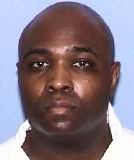
Sylvester Adams
Murderer Ervil LeBaron
Murderer · USA · 1972
Ervil Morrell LeBaron (1925 to August 16, 1981) was the leader of a polygamous…
35 victims
Ervil LeBaron
Murderer · USA · 1972
Ervil Morrell LeBaron (1925 to August 16, 1981) was the leader of a polygamous…
35 victims
 Brian Kevin Rosenfeld
Murderer · USA · 1985
Brian Kevin Rosenfeld Brian Kevin Rosenfeld was sentenced to three concurrent l…
23 victims
Brian Kevin Rosenfeld
Murderer · USA · 1985
Brian Kevin Rosenfeld Brian Kevin Rosenfeld was sentenced to three concurrent l…
23 victims
 Marvin Gray
Murderer · USA · 1975
Marvin Gray was convicted killer who claimed responsibility for 23 slayings and…
23 victims
Marvin Gray
Murderer · USA · 1975
Marvin Gray was convicted killer who claimed responsibility for 23 slayings and…
23 victims
 Yahweh ben Yahweh
Murderer · USA · 1980
Yahweh ben Yahweh was born and legally named Hulon Mitchell Jr. (October 27, 19…
23 victims
Yahweh ben Yahweh
Murderer · USA · 1980
Yahweh ben Yahweh was born and legally named Hulon Mitchell Jr. (October 27, 19…
23 victims
 Mia Gonzales
Homicide · USA · 2007
Mia Gonzales, age 36, was charged in connection with the Oct. 27, 2007 shooting…
1 victim
Mia Gonzales
Homicide · USA · 2007
Mia Gonzales, age 36, was charged in connection with the Oct. 27, 2007 shooting…
1 victim
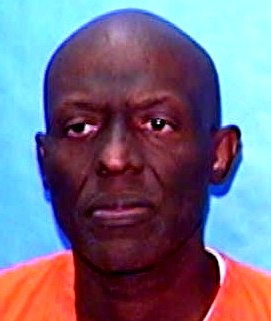 Harry Franklin Phillips
Murderer · USA · 1982
Harry Franklin Phillips Phillips was resentenced to death on 04/20/94, after an…
1 victim
Harry Franklin Phillips
Murderer · USA · 1982
Harry Franklin Phillips Phillips was resentenced to death on 04/20/94, after an…
1 victim
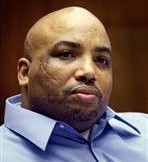 Chester Turner
Serial killer · USA · 1987
Chester Dewayne Turner was born November 5, 1966 in Warren, Arkansas. He became…
13 victims
Chester Turner
Serial killer · USA · 1987
Chester Dewayne Turner was born November 5, 1966 in Warren, Arkansas. He became…
13 victims
 Dwayne Allen Wright
Homicide · USA · 1989
Dwayne Allen Wright was executed by lethal injection on October 14, 1998 in Vir…
3 victims
Dwayne Allen Wright
Homicide · USA · 1989
Dwayne Allen Wright was executed by lethal injection on October 14, 1998 in Vir…
3 victims
 Thozamile Taki
Serial killer · South Africa · 2007
Thozamile Taki (born 1971), also known as the Sugarcane Killer, was a South Afr…
13 victims
Thozamile Taki
Serial killer · South Africa · 2007
Thozamile Taki (born 1971), also known as the Sugarcane Killer, was a South Afr…
13 victims
- Gender
- male
- Country
- USA
- Location
- York County, South Carolina, USA
- Date of birth
- 1956
- Age at first offence
- 23
- Characteristics
- robbery
- Victim profile
- Bryan Chambers, 16 (mildly retarded neighbor)
- Method of murder
- Strangulation
- Date(s) of murder
- October 17, 1979
- Years active
- 1979
- Date of arrest
- Next day
- Status
-
Executed
Executed by lethal injection in South Carolina on August 18, 1995
Sylvester Adams (capital case)
Background
Sylvester Lewis Adams was executed by lethal injection in South Carolina in 1995. He was convicted of kidnapping, housebreaking, and murder and was sentenced to death.
Adams’s case involved claims that the jury was not told that he had mild mental retardation and mental illness. Appeal proceedings and related federal habeas corpus review discussed whether the legal system had considered Adams’s mental condition and whether constitutional errors occurred during the guilt and sentencing phases.
Adams was the first person executed by lethal injection in South Carolina. Under a new law, Adams was the first South Carolina inmate allowed to choose injection instead of the electric chair.
The offence
In 1979, Bryan Chambers, a sixteen-year-old, was taken from his home and strangled to death in a wooded area directly behind the Chambers house.
Adams was convicted of murdering Bryan Chambers after breaking into the Chambers house looking for money. When Adams found none, he dragged Bryan into nearby woods and strangled him.
Abduction and evidence described in the state Supreme Court summary
On October 17, 1979, at approximately 3:00 p.m., Bryan Chambers, with a slight learning disability, was taken from his home and strangled to death in a wooded area directly behind the house.
Shortly thereafter, Bryan’s mother received a phone call. The only words she could make out were “boy ... place ... money....” Bryan’s mother hung up on the caller not knowing at that time that her son was missing.
The evidence introduced at trial relating to the abduction was as follows:
- Forced entry into the house through the rear door with the use of a tire tool (or jack handle).
- A piece of tablecloth was torn from the dining room table and used to hold a sock in the victim's mouth.
- Venetian blind cord, removed from the house, was used to bind his feet once he had been forced into the wooded area behind the house.
- The strangulation was caused by placing a stick in the tablecloth (pulled down around his neck) and tightening it in the fashion of a tourniquet.
- A butcher knife was missing from the victim's home and there was a deep cut above one of his ears consistent with a blow from such a knife.
Bryan’s body was found covered with brush by rescue workers the following day.
Investigation
The phone call received by Bryan’s mother included the only words she could make out: “boy ... place ... money....”
James Jeter was identified as a key state witness. His testimony included the following:
- The defendant rode a bicycle into Jeter’s backyard where he was raking leaves.
- Adams had a tire tool, a gun and a pair of gloves in his possession.
- Adams told Jeter he was going to break into the house next door to steal money.
- After entering the house, Adams attempted to solicit Jeter’s aid in removing a safe he had allegedly found there.
- Jeter refused.
- Adams stated he would await Bryan’s return home from school to get the combination.
- Jeter spoke with Bryan in Bryan’s front yard when he returned home a few minutes later.
- Jeter did not warn Bryan that Adams was inside because he was afraid.
- A short time later, Jeter saw Adams lead Bryan into the woods with something white tied around Bryan’s neck.
- Adams appeared to be resisting Adams.
- A search for Bryan was conducted by Jeter’s father and Bryan’s father (A.C. Mitchell) in the early evening.
- Jeter became concerned and asked Adams where he was.
- Adams told him Bryan was tied up in an abandoned house and he would be released when Bryan’s parents gave him (Adams) some money.
- Adams told Jeter he had attempted a ransom call but Bryan’s mother had hung up on him before he could tell her where to deliver the money.
- Two days after the killing, Jeter told the police for the first time that he knew about the incident.
A.C. Mitchell testified that on the evening of his son’s death, while he and a neighbor were searching for Bryan with the aid of Bryan’s small dog (which had been found trapped inside the washing machine of the boy’s home), Adams had frightened them away from the area where Bryan’s body was later found by appearing with his pit bulldog allegedly to aid in the search.
Arrest
Adams was arrested and charged with the kidnapping and murder of Bryan Chambers, housebreaking, and armed robbery.
The armed robbery count was dismissed.
Trial
Adams was convicted of the other crimes and sentenced him to death.
Jury instructions and reasonable doubt
A portion of the trial judge’s instruction on reasonable doubt was quoted and discussed in later review. The trial judge defined reasonable doubt as follows:
Now I do not mean, ladies and gentlemen, by the term reasonable doubt that it is some whimsical or imaginary doubt. It is not a weak doubt, it is not a slight doubt. It is a substantial doubt, a doubt for which you can give a reason. It is a substantial doubt arising out of the testimony or lack of testimony in the case for which a person honestly seeking to find the truth can give a reason. If you have such a doubt in your mind as to whether or not the State has proven this defendant guilty, you should resolve that doubt in his favor and write a verdict of not guilty and acquit him.
As I think I've indicated to you reasonable--what reasonable doubt means: I would tell you that the two phrases reasonable doubt and proof to a moral certainty are synonymous and the legal equivalent of each other. These phrases connote, however, a degree of proof distinguished from an absolute certainty. The reasonable doubt that the law gives the accused is not a weak or a slight doubt, but a serious or strong and wellfounded doubt as to the truth of the charge.
A later federal habeas opinion discussed that, in Cage v. Louisiana, similar jury instructions had violated the defendant’s due process rights, and it analyzed whether Adams’s conviction required a new trial and whether the rule should apply retroactively.
Mental competency and psychiatric evaluations
The federal appellate review described psychiatric evaluations after Adams was indicted. In December, 1979, and January, 1980, shortly after Adams was indicted, Dr. Herbert D. Smith conducted a psychiatric evaluation of Adams at the State Hospital. Dr. Smith concluded that Adams suffered from mild mental retardation and some paranoid trends but was not mentally ill and was competent to stand trial.
Dr. Harold C. Morgan evaluated Adams at the request of defense counsel and testified that his findings were consistent with the State Hospital’s findings shortly after indictment. Before the second trial, Adams’s counsel began to doubt his competence and asked Dr. Morgan to re-evaluate him. Dr. Morgan visited Adams and requested Dr. Diane Follingstad to test him. Adams would not cooperate.
At the direction of the trial court, Dr. Smith conducted a 20-minute psychiatric interview immediately before jury selection and found Adams competent, without knowing about Adams’s uncooperative behavior prior to the re-evaluation.
Adams argued that his subsequent bizarre behavior showed he lost competency during trial. The magistrate conducted an evidentiary hearing on Adams’s competency throughout the second trial, with both the defendant and the state presenting expert witnesses, as well as trial counsel and the prosecutor. The magistrate found Adams was competent throughout his trial, and the district court concluded that Dr. Smith’s testimony provided a persuasive and wholly adequate basis for finding Adams competent throughout his trial. The South Carolina Supreme Court held that Adams’s claim lacked merit.
Confinement and trial evidence related to abduction
The federal and state review included details about forced entry and bindings described above, plus witness testimony from James Jeter and testimony from A.C. Mitchell.
Voir dire and juror partiality
During voir dire, one prospective juror stated that he would believe a police officer’s testimony before that of a private citizen. The trial judge asked if the juror could determine based on evidence presented in court and the court’s instructions on the law and evaluate witness testimony from what he saw in court. After the juror responded that he could, the judge qualified him over Adams’s objection. Neither Adams nor the prosecution struck the juror in question. Adams had two peremptory strikes remaining when the juror was seated and ultimately used only nine of his ten peremptory strikes.
Closing argument statements and alleged due process issues
During closing argument, the prosecutor stated that Adams’s lawyers were appointed and that they would not tell the jury the police officers beat Adams. Counsel for Adams did not object.
Sentencing
Adams was sentenced to death.
Sentencing instructions on mitigation and life sentence recommendation
The jury could recommend a life sentence for any reason. The trial judge instructed the jurors on recommending life without statutory mitigating circumstances and reminded them that they could recommend life for any reason at all.
During jury deliberations, the jury asked whether Adams’s confession was a mitigating circumstance. The trial judge stated:
“not a statutory mitigating circumstance, but as I have also instructed you, you may consider the case in its entirety....”
The sentencing instruction included the following language quoted later:
[Y]ou may recommend a life sentence without finding the existence of an alleged statutory mitigating circumstance and you, as I have told you before, may recommend the imposition of the life sentence even should you find beyond a reasonable doubt the existence of an alleged statutory aggravating circumstance.
In other words, you may in your good judgment, recommend a life sentence for any reason at all that you see fit to consider.
Aggravating circumstances and the sentencing verdict
Under South Carolina law, the jury could not impose the death penalty unless it found Adams killed Bryan Chambers while in the commission of kidnapping or housebreaking.
At the sentencing phase, the trial judge instructed the jury that it could consider as aggravating circumstance that the murder was committed while in the commission of housebreaking and kidnapping, and the judge instructed that if the jury unanimously found beyond a reasonable doubt that one or more of those alleged statutory aggravating circumstances existed at the time the victim was murdered, it would be authorized to recommend the death sentence.
The verdict at the sentencing phase was:
We, the jury in the above entitled case, having found beyond a reasonable doubt that the following statutory aggravating circumstances existed, house--kidnapping and housebreaking, now recommend to the Court that the Defendant, Sylvester Lewis Adams, be sentenced to death.
The federal review also addressed definitions and the scope of kidnapping as an aggravating circumstance.
Prosecutor argument at sentencing
At the sentencing phase, the prosecutor argued to the jury:
There are four words that I consider important in somebody's life, rapport's one of them. You have to be able to communicate with people ... Coping is another one. You have to be able to cope to function in this world. If you can't cope, you can't function. Love's another one ... And the fourth one, repentance ... Now, again, I'll tell you, you recall the testimony and you recall if any of those four characteristics are held by that man right there. You do that. When you go back to that jury room and you deliberate, you try and decide whether he can handle any of those or whether he owns any of them, or whether he'll ever own any of them.
Adams later argued that this language violated the Eighth Amendment by suggesting his mental disabilities were aggravating rather than mitigating factors. No objection or mistrial motion occurred at trial.
Appeals
Adams pursued habeas corpus and appellate review following his death sentence.
Fourth Circuit and habeas proceedings
Adams appealed the denial of his petition for writ of habeas corpus, and the United States Court of Appeals for the Fourth Circuit affirmed the district court’s judgment. In the course of this federal appeal, the court addressed issues including reasonable doubt instruction, mental competency, alleged ineffective assistance of counsel, alleged Brady violations, admissibility of confession, juror impartiality, closing argument issues, sentencing instructions, aggravating circumstances, and prosecutorial remarks.
In later proceedings, the Supreme Court vacated the Fourth Circuit’s judgment in Adams v. Evatt and remanded for further consideration in light of Sullivan v. Louisiana. The Fourth Circuit then reaffirmed the district court’s denial of the habeas corpus petition. The Fourth Circuit’s reconsideration involved applying principles described in Sullivan and the standard and analysis used in Victor and Sandoval regarding reasonable doubt instructions.
Supreme Court actions described
The U.S. Supreme Court rejected Adams’s final appeal without comment.
The Supreme Court also rejected final appeals and certiorari in later stages as described in the habeas history.
Outcome
Sylvester Adams was executed by lethal injection in South Carolina.
He was executed early Friday morning by lethal injection in South Carolina. The lethal injection execution was in South Carolina on August 18, 1995.
Adams’s last words and statements at execution included:
- “Jesus, your baby is coming home,” which he sang.
- “I love you. I love you, Lord.”
- “I am the happiest man in the world. I'm not afraid to die. I'm not crazy.”
Adams also stated: “I'm not crazy.”
Aftermath
The governor refused to consider commuting the death sentence despite a request from the victim’s mother and opponents of the death penalty.
Adams’s last words were described as including references to being “not crazy” as he was executed.
Adams’s attorneys argued that the jury had never been told Adams was mildly retarded and suffered from a mental illness.
The U.S.
Spotted an error, or have more information about this case?