
Thozamile Taki
Serial killer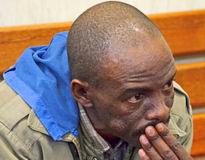 Bulelani Mabhayi
Serial killer · South Africa · 2007
Bulelani Mabhayi was a serial killer who terrorised the rural villagers of Thol…
20 victims
Bulelani Mabhayi
Serial killer · South Africa · 2007
Bulelani Mabhayi was a serial killer who terrorised the rural villagers of Thol…
20 victims
 Velaphi Ndlangamandla
Serial killer · South Africa · 1998
Velaphi Ndlangamandla, known as the “saloon killer”, was convicted in connectio…
19 victims
Velaphi Ndlangamandla
Serial killer · South Africa · 1998
Velaphi Ndlangamandla, known as the “saloon killer”, was convicted in connectio…
19 victims
 Jimmy Maketta
Serial killer · South Africa · 2005
Jimmy Maketta was born in 1964 or 1965. He was a South African rapist and seria…
16 victims
Jimmy Maketta
Serial killer · South Africa · 2005
Jimmy Maketta was born in 1964 or 1965. He was a South African rapist and seria…
16 victims
 Madumetsa Jack Mogale
Serial killer · South Africa · 2008
Madumetsa Jack Mogale (born 1968/9) was a South African serial killer dubbed th…
16 victims
Madumetsa Jack Mogale
Serial killer · South Africa · 2008
Madumetsa Jack Mogale (born 1968/9) was a South African serial killer dubbed th…
16 victims
 Sipho Dube
Serial killer · South Africa · 2001
Sipho Dube was convicted of seven murders and three rapes and was sentenced to…
7 victims
Sipho Dube
Serial killer · South Africa · 2001
Sipho Dube was convicted of seven murders and three rapes and was sentenced to…
7 victims
 William Zuern
Murderer · USA · 1983
William G. Zuern was executed by lethal injection in Ohio on June 8, 2004. He w…
2 victims
William Zuern
Murderer · USA · 1983
William G. Zuern was executed by lethal injection in Ohio on June 8, 2004. He w…
2 victims
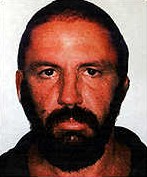 Robert Paul Long
Mass murderer · Australia · 2000
Robert Paul Long was an itinerant fruit-picker who lived in Australia and was d…
15 victims
Robert Paul Long
Mass murderer · Australia · 2000
Robert Paul Long was an itinerant fruit-picker who lived in Australia and was d…
15 victims
 Narcy Novack
Murderer · USA · 2009
Narcy Novack (55 at conviction) · Cristobal Veliz (59 at conviction) Narcy Nova…
2 victims
Narcy Novack
Murderer · USA · 2009
Narcy Novack (55 at conviction) · Cristobal Veliz (59 at conviction) Narcy Nova…
2 victims
 Nikole Flagg
Murderer · USA · 2003
Nikole Flagg (defendant) Myrvinia Lowe (victim; 61-year-old; employee at Cincin…
2 victims
Nikole Flagg
Murderer · USA · 2003
Nikole Flagg (defendant) Myrvinia Lowe (victim; 61-year-old; employee at Cincin…
2 victims
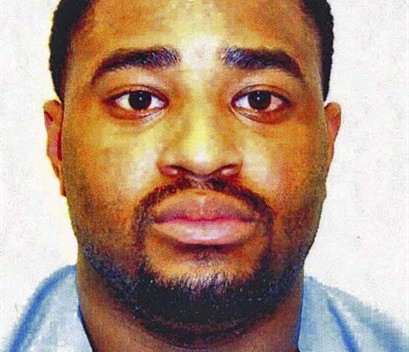 Kevin Green
Murderer · USA · 1998
August 21, 1998 — Kevin Green robbed a convenience store owned by Lawrence T. V…
1 victim
Kevin Green
Murderer · USA · 1998
August 21, 1998 — Kevin Green robbed a convenience store owned by Lawrence T. V…
1 victim
 Leroy Pooler
Murderer · USA · 1995
Leroy Pooler (born 01/27/48) was tried in the Fifteenth Judicial Circuit, Palm…
1 victim
Leroy Pooler
Murderer · USA · 1995
Leroy Pooler (born 01/27/48) was tried in the Fifteenth Judicial Circuit, Palm…
1 victim
- Gender
- male
- Country
- South Africa
- Location
- Kwa Zulu Natal/Eastern Cape, South Africa
- Date of birth
- 1971
- Age at first offence
- 36
- Characteristics
- murder for hire, serial rapist, armed robbery
- Victim profile
- Makhosi Mgobhozi of Efolweni / Noxolo Mpande of Bhizana / Nosisa Nozozo of Libode / Charity Mthethwa of Tongaat / Rose Mjoli of Bhizana / Khanyisile Ncayiyana of Bhizana / Thandeka Mthebeni of Matatiyela / Nonjabulo Mpanza of Efolweni / Philisiwe Mpanza of Efolweni / Nombali Ngcobo of uMzinyathi / Thandazile Bhokoda of Lusikisiki / Siziwe Tshongaye of Lusikisiki / Cherity Khumalo of KwaMashu (w omen aged between 18–25 years)
- Method of murder
- Strangulation
- Date(s) of murder
- 2007
- Years active
- 2007
- Date of arrest
- September 24, 2007
- Status
-
Life imprisonment
Sentenced to 13 life sentences for the murders and an additional 208 years (16 years for each of his victims of armed robbery) on January 19, 2011
Case overview
Thozamile Taki (born 1971), also known as the Sugarcane Killer, was a South African serial killer who killed 13 women aged 18–25. He dumped their bodies in agricultural plantations.
During his trial, Taki was remanded at Westville Prison. On March 2, 2010, now using a wheelchair, he entered court requesting that his girlfriend be given bail. Judge King Ndlovu postponed the trial until April 30, 2010, where the remaining eight of the state's 103 witness were to testify.
The offence
Taki killed 13 women and dumped their bodies in sugar-cane plantations at Umzinto, KwaZulu-Natal, and in tea plantations at Port St Johns in the Eastern Cape.
Judge King Ndlovu said Taki was found guilty on December 23, 2010, on all charges relating to killing 13 women. Ndlovu said Taki lured women by promising them jobs, and that “He is a danger to society, he cannot be rehabilitated. His permanent incarceration will prevent him from committing crimes.”
Ndlovu stated:
“He lured 11 women to Umzinto and two in Port St Johns and killed them by strangulation.”
The judge said the bodies were in a bad state of decomposition and it was difficult to determine the cause of death.
During the trial, the court heard that Taki approached the women and promised them jobs at various companies. He allegedly asked them for money to pay their rent at their new jobs, or asked them to bring money for a bribe to secure employment. The amount he asked for ranged from R300 to R3 000.
Body parts of some victims are alleged to have been provided to a local traditional healer or sangoma.
Investigation
Police conducted a search of Hlengiwe Nene’s home in September 2007. Judge King Ndlovu said: “A cellphone was found. Accused number two claimed it was hers but it was of Charity Khumalo [deceased]. She said she bought it at Jet stores and could not find the papers of the purchase as proof.”
Judge Ndlovu also addressed witness evidence and identity parades. He said all witnesses were credible, unbiased, reliable and honest, adding:
“Accused number one's evidence was unsubstantial, his story was highly improbable.”
Ndlovu said that in both identity parades conducted in Hibberdene and Brighton Beach, all witnesses pointed out Taki without hesitation, and he stated:
“That could not be a coincidence.”
Ndlovu said the issue of cellphone evidence demonstrated that the cellphones of the deceased were used by Taki.
Arrest and custody
Taki and his co-accused, former girlfriend Hlengiwe Nene, have been in custody since 2007.
Trial
Taki was tried alongside co-accused Hlengiwe Nene. Nene was acquitted on all charges.
Judge Ndlovu found Taki guilty on December 23, 2010, on all 26 charges. It was stated that the charges related to killing 13 women.
Taki and his accomplices attempted to escape during his trial period. On 21 February 2010, he, along with eight other prisoners, attempted to escape from Westville Prison. Taki fell from the roof of his fourth floor cell, seriously injuring himself while his accomplices successfully escaped. The trial was adjourned pending his recovery.
On March 2, 2010, now using a wheelchair, Taki entered court requesting that his girlfriend be given bail.
Two trials within a trial
During the trial, there were two trials within a trial. These arose after the defence challenged evidence including:
- a list allegedly compiled by Taki of all the women he had killed
- the defence denial that Taki had taken investigating officers to the scene of the crimes
Ndlovu said in his judgment that Taki testified that investigators had supplied a list of women and asked Taki to rewrite the list on another piece of paper in his handwriting. Ndlovu said:
“Accused number one [Taki] told the court that Inspector Nkabinde was reading the names to him. That was not necessary if the names were in front of him,”
and:
“The misspelling was so glaring of certain names, but he claims the list was in front of him,” said the judge.
Ndlovu said that with respect to the second trial within a trial, he was satisfied with the evidence of a police officer who took Taki to the crime scenes for pointing-out. The judge stated:
“There were lots of officers that were with accused number one. I was satisfied with their evidence and their stories corroborated.
“They all denied assaulting accused number one. None of them were shaken while giving evidence.”
Ndlovu said Taki’s evidence had been evasive and untrue, and that Taki had also contradicted himself.
Threat to a photographer
Meanwhile, Taki threatened to hit a photographer taking pictures of him during proceedings in the Durban High Court. Taki said:
“I will hit this boy if he continues taking pictures of me, he is disturbing me. In Ramsgate he was doing the same thing,”
Judge King Ndlovu told Taki he should not look at the photographer while delivering judgment.
Trial statements and judge’s findings
Judge King Ndlovu said:
“The person who lured the woman, promised them jobs but killed them and dumped their bodies in sugarcane fields, was none other than Thozamile Taki.
“The state has proven their case beyond reasonable doubt on all 26 counts,”
On sentencing, Ndlovu said:
“I watched the accused during the trial, he was callous and insensitive. He smiled when witnesses gave evidence and were in tears,”
and said Taki was a real “jackal in a sheepskin to his victims.”
Sentencing
On January 19, 2011, Judge King Ndlovu sentenced Taki to 13 life sentences—one for each of the women he killed—plus a further 208 years, made up of 16 years for the armed robbery of each woman.
The judge said:
“Danger to society” and “He is a danger to society, he cannot be rehabilitated. His permanent incarceration will prevent him from committing crimes.”
The sentencing brought consolation to family and friends who would never see their loved ones again, and Ndlovu said:
“Taki managed to persuade women in a shrewd way.”
Judge Ndlovu also commended the investigating team’s excellent work and praised the cellphone experts who gave evidence.
The sentence was welcomed with jubilation in the public gallery. Family members of the victims cried, sang and danced. Prosecutor Noxolo Tokwana was praised for her work.
The court also recorded that Taki was refused leave to appeal.
Appeals
Taki was refused leave to appeal.
Outcome
Taki was convicted on December 23, 2010, on all charges, and was sentenced on January 19, 2011 as follows:
- 13 life sentences for the murders
- an additional 208 years, made up of 16 years for the armed robbery of each victim
Co-accused Hlengiwe Nene was acquitted on all charges.
Aftermath and related testimony
Family members commented after the judgment. Thobile Jama, related to Khanyisile Ncayana who was last seen alive in May 2008, said:
“We are happy about the judgment. We could not sleep at night not knowing what happened to her,”
Bongi Mgobozi, whose sister Makhosi was murdered by Taki and was last seen alive in May 2007, said:
“I was relieved that her family now knew what had happened to Makhosi and who killed her.
“It is sad that a woman was involved in the killing of my sister. I felt bad seeing Hlengiwe's [accused number 2] children crying. My sister Makhosi also left a child that is nine years now,”
Mgobozi said:
“I want to see Thozamile die in jail. I don't want to see him out - he is not good for the community. I don't have any grudge against Hlengiwe. She did not spill any blood,”
Judge Ndlovu said Nene was “a victim of circumstance” and explained:
“Accused number two [Nene] found herself in this trouble for not cooperating with police. Had she done so she would not be in this mess,”
Ndlovu said:
“If the accused was not apprehended in 2007 he was going to continue with his killing spree,”
and:
“The judge said the sentencing would bring some consolation to family and friends who would never see their loved ones again.”
Judge Ndlovu also said the pattern resembled a serial killer, stating:
“All deceased were young and had ambitions to get jobs or were already working and wanted to get better jobs.
“When they left their homes they told their families that they had met a man who would get them jobs in factories or companies.”
Ndlovu said the personal items were taken from victims and that:
“This modus operandi proved that it was the same person operating like a serial killer. We are satisfied with the evidence,”
The judge also said:
“IsiXhosa was the trend”
“it seemed a trend that Taki lured IsiXhosa-speaking women even though some of the women were IsiZulu-speaking.”
Other details
Taki and his co-accused were described as having been in custody since 2007.
During the escape attempt, Taki fell through a fourth floor ceiling, was hospitalised, and the trial was adjourned pending his recovery.
The trial included witness evidence, identity parades, and cellphone evidence.
Taki approached the women and promised them jobs; he allegedly sought money for rent or bribes to secure employment, ranging from R300 to R3 000.

Spotted an error, or have more information about this case?