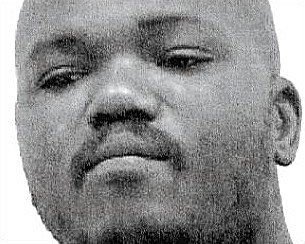
Dwayne Allen Wright
Homicide Jack Kevorkian
Homicide · USA · 1990
Jack Kevorkian (born May 26, 1928) was a controversial American pathologist. He…
130 victims
Jack Kevorkian
Homicide · USA · 1990
Jack Kevorkian (born May 26, 1928) was a controversial American pathologist. He…
130 victims
 David Koresh
Homicide · USA · 1993
David Koresh (born Vernon Wayne Howell; August 17, 1959 – April 19, 1993) led t…
79 victims
David Koresh
Homicide · USA · 1993
David Koresh (born Vernon Wayne Howell; August 17, 1959 – April 19, 1993) led t…
79 victims
 Todd Hall
Homicide · USA · 1996
Todd Hall was described by neighbors as "mentally slow" and was said to have su…
9 victims
Todd Hall
Homicide · USA · 1996
Todd Hall was described by neighbors as "mentally slow" and was said to have su…
9 victims
 Clinton Bankston
Homicide · USA · 1987
15 August 1987 — Ann Morris (63), her sister Sally Nicholson (59), and Sally’s…
5 victims
Clinton Bankston
Homicide · USA · 1987
15 August 1987 — Ann Morris (63), her sister Sally Nicholson (59), and Sally’s…
5 victims
 Joshua Jenkins
Homicide · USA · 1996
Joshua Jenkins was a 15-year-old American killer who killed five members of his…
5 victims
Joshua Jenkins
Homicide · USA · 1996
Joshua Jenkins was a 15-year-old American killer who killed five members of his…
5 victims
 Banita Jacks
Murderer · USA · 2007
Banita Jacks was a Washington, DC resident convicted of murdering her four daug…
4 victims
Banita Jacks
Murderer · USA · 2007
Banita Jacks was a Washington, DC resident convicted of murdering her four daug…
4 victims
 Michael Madison
Serial killer · USA · 2012
Michael Madison (born October 15, 1977) was held in custody as a suspect in at…
3 victims
Michael Madison
Serial killer · USA · 2012
Michael Madison (born October 15, 1977) was held in custody as a suspect in at…
3 victims
 Tim Kretschmer
Mass homicide · Germany · 2009
Tim Kretschmer (26 July 1991 – 11 March 2009) was a 17-year-old graduate of the…
15 victims
Tim Kretschmer
Mass homicide · Germany · 2009
Tim Kretschmer (26 July 1991 – 11 March 2009) was a 17-year-old graduate of the…
15 victims
 Curtis Giovanni Flowers
Mass murderer · USA · 1996
Curtis Giovanni Flowers was an African-American man who was tried six times in…
4 victims
Curtis Giovanni Flowers
Mass murderer · USA · 1996
Curtis Giovanni Flowers was an African-American man who was tried six times in…
4 victims
 Jamie Bruce McCoskey
Murderer · USA · 1991
Jamie Bruce McCoskey was sentenced to death on March 5, 1993 and was later exec…
1 victim
Jamie Bruce McCoskey
Murderer · USA · 1991
Jamie Bruce McCoskey was sentenced to death on March 5, 1993 and was later exec…
1 victim
- Gender
- male
- Country
- USA
- Location
- Maryland/Virginia, USA
- Date of birth
- 1972
- Age at first offence
- 17
- Characteristics
- juvenile, attempted rape
- Victim profile
- ??? / Saba Tekle (female, 33)
- Method of murder
- Shooting ( .38-caliber pistol)
- Date(s) of murder
- October 1989
- Years active
- 1989
- Date of arrest
- October 14, 1989
- Status
-
Executed
Executed by lethal injection on October 14, 1998 in Virginia
Case overview
Dwayne Allen Wright was executed by lethal injection on October 14, 1998 in Virginia. He was 17 when he killed Saba Tekle outside her Annandale apartment.
Status and execution
Wright was executed by injection at the Greensville Correctional Center a few hours after Gov. Jim Gilmore denied his request for clemency. The U.S. Supreme Court rejected a final appeal by a 7-2 vote. Wright was pronounced dead at 9:15 p.m.
In announcing his decision, Gov. Jim Gilmore noted that Wright had fashioned a homemade knife while in prison and hid it in his cell, and had attacked other prisoners. Gilmore said: "There has never been any question at to Wright's guilt." He also said: "He admitted to the murder. The convictions and death sentence have been upheld throughout numerous appeals."
Wright’s execution was in Virginia’s Greensville Correctional Center.
Timeline
- October 13, 1989 — Tekle visited Minia Gabriel at Gabriel's house in Arlington County.
- About 8:30 p.m., October 13, 1989 — Tekle left Gabriel's house, driving Gabriel's burgundy Nissan Maxima automobile.
- About 9:00 p.m., October 13, 1989 — Seble Kasa heard Tekle calling from outside the apartment; Kasa heard two gunshots as she approached the exterior door.
- October 14, 1989 — A Washington, D.C. police officer saw Wright operating a burgundy Nissan Maxima automobile; Wright sped off, was pursued, abandoned the automobile, and was apprehended and arrested; the keys to the Nissan were recovered from Wright's pocket; after being advised of Miranda rights and signing a waiver, Wright told a police officer he observed Tekle operating the Nissan automobile and wanted to steal the car.
- June 17, 1991 — A grand jury returned a five count indictment against Wright.
- November 15, 1990 — The Commonwealth gave formal notice of its intention to seek transfer of charges to Circuit Court and seek the death penalty.
- January 24, 1992 — The trial court entered its sentencing order of death.
- 1993 — The Supreme Court of Virginia affirmed Wright’s convictions and sentence in Wright v. Commonwealth, 245 Va. 177, 427 S.E.2d 379 (1993).
- 1994 — The U.S. Supreme Court vacated Wright’s sentence based on Simmons v. South Carolina; on remand the Virginia Supreme Court reaffirmed the sentence; the Supreme Court denied certiorari.
- March 14, 1996 — The Virginia Supreme Court dismissed Wright’s state habeas petition and denied rehearing.
- March 14, 1997 — Wright filed his petition for federal habeas relief in the district court.
- September 12, 1997 — The district court adopted the magistrate judge's report and recommendation and ordered the petition dismissed.
- June 3, 1998 — The case was argued in the U.S. Court of Appeals, Fourth Circuit.
- July 16, 1998 — The U.S. Court of Appeals, Fourth Circuit decided the case, Wright v. Commonwealth (97-32), dismissing the petition.
- October 14, 1998 — Wright was executed by lethal injection in Virginia.
The offence
Victim and setting
Saba Tekle was age 33. She resided with her mother and two sisters in an apartment located at Annandale, in Fairfax County.
On October 13, Tekle had been visiting with Minia Gabriel at Gabriel's house in Arlington County. Tekle left Gabriel’s house driving Gabriel’s burgundy Nissan Maxima automobile. Tekle planned to return to Gabriel’s house by 9:00 p.m.
Tekle called to her sister and her mother from outside the apartment. At about 9:00 p.m., Seble Kasa was in the apartment and heard Tekle calling. As Kasa walked to the exterior door in response to Tekle’s call, Kasa heard two gunshots, "one right after the other." When Kasa opened the door, she found Tekle lying on the floor at the bottom of a flight of stairs and heard someone running up the stairs.
Gunshot injury and autopsy findings
An autopsy disclosed that Tekle had sustained a single gunshot wound to the right, upper back.
The medical examiner testified that the bullet went in a forward, upward and rightward direction and injured the transverse processes or little bones that protrude from the sides of the backbone of the upper two thoracic backbones. The medical examiner testified that the bullet also hit the right first rib, injured the upper lobe of the right lung, continued through the soft tissue or muscles of the neck, perforated or passed through the right internal jugular vein, and exited the right lower neck.
The medical examiner opined that Tekle's death was caused by a "[p]erforating gunshot wound in the neck."
Tekle also had sustained abrasions to the left forehead and to the right knee.
Clothing and evidence at scene
When Tekle's body was received by the medical examiner, it was clad only in a jacket, dress, brassiere, and some jewelry. Tekle's coat, underpants, shoes, and pocketbook were found on or near the sidewalk outside the apartment building.
The police discovered two impact areas, caused by bullets, in the stairwell outside the apartment. One impact area was in a "header" above the staircase; the other was in the wall 43 inches above the floor on which Tekle's body was found.
There was a large pool of blood on the floor around Tekle's body and a small amount of blood on the two steps nearest the floor. There was a bloody handprint on the apartment door.
The police were unable to locate the Nissan automobile at the crime scene. However, they did find a Buick automobile with its engine running. The left portion of the Buick's steering column had been "ripped off," allowing the automobile to be started without a key.
Latent fingerprints recovered from the Buick later were determined to match Wright's fingerprints.
Wright’s conduct as recited by the Virginia Supreme Court
On October 14, a Washington, D.C. police officer saw Wright operating a burgundy Nissan Maxima automobile. Wright looked at the officer and then "sped off at a high rate of speed, never stopping at [a] stop sign." The officer pursued Wright. Wright abandoned the automobile, and after a brief chase on foot, the officer apprehended and arrested Wright. The keys to the Nissan were recovered from Wright's pocket.
After being advised of his Miranda rights and signing a waiver of those rights, Wright told a police officer that he had observed Tekle operating the Nissan automobile and decided that he wanted to steal the car.
Wright followed Tekle to her apartment building and parked the Buick automobile where the police later found it. After Tekle exited her automobile, Wright approached her at gunpoint and demanded that she give him the keys to the Nissan. Tekle dropped the keys on the ground, and Wright picked them up.
Wright then ordered Tekle to take off her clothes because he wanted to take her into a wooded area behind the apartment building and "have sex." Tekle removed her shoes and her underpants and then ran, screaming, toward the apartment building.
Wright chased her into the building and fired two shots at her. He knew that one of the shots hit Tekle. Wright then left the area in the Nissan and disposed of the weapon.
Additional murders mentioned
The executive clemency proceedings and later summaries stated that Wright had killed two other people earlier in the week. The U.S. Court of Appeals record also described his conduct as involving killing three people over four days in 1989 and stated that he shot to death three people in two states and the District of Columbia.
Charges and convictions
Indictment and counts
Wright was found guilty by a Virginia jury of five counts:
- Murder of Saba Tekle during the commission of a robbery
- Robbery
- Use of a firearm during a robbery
- Murder subsequent to attempted rape
- Attempted rape
Juvenile transfer and indictments
Because Wright was only seventeen years old at the time of his crimes, criminal proceedings were initiated by petitions filed in juvenile court. The first petition alleged that he murdered Tekle and the second petition alleged that he used a firearm in the commission of that murder. The juvenile court amended the first petition to charge Wright with capital murder because the murder occurred while in the commission of or in the attempt to commit robbery. Fairfax County authorities later obtained a third petition against Wright in juvenile court charging him with robbery.
On November 15, 1990, the Commonwealth gave formal notice of its intention to seek transfer of these charges to Circuit Court and its intention to seek the death penalty.
The juvenile court granted Wright's motion for a sanity and competency evaluation and held a probable cause hearing, finding probable cause as to each of the three charges. The juvenile court then granted the Commonwealth’s motion to transfer and advised the Commonwealth it could seek indictment.
On June 17, 1991, a grand jury returned a five count indictment against Wright, including the five counts listed above.
Jury recommendation and trial court sentence
A Fairfax County jury found Wright guilty on all counts and recommended that Wright be sentenced to death based upon his future dangerousness. The trial court adopted the jury’s recommendation and imposed the death sentence on Wright.
On January 24, 1992, the trial court entered its sentencing order of death.
Investigation and arrest
A Washington, D.C. police officer saw Wright operating a burgundy Nissan Maxima on October 14 and saw him speed off at a high rate of speed without stopping at [a] stop sign. The officer pursued Wright, Wright abandoned the automobile, and after a brief chase on foot, the officer apprehended and arrested Wright.
After Wright was advised of Miranda rights and signed a waiver, he told a police officer that he had observed Tekle operating the Nissan automobile and decided that he wanted to steal the car.
Trial
Verdict
Wright was found guilty by a Virginia jury of murder during the commission of a robbery; robbery; use of a firearm during a robbery; murder subsequent to attempted rape; and attempted rape. The jury recommended the death penalty based upon future dangerousness.
Juror intimidation allegation
Wright later contended that the victim's family intimidated a juror during the trial, tainting the jury and denying him a fair and impartial jury. On state habeas review, the Supreme Court of Virginia held that Wright could have raised this issue on direct appeal but did not, and therefore it was procedurally defaulted under Slayton v. Parrigan.
In the federal appeal record, it was noted that the trial court questioned Ms. Simpkins individually and then the entire jury panel about the alleged communication, dismissed Ms. Simpkins from the panel, but denied Wright’s motion for a mistrial. The trial court found that there was no communication between the victim's family and any juror, including Ms. Simpkins, and found that nothing done inside or outside the courtroom influenced any juror who decided the case.
Sentencing
The jury recommended the death penalty based upon Wright’s future dangerousness. The trial court entered its sentencing order of death on January 24, 1992.
Appeals
Direct appeal to Virginia Supreme Court
The Supreme Court of Virginia affirmed Wright’s convictions and sentence in Wright v. Commonwealth, 245 Va. 177, 427 S.E.2d 379 (1993).
U.S. Supreme Court vacatur and remand
The U.S. South Carolina*. The case was Wright v. Virginia, 512 U.S. 1217, 114 S.Ct. 2701, 129 L.Ed.2d 830 (1994). After remand, the Virginia Supreme Court reaffirmed the sentence, concluding that Wright "was not ineligible for parole," see Wright v. Commonwealth, 248 Va. 485, 450 S.E.2d 361, 363 (1994). The U.S. Supreme Court denied certiorari, see Wright v. Virginia, 514 U.S. 1085, 115 S.Ct. 1800, 131 L.Ed.2d 726 (1995).
State habeas
On March 14, 1996, the Virginia Supreme Court dismissed Wright’s state habeas petition and denied rehearing.
Federal habeas
Wright filed a federal habeas petition in the district court on March 14, 1997. On September 12, 1997, the district court adopted the magistrate judge's report and recommendation and ordered the petition dismissed. Wright later petitioned the U.S. Court of Appeals, Fourth Circuit, which dismissed his petition.
In the Fourth Circuit, Wright’s claims included:
- The Virginia circuit court lacked jurisdiction over counts four and five of the indictment (murder subsequent to attempted rape and attempted rape)
- Equal protection of the law when the Virginia Supreme Court affirmed his convictions on counts four and five in violation of Virginia state law
- Denial of a fair and impartial jury due to intimidation of a juror by the victim's family
- Ineffective assistance of counsel He also contended that the district court abused its discretion by denying funds to hire a neurologist under 28 U.S.C.A. § 848(q)(9).
The Fourth Circuit dismissed the petition and denied a Certificate of Appealability.
Outcome
The U.S. Court of Appeals, Fourth Circuit dismissed Wright’s petition by published opinion. The Fourth Circuit held that Wright failed to make "a substantial showing of the denial of a constitutional right." It denied his motion for a Certificate of Appealability and dismissed his petition.
Wright was then executed by lethal injection on October 14, 1998 in Virginia.
Clemency and public reactions
Clemency denial and final appeal
Wright’s execution followed a denial of clemency by Gov. Jim Gilmore. The U.S.
Mental health dispute presented to clemency and courts
Defense attorneys argued that Wright suffered brain damage as a child and is borderline retarded. Two jurors released notarized affidavits stating they did not know Wright was brain damaged and that they would not have sentenced him to death had they known.
Gov. Jim Gilmore said that three mental health experts who examined Wright after his arrest determined that he "did not suffer from mental retardation or significant brain damage."
Advocacy and protests
Amnesty International, the American Civil Liberties Union, the American Bar Association, Harvard law professor Charles J. Ogletree Jr., the Rev. Jesse Jackson, and Sen. Edward M. Kennedy, D-Mass., protested the execution.
The material also referred to Bernard Cardinal Law of Boston, Oliver Hill, the civil rights leader, the Virginia Alliance for the Mentally Ill, the Children’s Defense Fund, Virginians for Alternatives to the Death Penalty, and other groups opposed to capital punishment.
It stated that Wright’s lawyers included Charles J. Ogletree Jr. and Robert E. Lee, of the Virginia Capital Resource Center in Richmond.
David B. Botkins, spokesman for Virginia Attorney General Mark L. Earley, said: "What gets lost in all the last-minute public relations ploys by death penalty opponents and the defense is the toll and trauma it takes on the victims and their families,"
Other details
Age and characterization as a juvenile offender
Wright was 17 at the time of the killing of Saba Tekle and was characterized as a juvenile offender facing execution.
The account stated that the last juvenile offender executed in Virginia was Fritz Lewis in 1924, who died in the electric chair for a murder in Caroline County.
The execution was described as the 12th in the United States of juvenile offenders since the Supreme Court reinstated the death penalty in 1976, with 7 of those in Texas.
It also stated that Wright became the 1st Virginian in 74 years to be put to death for a crime committed as a juvenile.
In-prison conduct noted at clemency
Gov. Jim Gilmore noted that Wright fashioned a homemade knife while in prison, hid it in his cell, and attacked other prisoners.
Time of death and pronouncement
Execution logistics described
He chose injection instead of the electric chair. Corrections Director Ronald J. Angelone stood on one side of the room with his ear to a red phone connected to Gov. James S. Gilmore III’s office in case of a last-minute reprieve. Wright was surrounded by 8 guards, and prison officials and witnesses observed from separate rooms with a curtain blocking view for several minutes.
Wright made a final statement in response to being asked if he had a final statement, saying, "My attorney has my statement." It was stated that his lawyer later said the message was private and intended for Wright’s family.
Family visit shortly before execution
Earlier Wednesday, Wright visited with his mother and 2 brothers. On the final day, he met with his mother, 2 brothers and an aunt.
Massachusetts protest figure
The account referenced Sen. Edward M. Kennedy, D-Mass., among those who protested the execution.
Additional background and mental health assertions included in clemency material and advocacy
The materials described Wright’s troubled childhood and mental health issues, including being committed to a mental hospital at age 13, being born with organic brain damage, and his mother suffering from mental illnesses. It also referenced that his father was incarcerated and that he developed serious emotional problems and did poorly at school.
The background account said doctors found signs of organic brain damage, and evaluated Wright’s mental capacity as borderline retarded and his verbal ability as retarded.
The advocacy material also claimed Wright was treated for "major depression with psychotic episodes," and that he experienced periods in hospital and juvenile detention facilities between ages 12 and 17.
Police officer knowledge
The account stated that on October 14, a Washington, D.C. police officer who had known Wright for a number of years saw Wright operating the automobile and that the officer pursued him.
Related procedural citations in federal appeal
In the Fourth Circuit decision, the court referenced Green v. French, Slayton v. Parrigan, Strickland v. Washington, and other federal habeas standards. The decision also addressed the Antiterrorism and Effective Death Penalty Act of 1996 and sections including 28 U.S.C.A. § 2254(d), 28 U.S.C.A. § 2253(c)(1)(B)(2), and 28 U.S.C.A. § 848(q)(9).
Dismissal outcome
The Fourth Circuit decision stated that the petition was dismissed by published opinion, and it denied Wright’s motion for a Certificate of Appealability and dismissed the petition.
Spotted an error, or have more information about this case?