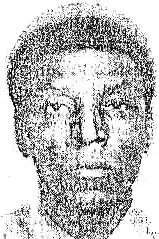
James Adams
Murderer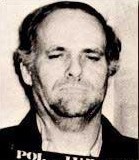 Ervil LeBaron
Murderer · USA · 1972
Ervil Morrell LeBaron (1925 to August 16, 1981) was the leader of a polygamous…
35 victims
Ervil LeBaron
Murderer · USA · 1972
Ervil Morrell LeBaron (1925 to August 16, 1981) was the leader of a polygamous…
35 victims
 Marvin Gray
Murderer · USA · 1975
Marvin Gray was convicted killer who claimed responsibility for 23 slayings and…
23 victims
Marvin Gray
Murderer · USA · 1975
Marvin Gray was convicted killer who claimed responsibility for 23 slayings and…
23 victims
 Yahweh ben Yahweh
Murderer · USA · 1980
Yahweh ben Yahweh was born and legally named Hulon Mitchell Jr. (October 27, 19…
23 victims
Yahweh ben Yahweh
Murderer · USA · 1980
Yahweh ben Yahweh was born and legally named Hulon Mitchell Jr. (October 27, 19…
23 victims
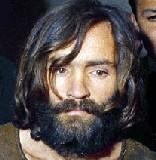 Charles Manson
Murderer · USA · 1969
Charles Milles Manson (born November 12, 1934) was an American criminal and mus…
9 victims
Charles Manson
Murderer · USA · 1969
Charles Milles Manson (born November 12, 1934) was an American criminal and mus…
9 victims
 Scott Eby
Murderer · USA · 2004
Scott Eby — defendant · Riley Fox — victim; three-year-old girl · Kevin Fox — R…
1 victim
Scott Eby
Murderer · USA · 2004
Scott Eby — defendant · Riley Fox — victim; three-year-old girl · Kevin Fox — R…
1 victim
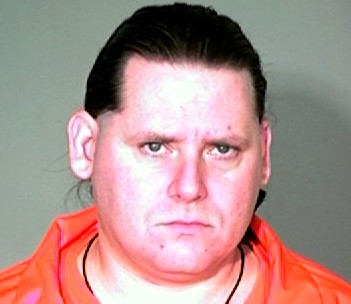 Darrel Pandeli
Murderer · USA · 1992
Darrel Pandeli was convicted of murder and sentenced to death, and his case ret…
2 victims
Darrel Pandeli
Murderer · USA · 1992
Darrel Pandeli was convicted of murder and sentenced to death, and his case ret…
2 victims
 Harold McQueen
Murderer · USA · 1981
Harold McQueen, Jr. was executed by electrocution in Kentucky on July 1, 1997.…
1 victim
Harold McQueen
Murderer · USA · 1981
Harold McQueen, Jr. was executed by electrocution in Kentucky on July 1, 1997.…
1 victim
 Robert Austin Sullivan
Murderer · USA · 1973
April 8, 1973 — Robert Austin Sullivan and Reid McLaughlin robbed a Howard John…
1 victim
Robert Austin Sullivan
Murderer · USA · 1973
April 8, 1973 — Robert Austin Sullivan and Reid McLaughlin robbed a Howard John…
1 victim
 Margaret Allen
Murderer · United Kingdom · 1948
Margaret Allen was a cross-dressing lesbian who preferred to be called "Bill" a…
1 victim
Margaret Allen
Murderer · United Kingdom · 1948
Margaret Allen was a cross-dressing lesbian who preferred to be called "Bill" a…
1 victim
- Gender
- male
- Country
- USA
- Location
- St. Lucie County, Florida, USA
- Date of birth
- May 30, 1936
- Age at first offence
- 37
- Characteristics
- robbery, rape
- Victim profile
- Millonaire rancher Edgar Brown
- Method of murder
- Beating with a fireplace poker
- Date(s) of murder
- November 12, 1973
- Years active
- 1973
- Date of arrest
- —
- Status
-
Executed
Executed by electrocution in Florida on May 10, 1984
Background
James Adams was executed by electrocution in Florida on May 10, 1984. He was 47 years old. His date of birth was May 30, 1936. Adams had escaped from a prison in Tennessee where he was serving a 99-year sentence for rape.
Adams was described as mentally ill and/or mentally retarded in the family of impoverished sharecroppers; he was the 12th of 14 children.
The offence
Edgar Brown, a white man, was beaten to death with a fireplace poker during an alleged robbery in his home. Edgar Brown died in the hospital the next day as a result of the beating.
The beating happened on November 12, 1973, at approximately 10:30 a.m., in Ft. Pierce, Florida. Brown was beaten in the course of an alleged robbery. Adams entered Brown’s home to rob him and when Brown returned, he bludgeoned him to death with a fire poker.
Investigation
Adams’ Rambler was seen leaving the scene.
Items from Brown’s house were found in a car belonging to Adams’ wife.
Forensic testimony included hair found in the victim’s hand. Hairs found in the victim’s hand were not from Adams. This evidence was released three days after Adams was sentenced and then suppressed by the state. A small bloodstain on one of the dollar bills in Adams’s possession was consistent with the victim’s blood type, but also with 45 percent of people living in the United States.
Arrest
Adams was arrested, tried, and convicted of his murder.
Trial
The trial took place in St. Lucie County.
The trial judge was Wallace Sample.
The trial attorneys were N. Richard Schopp, Port. St. Lucie, FL and Bruce Wilkinson, Stuart, FL.
The prosecutors were R. N. Koblegard and Raymond E. Ford.
Adams was tried by jury.
Verdict
The jury voted 7-5 for death penalty.
The jury convicted Adams of capital murder on circumstantial evidence and on evidence that was contradictory.
The confession was noted as “No,” and Adams always claimed innocence.
Evidence and witnesses
Eyewitness testimony existed: Foy Hortman spoke with a person leaving the house where the murder committed, viewed a lineup, and stated “not Adams”.
At trial, the one eyewitness who saw and spoke to a person leaving the house where the murder was committed originally said that he was certain Adams was not the person. At trial, this eyewitness testified that Adams “may or may not” have been the person to whom he spoke.
Vivian Nickerson borrowed Adams’s car shortly before the murder. Nickerson had a masculine appearance and fit many of the characteristics described by the eyewitness, but she was never included in any photo array or lineup.
According to Vivian Nickerson’s original sworn statement, Adams was at her house at the time of the murder while she used his car. At trial, she testified to a different time-frame, alleging that Adams arrived after the time of the murder. The defense failed to impeach her testimony by raising the inconsistency between her two statements.
One witness reported that he thought Adams was driving the car towards the victim’s house shortly before the robbery and assault.
A second witness positively identified Adams as the driver of the car seen leaving the victim’s home. This witness reportedly stated that he would testify against Adams because he believed that Adams was having an affair with his wife, for which he had threatened revenge.
The principal exculpatory evidence included an alibi: playing cards at a friend’s house; and the hair in the victim’s hand not being his.
Defendant’s testimony and alibi
Adams testified and maintained innocence. He said he was at the house of a friend, Vivian Nickerson, from 10:00 a.m. until 3:00 p.m. on the day of the murder. Nickerson initially confirmed Adams’s alibi and stated that she had borrowed Adams’s car before 10:30 a.m. At trial, she changed her testimony to say that Adams did not arrive at her house before 11:00 a.m. Adams’s attorney did not question the inconsistency of her statements.
Sentencing
The jury served as the sentencing authority, and the judge had override.
Adams was convicted of capital murder. At sentencing, the vote for death was 7 to 5.
The statutory aggravating factor was previous (unconstitutional) conviction for rape of a white woman in TN in 1962.
The non-statutory aggravating factor was race.
Mitigating factors included that Adams was 12th of 14 children in family of impoverished sharecroppers and that no witnesses were called by the defense in penalty phase.
Mental Retardation or Neurological Damage was listed as “No”.
Criminal history included a previous conviction for rape of white woman in TN, and a conviction for stealing a pig in 1976, with no counsel.
Appeals
Florida Supreme Court
In 1976, the Florida Supreme Court affirmed conviction and death sentence. Certiorari was denied on October 3, 1977.
In 1978, the Florida Supreme Court denied relief on info not known to defense. He also received a stay of execution by the Florida Supreme Court in April 1978.
U.S. Supreme Court and further proceedings
The U.S. Supreme Court refused to intervene, and to reconsider decision, noted as “2977;” and later continued his stay so he could file his writ of certiorari, which was denied October 30, 1978. A clemency hearing occurred on November 5, 1979.
A first death warrant was signed on January 9, 1980. The Florida Supreme Court denied a stay, but he obtained one from the Southern District Court in February of 1980. His writ was denied in an unpublished opinion, and in July of 1983 the Eleventh Circuit Court of Appeals affirmed the denial.
On January 11, 1984, the U.S. Supreme Court denied certiorari.
A second death warrant was signed on April 12, 1984.
All relief was then denied in the courts, and on May 9, 1984, the U.S. Supreme Court vacated his stay. He was executed the next day.
Racial disparities stay and vacatur
A stay on racial Disparities was granted by the 11th Circuit on May 8, 1984 and was vacated by the U.S. Supreme Court. The U.S. Supreme Court vacatur noted dissents by Blackmun, Brennan, Marshall, & Stevens.
Clemency
Other details
Jury composition
The jury was all male and white.
Accomplice and jailhouse snitch
There was no accomplice testimony. There was no jailhouse snitch.
Police/prosecutorial issues and ineffective assistance
Ineffective Assistance was listed as “Yes”. Police Misconduct was listed as “Unknown”. Prosecutorial Misconduct included suppression of forensics on hair in hand of victim until 3 days after sentencing.
Appellate counsel
Appellate counsel was Richard Burr and Craig Barnard.
Trial language and conferences
During the trial, both the prosecution and the defense referred to Adams as “nigger”.
Prior to closing arguments, a private conference was held at which both the trial judge and prosecutor agreed that there was “no pre-meditation,” which should have exempted Adams from a death sentence.
Additional allegations and issues raised in proceedings
The appeals record included allegations that the state withheld evidence, and that the state and federal governments failed to ensure Adams's right to a fair and impartial trial. It also alleged undisputed evidence of racial discrimination and compelling evidence of innocence.
Name/DOC # and location
The name listed was James Adams. The address listed was Florida State Prison/deceased.
Crime timeline elements
The morning of November 12, 1973 at approximately 10:30 a.m. included Edgar Brown being beaten with a fire poker in the course of an alleged robbery in his home.

Spotted an error, or have more information about this case?