Leonard Coey
Murderer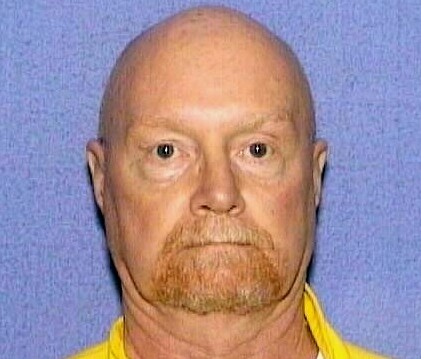 Gary Duane Rardon
Murderer · USA · 1962
Gary Duane Rardon killed a man in 1962 and later served 4 years for manslaughte…
4 victims
Gary Duane Rardon
Murderer · USA · 1962
Gary Duane Rardon killed a man in 1962 and later served 4 years for manslaughte…
4 victims
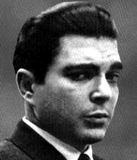 Charles Howard Schmid
Murderer · USA · 1964
Charles Howard Schmid was born on 8 July 1942 and was adopted by Charles and Ka…
3 victims
Charles Howard Schmid
Murderer · USA · 1964
Charles Howard Schmid was born on 8 July 1942 and was adopted by Charles and Ka…
3 victims
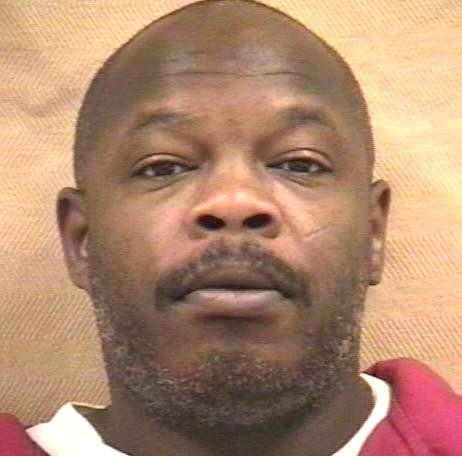 Glen Edward Chapman
Murderer? · USA · 1992
Defendant: Glen Edward Chapman Legal case references: In the Supreme Court of N…
2 victims
Glen Edward Chapman
Murderer? · USA · 1992
Defendant: Glen Edward Chapman Legal case references: In the Supreme Court of N…
2 victims
 Benjamin Ng
Mass murderer · USA · 1983
Benjamin Ng participated in the killings at the Wah Mee gambling club in Seattl…
3 victims
Benjamin Ng
Mass murderer · USA · 1983
Benjamin Ng participated in the killings at the Wah Mee gambling club in Seattl…
3 victims
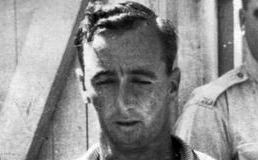 Raymond Bailey
Murderer · Australia · 1957
Raymond Bailey was convicted of the murder of Sally (Thyra) Bowman (43), her da…
3 victims
Raymond Bailey
Murderer · Australia · 1957
Raymond Bailey was convicted of the murder of Sally (Thyra) Bowman (43), her da…
3 victims
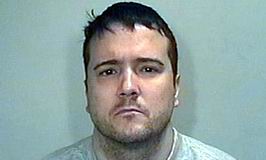 Stephen Shaun Griffiths
Serial killer · United Kingdom · 2009
Stephen Shaun Griffiths was convicted after pleading guilty to killing three wo…
3 victims
Stephen Shaun Griffiths
Serial killer · United Kingdom · 2009
Stephen Shaun Griffiths was convicted after pleading guilty to killing three wo…
3 victims
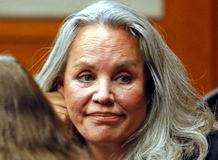 Pamela Phillips
Murderer · USA · 1996
Pamela Phillips was tried in Tucson, Arizona, for the 1996 car-bomb murder of h…
1 victim
Pamela Phillips
Murderer · USA · 1996
Pamela Phillips was tried in Tucson, Arizona, for the 1996 car-bomb murder of h…
1 victim
- Gender
- male
- Country
- USA
- Location
- Maricopa County, Arizona, USA
- Date of birth
- J uly 7, 1898
- Age at first offence
- 57
- Characteristics
- parricide, abuser
- Victim profile
- H is wife, Elnora Coey
- Method of murder
- Shooting
- Date(s) of murder
- January 27, 1955
- Years active
- 1955
- Date of arrest
- Same day (surrenders)
- Status
-
Executed
Executed by asphyxiation-gas in Arizona on May 22, 1957
Case record: Leonard Coey
Timeline
- January 27, 1955 — Leonard Coey mortally wounded his wife, Elnora Coey, in a small shed at the rear of their home.
- January 27, 1955 — Leonard Coey drove to the Maricopa County Sheriff’s office, announced he had a dead woman in the car, pulled her body to the ground, and stated, "there is the son-of-a-bitch. She tried once too often to kill me and my kids".
- January 27, 1955 — Leonard Coey deposited the body of his dead wife, Elnora Coey, at about 2:30 P.M. at the back of the Sheriff’s office, Maricopa County Courthouse, Phoenix, Arizona, dragging her out of the car as she fell to the pavement and muttering "some filthy words respecting her".
- February 39, 1955 — An information was filed in the Superior Court of Maricopa County, Arizona charging Leonard Coey with the crime of MURDER (FIRST DEGREE), a felony.
- February 3, 1955 — Leonard Coey was arraigned and entered a plea of not guilty to Murder (First Degree), a felony, and trial was set for March16, 1955.
- March 16, 1955 to March 24, 1955 — Trial was held.
- March 24, 1955 — Leonard Coey was found guilty by a jury of Murder (First Degree), a felony, with the punishment at death.
- April 12, 1955 — Wm. P. Mahoney Jr., County Attorney, Arizona Supreme Court, submitted a submission dated this day.
- March 19, 1957 — La Prade, Justice issued the opinion: State of Arizona, Appellee v. Leonard Coey, Appellant.
Background
Leonard Coey was convicted of the crime of murder in the first degree and sentenced to be executed. From the judgment and sentence he perfected an appeal.
The deceased victim was the wife of Leonard Coey. She was approximately half his size and about half his age. She was employed, and he was not.
Elnora Coey had filed for divorce against Leonard Coey. The court issued "the usual 'restraining order and order to show cause'" directing, among other things, that he leave the family abode forthwith. Defendant’s first knowledge of this was on the morning of January 27, 1955, when a process server appeared at the home and made service upon him.
Leonard Coey testified that he had made preparation to leave but was reluctant to do so because he felt he should remain with his children to protect them from his wife. During the trial, it developed that Leonard Coey had abused his wife and children for a period of fifteen years, both physically and mentally, and that he had threatened to kill his wife.
During the trial, it also developed that Elnora Coey had been working for a period of four to five years and that Leonard Coey had been staying at the house, presumably taking care of the children.
Leonard Coey testified that his wife had threatened to kill him on various occasions which was contrary to the evidence introduced at the trial except by the defendant. During the trial, psychiatrists provided medical testimony on insanity, with testimony that the defendant was legally insane and that he was not legally insane. The court noted that there were elements of paranoia, which was described as "a sort of persecution complex."
Leonard Coey stated that his true name was Leonard Coey. He stated that he was 57 years of age, that he was an American citizen, and that he had lived in Arizona and in Maricopa County for more than eleven years. He stated that he had made his living as a carpenter and that he had four children. Wm. P. Mahoney Jr., County Attorney, submitted a submission dated the 12th day of April, 1955.
The offence
On or about January 27, 1955, Leonard Coey deposited the body of his dead wife, Elnora Coey, at about 2:30 P.M. at the back of the Sheriff’s office, Maricopa County Courthouse, Phoenix, Arizona. Leonard Coey deposited her body by dragging her out of the car; as she fell from the car to the pavement, he muttered "some filthy words respecting her".
Leonard Coey entered a small shed at the rear of their home with his wife. While there, Leonard Coey mortally wounded his wife with a .45 caliber revolver which he had obtained for the claimed purpose of protecting his children from anticipated assaults by his wife.
After killing Elnora Coey, Leonard Coey loaded her body in his automobile and drove to the Maricopa County Sheriff's office. He announced that he had a dead woman in the car. While at the office, he pulled her body out of the automobile to the ground and stated: "there is the son-of-a-bitch.
Leonard Coey testified that while he and his wife were in the shed she attacked him with a hammer, and he then shot her. He maintained this theory of self-defense throughout the trial, although the opinion stated it was by no means supported by the evidence. His attorneys presented the defense at his insistence, and his attorneys urged, over his violent objections, the defense of insanity.
The opinion stated that the defendant brutally, wantonly and cold-bloodedly murdered his wife, Elora Coey.
Investigation
Leonard Coey freely gave a statement setting forth the events. A deputy sheriff later questioned Leonard Coey regarding where Johnny was at the time he shot his wife.
The county attorney’s opening statement to the jury included: "The evidence will show that Johnny [5-year-old son of deceased] was dispatched to procure a soft drink so that this incident [killing] could occur in privacy."
The deputy sheriff testified regarding a conversation with Leonard Coey after the killing. The deputy sheriff testified:
"A. We questioned him [defendant] as to where Johnny was at the time he shot his wife and he told me that Johnny had asked him for a quarter and he had gone to the store for some Coca-Cola and later we talked to him and -- " "Q. Go ahead. A. We went back and talked to him the next day. In fact, we asked him if there was anyone we could question regarding it that would be of help to him, if he had any friends or any witnesses we could talk to that would be his witnesses and he told us no, and then I told him we had been down to talk to little Johnny, his boy, and that his little boy had definitely -- or was definite that he didn't ask his daddy for a quarter -- " "A. I told him we had talked to the little boy and the little boy was positive that he didn't ask his father for the money but that his father gave him the quarter and told him to go to the store and get the Coca-Cola. " "Q. What was his response to that? A. His response was he didn't care what the boy said."
Leonard Coey testified during trial about the Coca-Cola matter. He testified:
"Q. Where was Johnny at this time? A. Early that morning Johnny came to the bed and asked me for money for pop. As is usual, I give me a dime and he goes and gets pop. At this time I was laying in an unfriendly position to get into my pockets and I didn't want to be disturbed so I said, 'Johnny, when I get up I will give you money for pop.' As I often do, if I am laying down, he comes and I often wait until I get up, then I give him the money. So I told him at that time, 'When I get up I will give you money for pop.' When I went out I was getting the car ready to take off, walking around, trying to think of how I could help us." "Q. I want to know where Johnny was when this occurrence took place. A. Sometime prior to this I was getting ready to take off and then John wasn't at hand and she was worrying about John, she wanted to know where John was. John and her prior to that had gone into the basement together and after that I didn't see John. Then she started asking about John so I went out to find John and at the same time I don't know if I had blankets with me then, I don't know, but at the same time I was trying to get the car ready to go and yet trying not to go, and I went out and John was near the car. So instead of giving John his usual dime, I guess all I had in my pocket in the way of change was a quarter and I didn't know but that would be the last bottle of pop I would buy for John so I gave John the quarter and he took off to the store for his pop."
Arrest
The record included that a process server appeared at the home and made service upon Leonard Coey on the morning of January 27, 1955. The record did not otherwise specify an arrest event.
Trial
Leonard Coey was charged with Murder (First Degree), a felony.
At arraignment, he entered a plea of not guilty to Murder (First Degree), a felony.
Trial was held from March 16, 1955 to March 24, 1955. On March 24, 1955, a jury found Leonard Coey guilty of Murder (First Degree), a felony, with the punishment at death.
Leonard Coey’s counsel conceded that except for the issue of insanity the jury might well have found from the evidence that Leonard Coey committed murder in the first degree.
Leonard Coey’s attorneys presented the defense of insanity over his violent objections.
Issues on appeal (assignments of error)
Assignment No. 1 — partial insanity instruction
Leonard Coey contended that the jury was erroneously instructed on the matter of "partial insanity" on the ground that there was no evidence upon which such instruction could be predicated. The opinion described that the instruction was consistent with the basic test for insanity applied in criminal cases: whether the party accused possessed the ability to distinguish right from wrong at the time of the commission of the alleged crime.
The opinion stated that the issue of insanity was in the case at the instance of Leonard Coey, and testimony on this issue included both lay and expert testimony.
The court concluded the instruction was a proper instruction on the issue of insanity.
Assignment No. 2 — county attorney comment on life imprisonment vs death
Leonard Coey argued that a statement made to the jury by the county attorney, to the effect that if the verdict were life imprisonment rather than death, Leonard Coey would be imprisoned for only a few years, constituted reversible error based upon resulting prejudice.
The opinion stated that such comment was permissible in this jurisdiction and found no error, citing State v. Jordan and State v. Macias.
Assignment No. 3 — failure of appointed expert to testify
Leonard Coey contended that failure of an expert appointed by the court under Rule 305, Criminal Procedure, section 44-1702, A.C.A. 1939 (as described), omitted from rules effective January 1, 1956, to testify where the appointive order was not vacated, constituted reversible error.
The opinion construed the rule as directory rather than mandatory and held that his failure to testify did not constitute error.
Assignment No. 4 — non-availability of children to testify
Leonard Coey complained that he was prejudiced by the non-availability of his children to testify in his behalf and that the court was derelict in failing to make provision for the presence of the children during the trial.
The opinion stated that the children had been made wards of the court, placed in the custody of the County Department of Public Welfare, and ordered sent to the home of relatives in another state for their best interests.
After commencement of the trial, subpoenas were served both upon the juvenile judge and the director of the Welfare Department, commanding these officials to produce the children at the trial; each returned with a notation that the children would not be present.
The opinion stated that it was the responsibility of the parties, not the court, to ensure that witnesses were present. It also stated the court had discretionary authority to grant a continuance upon proper application, but that the defendant made no application for a continuance, so the absence of the witnesses presented no valid basis for appeal.
Assignment No. 5 — lay witnesses’ opinions on sanity
Leonard Coey insisted the trial court erred by permitting lay witnesses to testify as to opinions relative to his sanity without proper foundation.
The opinion stated that lay witness testimony was admissible on the issue of whether he was legally insane at the time he committed the criminal act as that of a medical witness, but that the fact a witness was a lay witness went to weight rather than admissibility. The opinion stated that a foundation establishing an opportunity to observe the defendant was required, and that the record reflected foundation in strict compliance in each instance.
Assignment No. 6 — refused witness conclusion about children’s attitude after the offense
Leonard Coey’s sixth assignment of error was based on the trial court’s refusal to permit a witness to give his conclusion about the attitude of Leonard Coey’s children at a time after the offense when they were visiting a funeral parlor to observe their mother’s remains.
The opinion stated that the objection to the proffered testimony was that it was immaterial and called for opinion evidence, and that the trial court’s ruling was patently correct. The opinion stated that the attitude of the children after the offense had no materiality.
Assignment No. 7 — admission of prejudicial hearsay
Leonard Coey complained that the trial court committed reversible error by admitting prejudicial hearsay testimony over his objections. He argued it was salient evidence from which the jury could find deliberation and premeditation essential to establish first degree murder.
The opinion addressed the county attorney’s opening statement about Johnny being dispatched to procure a soft drink so that the killing could occur in privacy.
The opinion then described the deputy sheriff’s testimony quoting what Leonard Coey had been told that the boy said and the deputy sheriff’s testimony that Leonard Coey responded: "His response was he didn't care what the boy said."
The opinion analyzed hearsay principles and stated the statements made by the boy could only pass the test of materiality if introduced to prove the truth that he did not ask to go to the store at the time just prior to the killing but that Leonard Coey had in fact dispatched him to the store.
The opinion concluded that the admission was error, but that it did not prejudice Leonard Coey when viewed in the light of the entire record. It reasoned that Leonard Coey’s testimony portrayed the Coca-Cola incident substantially the same as the hearsay account, and that both accounts agreed that at a time immediately prior to the killing Leonard Coey gave the boy a quarter and the boy made no request for it at that time.
The opinion also stated that the erroneous hearsay bore primarily on premeditation, and it listed other evidence bearing on premeditation:
- The restraining order incident to the divorce proceeding was received the same day as the killing.
- Leonard Coey was exceedingly reluctant to leave because he feared consequences of leaving his children alone with what he termed an insane woman.
- Leonard Coey loaded the gun and carried it during the morning prior to firing the fatal shot and carried the weapon in his pocket when he entered the shed where he shot his wife.
- After killing Elnora Coey, Leonard Coey pulled her body irreverently from his car behind the office of the county sheriff and declared: "There is the son-of-a-bitch.
The opinion therefore held the erroneous admission did not constitute reversible error.
Assignment No. 8 — verdict contrary to law and weight of evidence
Leonard Coey’s final contention was that the verdict was contrary to law and the weight of the evidence.
The opinion stated the court meticulously answered all assignments complaining of errors at law and found them without merit. It stated the weight of the evidence was for the jury. It also stated the court examined the transcript and found ample evidence, if believed by the jury, to sustain the allegations of the information, and that counsel conceded except for insanity.
The opinion stated that the court examined the record for prejudicial error, found none, concluded the defendant received a fair and impartial trial, and held that the jury was warranted in finding him guilty as charged.
Sentencing
Leonard Coey was sentenced to be executed after the March 24, 1955 conviction for Murder (First Degree).
Appeals
Leonard Coey perfected an appeal from the judgment and sentence. The opinion was issued on March 19, 1957 by La Prade, Justice, with Udall, C. J., and Windes, Phelps, and Struckmeyer, JJ., concurring.
The judgment was affirmed.
Outcome
The Supreme Court affirmed the judgment and sentence. Leonard Coey was executed by asphyxiation-gas in Arizona on May 22, 1957.
Other details
At the time of sentencing and appeal, Leonard Coey was identified as an inmate with the number 018320.
Elnora Coey was described as "Elora Coey" in one portion of the record narrative, and as "Elnora Coey" elsewhere.
Spotted an error, or have more information about this case?