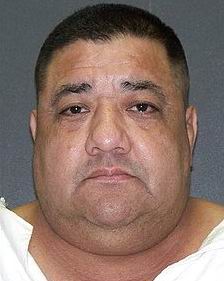
John Avalos Alba
Murderer Brian Kevin Rosenfeld
Murderer · USA · 1985
Brian Kevin Rosenfeld Brian Kevin Rosenfeld was sentenced to three concurrent l…
23 victims
Brian Kevin Rosenfeld
Murderer · USA · 1985
Brian Kevin Rosenfeld Brian Kevin Rosenfeld was sentenced to three concurrent l…
23 victims
 Russell Ellwood
Murderer · USA · 1991
Russell Ellwood was a former taxi driver. Authorities suspected him of killing…
20 victims
Russell Ellwood
Murderer · USA · 1991
Russell Ellwood was a former taxi driver. Authorities suspected him of killing…
20 victims
 Robert Martines Perez
Murderer · USA · 1994
Name: Robert Martines Perez · Other name used in proceedings: Robert Martinez P…
15 victims
Robert Martines Perez
Murderer · USA · 1994
Name: Robert Martines Perez · Other name used in proceedings: Robert Martinez P…
15 victims
 Billy Frank Vickers
Murderer · USA · 1993
Billy Frank Vickers Vickers was executed by lethal injection in Texas on Januar…
14 victims
Billy Frank Vickers
Murderer · USA · 1993
Billy Frank Vickers Vickers was executed by lethal injection in Texas on Januar…
14 victims
 Terence Andrus
Murderer · USA · 2008
Terence Andrus was a Black man. He was male, with black hair, brown eyes, a hei…
2 victims
Terence Andrus
Murderer · USA · 2008
Terence Andrus was a Black man. He was male, with black hair, brown eyes, a hei…
2 victims
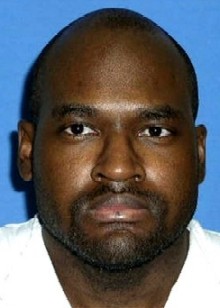 Sean Derrick O'Brien
Murderer · USA · 1993
Name: Sean Derrick O'Brien Sean Derrick O'Brien was executed by lethal injectio…
2 victims
Sean Derrick O'Brien
Murderer · USA · 1993
Name: Sean Derrick O'Brien Sean Derrick O'Brien was executed by lethal injectio…
2 victims
 Mark Anthony Guglielmo
Murderer · USA · 1994
December 12, 1968 — Mark Anthony Alexander Guglielmo was born in Westchester Co…
1 victim
Mark Anthony Guglielmo
Murderer · USA · 1994
December 12, 1968 — Mark Anthony Alexander Guglielmo was born in Westchester Co…
1 victim
 Shawn Grell
Murderer · USA · 1999
Shawn Grell was the father of Kristen Grell. · Kristen Grell was the 2-year-old…
1 victim
Shawn Grell
Murderer · USA · 1999
Shawn Grell was the father of Kristen Grell. · Kristen Grell was the 2-year-old…
1 victim
 Theofilos Sechidis
Mass murderer · Greece · 1996
Theofilos Sechidis was a 24-year-old Greek law school student. In May 1996, he…
5 victims
Theofilos Sechidis
Mass murderer · Greece · 1996
Theofilos Sechidis was a 24-year-old Greek law school student. In May 1996, he…
5 victims
- Gender
- male
- Country
- USA
- Location
- Collin County, Texas, USA
- Date of birth
- J une 26, 1955
- Age at first offence
- 36
- Characteristics
- parricide, domestic violence, attempted rape, child molester, alcohol
- Victim profile
- His wife, Wendy Alba, 28
- Method of murder
- Shooting (.22 caliber pistol)
- Date(s) of murder
- August 5, 1991
- Years active
- 1991
- Date of arrest
- —
- Status
-
Executed
Executed by lethal injection in Texas on May 25, 2010
Case overview
John Avalos Alba was convicted of capital murder and was sentenced to death in Texas for killing his wife Wendy Alba during the course of a burglary. A Collin County jury sentenced Alba to death for killing his wife during the course of a burglary.
Timeline
- August 5, 1991 — Alba purchased a .22 caliber semiautomatic pistol and a box of ammunition at a pawn shop in Plano.
- June 1991 — Alba was accused of molesting a 12-year-old girl who was at his apartment for a slumber party.
- August 4, 1991 — Alba was released from jail on a day before he hunted Wendy down and killed her.
- August 5, 1991 — Around 10 p.m., Alba went to Wendy’s location in Allen and tried to force entry into Gail Webb’s apartment with the .22 pistol.
- August 6, 1991 — Alba was arrested after a lengthy stand-off with police at a shopping center in Plano.
- November 19, 1991 — Alba was indicted for capital murder by a Collin County grand jury.
- May 7, 1992 — A jury found Alba guilty of capital murder.
- May 7, 1992 — After a separate penalty hearing, Alba was sentenced to death.
- June 28, 1995 — The Court of Criminal Appeals of Texas affirmed Alba’s verdict and sentence.
- January 16, 1996 — The U.S. Supreme Court denied certiorari review.
- April 15, 1998 — The Texas Court of Criminal Appeals denied Alba’s application for writ of habeas corpus.
- November 2, 1998 — The Supreme Court denied certiorari review.
- January 13, 2000 — A U.S. district court denied Alba’s petition for habeas corpus relief.
- August 21, 2000 — The United States Court of Appeals for the Fifth Circuit vacated Alba’s death sentence.
- March 1, 2001 — After being retried on sentencing only, a jury again sentenced Alba to death.
- April 16, 2003 — The Texas Court of Criminal Appeals affirmed Alba’s death sentence.
- September 10, 2003 — Alba’s motion for rehearing was denied.
- October 15, 2003 — The Texas Court of Criminal Appeals denied application for writ of habeas corpus.
- May 24, 2004 — The U.S.
- June 23, 2005 — Alba filed an amended petition for writ of habeas corpus in a U.S. District Court.
- February 3, 2006 — A federal district court stayed federal proceedings in order for Alba to return to state court on a lethal-injection claim.
- September 24, 2008 — The Texas Court of Criminal Appeals dismissed Alba’s application for habeas corpus relief.
- December 22, 2008 — A district court denied habeas corpus relief.
- October 8, 2009 — The United States Court of Appeals for the Fifth Circuit denied a certificate of appealability.
- January 6, 2010 — Alba filed a petition for writ of certiorari in the U.S. Supreme Court.
- May 17, 2010 — The Supreme Court denied his petition for writ of certiorari to the 5th Circuit, ending his federal habeas corpus litigation.
- May 25, 2010 — Alba was executed by lethal injection in Texas.
- May 25, 2010 — Alba was pronounced dead at 6:19 p.m.
The offence
Purchasing the firearm
On August 5, 1991, Alba went to a pawn shop in Plano and purchased a .22 caliber semiautomatic pistol and a box of ammunition.
Killing of Wendy Alba during a burglary
Shortly before the killing, Wendy Alba was staying with friends Robert Donoho and Gail Webb in Allen after unsuccessful attempts to find refuge in local women’s shelters. Alba tracked his wife Wendy to Allen. He tried to force himself into Gail’s apartment, carrying the .22 pistol. Donoho rushed to call 9-1-1 while Wendy and Gail leaned against the apartment door to close and lock it and prevent Alba from entering.
Alba overpowered the two women and forced the door open. Alba entered the apartment and waved the pistol, laughing and saying, “You deserve this.” Alba grabbed Wendy by the hair and dragged her to the doorway of the apartment where he pistol-whipped her before shooting her to death. Alba left Wendy’s body lying across the threshold and went back into the apartment after Gail.
Alba stood over Gail, kicked her repeatedly and shot her six times at point-blank range while her young son watched. When Gail’s arm broke and fell away from her head, he shot her once more in the temple. Gail survived.
In another detailed account of the attack, Alba forced entry by firing into the back of the door and told Wendy and Webb that “you bitches deserve this.” Alba pistol-whipped and shot Wendy three times, including shooting her in the back of her head, her buttocks, and the middle of her back, severing her spinal cord. Wendy later died at the hospital. Alba then went after Webb in the kitchen area, stood over her and laughingly stated, “you deserve to die, bitch.” Alba then shot Webb six times in the head and arms, and Webb survived the attack.
Shooting at Donoho and the apartment manager
During the attack, Donoho had gone to the back bedroom to place an emergency “911” call. When he came out to check on Wendy and Webb, Alba asked him, “You want some of this?” and fired a shot at Donoho’s head, missing by about twelve to fifteen inches.
After leaving the apartment, Alba encountered Misty Magers, the apartment manager, her boyfriend, and a neighbor. When the manager ran to call for help, Alba fired a shot in her direction and yelled, “I'm going to get you too, Misty.” He then turned the gun on the other two and asked, “Do you want any of this?” They let Alba pass.
Flight and stand-off with police; attempts involving officers and others
Alba fled the scene. He was arrested after a lengthy stand-off in a shopping center in Plano on August 6, 1991.
In one account, as Alba was attempting to finally leave the complex, he ran into Officer Wallace Moreland of the Allen Police Department. Alba told Moreland, “I'm getting the hell out of here. There's a crazy son of a bitch over there shooting people.” Moreland did not stop him because he was unaware that Alba was involved in the crime.
Alba left the scene in his own car at a high rate of speed, later abandoned his vehicle in Plano, and fled on foot to a Plano bowling alley.
Alba then encountered Ryan Clay, a teenager, working on a car in the parking lot. Alba asked for a ride and when Clay stated it was not his car Alba pointed his gun at him and again asked for a ride. Clay complied. Before they could leave the parking lot, sixteen-year-old Michael Carr, the owner of the car, stopped them; Carr drove Alba as requested to a nearby neighborhood. Alba was apprehended on August 6, 1991, after the police stand-off at a retail shopping center in Plano.
In another detailed account, while fleeing Alba encountered a police officer and told him he was getting out of the area because a crazy man was shooting a gun. The officer was not aware that Alba was the shooter and allowed Alba to leave. Alba sped off in his own car, dumped it at a Plano bowling alley and carjacked a teenager, forcing the 16-year-old to drive him into a nearby neighborhood. He spent the night with a woman who had his child. That morning, he returned to the apartment complex where the shooting occurred, saw an officer and ran to a shopping mall, where he began a standoff with police by threatening to kill himself. Two hours later, a police SWAT team used a stun grenade and tear gas to end the standoff and arrest him.
Victims
- Wendy Alba (Alba’s wife) was killed during the burglary; she died after being shot.
- Gail Webb was shot; she survived the attack.
- Robert Donoho was targeted with a shot that missed.
- Misty Magers (apartment manager) was targeted with a shot.
- A young son of Gail Webb watched while Alba shot her.
- Michael Carr, a sixteen-year-old, was involved in the carjacking and drove Alba as requested.
- A 16-year-old teenager (described as a teenager in one account and specifically as Michael Eugene Carr in another) was forced to drive him.
- Ryan Clay was approached and forced into providing a ride.
Criminal history and related allegations
Indecency with a child accusation and arrest
There was testimony that Alba molested a 12-year-old girl who was at his apartment for a slumber party in June 1991 and, as a result, was arrested for indecency with a child. A warrant was issued for his arrest on the charge of indecency with a child.
Alba remained in jail until his release on August 4, 1991, the day before he hunted Wendy down and killed her.
While handcuffed but before he was transported to jail, Wendy told Alba she would not get him out of jail. Alba said, “Wendy, you better come get me out of jail or I’ll kill you.”
Domestic violence and threats against Wendy
A number of prior incidents were presented, including testimony about Alba’s violent and domestic abusive history during punishment.
On May 29, 1987, Alba and Wendy had an altercation at a bar in Elgin. Alba was seen angrily swinging a spiked metal ball and chain.
After a prolonged high-speed chase during a routine traffic stop nearby, Alba sped by in his truck with Wendy yelling for help from inside. Alba slammed on his brakes, jumped out of his truck and approached the officers shouting. Alba resisted arrest and refused to follow instructions, fighting and kicking the officers. Alba was arrested in Spring 1991 by Allen police officers dispatched on a domestic violence call. When police arrived, Wendy had two black eyes, red marks on her neck and body, and the imprint of a shoe on her back where she said Alba had kicked her. Alba told one arresting officer that he knew where the officer lived and he was going to kill the officer’s wife and children.
Police testified they had responded to similar calls from Wendy in the past. Wendy’s employer and several neighbors and friends testified to hearing yelling and screaming, seeing Wendy with bruises and black eyes, seeing Alba physically abuse Wendy, and hearing Alba threaten her.
Alba’s ex-wife testified that she had been subject to his violence during their marriage.
Alcohol use and day of shooting
A woman who had a child with Alba testified that he’d been drinking the day of the shooting.
Trial testimony also characterized Alba and Wendy’s marriage as “rocky,” marked by alcohol abuse, infidelity and domestic violence.
Attempted rape allegation
The characteristics list indicates “attempted rape,” and the narrative reflects that Alba had an arrest for indecency with a child; the case description does not provide further detail beyond the indecency-with-a-child testimony.
Procedural history
- 11/19/1991 — Alba was indicted for capital murder by a Collin County grand jury.
- 5/1/1992 — A jury found Alba guilty of capital murder.
- 5/7/1992 — After a separate penalty hearing, Alba was sentenced to death.
- 6/28/1995 — The Court of Criminal Appeals of Texas affirmed Alba’s verdict and sentence.
- 1/16/1996 — The U.S.
- 4/15/1998 — The Texas of Criminal Appeals denied Alba’s application for writ of habeas corpus.
- 11/2/1998 — The Supreme Court denied certiorari review.
- 1/13/2000 — A U.S.
- 8/21/2000 — The United States Court of Appeals for the Fifth Circuit vacated Alba’s death sentence.
- 3/1/2001 — After being retried on sentencing only, a jury again sentenced Alba to death.
- 4/16/2003 — The Texas Court of Criminal Appeals affirmed Alba’s death sentence.
- 9/10/2003 — Alba’s motion for rehearing was denied.
- 10/15/2003 — The Texas Court of Criminal Appeals denied application for writ of habeas corpus.
- 5/24/2004 — The U.S.
- 6/23/2005 — Alba filed an amended petition for writ of habeas corpus in a U.S. District Court.
- 2/3/2006 — A federal district court stayed federal proceedings in order for Alba to return to state court on a lethal-injection claim.
- 9/24/2008 — The Texas Court of Criminal Appeals dismissed Alba’s application for habeas corpus relief.
- 12/22/2008 — A district court denied habeas corpus relief.
- 10/8/2009 — The United States Court of Appeals for the Fifth Circuit denied a certificate of appealability.
- 1/6/2010 — Alba filed a petition for writ of certiorari in the U.S. Supreme Court.
- 05/17/2010 — The Supreme Court denied his petition for writ of certiorari to the 5th Circuit, ending his federal habeas corpus litigation.
Trial
Capital murder and jury findings
In the trial and appeal discussion, Alba was convicted of capital murder for intentionally causing the death of an individual during the course of a burglary. The jury answered the special issues affirmatively and punishment was assessed accordingly at death. The indictment alleged that Alba “intentionally cause[d] the death of an individual, Wendy Alba, by shooting the said Wendy Alba with a deadly weapon, namely, a firearm, and the said defendant was then and there in the course of committing and attempting to commit the offense of burglary of a habitation of Robert Guinn Donoho.”
Defence arguments raised on appeal
The appeals record reflects that Alba did not challenge the sufficiency of the evidence.
On appeal, Alba complained that the trial court erred in receiving the jury’s guilty verdict and death sentence because Texas Penal Code Section 19.03(a)(2) was unconstitutionally applied to him. Specifically, he asserted that the State used killing of his wife as both the primary offense of murder and as an element of the underlying offense of burglary. The Court of Criminal Appeals overruled this point of error, stating there was no need for the State to use the murder as both the primary offense and an element of burglary because the evidence showed two completely separate felonies of attempted murder after forcing his way into the apartment.
On appeal, he also argued the trial court erred in failing to quash the indictment because the State was allegedly required to specifically allege the elements of the underlying offense of burglary. The Court of Criminal Appeals overruled that point of error as well, noting precedent that an indictment need not allege constituent elements of the underlying offense.
Evidence of extraneous kidnapping
Alba complained that the trial court erred in admitting evidence of an extraneous offense of kidnapping two teenage boys at the guilt/innocence phase. The Court of Criminal Appeals overruled this point of error, holding the evidence was admissible as necessarily related circumstance showing flight from arrest.
The appeals decision recounted evidence about Ryan Clay and Michael Eugene Carr being forced to drive Alba after he demanded a ride at a Plano bowling alley.
Excluded testimony
Alba contended the trial court erred in refusing to admit testimony of Mike Engle about a sexual relationship with Wendy Alba. The Court of Criminal Appeals held the testimony was irrelevant because appellant offered it for showing why Wendy might fear him.
Jury conversation and mistrial
Alba alleged error based on unauthorized juror conversations. During the punishment phase prior to deliberations, Juror Botts received a computerized collect call from an unknown county jail. The bailiff and detention officer were notified and there was a hearing outside the presence of the jury. The Court of Criminal Appeals overruled this point of error, finding appellant suffered no prejudice.
At the hearing, the juror testified that:
- “No. It was very unclear as to the nature of the problem that he indicated to me. I did not understand what he was saying; whether he was saying that the defendant was involved, or who may have been originating calls, or anything of that nature. It was very obscure as to what he was telling me, and I did not understand what he was saying.”
- “No, sir. Nothing that he said could have led me to believe that I could identify the source of the problem at all.”
- “No, sir. Nothing that he said would have caused me to make that kind of conclusion. * * * * * *”
- “No, sir.”
The court also asked:
- “Now, have you-this conversation you had with this person at the jail, did anyone ever indicate to you that anything was the result of having been done by the defendant in this case, or by his lawyers? ”
The juror responded: “No.
Sentencing and punishment hearing
Psychiatric expert and voir dire issue
Alba complained that the trial court erred in denying his request for a voir dire examination of the State’s psychiatric expert outside the presence of the jury. The Court of Criminal Appeals addressed the point in detail and overruled it.
The trial record in the appeals decision included that at the punishment phase the State called Dr. Richard Coons as a psychiatric expert and the prosecutor stated: “I want to ask you a hypothetical question based on what I believe is the evidence in this case, and then I'm going to ask you for an opinion-some opinions on some issues in this case.”
Appellant objected and asked for the voir dire hearing provided for by Rule 705(b). The trial court overruled the objection and Dr. Coons thereafter expressed his opinion.
Special issue instructions
The appeals decision included the jury instruction definition of attempted murder: “Our law provides that a person commits the offense of attempted murder if with specific intent to commit murder he does an act amounting to more than mere preparation that tends but fails to effect the commission of the offense of murder. The offense of attempted murder is a felony offense.” (Emphasis added.)
Appeals
Direct appeal
The Texas Court of Criminal Appeals affirmed Alba’s verdict and death sentence in 1995, following the guilt/innocence and punishment phase appeals.
U.S. Supreme Court and later appeals
The U.S. Supreme Court denied certiorari review at various stages, including after the 1995 affirmance and after later state habeas rulings. A federal district court denied Alba’s petition for habeas relief in 2000. The United States Court of Appeals for the Fifth Circuit vacated Alba’s death sentence on August 21, 2000. After resentencing on punishment only, a jury sentenced him to death again on March 1, 2001. The Texas Court of Criminal Appeals affirmed in April 2003. Alba’s subsequent state and federal appeals were denied.
Federal habeas and certificate of appealability
In Alba v. Thaler, the U.S. Court of Appeals for the Fifth Circuit denied a certificate of appealability, stating that no reasonable jurist could disagree that Alba’s claims were procedurally defaulted. The court identified claims about racially motivated decisions by the State and described Alba’s arguments and the procedural default analysis. The certificate of appealability was denied.
Outcome
Alba’s legal process ended with his execution on May 25, 2010. During the execution, when asked whether he had a final statement, John Alba said: “I wish I could go back and change it, but I know I can't.”
He addressed his son and daughter: “Just tell everyone I love them,” he said. “Y'all will be OK. I will, too. ”
He also told the warden: “OK, warden,” he said. “Do it.”
In a final statement that addressed forgiveness and family, Alba said: “I am sorry for taking someone so precious to you and to my kids,” he said to the victim’s family. “I wish I could take it all back and change it, but I know I can’t.” “Thanks for being beside me,” Alba said. “I appreciate you always standing by me and everything ya’ll have done. “Tell everyone I love them,” he added. “I’ll be OK ... you will, too.”
Shortly after instructing the warden, “Let’s do it,” Alba said he could taste the drugs: “I am starting to go,” he said just before slipping into unconsciousness.
Alba was pronounced dead at 6:19 p.m.
Aftermath and additional case-related details
A web site operated by a supporter described the circumstances of the murder differently than the trial record. The narrative included that Wendy Alba allegedly physically abused John and had sexual affairs with several other men, and that friends she moved in with were drug dealers. It also claimed an argument about the environment where his children were living. These allegations were not presented as trial facts within the case record content provided.
Alba declined to speak with reporters as his execution date neared.
Alba’s execution was attended by members of the victim’s family, the parents of the daughter he was accused of molesting, and his own son and daughter.
At a time near execution, Alba was identified as 54 years old in multiple accounts.
Spotted an error, or have more information about this case?