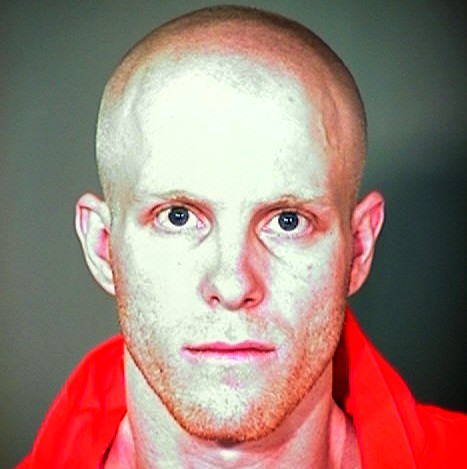
Shawn Grell
Murderer Russell Ellwood
Murderer · USA · 1991
Russell Ellwood was a former taxi driver. Authorities suspected him of killing…
20 victims
Russell Ellwood
Murderer · USA · 1991
Russell Ellwood was a former taxi driver. Authorities suspected him of killing…
20 victims
 Robert Martines Perez
Murderer · USA · 1994
Name: Robert Martines Perez · Other name used in proceedings: Robert Martinez P…
15 victims
Robert Martines Perez
Murderer · USA · 1994
Name: Robert Martines Perez · Other name used in proceedings: Robert Martinez P…
15 victims
 Billy Frank Vickers
Murderer · USA · 1993
Billy Frank Vickers Vickers was executed by lethal injection in Texas on Januar…
14 victims
Billy Frank Vickers
Murderer · USA · 1993
Billy Frank Vickers Vickers was executed by lethal injection in Texas on Januar…
14 victims
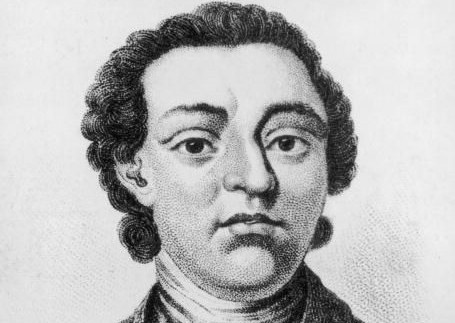 Earl Ferrers
Murderer · United Kingdom · 1760
Laurence Shirley was the 4th Earl Ferrers and was born on 18 August 1720 and ex…
1 victim
Earl Ferrers
Murderer · United Kingdom · 1760
Laurence Shirley was the 4th Earl Ferrers and was born on 18 August 1720 and ex…
1 victim
 Jamie Ray Ward
Murderer · USA · 1989
Jamie Ray Ward, 41, was sentenced to death in July 1991 in Walker County for ki…
1 victim
Jamie Ray Ward
Murderer · USA · 1989
Jamie Ray Ward, 41, was sentenced to death in July 1991 in Walker County for ki…
1 victim
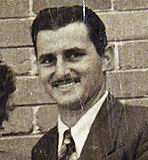 Tony Rawlins
Murderer · Australia · 1955
Tony Rawlins was a former stockman. He was an alcoholic and said he believed “o…
1 victim
Tony Rawlins
Murderer · Australia · 1955
Tony Rawlins was a former stockman. He was an alcoholic and said he believed “o…
1 victim
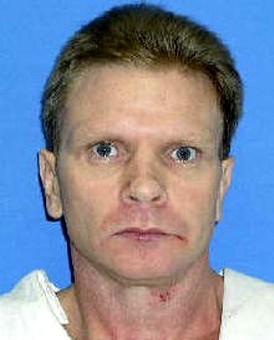 Bobby Wayne Woods
Murderer · USA · 1997
Defendant: Bobby Wayne Woods · Execution: Bobby Wayne Woods was executed by let…
1 victim
Bobby Wayne Woods
Murderer · USA · 1997
Defendant: Bobby Wayne Woods · Execution: Bobby Wayne Woods was executed by let…
1 victim
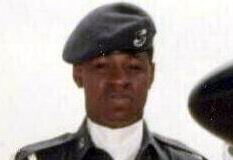 Dwight Loving
Murderer · USA · 1988
Dwight J. Loving was a private at Fort Hood, Texas at the time of the murders.…
2 victims
Dwight Loving
Murderer · USA · 1988
Dwight J. Loving was a private at Fort Hood, Texas at the time of the murders.…
2 victims
- Gender
- male
- Country
- USA
- Location
- Maricopa County, Arizona, USA
- Date of birth
- February 17, 1975
- Age at first offence
- 24
- Characteristics
- parricide, alcohol, child killer, mentally ill
- Victim profile
- His 2-year-old daughter, Kristen
- Method of murder
- Doused her with gasoline, and set her on fire
- Date(s) of murder
- December 2, 1999
- Years active
- 1999
- Date of arrest
- —
- Status
-
Sentenced to death
Sentenced to death on July 9, 2001; death sentence vacated and new sentencing ordered in 2006; jury later ordered death by lethal injection on July 27, 2009
Parties and identities
- Shawn Grell was the father of Kristen Grell.
- Kristen Grell was the 2-year-old daughter killed on December 2, 1999.
- Amber Salem was Kristen Grell’s mother and Grell’s girlfriend’s relative in the household described; her parents also lived at the home where Grell stayed for several days after the offence.
- Detective Donald Walsh of the Maricopa County Sheriff’s Office testified about what he said was consistent with the attack.
- Police investigators found evidence at the scene, including tire tracks, shoe impressions, and a book of matches with one match missing.
- Prosecutors and defense attorneys were involved in the resentencing proceedings after the death sentence was vacated.
- Judge Barbara Jarrett sentenced Shawn Grell to death.
- Judge Teresa Sanders presided over hearings scheduled for resentencing proceedings referenced in the later reporting.
- Lee Petruso was Kristen Salem’s grandmother.
- Victim Kristen Salem’s mother was identified as Amber Salem in the narrative.
Timeline
- December 2, 1999 — Grell took his 2-year-old daughter, Kristen, to a remote area in Apache Junction, poured gasoline over her, and set her on fire; Kristen suffered third- and fourth-degree burns over 98 percent of her body and died from burns and smoke inhalation.
- November 29, 1999 — Shawn Grell left work early claiming he was needed at his girlfriend’s house and did not return to work.
- December 2, 1999 (morning) — Amber dropped Kristen off at a daycare center.
- December 2, 1999 (later that day) — Grell picked up Kristen from the daycare and signed Amber’s name instead of his own on the sign-out sheet.
- December 2, 1999 (afternoon/evening) — Grell drove to Mesa with Kristen, bought beer and a sports drink, bought a red plastic gas container, bought gasoline, visited convenience stores including one in Apache Junction without apparently buying anything.
- December 2, 1999 (after fire) — Kristen stumbled around walking at least twelve feet before collapsing face down in the dirt; Grell watched her fall and then drove around briefly before returning to check if the fire had gone out.
- December 2, 1999 (evening) — Grell told a convenience store worker he had just seen some kids light a dog on fire in the nearby desert and said, "I can't believe that kids would set a dog on fire[;] this is what the world is coming to when kids set dogs on fire."
- December 2, 1999 (just before midnight) — A Phoenix police officer pulled Grell over on suspicion of driving under the influence; Grell handed the officer a bottle of beer and the officer eventually released Grell to walk home.
- Around two a.m. — Another Phoenix police officer stopped Grell, arrested him, took him to the police station, where breath tests confirmed a blood alcohol content of approximately .16; the officer released Grell after processing and a taxi cab took Grell to Third Avenue and Van Buren.
- After processing (overnight) — Grell walked to the state capitol, used a call box to telephone the Capitol Police Department, and told capitol police several times that he had killed his daughter and informed them where he left her body.
- After confirmation at the scene — Police arrested Grell on suspicion of murder after confirming that an infant’s body was found where Grell indicated it would be.
- Months after his arrest — Grell signed a "Prisoner Media Waiver" informing him that "statements made to reporters, newspersons and other members of the media may be used against you in court."
- At a news conference (after waiver) — Grell admitted killing his daughter; the news conference was video taped.
- Three weeks later — Grell sent a letter to the prosecutor stating: "I took my daughter's life away from her on December 2, 1999; in a very sickening way!"
- April 21 (letter handwriting referenced) — Police investigators confirmed the handwriting on the April 21 letter matched Grell’s handwriting.
- Trial Convicted: September 1, 2000 (Guilty Plea) — Grell was convicted of first degree murder.
- Sentenced to death: July 9, 2001 — The court sentenced Grell to death.
- June 6, 2006 — The Arizona Supreme Court unanimously decided Grell did not give up his right to a jury sentencing when he waived his right to a jury trial in 2000; Grell’s death sentence was vacated and it was ordered that a new sentencing hearing be held.
- March 17 (scheduled resentencing hearing referenced) — A hearing was scheduled on March 17 to hear motions on jury selection and other issues on resentencing of Shawn Grell.
- Jul. 27, 2009 — A jury reached the same conclusion and ordered that Grell die by lethal injection.
Background
Shawn Grell grew up hard and mean in the narrative provided. He killed his family’s cat, set fire to their dog, and burned down the house they lived in.
In 1988, when he was thirteen, police arrested Grell after he fondled a young girls breasts. Grell was sent to a juvenile facility after the incident, where he continued to get in trouble. He received incidents including assaulting staff and other inmates earning him a reputation for being an unstable kid whose “assaultiveness” needed to be controlled. He was tested and was diagnosed as borderline retarded with an IQ somewhere between 70 and 80.
By 1992 he had been convicted of assault and sent to prison. In 1995 he was back in jail for robbing a convenience store. Grell was granted parole, but his Parole Officer violated him when he was caught possessing drug paraphernalia in 1998.
During the three years out on parole, Grell had a girlfriend, Amber Salem, and when he asked her to marry him in 1998, she accepted. Kristen Salem was born in 1997, and by winter of 1999 she was described as a happy, well adjusted little toddler. All three moved into Amber’s parents home by the time Shawn violated his parole and was sent back to prison.
After Grell was released in 1999, his criminal record made employment difficult. Companies either would not hire him, or, if he lied and didn’t tell them about his record, fired him in a couple of months after background checks were completed. The inability to remain employed caused conflict at home, especially between Grell and Amber Salem’s parents.
On November 29, 1999, Grell left work early claiming that he was needed at his girlfriend’s house and did not return to work.
The offence
On the morning of December 2, Amber dropped Kristen off at a daycare center. Later that day, Grell picked Kristen up from the center, signing Amber’s name instead of his own on the sign-out sheet.
Grell drove to Mesa with Kristen. At 5:40 p.m., he stopped at a convenience store to purchase beer and a sports drink. About an hour later, Grell bought a red plastic gas container at a department store in Mesa. He continued to drive around Mesa before stopping at another convenience store where he bought just over a gallon of gasoline. Still later that evening, Grell entered a convenience store in Apache Junction, but apparently did not buy anything.
Grell then drove to a remote area near Apache Junction, took his sleeping daughter out of the car, and laid her on the ground in a drainage ditch approximately fifteen feet from the road. Kristen woke up as her father poured gasoline over her. He then lit a match and flicked it on her, setting her on fire. Kristen managed to walk around and stomp her feet for up to 60 seconds before collapsing in the dirt. Kristen stumbled around, walking at least twelve feet before falling to her knees and then collapsing face down in the dirt.
Grell returned to his car after watching Kristen fall to her knees and drove around briefly before returning to see if the fire had gone out. He then returned to one of the convenience stores he previously visited to purchase more beer. He told the worker at the cash register that he had just seen some kids light a dog on fire in the nearby desert. Grell stated: "I can't believe that kids would set a dog on fire[;] this is what the world is coming to when kids set dogs on fire."
Kristen suffered third- and fourth-degree burns over 98 percent of her body. The only bottoms of her feet were not burned. She died from a combination of burns and smoke inhalation.
According to Detective Donald Walsh, Kristen was lying on the ground when the blaze began on the front of her body. Walsh said she got up and ran about 12 feet, walking in circles at one point as the flames spread upwards to her face. Walsh testified that the heat was so intense that a barrette on the left side of her head melted, the plastic running down her face. Walsh said Kristen finally collapsed face-first in a ditch and died. The autopsy revealed Kristen’s death resulted from thermal injuries and smoke inhalation.
Investigation
At the scene, police investigators found Kristen’s badly burned and lifeless body. Police found tire tracks consistent with the tires on the car Grell was driving that day. Investigators found large and small shoe impressions in the dirt consistent with the shoes that Grell and Kristen were wearing. Investigators found a book of matches with one match missing.
Police also found some partially burned candy, a melted hair clip, and various articles of partially burned clothing. Police recovered a red plastic gas container that appeared new and still contained a small amount of gasoline. Grell’s fingerprints were found on the gas can. Investigators noted several areas of burnt soil and a strong smell of gasoline in the area.
The autopsy revealed that Kristen had third and fourth degree burns over 98% of her body. According to the lead detective, the positioning of Kristen’s body, burn patterns on her clothes and body, burn patterns on the ground near her body, and other evidence collected at the scene were all consistent with Kristen having had gasoline poured on her body and then being lit on fire.
Arrest and custody events
Just before midnight, a Phoenix police officer pulled Grell over on suspicion of driving under the influence. Grell handed the officer a bottle of beer he had been drinking, and the officer eventually released Grell to walk home.
Grell apparently returned to his car after the officer left. Around two a.m., another Phoenix police officer stopped Grell. This officer arrested Grell and took him to the police station. Breath tests confirmed Grell had a blood alcohol content of approximately .16. After processing Grell, the officer released him, and a taxi cab took Grell to Third Avenue and Van Buren. From there, Grell walked to the state capitol.
Grell used a call box to telephone the Capitol Police Department and told capitol police several times that he had killed his daughter and informed them where he left her body.
After confirming that an infant’s body was found where Grell indicated it would be, police arrested him on suspicion of murder.
Admissions and statements
Grell signed a "Prisoner Media Waiver" informing him that "statements made to reporters, newspersons and other members of the media may be used against you in court."
Grell held a news conference that was video taped, and he admitted killing his daughter. At the news conference, Grell stated:
We [he and Kristen] had gone to Mesa. Went to Mesa. I was going to see my sister's, my sister's house, but I decided not to. I decided to go to the store and get a few beers, and to go drinking, and drive around in the car. Took Kristen to McDonald's, um, then we just cruised around a little bit more. And I just, I didn't, I decided that I was going to go ahead and do it. I went to the gas station to get the stuff and drove around, trying to find a place where I could do it.
During the press conference, Grell also stated that Kristen woke up when he poured gasoline on her and she stood up when he lit the match and threw it on her.
Three weeks later Grell sent a letter to the prosecutor stating: "I took my daughter's life away from her on December 2, 1999; in a very sickening way!" In the letter, Grell stated several times that he was guilty. Police investigators confirmed that the handwriting on the April 21 letter matched Grell’s handwriting.
Trial
In consultation with his attorneys, Grell elected to avoid a jury trial and the parties submitted the case to the trial court based on stipulated facts.
The court found Grell guilty of first degree murder. Grell entered a guilty plea and was convicted on September 1, 2000.
Sentencing
At the sentencing hearing, the court concluded that the State proved beyond a reasonable doubt the existence of three aggravating factors:
- A prior conviction for a serious offense, A.R.S. § 13-703(F) (2) (Supp. 2002)
- The heinous, cruel, or depraved manner of the murder, id. § 13-703(F) (6)
- That the victim was less than fifteen years of age, id. § 13-703(F) (9)
The court found no mitigating circumstances sufficiently substantial to call for leniency and sentenced Grell to death under Id. § 13-703(E).
The narrative about sentencing also described that Judge Barbara Jarrett sentenced Shawn Ryan Grell to Death on July 9, 2001.
Appeals
On June 6, 2006, the Arizona Supreme Court unanimously decided that Grell did not give up his right to a jury sentencing when he waived his right to a jury trial in 2000. Grell’s death sentence was vacated, and it was ordered that a new sentencing hearing be held.
The Arizona Supreme Court’s resentencing was linked to two United States Supreme Court rulings described in the narrative:
- A ruling found it was unconstitutional to execute the mentally retarded.
- A ruling stated that only jurors, not judges, can find that aggravating factors exist to qualify defendants for a death sentence.
The narrative described that the U.S. Supreme Court declined to review Grell’s death sentence.
Outcome
On Jul. 27, 2009, eight years after a judge sentenced Shawn Ryan Grell to death, a jury ordered that he die by lethal injection.
The narrative stated that the sentence had been vacated in 2006 and sent back for re-sentencing by a jury. It also described defense attorney Gary Bevilacqua’s position that he was still hoping that the state Supreme Court would reduce Grell’s sentence to life in prison.
Other details
- A "Prisoner Media Waiver" was signed by Grell.
- The narrative included Grell’s alleged interactions and conduct during police encounters, including that he laughed, joked, and suggested a lingerie bar he thought the cops might enjoy during a 30 minute interview after one stop, and that he did not mention his two-year-old daughter.
- The narrative included quotes attributed to defense attorney Gary Bevilacqua:
- "You can’t have a procedure where you execute the retarded," Bevilacqua said.
- "He’s been diagnosed as retarded since first grade."
- In a described court filing, Bevilacqua argued: "the only penalty that fits this crime is that he spend the rest of his days sitting on death row. Justice demands no less." (A quote is included in the narrative in the same area as prosecutor statements.)
- The narrative included a quote attributed to prosecutor Kristen Hoffmeyer: "the only penalty that fits this crime is that he spend the rest of his days sitting on death row. Justice demands no less."
- Lee Petruso said: "It’s been a long 10 years but it’s worth the wait," and she was described as Kristen Salem’s grandmother.
- The later reporting referenced that prosecutors and defense attorneys agreed to a pool of 225 potential jurors and disagreed on other issues, including whether or not Grell should be referred to as "the defendant."
- The later reporting described defense attorney Gary Bevilacqua’s motion to dismiss the death penalty on procedural grounds and included a procedural argument: "The death penalty is not available for the crime of first-degree murder, the noticed aggravating factors are not supported by probable cause, the indictment cannot be amended to charge the greater offense of capitol murder."
- The later reporting said the case ranked among the most horrific slayings in the east Valley in recent memory and that it drew the only death sentence meted out by Jarrett during her 12-year career on the bench.
- The narrative indicated sentencing history included additional hearings in 2005 focused on a war of dueling psychologists and psychiatrists.
- The narrative stated that prosecutors and defense attorneys agreed Grell’s intelligence fell within the range of mental retardation and disagreed on whether his life demonstrated he was capable of functioning in society.

Spotted an error, or have more information about this case?