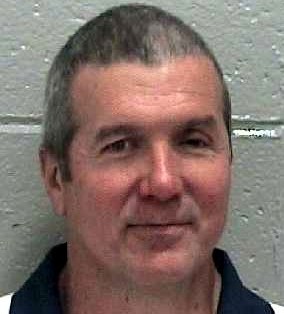
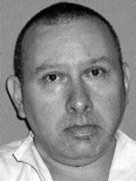
Jack Edward Alderman
Murderer Ervil LeBaron
Murderer · USA · 1972
Ervil Morrell LeBaron (1925 to August 16, 1981) was the leader of a polygamous…
35 victims
Ervil LeBaron
Murderer · USA · 1972
Ervil Morrell LeBaron (1925 to August 16, 1981) was the leader of a polygamous…
35 victims
 Marvin Gray
Murderer · USA · 1975
Marvin Gray was convicted killer who claimed responsibility for 23 slayings and…
23 victims
Marvin Gray
Murderer · USA · 1975
Marvin Gray was convicted killer who claimed responsibility for 23 slayings and…
23 victims
 Yahweh ben Yahweh
Murderer · USA · 1980
Yahweh ben Yahweh was born and legally named Hulon Mitchell Jr. (October 27, 19…
23 victims
Yahweh ben Yahweh
Murderer · USA · 1980
Yahweh ben Yahweh was born and legally named Hulon Mitchell Jr. (October 27, 19…
23 victims
 Charles Manson
Murderer · USA · 1969
Charles Milles Manson (born November 12, 1934) was an American criminal and mus…
9 victims
Charles Manson
Murderer · USA · 1969
Charles Milles Manson (born November 12, 1934) was an American criminal and mus…
9 victims
 Robert Lee Yates
Serial killer · USA · 1975
Robert Lee Yates Jr. (born May 27, 1952) was an American serial killer from Spo…
18 victims
Robert Lee Yates
Serial killer · USA · 1975
Robert Lee Yates Jr. (born May 27, 1952) was an American serial killer from Spo…
18 victims
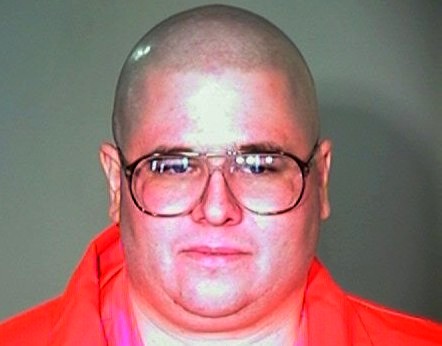 Richard Djerf
Mass murderer · USA · 1993
Richard Djerf — defendant · Albert Luna, Sr. — victim · Albert Luna, Jr. — vict…
4 victims
Richard Djerf
Mass murderer · USA · 1993
Richard Djerf — defendant · Albert Luna, Sr. — victim · Albert Luna, Jr. — vict…
4 victims
 Warren Eugene Bridge
Murderer · USA · 1980
February 10, 1980 — Warren Eugene Bridge was convicted for the robbery and shoo…
1 victim
Warren Eugene Bridge
Murderer · USA · 1980
February 10, 1980 — Warren Eugene Bridge was convicted for the robbery and shoo…
1 victim
- Gender
- male
- Country
- USA
- Location
- Chatham County, Georgia, USA
- Date of birth
- May 29, 1951
- Age at first offence
- 23
- Characteristics
- parricide, attempt to collect insurance money
- Victim profile
- H is wife Barbara Alderman, 20
- Method of murder
- Drowning
- Date(s) of murder
- September 21, 1974
- Years active
- 1974
- Date of arrest
- —
- Status
-
Executed
Executed by lethal injection in Georgia on September 16, 2008
Case record: Jack Edward Alderman
Status and execution
Jack Edward Alderman was sentenced to death for the murder of his wife. He was executed by lethal injection in Georgia on September 16, 2008. He was pronounced dead at 7:25 p.m. on Tuesday.
A chaplain prayed for Alderman in the death chamber, including the words: “Jack, may Christ … free you from excruciating pain.” Alderman declined a final comment. Alderman did not make a special last meal request, and he received the regular prison meal of baked fish, peas, cole slaw, carrots, cheese grits, bun, fruit juice and chocolate cake at 4 p.m. on Tuesday. He barely touched the meal.
Witnesses described Alderman’s manner during the lethal injection process as calm, almost serene, with his eyes closed the entire time. He was administered lethal injection with needles in each arm, and later reports described administration with needles in both arms while he was strapped down. He was calm throughout the 14-minute procedure, and for a few minutes before he was declared dead, witnesses said he smiled.
Offence
Alderman murdered his wife, Barbara Alderman, in Chatham County, Georgia. The motive for the murder was life insurance money. The victim had a $10,000 life insurance policy supplied through her employment with the City of Savannah, with a clause providing for payment of double benefits in the event of accidental death. Alderman was aware of the $10,000 life insurance policy. The victim also had another insurance policy in the amount of $25,000 with her mother named as the beneficiary.
The evidence at trial described Alderman and accomplice John Arthur Brown beat the victim with a crescent wrench, choked her, and put her under water in a bathtub to ensure she was dead. After the killing, the men visited two Savannah bars before dumping the body in a creek near her family’s home in Rincon. Prosecutors alleged Alderman wanted to collect $20,000 in life insurance money.
Background
Alderman and his wife lived together at the Chatham City Apartments in Garden City, Chatham County, Georgia. Alderman was employed as an Assistant Manager at a local Piggly-Wiggly Supermarket. The victim was employed in the Tax Assessor’s Office for the City of Savannah.
Alderman met John Arthur Brown when both Alderman and Brown were employed in the Vehicle Maintenance Department of the City of Savannah. Alderman testified that he and Brown were not close friends but would occasionally go for a beer and play pool together. After Alderman left the job with the City of Savannah, Alderman and Brown continued their relationship, seeing each other approximately every two or three weeks.
Timeline
- September 19, 1974 — Brown testified that Alderman called him requesting him to come to the Piggly-Wiggly Supermarket; Alderman asked Brown to kill the victim and offered Brown one half of the insurance proceeds.
- September 21, 1974 — Alderman asked Brown to come to Alderman’s apartment; Alderman handed Brown a wrench and instructed him to go into the bedroom and hit the victim. The beating, choking, and drowning in a bathtub occurred, followed by visits to Savannah bars and the dumping of the body in Dasher’s Creek near Rincon.
- September 22, 1974 — Garden City Police Officer J. D. Crosby went to Alderman’s apartment at approximately 12:00 to 12:15 a.m.; the apartment was locked. Crosby returned at approximately 2:30 a.m. and found Alderman there with a white female. Crosby informed Alderman that his wife had been involved in a traffic accident and asked him to accompany Effingham County authorities to the hospital.
- September 30, 1974 — Alderman’s father, Jack Alderman, Sr., removed a crescent wrench from Alderman’s apartment and turned it over to Chief Curtis Thompson of the Garden City Police Department.
- June 4, 1979 — The state habeas corpus court conducted a hearing and denied Alderman’s application for habeas corpus relief.
- March 26-31, 1984 — Alderman’s resentencing trial took place in the Superior Court of Chatham County, Georgia.
- April 1, 1984 — Alderman was again sentenced to death.
- February 28, 1985 — The Georgia Supreme Court affirmed Alderman’s newly imposed death sentence.
- October 15, 1985 — The United States Supreme Court denied Alderman a petition for writ of certiorari.
- November 18, 1995 — The United States Supreme Court denied Alderman’s petition for rehearing.
- February 6, 1986 — Alderman filed a state habeas corpus petition in the Superior Court of Butts County.
- June 29, 1987 — An evidentiary hearing was held in the state habeas corpus proceedings.
- September 10, 1987 — The state habeas corpus court denied Alderman state habeas corpus relief.
- October 28, 1987 — The Georgia Supreme Court denied Alderman a certificate of probable cause to appeal.
- March 7, 1988 — The United States Supreme Court denied a petition for writ of certiorari.
- April 25, 1988 — The United States Supreme Court denied Alderman’s petition for rehearing.
- June 20, 1988 — Alderman filed a petition for a writ of habeas corpus in the United States District Court for the Southern District of Georgia.
- June 6, 1989 — The district court denied Alderman federal habeas corpus relief.
- June 22, 1992 — After an evidentiary hearing on a claim concerning the traverse jury, the district court entered an order denying the petition on all grounds.
- April 14, 1994 — The Eleventh Circuit affirmed the decision of the district court and denied habeas corpus relief.
- December 12, 1994 — The United States Supreme Court denied Alderman a petition for writ of certiorari.
- December 22, 1994 — Alderman filed a second state habeas corpus petition in the Superior Court of Butts County.
- March 29, 1999 — An amended petition for writ of habeas corpus was filed in the second state habeas corpus proceedings.
- May 5-6, 1999 — An evidentiary hearing was held in the second state habeas corpus proceedings.
- December 29, 1999 — The state habeas corpus court denied Alderman state habeas corpus relief.
- January 10, 2002 — The Georgia Supreme Court denied Alderman’s application for a certificate of probable cause to appeal.
- October 21, 2002 — The United States Supreme Court denied Alderman a petition for writ of certiorari.
- February 10, 2003 — Alderman filed a second federal habeas corpus petition in the United States District Court for the Southern District of Georgia.
- July 19, 2004 — The district court denied Alderman federal habeas corpus relief.
- August 3, 2004 — The district court denied a motion to alter and amend judgment.
- October 4, 2004 — The district court denied Alderman a certificate of appealability.
- November 15, 2004 — The Eleventh Circuit denied Alderman’s application for a certificate of appealability.
- June 27, 2005 — Following an application to the court en banc for a certificate of appealability, the Eleventh Circuit granted Alderman’s certificate of appealability as to only one issue.
- February 13, 2006 — The case was orally argued before the Eleventh Circuit.
- October 30, 2006 — The Eleventh Circuit issued an opinion denying relief.
- December 8, 2006 — The Eleventh Circuit denied Alderman’s petition for panel rehearing.
- May 7, 2007 — Alderman filed a petition for writ of certiorari in the United States Supreme Court.
- October 1, 2007 — The United States Supreme Court denied the petition for writ of certiorari.
- September 16, 2008 — Alderman was executed by lethal injection in Georgia; he was pronounced dead at 7:25 p.m.
The killing and alleged plan
On the afternoon of September 19, 1974, Brown testified that Alderman approached him and requested his assistance in the killing of his wife, telling Brown that he would split one-half the proceeds of his wife’s life insurance policy if Brown helped. Brown initially thought Alderman was “kidding,” but Alderman’s persistence convinced Brown that Alderman was serious.
On the following Saturday, September 21, 1974, Brown testified that Alderman asked him to come to Alderman’s apartment. Upon Brown’s arrival at approximately 5:30 or 6:00 p.m., Alderman handed Brown a wrench and instructed Brown to go into the bedroom and hit the victim. Alderman later returned to the apartment pretending that Brown had returned. Alderman and Brown played records on a stereo while Alderman went and woke the victim to clean after Alderman’s dog in the dining room. After Brown did not attack the victim while she was cleaning up the carpet, Alderman became angry and threatened Brown.
Brown struck the victim on the back of the head with the wrench. The victim cried out and ran into the living room where she was tackled by Alderman. Alderman then held his hands over the victim’s nose and mouth in an attempt to suffocate her while Brown attempted to strangle her. Brown testified that when the victim became unconscious, he told Alderman the victim was dead, but Alderman stated he wanted to make sure.
Alderman and Brown carried the victim into the bathroom and placed her in the bathtub. Alderman started running water into the bathtub. Brown returned to the living room and dining room to clean up blood from the carpeting. Alderman joined Brown and attempted to clean the carpet with rug shampoo. Both men changed clothes. They then went into the bathroom, where Brown pulled aside the shower curtain to see the victim lying face up in the tub, with water covering her body.
Afterward, the men left the apartment, first going to the Piggly-Wiggly Supermarket where Alderman borrowed $100, and then going to two Savannah bars: Joey Dee’s Bayshore Lounge and the Waving Girl Lounge. Alderman gave Brown $100 at some point during the evening. At approximately 10:00 p.m., Alderman and Brown returned to Alderman’s apartment, removed the victim’s body from the bathtub, wrapped it in a green quilt, and placed the body in the trunk of Alderman’s 1974 Pontiac LeMans. Brown drove the car and Alderman followed on his motorcycle to Rincon and Dasher’s Creek.
At the creek, both men removed the victim’s body from the trunk and placed it in the driver’s seat of the car. The men left the engine and the lights on and put the transmission in drive. At Alderman’s direction, Brown reached into the window, released the emergency brake, and sent the car into the creek. When the car did not go all the way into the creek, Alderman directed Brown to open the car door and let the victim’s body fall halfway out of the car. Brown testified that the purpose was to make the victim’s death look like an accident.
Leaving the scene, both men removed the green quilt and rubber trunk mat from the car and left on Alderman’s motorcycle, with Brown driving. On their way to dispose of the quilt and mat at a dump off of Highway 21, Brown testified they passed a car on Wisenbaker Road. Both men then returned to Joey Dee’s Lounge and went to Johnny Ganem’s establishment to eat.
Discovery of the body and investigation
Ronnie Cowart testified that he passed over Dasher’s Creek on his way to Rincon at approximately 10:05 p.m. on September 21, 1974, and saw nothing in the creek. Cowart also testified that at approximately 10:15 p.m. he heard a car and a motorcycle pass on Baker Hill Road and then turn onto Highway 131, and he stated it was unusual to hear a motorcycle at that time of night.
Randy Hodges and Terry Callahan were returning home via Baker Hill Road and Highway 131 at approximately 11:00 p.m. on September 21, 1974. While on Baker Hill Road, the men met a motorcycle coming from the opposite direction with a light-colored object flapping in the wind. After turning onto Highway 131 and approaching Dasher’s Creek, they noticed a car in the creek. Hodges jumped out, saw a woman in the car, and noticed the car lights and interior fan were still on, with the car transmission in neutral. He observed that the victim’s body was laying half out of the car, face up in the water, and he noticed blood stains on the car seat. Callahan went to Lamar Rahn’s house to call for help.
Carol Riner Jones arrived at Dasher’s Creek at approximately 11:00 p.m. on September 21, 1974, and noticed that the car was in neutral and that the car’s air conditioning lights were still on.
Effingham County Sheriff Lloyd Fulcher was summoned to the Dasher’s Creek scene. Fulcher found the victim’s car in the water adjacent to the bridge with the car lights and air conditioning fan on. Sheriff Fulcher found no apparent physical damage to the car. The victim’s body was removed from the car and taken to a hospital, where a laceration at the base of her skull was later noticed. Sheriff Fulcher observed no skid marks from the car and motorcycle tracks in the area. He also observed blood stains on the seat of the car and that the pasteboard covering of the car trunk had been removed.
Garden City Police Officer J. D. Crosby went to Alderman’s apartment at approximately 12:00 to 12:15 a.m. on September 22, 1974, and the apartment was locked. Crosby informed Alderman that the victim had been involved in a traffic accident and that Alderman evidenced no reaction. Alderman was asked to accompany Effingham County authorities to the hospital.
Georgia Bureau of Investigation Agent H. H. Keadle went to the Effingham County Hospital on September 21, 1974. His observation of the victim’s body showed a tear in the skin at the base of the victim’s head and bloody material around the victim’s nose and mouth. When Alderman arrived at the hospital at approximately 4:15 a.m. on September 22, Alderman was accompanied by a white female, Ms. Gerlinda Carmak.
After Agent Keadle and Sheriff Fulcher noticed red/brown stains in the seat and crotch of Alderman’s pants and on Alderman’s white belt, Alderman’s clothes were taken from him. Further investigation led Agent Keadle to John Brown, who eventually gave a statement incriminating both Brown and Alderman.
Keadle’s investigation confirmed blood stains on the driver’s seat in Alderman’s car, the gear shift in neutral, and lights left on in the car. Keadle observed the motorcycle marks at the scene where the car had been found. Keadle recovered a stained portion of a green rug, which had been removed from Alderman’s apartment by the victim’s mother, as well as Alderman’s motorcycle helmet.
Alderman’s father, Jack Alderman, Sr., removed a crescent wrench from Alderman’s apartment on September 30, 1974, and turned it over to Chief Curtis Thompson of the Garden City Police Department. Chief Thompson was also responsible for transporting Brown back to Garden City from Statesboro, during which Brown made incriminating statements.
Forensic serologist Elizabeth Quarles, of the Georgia State Crime Laboratory, examined blood on Alderman’s clothes. The blood, type A, subtype M, was consistent with the victim’s blood. An examination of the victim’s automobile revealed one palm print and four fingerprints stipulated to be Alderman’s. Brown’s fingerprints were not found on the car.
Dr. Charles Sullenger performed the autopsy on the victim. Sullenger discovered a laceration wound on the back of the victim’s head inflicted by a relatively blunt instrument. He observed liquid in the victim’s lungs and determined it had entered the lungs while the victim was still breathing. The doctor found no evidence of abnormalities in the victim’s heart, no scratches on the victim’s forearms, and no evidence of strangulation. According to Dr. Sullenger, the victim died as a result of asphyxia due to drowning. Sullenger concluded the blow to the victim’s head did not occur as the result of a car accident, and that there was not enough blood in the car to establish that the blow occurred in the car. Dr. Sullenger testified that it appeared the victim had been hit on the head somewhere else, then placed into the car and driven into the creek.
Dr. Sandra Conradi, a forensic pathologist employed by the University of South Carolina, testified on behalf of Alderman and in rebuttal to Dr. Sullenger’s autopsy report. Conradi’s opinion, based on her review of portions of the trial transcript, the autopsy report, and other documents, suggested ways the autopsy report could have been more complete.
Arrest and detention
After Crosby requested Alderman accompany Effingham County authorities to the hospital, Alderman was transported to the hospital where the investigation included observations of stains on his clothes and belt.
Trial
Original trial and conviction
Alderman was originally convicted in the Superior Court of Chatham County for the 1974 murder of his wife. The Georgia Supreme Court affirmed his conviction and death sentence in Alderman v. State, 241 Ga. 496, 245 S.E.2d 642 (1978), cert. denied, 439 U.S. 99 (1978), r’hrg denied, 439 U.S. 1132 (1979).
Alderman v. State described the appellant as indicted by a Chatham County Grand Jury for the offense of murder. The jury found the statutory aggravating circumstances that: the murder was “committed . . . for the purpose of receiving money or any other thing of monetary value” (Code Ann. s 27-2534.1(b)(4)) and the offense involved “outrageously or wantonly vile, horrible or inhuman in that it involved torture, depravity of mind, or an aggravated battery to the victim” (Code Ann. s 27-2534.1(b)(7)). Alderman was sentenced to death by electrocution. Alderman’s amended motion for new trial was overruled.
Alderman testified on his own behalf and denied completely the story told by Brown. Alderman testified that after an argument, both he and the victim left the apartment separately on Saturday, September 21, 1974. Alderman testified that he took a bus to Savannah, spent time in the Bayshore Lounge and the Waving Girl Bar, and after seeing Brown and other persons at these bars, took a taxi back to his apartment arriving at approximately 10:00 p.m. Alderman testified that the victim had not returned and he decided to go to Rincon to see the victim at her grandmother’s. Alderman testified that while on his motorcycle, he observed his car off the bridge at Dasher’s Creek. He stopped, went down to the partially submerged car, saw the victim with tail lights and interior lights on and her face submerged, picked the victim’s head out of the water placing it in his lap, heard a noise, became fearful, and fled the scene. Alderman testified that he then drove to Savannah, returned to the Bayshore Lounge, and went to Johnny Ganem’s for breakfast with friends. He offered Gerlinda Carmak a ride home, stopped at his apartment for a jacket, and stated that police took him to Effingham County and the hospital where he identified his wife’s body. Alderman testified that he did not know why he left his wife’s body in the creek and recalled nothing of the trip back to Savannah. He testified that he first realized the full facts surrounding his wife’s death after being treated by a psychiatrist who refreshed his memory, and that fear caused him to leave the victim’s body because he knew the family would blame him for her death.
Resentencing trial
After federal habeas relief affected the sentence, a resentencing trial was conducted in the Superior Court of Chatham County, Georgia. The resentencing trial took place from March 26-31, 1984. On April 1, 1984, Alderman was again sentenced to death.
Direct appeal and resentencing appeal
The Georgia Supreme Court affirmed Alderman’s newly imposed death sentence in Alderman v. State, 254 Ga. 206, 324 S.E.2d 68 (1985), direct appeal.
Alderman’s appeal after resentencing included multiple enumerations of error. The Supreme Court discussed the timing of challenges to the grand jury array and stated that year 1984 was too late to raise, for the first time, a challenge to a 1975 grand jury array. It addressed juror death-qualification and found the practice not unconstitutional, and it addressed excusal of jurors and rejected the claim that the jurors were improperly excluded. It also found that the evidence supported the jury’s findings regarding statutory aggravating circumstances, including that the offense was “outrageously or wantonly vile, horrible or inhuman” in that it involved torture, depravity of mind, or an aggravated battery.
The Supreme Court affirmed the judgment and sentence and stated that it did not find that the sentence was imposed under the improper influence of passion, prejudice, or any other arbitrary factor. It concluded the death sentence was neither excessive nor disproportionate.
Evidence and trial allegations
The appellate material recounted the state’s evidence supporting the jury’s findings. It included that Alderman approached John A. Brown and asked for assistance in killing Alderman’s wife for insurance proceeds. The recounted evidence included that Brown struck the wife in the back of the head with a wrench, that Alderman tackled the wife and attempted to strangle her, and that Alderman started running water in the tub after the wife was moved into the bathroom. The state’s evidence also included that Alderman and Brown cleaned blood stains, changed clothes, went to a Piggly-Wiggly store where Alderman got $100 which he gave to Brown, went to a bar and started drinking, returned around 10 p.m., wrapped the body in a green quilt, and placed it in the trunk of Alderman’s car. The evidence described the men driving to Rincon, Georgia in Effingham County and pushing the car into Dasher Creek and leaving the impression it was an accident.
In addition, the appellate material included the defense testimony denying participation in the death, including testimony that Alderman and the victim had argued, that he left the apartment, that he took a bus to Savannah, returned home to find his wife not there, traveled to Rincon to her grandmother, and found the wife’s car in the creek with her body under water, cradled her head, and fled in shock.
Sentencing
Alderman was sentenced to death in 1984. Prior to resentencing, he had been originally sentenced to death after the original conviction affirmed by the Georgia Supreme Court. The resentencing trial again resulted in a death sentence.
The jury found as statutory aggravating circumstances: murder for the purpose of receiving money or other thing of monetary value; and murder involving torture, depravity of mind, or an aggravated battery.
Appeals
Federal habeas and reinstatement / resentencing
Alderman challenged his conviction and death sentence by filing a petition for state habeas corpus relief. On June 4, 1979, the state habeas corpus court denied the application. The Georgia Supreme Court denied a certificate of probable cause to appeal. The United States Supreme Court denied a petition for a writ of certiorari in Alderman v. Balkcom, 444 U.S. 1103 (1980), r’hrg denied, 445 U.S. 973 (1980).
Alderman then filed an application for federal habeas corpus relief. Federal habeas relief was granted as to both his conviction and sentence in Alderman v. Austin, 498 F. Supp. 1134 (S.D. GA. 1980). On appeal, the United States Court of Appeals for the Fifth Circuit affirmed the grant of relief as to the death sentence but reversed the grant of relief as to the conviction in Alderman v. Austin, 663 F.2d 558 (5th Cir. Unit B 1981) and Alderman v. Austin, 695 F.2d 124 (5th Cir. 1983) (en banc).
State habeas (Butts County) and further federal habeas
Alderman filed a state habeas corpus petition in the Superior Court of Butts County on February 6, 1986, and amended petitions were filed June 16, 1987 and June 25, 1987. An evidentiary hearing was held on June 29, 1987. On September 10, 1987, the state habeas corpus court denied relief. Alderman’s certificate of probable cause application was denied on October 28, 1987. The United States Supreme Court denied certiorari on March 7, 1988, and denied rehearing on April 25, 1988.
Alderman filed a federal habeas corpus petition in the United States District Court for the Southern District of Georgia on June 20, 1988. The district court denied relief on June 6, 1989. After a remand for a claim concerning the traverse jury and an evidentiary hearing, the district court denied all grounds on June 22, 1992. On October 23, 1992, the district court granted a certificate of probable cause to appeal. The Eleventh Circuit affirmed denial of habeas corpus relief on April 14, 1994 in Alderman v. Zant, 22 F.3d 1541 (11th Cir. 1994). The United States Supreme Court denied a petition for writ of certiorari on December 12, 1994.
Alderman then filed a second state habeas corpus petition in the Superior Court of Butts County on December 22, 1994. An amended petition was filed on March 29, 1999. An evidentiary hearing was held on May 5-6, 1999. On December 29, 1999, the state habeas corpus court denied relief. Alderman’s application for a certificate of probable cause to appeal was denied on January 10, 2002. The United States Supreme Court denied certiorari on October 21, 2002 in Alderman v. Head, 537 U.S. 995 (2002).
Alderman filed a second federal habeas corpus petition on February 10, 2003. The district court denied federal habeas relief on July 19, 2004, and denied a motion to alter and amend on August 3, 2004. The district court denied a certificate of appealability on October 4, 2004.
The Eleventh Circuit denied a certificate of appealability on November 15, 2004. On June 27, 2005, following an en banc application, it granted a certificate of appealability as to only one issue raised in the district court’s order. The case was orally argued on February 13, 2006. On October 30, 2006, the Eleventh Circuit denied relief in Alderman v. Terry, 468 F.3d 775 (11th Cir. 2006). The Eleventh Circuit denied panel rehearing on December 8, 2006.
Alderman filed a petition for writ of certiorari in the United States Supreme Court on May 7, 2007, and the petition was denied on October 1, 2007.
Clemency and last events
On Tuesday, the Georgia Board of Pardons and Paroles rejected Alderman’s bid for clemency for the second time. Alderman made a recorded statement earlier in the day thanking everyone who made his life better considering the circumstances. Georgia Department of Corrections spokesman Paul Czachowski paraphrased the recorded statement. Alderman declined a final comment.
No members of Alderman’s family witnessed the execution. Two members of Barbara Alderman’s family were at the prison but did not witness the execution.
Key participants and identifiers
- Defendant: Jack Edward Alderman (GDC ID: 0000385463; DOB: 1951; race: white; gender: male; height: 6' 07"; weight: 162; eye color: brown; hair color: black).
- Victim: Barbara Alderman (also referred to as Barbara Jean Alderman in portions of the material).
- Accomplice: John Arthur Brown.
- Commissioner: James E. Donald (listed as Commissioner in an execution notice).
- Georgia Department of Corrections: listed as “GA DIAG & CLASS PRIS-PERM CASE NO: 117244” and execution notice location as Georgia Diagnostic and Classification Prison in Jackson.
- Prosecution / officials: David Lock (assistant district attorney in Chatham County); Michael Seiml (attorney); Thurbert E. Baker (Georgia Attorney General); Paul Czachowski (Georgia Department of Corrections spokesman).
- Law enforcement and forensic personnel: Sheriff Lloyd Fulcher; Officer J. D. Crosby; GBI Agent H. H. Keadle; Chief Curtis Thompson; Forensic Serologist Elizabeth Quarles; Dr. Charles Sullenger; Dr. Sandra Conradi.
- Witnesses: Ronnie Cowart; Randy Hodges; Terry Callahan; Carol Riner Jones; Lamar Rahn (mentioned as the person Callahan went to for help); Sally Wiess; Andrew J. Ryan, III.
- Family: Alderman’s father Jack Alderman, Sr.; the victim’s mother (referred to as removing evidence from Alderman’s apartment); Barbara Alderman’s sister Rheta Braddy (also referred to as Debra Blase and Rheta Earlene Blase in different parts).
Trial accounts and quotations
“Jack, may Christ … free you from excruciating pain.”
Attributed to a chaplain praying for Alderman in the death chamber.
Offence details and places
- Crime commit date: 09/21/74.
- Conviction county: Chatham County.
- Execution county / location: Chatham County was referenced for the murder; execution location was the Georgia Diagnostic and Classification Prison in Jackson.
- Scene descriptions: Alderman and Brown beat and drowned the victim in the bathtub at Alderman’s apartment in Garden City, Chatham County, Georgia, and then dumped the body in Dasher’s Creek near Rincon, Georgia.
Final meal and final words
Alderman did not make a special last meal request. At 4 p.m. Tuesday, he was given baked fish, peas, cole slaw, carrots, cheese grits, bun, fruit juice and chocolate cake. Final words: declined.
Spotted an error, or have more information about this case?