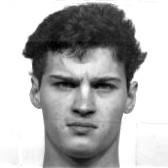
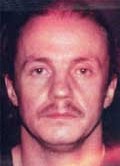
Warren Eugene Bridge
Murderer Ervil LeBaron
Murderer · USA · 1972
Ervil Morrell LeBaron (1925 to August 16, 1981) was the leader of a polygamous…
35 victims
Ervil LeBaron
Murderer · USA · 1972
Ervil Morrell LeBaron (1925 to August 16, 1981) was the leader of a polygamous…
35 victims
 Brian Kevin Rosenfeld
Murderer · USA · 1985
Brian Kevin Rosenfeld Brian Kevin Rosenfeld was sentenced to three concurrent l…
23 victims
Brian Kevin Rosenfeld
Murderer · USA · 1985
Brian Kevin Rosenfeld Brian Kevin Rosenfeld was sentenced to three concurrent l…
23 victims
 Marvin Gray
Murderer · USA · 1975
Marvin Gray was convicted killer who claimed responsibility for 23 slayings and…
23 victims
Marvin Gray
Murderer · USA · 1975
Marvin Gray was convicted killer who claimed responsibility for 23 slayings and…
23 victims
 Yahweh ben Yahweh
Murderer · USA · 1980
Yahweh ben Yahweh was born and legally named Hulon Mitchell Jr. (October 27, 19…
23 victims
Yahweh ben Yahweh
Murderer · USA · 1980
Yahweh ben Yahweh was born and legally named Hulon Mitchell Jr. (October 27, 19…
23 victims
 Tracey Van Dungey
Murderer · United Kingdom · 2004
Tracey Antoinette Van Dungey was 43 (16/10/67) and lived on Sugden Way, Barking…
2 victims
Tracey Van Dungey
Murderer · United Kingdom · 2004
Tracey Antoinette Van Dungey was 43 (16/10/67) and lived on Sugden Way, Barking…
2 victims
 Jeremy Jones
Serial killer · USA · 1992
Name: Jeremy Jones · Aliases/identities mentioned: John Paul Chapman · Age (as…
21 victims
Jeremy Jones
Serial killer · USA · 1992
Name: Jeremy Jones · Aliases/identities mentioned: John Paul Chapman · Age (as…
21 victims
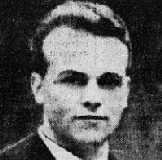 Roger Girerd
Mass murderer · France · 1965
Roger Girerd was the perpetrator of a mass murder in Charvieu-Chavagneux on May…
10 victims
Roger Girerd
Mass murderer · France · 1965
Roger Girerd was the perpetrator of a mass murder in Charvieu-Chavagneux on May…
10 victims
 Janjira Smith
Murderer · USA · 2006
Janjira Jeffrey Smith poisoned her ex-boyfriend’s Jägermeister with insecticide…
1 victim
Janjira Smith
Murderer · USA · 2006
Janjira Jeffrey Smith poisoned her ex-boyfriend’s Jägermeister with insecticide…
1 victim
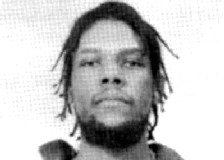 Michael William Daniels
Murderer · USA · 1978
January 16, 1978 — Michael Daniels and two other men committed a series hold-up…
1 victim
Michael William Daniels
Murderer · USA · 1978
January 16, 1978 — Michael Daniels and two other men committed a series hold-up…
1 victim
 John Joseph Romano
Murderer · USA · 1985
John Joseph Romano was convicted of killing jeweler Roger Joel Sarfaty during t…
2 victims
John Joseph Romano
Murderer · USA · 1985
John Joseph Romano was convicted of killing jeweler Roger Joel Sarfaty during t…
2 victims
- Gender
- male
- Country
- USA
- Location
- Galveston County, Texas, USA
- Date of birth
- J uly 3, 1960
- Age at first offence
- 20
- Characteristics
- robbery
- Victim profile
- Walter Rose, 62 (convenience store clerk)
- Method of murder
- Shooting (.38 caliber pistol)
- Date(s) of murder
- February 10, 1980
- Years active
- 1980
- Date of arrest
- 10 days after
- Status
-
Executed
Executed by lethal injection in Texas on November 22, 1994
Case record: Warren Eugene Bridge
Timeline
- February 10, 1980 — Warren Eugene Bridge was convicted for the robbery and shooting of Walter Rose, a 62-year-old convenience store clerk in Galveston.
- February 24, 1980 — Rose died of his wounds four days after the arrest of Bridge and Costa during a drug raid on their motel room.
- July 9, 1980 — Bridge escaped from the Galveston county jail while in custody on the capital murder charge.
- July 10, 1980 — Bridge was recaptured the following morning in Texas City.
- March 1985 — Bridge was implicated in the stabbing of a fellow inmate.
- September 10, 1980 — After trial, Bridge was sentenced to death by lethal injection pursuant to Tex.Crim.Proc. Code Ann. Sec. 37.071.
- September 1984 — While on death row, Bridge was implicated in the bombing of another inmate’s cell.
- January 1985 — Bridge was convicted of aggravated assault in Walker County and given a concurrent 10-year prison sentence.
- June 25, 1987 — Bridge filed a writ of habeas corpus in state district court in Galveston pursuant to Tex.Crim.Proc. Code Ann. Sec. 11.07.
- August 24, 1987 — The state district court recommended the writ application be denied without a hearing.
- September 4, 1987 — The Texas Court of Criminal Appeals denied the writ application.
- September 21, 1987 — Bridge filed a habeas corpus petition with the federal district court in Galveston and asked the court to stay his execution scheduled for October 1, 1987.
- September 24, 1987 — The federal district court entered its order denying the stay of execution and the requested writ of habeas corpus.
- September 25, 1987 — The district court also denied Bridge’s Certificate of Probable Cause but granted leave to proceed in forma pauperis.
- February 18, 1988 — The United States Court of Appeals, Fifth Circuit denied habeas corpus relief and rejected Bridge’s contentions; rehearing and rehearing en banc were denied later.
- March 17, 1988 — Rehearing and rehearing en banc were denied.
- September 8, 1988 — Bridge moved in state district court for post conviction relief, 28 U.S.C. § 2254, and a stay of execution.
- September 14, 1988 — The Fifth Circuit denied Bridge’s motion for certificate of probable cause to appeal and denied a stay of execution.
- November 1, 1988 — The Fifth Circuit issued an opinion on petition for rehearing and suggestion for rehearing en banc.
- January 4, 1989 — The Fifth Circuit issued an order on suggestion for rehearing and rehearing en banc.
- June 11, 1992 — The Fifth Circuit issued an opinion on remand from the Supreme Court and held Bridge’s claim had no merit.
- November 22, 1994 — Bridge was executed by lethal injection in Texas.
Background
Warren Eugene Bridge was born in Fauquier County, Virginia. After his mother passed away, he and his sister, Jennifer Rigsby were reared by their step-father Bill Mathis in Albany, Georgia.
Bridge had an educational level of 11 years. He grew up in a racist environment. Though he did work as a cashier at a local restaurant, his drug problems and run-ins with the law brought him to his ultimate fate.
Bridge lived his life robbing and stealing from convenience stores and individual people to support his drug addictions. In 1978, before he came to Texas, Bridge was given a 15-year prison sentence in Georgia for burglary. He was released from prison and placed on probation in 1979.
While on death row, Bridge was implicated in the bombing of another inmate’s cell in September 1984 and stabbing of a fellow inmate in March 1985.
Assistant Warden Mickey Liles said, “I do not know how Bridge got the weapon,” because he had just been released from solitary confinement. Both inmates were black; Bridge is white.
Attorney Anthony Griffin took over the case after Bridge’s lawyer, Richard Thorton died. Griffin filed numerous stays of execution on behalf of Bridge, many of which were successful keeping Bridge alive for some time.
Griffin said: “I am very against the death penalty, which is why I took over the case, “ Life in prison without parole, let the convicts live and die in prison.”
Bridge discussed his views on punishment and said: “I would rather be shot,” Bridge said, “ I would rather die standing up – with my shoes on – than laying down. The way they do it now is a druggie way to die. I wouldn’t want to be hanged or ride old Sparky (the electric chair). I’m not very fond of electricity. Just a plain bullet is cleaner somehow.”
Bridge had received a tattoo of the Confederate flag while in prison. He had been known for associating with the Arian Brotherhood, a white fascist prison gang.
The offence
Bridge was convicted for the February 10, 1980 robbery and shooting of Walter Rose, a 62-year old convenience store clerk in Galveston. Rose was shot four times with a .38 caliber pistol.
Bridge and co-defendant Robert Joseph Costa robbed the Stop & Go store at 710 Fourth Street for $24. Rose died of his wounds on February 24, 1980, four days following the arrest of Bridge and Costa during a drug raid on their motel room.
Bridge pled not guilty to the capital murder charge. His primary defense was the claim that accomplice Costa was the actual killer of Rose.
Investigation
Bridge and Costa were arrested during a drug raid on their motel room. The evidence showed that Bridge shot Rose four times with a .38 caliber revolver.
Arrest
Bridge and accomplice Robert Costa were arrested following a drug raid on their motel room.
Trial
Bridge was tried and convicted in the 212th Judicial District Court, Galveston County, for the murder of Walter Rose, on February 10, 1980, while robbing the Stop & Go convenience store where Rose was employed.
At the separate punishment hearing after Bridge was convicted, the jury answered affirmatively the special capital punishment issues. Under the Texas scheme described, the court presented two special issues to the jury in the sentencing portion of his capital murder trial:
- whether the conduct of the defendant that caused the death of the deceased was committed deliberately and with the reasonable expectation that the death of the deceased or another would result;
- whether there is a probability that the defendant would commit criminal acts of violence that would constitute a continuing threat to society.
Bridge’s lawyer sought habeas corpus relief after his conviction and sentence.
The Texas Court of Criminal Appeals affirmed Bridge’s conviction and sentence in Bridge v. State, 726 S.W.2d 558 (Tex.Crim.App.1986).
Bridge’s accomplice Robert Costa was convicted of aggravated robbery and sentenced to 13 years in prison in a separate trial.
Bridge did not seek certiorari review of his conviction from the United States Supreme Court.
Sentencing
Bridge was sentenced, on September 10, 1980, to death by lethal injection pursuant to Tex.Crim.Proc. Code Ann. Sec. 37.071.
Appeals
Bridge filed a writ of habeas corpus and multiple federal habeas corpus petitions. The case involved challenges to evidentiary rulings and to ineffective counsel claims, as well as later challenges under the Eighth and Fourteenth Amendments relating to mitigation instructions at punishment.
Habeas corpus challenges and ineffective counsel claims (First federal petition reviewed by the Fifth Circuit)
Bridge sought habeas corpus relief pursuant to 28 U.S.C. Sec. 2254 from his conviction for capital murder. The Fifth Circuit described Bridge’s first federal habeas petition.
Bridge alleged he was deprived of his due process rights to a fundamentally fair trial under the Fourteenth Amendment by the trial court’s refusal to allow into evidence at the guilt/innocence phase of his trial testimony regarding Robert Costa’s indictment, conviction, and sentence for aggravated robbery. Bridge argued exclusion was unfair because it prevented the jury from understanding the “relative posture” of appellant and the testimony of one of the state’s witnesses. The trial court also granted the state’s oral motion in limine preventing defense counsel from even mentioning during trial that Costa had been indicted, tried, and convicted of aggravated robbery and sentenced to only 13 years.
The Fifth Circuit rejected this evidentiary claim.
Bridge also raised ineffective counsel claims reviewed under the two-prong standard from Strickland v. Washington.
The Fifth Circuit addressed and rejected the following ineffective counsel theories:
- Counsel failed to object to testimony introduced during the guilt/innocence stage about Bridge’s escape from jail; Bridge escaped from the Galveston county jail on the night of July 9, 1980 and was recaptured the following morning in Texas City.
- Counsel failed to object to improper jury arguments made by the state; Bridge asserted the prosecutor told the jury to disregard the court’s charge and the relevant law concerning burden of proof, presumption of innocence, and Bridge’s right not to testify.
- Counsel during voir dire allegedly wasted three peremptory challenges on venire members Gallaway and Gamble who Bridge believed would require the defendant to disprove one of the special issues concerning capital punishment; the Fifth Circuit found responses indicated they would place the burden properly on the state.
- Counsel allegedly failed to get venire member Whitmore removed for cause based on conflicting responses; counsel had properly moved to have Whitmore removed for cause and objected when the court denied the motion, and the Fifth Circuit found no ineffectiveness in failing to raise the issue on appeal.
- Counsel allegedly failed to attempt to rehabilitate four venire members expressing personal convictions against the death penalty; all four were removed for cause, and the Fifth Circuit rejected ineffectiveness on that point.
The Fifth Circuit denied habeas corpus relief and dissolved the stay of execution. “DENIAL OF HABEAS CORPUS AFFIRMED. STAY OF EXECUTION VACATED.”
Mitigation-instruction challenges and procedural issues (Subsequent Fifth Circuit proceedings)
Bridge argued that the law under which he was sentenced to death, Tex.Crim.Proc.Code Ann. Art. 37.071 (Vernon 1981), violated the Eighth and Fourteenth Amendments because it allowed a Texas jury no mechanism for considering individual mitigating circumstances during the punishment phase of a capital murder trial.
The Fifth Circuit discussed procedural default arguments raised by the state and declined to accept the procedural bar in earlier decisions, while later withdrawals and remand required reconsideration. It analyzed whether Bridge’s mitigating circumstances were beyond the scope of the two special questions.
In later proceedings on remand, the Fifth Circuit held that no major thrust of Bridge’s mitigating evidence was substantially beyond the scope of the two special questions asked during sentencing and denied Bridge’s motion for certificate of probable cause, dismissing his appeal, while vacating the stay of execution.
Outcome
Bridge was denied habeas corpus relief, and the stay of execution was dissolved or vacated in multiple stages. The Fifth Circuit denied Bridge’s motion for certificate of probable cause to appeal in the proceedings it described and found no basis to grant relief.
The final status remained execution.
Aftermath
Bridge was executed by lethal injection in Texas on November 22, 1994. The account described that on the morning of the execution, Bridge said goodbye to his family, nodded to his stepfather, said, “See ya” and died. He had a stomach full of fish sticks, peaches, and a double-meat cheeseburger.
Robert Costa received a separate sentence of 13 years in prison for aggravated robbery in a separate trial.
Spotted an error, or have more information about this case?