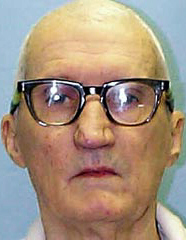
James Barney Hubbard
Murderer Gary Gene Tison
Murderer · USA · 1967
Gary Gene Tison was serving life sentences at the Arizona state prison. He had…
7 victims
Gary Gene Tison
Murderer · USA · 1967
Gary Gene Tison was serving life sentences at the Arizona state prison. He had…
7 victims
 Gary Duane Rardon
Murderer · USA · 1962
Gary Duane Rardon killed a man in 1962 and later served 4 years for manslaughte…
4 victims
Gary Duane Rardon
Murderer · USA · 1962
Gary Duane Rardon killed a man in 1962 and later served 4 years for manslaughte…
4 victims
 Charles Howard Schmid
Murderer · USA · 1964
Charles Howard Schmid was born on 8 July 1942 and was adopted by Charles and Ka…
3 victims
Charles Howard Schmid
Murderer · USA · 1964
Charles Howard Schmid was born on 8 July 1942 and was adopted by Charles and Ka…
3 victims
 Harry Mitts
Murderer · USA · 1994
Harry Mitts was sentenced to death in November 1994 for murders and attempted m…
2 victims
Harry Mitts
Murderer · USA · 1994
Harry Mitts was sentenced to death in November 1994 for murders and attempted m…
2 victims
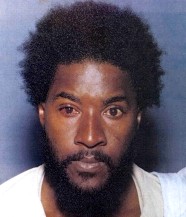 Eddie Lee Mosley
Serial killer · USA · 1973
Eddie Lee Mosley was found incompetent to stand trial for murders and was commi…
16 victims
Eddie Lee Mosley
Serial killer · USA · 1973
Eddie Lee Mosley was found incompetent to stand trial for murders and was commi…
16 victims
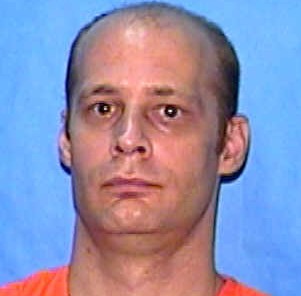 John Christopher Marquard
Murderer · USA · 1991
John Christopher Marquard was sentenced to death on February 5, 1993. The Flori…
1 victim
John Christopher Marquard
Murderer · USA · 1991
John Christopher Marquard was sentenced to death on February 5, 1993. The Flori…
1 victim
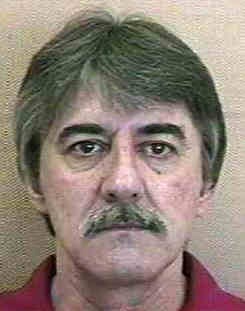 Arthur Martin Boyd
Murderer · USA · 1982
Arthur Martin Boyd was executed by lethal injection in North Carolina on Octobe…
1 victim
Arthur Martin Boyd
Murderer · USA · 1982
Arthur Martin Boyd was executed by lethal injection in North Carolina on Octobe…
1 victim
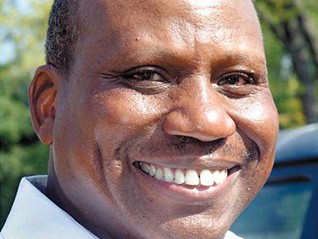 Charles Lee Thornton
Mass murderer · USA · 2008
Charles Lee “Cookie” Thornton was killed during a shoot-out with the police the…
5 victims
Charles Lee Thornton
Mass murderer · USA · 2008
Charles Lee “Cookie” Thornton was killed during a shoot-out with the police the…
5 victims
- Gender
- male
- Country
- USA
- Location
- Tuscaloosa County, Alabama, USA
- Date of birth
- March 7, 1930
- Age at first offence
- 27
- Characteristics
- alcohol, robbery, torture, disputes
- Victim profile
- David Dockery / Lillian Montgomery, 62 (store owner)
- Method of murder
- Shooting
- Date(s) of murder
- 1957 / 1977
- Years active
- 1957–1977
- Date of arrest
- January 10, 1977
- Status
-
Executed
Executed by lethal injection in Alabama on August 5, 2004
Case record: James Barney Hubbard
Status
James Barney Hubbard was executed by lethal injection in Alabama on August 5, 2004.
Background
James Barney Hubbard first went to prison in 1957 for a second-degree murder conviction in the death of David Dockery in Tuscaloosa County. Hubbard was released in 1976 and killed again the next year.
Hubbard had been living with the victim in the case that led to his death sentence, and he moved into her home next door to the store she ran in Tuscaloosa.
In June 1980, an execution date was set for July 11, 1980, but a ruling by the U.S. Supreme Court declared Alabama's death penalty law unconstitutional. Hubbard was retried and sentenced to death at the retrial. Hubbard’s first conviction had been within 20 years of the 1957 second-degree murder conviction.
During his time on death row, Hubbard maintained his innocence during the lengthy appeals. He had been diagnosed with dementia by a licensed psychologist, and his condition may cause confusion and interfere with his ability to understand legal procedures. He also claimed he was suffering from hepatitis, diverticulitis, hypertension and acute back pain.
Hubbard was described as having been near execution before, but he had won a delay.
The offence
In the 1977 case, Lillian Montgomery, a 62-year-old store owner, was shot three times and robbed of her gold and diamond wristwatch and about $500 in cash and checks. Montgomery had befriended Hubbard and “sponsored” him to gain his release in 1976. Hubbard moved into her home next door to the store she ran in Tuscaloosa.
Hubbard told police that he had been drinking whiskey with Montgomery and claimed she committed suicide, calling the police to report the shooting. Montgomery died as the result of three gunshot wounds: one to the face, one to the head, and one to the shoulder.
The indictment described the killing as occurring on January 10, 1977, by shooting Lillian Montgomery with a pistol. It alleged that, at the time of the killing, Hubbard had been convicted of murder in the second degree in the preceding twenty (20) years on to-wit: October 10, 1957.
A jury found Hubbard “guilty of murder in the first degree with aggravated circumstances as charged in count one of the indictment and fix his punishment at death”. The verdict was found to be responsive to the indictment and consistent with Ex Parte Clements, 370 So.2d 723 (Ala.1979).
At the sentencing hearing on aggravating and mitigating circumstances, the court found aggravating circumstances including that the capital felony was committed for pecuniary gain, and found the capital felony was especially heinous, atrocious and cruel. The court’s order described evidence that Hubbard had been without money the night before the crime, that when arrested Hubbard had $500 on his person including checks made payable to the victim, that the victim’s son checked the cash register at the victim’s store and found it to be empty, and that Hubbard had the victim’s diamond watch at the time of arrest valued at $400 and identified as hers, with the watch band broken when recovered by police.
Investigation and evidence
Shortly after 8:00 on the morning of January 10, 1977, an ambulance arrived at the Montgomery Store on Highway 82 in Tuscaloosa, Alabama, as a result of a reported “suicide.” Hubbard had telephoned the police department and was standing in a side door, signaling the ambulance attendants to come into the kitchen. Mrs. Montgomery lay dead on the floor having been shot three times with her own .38 caliber pistol.
At the scene, Hubbard told the police that “he and Mrs. Montgomery had been in the upstairs bedroom arguing, that she'd went downstairs and he had heard what he thought were two shots” about 7:00 that morning. The pistol and a one-half pint bottle of Cabin Hollow whiskey were found on Hubbard after he told a police officer that he had the weapon. Nitrate tests revealed a small amount of powder residue on both of Hubbard’s hands and on the right hand of the deceased. The presence of the residue indicated that the test subject had recently fired a weapon or had handled a weapon that had recently been fired.
At police headquarters Hubbard gave a statement in which he indicated that Mrs. Montgomery committed suicide.
In the second appeal record, an alcohol blood test at the time of autopsy disclosed the deceased had an alcohol blood content of .11 percent.
The autopsy later on the same day disclosed that the victim had been shot three times. One bullet entered the left shoulder, passing at an angle and exiting behind the left shoulder; another bullet entered the mouth, cutting furrowing the tongue and shattering the jaw and one of her dentures, leaving five or six pieces lodged in her throat, and causing severe bleeding; a third bullet entered just above the left eyebrow and penetrated the brain from the victim’s left to her right, lodging in the lower right rear of the skull, and was the cause of death.
The pathologist testified that the victim would have been unable to articulate or speak after the wound to the mouth, and stated: “I don't think anyone would be able to articulate words with the injury that I have described.... She could not be able to talk so that she could be understood.”
The pathologist further testified: “Within a reasonable medical probability, she was shot in the mouth before she was shot in the brain.” He explained that most blood flowed as a result of the shot in the mouth and that the heart had to be pumping while she bled.
It was determined by a firearms expert that the bullet recovered from the victim's skull and the three spent .38 caliber shell casings found in the wastepaper basket in the upstairs bedroom were fired by the pistol taken from Hubbard’s person. The spent bullet found in the kitchen was so mutilated comparisons were impossible.
Pattern tests were conducted by the State toxicologist, and he opined that the three shots were fired from a distance of no closer than fifteen inches and possibly as far away as thirty- nine inches.
Arrest and custody
In the second trial record, police officers arrived about 8:53 a.m. Tuscaloosa Police Officers Jack Manley and Charles Stephens arrived at the scene. Sergeant Dempsey Marcum, the homicide detective, arrived at approximately 9:15 a.m.
Manley searched Hubbard’s person and found a .38 caliber pistol, a partial box of .38 caliber ammunition, and a half-pint bottle containing whiskey. At this point, Manley gave Hubbard Miranda warnings by reading from a card and placed him in the patrol car.
Later, Hubbard showed Officer Stephens his billfold and stated, “I'm not a bum.”
Statements by Hubbard
After being advised of Miranda rights and signing a waiver, Marcum wrote a statement as it was made by Hubbard, and Hubbard signed it after reading it and having it read to him by Marcum. The statement was read into the record. The statement read:
“All right, this statement was taken at the Tuscaloosa County Homicide Office on 1614 26th Avenue at 11:35 a.m. on January 10, 1977. Investigator Shirley Fields was present there in the office. 'Approximately about two or three a.m. this morning I went downstairs to the store and got me a half pint of Kentucky corn whiskey and drank most of the half pint. After I went back upstairs, Lillian said she had a headache and that she wanted something to drink to see if she could stop her headache. I asked her what she wanted to drink and she said get her a pint of that J.W. Dant and I went downstairs to the store and got her some ice and a Coke and brought it back up to her. She mixed it and she mixed it in a large glass and drank it. I asked her if she was feeling any better. I was laying on the other side of the bed from her. She said, "I'm going to fix me another one." I'd already drank enough and was settled enough that I was fixing to doze back off to sleep. Before she had the drink, she said she wanted to go where her mother was. I said, "What are you talking about, Sugar?", and she said she had so many debts to pay that she just wanted to get out of her misery. I was just dozing when she got up. I didn't see her with the pistol. But she keeps it under her pillow. She went downstairs and I heard two shots. I went downstairs and saw her laying in the floor. I asked her, "What in the world have you done?", and she said, "I just wanted to leave and get out of the way." The last thing she said was to tell me for me and Jimmy and Johnny to take care of what she had and said, "You tell Jimmy and Johnny I want you to have my car." She then just passed out and then I went back upstairs and looked in a book and got Mildred's phone number and then I called Mildred on the upstairs phone. Mildred told me to call the ambulance and the police. Then I called my mother, Mrs. Benny Hubbard, at the rest home in Northport and I told her what Lillian had done. Mother said, "Well, call the ambulance or call somebody." I hung up the phone, then I called Nettie at the bar at the Old Southern Dairy where that lounge is there. I told Nettie what Lillie had done and asked her what I had ought to do. She said, "Call a doctor or ambulance," that she couldn't come down there. Then I called the operator and she told me to call the police headquarters and she dialed them for me. I told her it was an emergency, the police department answered and said they would send the ambulance right on out there. When I saw Lillian, the pistol was under her left hand. I took the pistol out from under her left hand and carried it back upstairs and took two empty shells out of it and put two more bullets in it. I stuck the pistol in my pocket and was fixing to go hide it. I put the box of shells in my pocket and came downstairs. I believe the police got the pistol off me. I put the two empty shells in a trash can upstairs. The police brought me to the homicide office. This is my true and correct statement.' Signed James B. Hubbard.”
Trial
The indictment was a two count indictment under the Alabama Death Penalty Act relating to “[a]ny murder committed by a defendant who has been convicted of murder in the first or second degree in the 20 years preceding the crime.” It alleged:
- Count one charged first degree murder with the prior conviction.
- Count two charged second degree murder with the prior conviction.
The indictment, omitting formal parts, stated:
“I. The Grand Jury of said County charge that before the finding of this Indictment J. B. Hubbard, alias JAMES BILLY HUBBARD, alias JOHN BARNEY HUBBARD, whose name is otherwise unknown to the Grand Jury, unlawfully and with malice aforethought, killed Lillian Montgomery, on to-wit: January 10, 1977, by shooting her with a pistol, and the Grand Jury further charge that at the time said killing was perpetrated, the said J. B. HUBBARD, alias JAMES BILLY HUBBARD, alias JOHN BARNEY HUBBAND had been convicted of murder in the second degree in the preceding twenty (20) years, on to-wit: October 10, 1957.
"II. The Grand Jury of said County further charge that before the finding of this Indictment J. B. HUBBARD, alias JAMES BILLY HUBBARD, alias JOHN BARNEY HUBBARD, whose name is otherwise unknown to the Grand Jury, unlawfully and with malice aforethought, killed Lillian Montgomery, on to-wit: January 10, 1977, by shooting her with a pistol, but without premeditation or deliberation, and the Grand Jury further charge that at the time said killing was perpetrated, the said J. B. HUBBARD, alias JAMES BILLY HUBBARD, alias JOHN BARNEY HUBBARD had been convicted of murder in the second degree in the preceding twenty (20) years, on to-wit: October 10, 1957.”
At trial and on appeal, Hubbard was represented by the Public Defender’s Office of Tuscaloosa County in the earlier proceedings, and in the later retrial two appointed attorneys represented him and also represented him on appeal.
In the second trial record, after a jury found Hubbard guilty as charged, a separate sentencing hearing was held, and the trial court accepted the jury’s recommendation and sentenced Hubbard to death.
Hubbard’s defense was based upon the alibi that he was upstairs when Ms. Montgomery was shot in the downstairs kitchen, and the thrust was that Ms. Montgomery committed suicide.
Appellant did not testify.
Defense witnesses in the second trial record included Eugene Shultz, Robert A. Gooden, and Mildred Burgin. Gooden testified he was called between 4:00 a.m. and 5:00 a.m. by Ms. Montgomery to help start her automobile, that he tried but failed, and that he saw both Ms. Montgomery and Hubbard and they did not appear to be having any argument. Shultz testified he was asked around 6:00 a.m. by Hubbard to help start the automobile, and that when they returned into the house they were “arm and arm.” Burgin testified she was a friend of the victim and had visited her about a week prior to her death, observed the victim give appellant $1,100, testified the victim complained about bills the appellant was “running up,” and that on the morning of the shooting appellant called her and told her Ms. Montgomery had shot herself and said, “I think she's down there bleeding to death.” Burgin testified she told appellant to call an ambulance.
Sentencing
A hearing on aggravating and mitigating circumstances resulted in findings including three aggravating circumstances and no mitigating circumstances.
In one sentencing order, the court stated it held a hearing on October 28, 1977, and described the jury verdict and findings. The court adjudged Hubbard guilty of Murder in the First Degree with aggravating circumstances as charged in Count I of the Indictment. The court found the capital felony was committed for pecuniary gain, noting checks and the diamond watch found on Hubbard at arrest, the emptiness of the store cash register, and the forcible taking of the diamond watch with the watch band broken. The court also found the capital felony was especially heinous, atrocious and cruel based on evidence that the victim was shot three different times with a period of time elapsing between the last two shots.
The court concluded:
“THEREFORE, after listening to the evidence presented and the arguments of the able attorneys, and after weighing the aggravating circumstances presented by the State and noting the absence of any mitigating circumstances which would justify the Court's refusal to accept the death penalty as fixed by the Jury, it is therefore the order and judgment of the Court that the Jury's verdict of death be accepted in the manner and form provided by law.”
The court in earlier appeals required remand for the sentencing order to include findings of fact from the trial and mitigating circumstances, if any, as required by statute.
At the sentencing hearing, defense counsel attempted to introduce testimony from trial jurors about what sentence they would have voted for if life without parole verdict options had been available. The trial judge ruled such evidence was immaterial and irrelevant, stating the jury’s feeling was not relevant because their verdict was advisory and the final decision would be made by the judge after evidence was produced at the hearing.
The appellate discussion referenced Lockett v. Ohio, and the principles governing consideration of mitigating factors.
Appeals and post-conviction proceedings
Hubbard’s appeals included multiple direct appeals and post-conviction and habeas proceedings, including:
- Hubbard v. State, 382 So.2d 577 (Ala.Cr.App. 1979) (Direct Appeal): Judgment affirmed. The appellate court held that he was not denied effective assistance of counsel and that his prior conviction was properly admitted. It also held the statute was not unconstitutional and addressed evidence about keys and consent. It further held that the order directing execution did not satisfy statutory requirements, requiring remand.
- Hubbard v. State, 405 So.2d 695 (Ala.Cr.App. 1981).
- Hubbard v. State, 500 So.2d 1204 (Ala.Cr.App. 1986).
- Hubbard v. Haley, 317 F.3d 1245 (11th Cir. 2003) (Habeas).
The direct appeal involving Hubbard v. State, 382 So.2d 577, included detailed findings from a coram nobis hearing about the competence and conflict allegations regarding trial counsel in the 1957 murder case. It recounted that the court found Hon. James Marshall to have been diligent, resourceful and experienced in criminal defense, and described findings about why Divid Hubbard was not used as a witness in the original case due to the possibility of self incrimination, and found that the petitioner understood what he was doing when he signed a dismissal of his appeal.
The later appellate record included discussion of the sentencing court’s order and its statutory compliance. The appellate court stated that remand was required for the sentencing order to include the findings of fact from the trial and the mitigating circumstances, if any, because the sentencing order did not specify mitigating circumstances.
In one sentencing-related appellate analysis, the court discussed the aggravating circumstance of pecuniary gain and referenced Ex Parte Cook, 369 So.2d 1251 (Ala.1978), stating that Cook’s aggravating circumstance was not applied to a robbery and distinguishing that Hubbard was not charged with robbery, so subsection 6 could be an aggravating circumstance in that case.
A subsequent post-remand affirmance stated that the trial judge had complied with Alabama Code Section 13-11-4 and the judgment was affirmed.
In July 2004, less than a week before the execution date, Hubbard sought to block his execution by claiming he was too old and mentally incompetent. His attorneys argued advanced age and mental incompetence would be cruel and unusual punishment. A federal court dismissed his new claims, instructing that they would have to be filed as a fresh appeal through the 11th U.S. Circuit Court of Appeals before the age argument could be considered. Hubbard’s defense team wrote to Alabama Governor Bob Riley seeking a commutation.
In the period leading up to the execution, the U.S. Supreme Court voted 5-4 to deny a stay for Hubbard. Hubbard’s attorney contended the execution would amount to cruel and unusual punishment for someone so old and mentally incompetent. Governor Bob Riley rejected a request to commute the sentence.
Hubbard’s filings with the Supreme Court included arguments including that the execution claim raised a novel issue in line with other cruel and unusual punishment claims. The state argued that repeat killers like Hubbard did not deserve leniency merely because their life of crime did not result in the imposition of a death sentence until later in life.
The 11th U.S. Circuit Court of Appeals denied a request for a stay in federal court.
Outcome
Hubbard was convicted twice in Montgomery’s death and sentenced to death. His death sentence was carried out by lethal injection in Alabama on August 5, 2004.
Aftermath
Hubbard died by injection at 6:36 p.m. at Holman Prison near Atmore on August 5, 2004.
Warden Grantt Culliver read the death order at 6:13 p.m. The first drug was administered through intravenous lines in both arms at 6:17 p.m. Hubbard yawned twice and fell asleep with his mouth slightly open.
Witnesses included Hubbard’s daughter Barbara McKinney and Montgomery’s son Jimmy Montgomery. Montgomery’s son Jimmy Montgomery said he was disappointed that Hubbard offered no last words or apology and discussed not expecting him to “go as easy as he did today without saying something.” Montgomery’s other son, Johnny Montgomery, did not plan to witness the execution.
Final words were recorded as: none. Final meal details included two eggs over-medium, four pieces of bacon, sliced tomatoes, fried green tomatoes, pineapple slices with mayonnaise, white bread, a banana and a medium-sized V8 juice.
Steve Hayes, executive assistant for Alabama’s Department of Corrections, said McKinney was claiming Hubbard’s body and it was not known where he would be buried.
Other details
Prior conviction and coram nobis findings
Hubbard’s 1957 second-degree murder conviction was addressed in coram nobis proceedings. A lengthy order from the coram nobis hearing included findings that trial counsel Hon. James Marshall was “diligent, resourceful and able,” and included multiple findings described in the appellate decision, including that the court found Divid Hubbard was an eye witness and testified in the coram nobis hearing that the victim was unarmed, that he heard no threat uttered by the victim, and that he saw no sign of provocation for the shooting. The coram nobis order also stated the court’s conclusions that at all times after commission of the said crime the petitioner had received fair and equitable treatment and had in no instance been deprived of any right.
The coram nobis order included a finding commending court-appointed counsel at the coram nobis hearing and stated those services were rendered without any remuneration from any source whatsoever.
Discovery and statement about watch and robbery
At sentencing, Officer Dempsey Marcum testified that when Hubbard was “booked” following his arrest a watch and checks belonging to the deceased were found in his possession. Marcum testified that at the time the watch was taken from Hubbard, Hubbard stated that Mrs. Montgomery told him after she shot herself that she wanted him to have the watch. The appellate decision addressed whether failure to reveal the statement prior to sentencing hearing was error, noting that an oral statement not introduced at trial fell outside the scope of the discovery motion limited to statements the State may introduce at trial.
The testimony also described that the watch was valued between $400 and $500, and stated the watch band was broken and that the watch was appraised between $400 and $500. It also noted that the deceased always wore the watch.
Inmate’s family and visitors mentioned around execution
Hubbard left behind two grown children. McKinney, 53, used to visit him regularly and had six children, four adopted. Hubbard had a son, John, who had two children. On Wednesday and Thursday before the execution, Hubbard had about 15 visitors, including four visitors from the Kairos Organization, a spiritual group. It was also described that Montgomery’s family members traveled to Atmore.
Letter and disputed “last words”
A statement attributed to Hubbard in a letter described his claim that there were “no eyewitnesses” and “NO PROOF that I committed the crime...”. A sample letter to Governor Riley on Hubbard’s behalf contained a request to stop the execution and included dates and statements about Hubbard’s age and condition and about mitigation evidence not being presented. The sample letter text included a date “8/5/2003” within the letter.
Hubbard’s final words were recorded as none.
Quotes from legal personnel and participants
Governor Bob Riley was quoted as saying: “Justice has not been swift in this case, but justice must be delivered,” Riley said. Riley was also described as rejecting a request to commute and calling the crime “heinous and violent”.
Defense attorney Alan D. Rose was quoted as saying: “It is a very sad day,” said Alan D. Rose, Hubbard's attorney. “The state of Alabama has taken the life of a 74-year-old man. The U.S. Supreme Court did not do its job today. It could have saved a sick, frail man's life. It makes no sense.”
Tuscaloosa County District Attorney Tommy Smith was quoted as saying: “You need to get to a final point expeditiously,” and he said the issue was the “unconscionable delays” on appeals that allowed Hubbard to stay alive.
Assistant Attorney General Clay Crenshaw was quoted as saying: “He's been in prison and he's been observed, and he's never had a mental health (consultation),” and also stated, “I think it is a last-minute thing. ... And even if he suffers from dementia, that doesn't necessarily make him incompetent.”

Spotted an error, or have more information about this case?