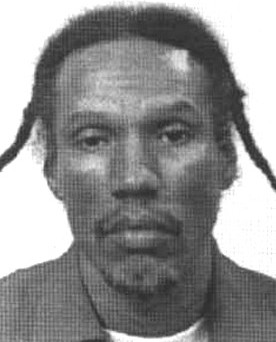
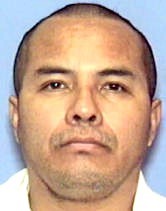
Gregory Resnover
Murderer Ervil LeBaron
Murderer · USA · 1972
Ervil Morrell LeBaron (1925 to August 16, 1981) was the leader of a polygamous…
35 victims
Ervil LeBaron
Murderer · USA · 1972
Ervil Morrell LeBaron (1925 to August 16, 1981) was the leader of a polygamous…
35 victims
 Brian Kevin Rosenfeld
Murderer · USA · 1985
Brian Kevin Rosenfeld Brian Kevin Rosenfeld was sentenced to three concurrent l…
23 victims
Brian Kevin Rosenfeld
Murderer · USA · 1985
Brian Kevin Rosenfeld Brian Kevin Rosenfeld was sentenced to three concurrent l…
23 victims
 Marvin Gray
Murderer · USA · 1975
Marvin Gray was convicted killer who claimed responsibility for 23 slayings and…
23 victims
Marvin Gray
Murderer · USA · 1975
Marvin Gray was convicted killer who claimed responsibility for 23 slayings and…
23 victims
 Yahweh ben Yahweh
Murderer · USA · 1980
Yahweh ben Yahweh was born and legally named Hulon Mitchell Jr. (October 27, 19…
23 victims
Yahweh ben Yahweh
Murderer · USA · 1980
Yahweh ben Yahweh was born and legally named Hulon Mitchell Jr. (October 27, 19…
23 victims
 Lila Gladys Young
Murderer · Canada · 1928
Lila Gladys Young was also named Lila Gladys Lila Coolen. Lila Gladys Young was…
100 victims
Lila Gladys Young
Murderer · Canada · 1928
Lila Gladys Young was also named Lila Gladys Lila Coolen. Lila Gladys Young was…
100 victims
 Robert Gary Girts
Murderer · USA · 1992
Robert Gary Girts was a Poland Township native who worked at a funeral home in…
1 victim
Robert Gary Girts
Murderer · USA · 1992
Robert Gary Girts was a Poland Township native who worked at a funeral home in…
1 victim
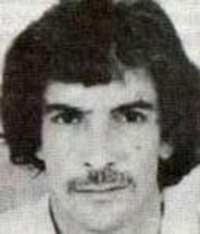 Keith Faure
Murderer · Australia · 1976
Keith George Faure was born in June 1951. He was an Australian career criminal…
4 victims
Keith Faure
Murderer · Australia · 1976
Keith George Faure was born in June 1951. He was an Australian career criminal…
4 victims
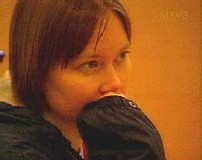 Sanna Sillanpää
Homicide · Finland · 1999
Sanna Riitta Liisa Sillanpää (born April 15, 1968) was a Finnish woman who shot…
3 victims
Sanna Sillanpää
Homicide · Finland · 1999
Sanna Riitta Liisa Sillanpää (born April 15, 1968) was a Finnish woman who shot…
3 victims
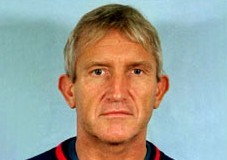 Kenneth Noye
Homicide - Murderer · United Kingdom · 1983
Kenneth Noye was a British criminal. Noye was involved in laundering the procee…
2 victims
Kenneth Noye
Homicide - Murderer · United Kingdom · 1983
Kenneth Noye was a British criminal. Noye was involved in laundering the procee…
2 victims
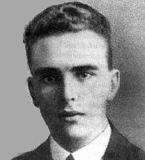 Frederick Bywaters
Murderer · United Kingdom · 1922
Frederick Edward Francis Bywaters (27 June 1902 – 9 January 1923) and Edith Jes…
1 victim
Frederick Bywaters
Murderer · United Kingdom · 1922
Frederick Edward Francis Bywaters (27 June 1902 – 9 January 1923) and Edith Jes…
1 victim
- Gender
- male
- Country
- USA
- Location
- Marion County, Indiana, USA
- Date of birth
- August 12, 1951
- Age at first offence
- 29
- Characteristics
- to avoid arrest
- Victim profile
- Jack Ohrberg, 44 ( Indianapolis Police Sergeant )
- Method of murder
- Shooting ( AR-15 rifle)
- Date(s) of murder
- December 11, 1980
- Years active
- 1980
- Date of arrest
- Same day (surrenders)
- Status
-
Executed
Executed by electrocution in Indiana on December 8, 1994
Case record: Gregory Resnover
Background
Gregory Resnover was convicted of conspiracy to commit murder and murder in Indiana and was sentenced to fifty years imprisonment for conspiracy and to death for murder. The death sentence was carried out by electrocution in Indiana on December 8, 1994.
A report described how 7 Indiana executions had been carried out and that Indiana used the electric chair since 1914. It also stated that, in the years since the death penalty was restored, there had been 256 executions in the United States, including the execution of Gregory Resnover.
Legal history (direct appeals and post-conviction)
Direct appeal: Resnover v. State, 460 N.E.2d 922 (Ind. March 19, 1984)
Defendant-Appellant Gregory Resnover was found guilty by a jury in the Marion Superior Court of conspiracy to commit murder and murder. The trial court sentenced Appellant to fifty years imprisonment for conspiracy and to death for murder.
The Supreme Court held: (1) Indiana's death penalty statute is constitutional; (2) Superior Court adequately followed standards and guidelines prior to imposition of the death penalty; (3) prosecutor's discretion to file a capital punishment count was permissible; (4) manner in which imposition of the death sentence is automatically reviewed contains no latent constitutional infirmities; (5) defendant's motion for continuance due to prejudicial publicity was properly denied; (6) testimony of police officer, news reporter, and fellow jail inmate concerning statements made by defendant were admissible; (7) tape recording of police radio communications was admissible; (8) officer was properly allowed to testify during penalty phase of defendant's trial; and (9) death penalty was not arbitrarily or capriciously imposed upon defendant, and was reasonable and appropriate in his case.
The decision stated: the judgment was affirmed and remanded, and remanded “for the sole purpose of setting the date when Appellant's death sentence is to be carried out.”
The opinion included:
PIVARNIK, Justice. Defendant-Appellant Gregory Resnover was found guilty by a jury in the Marion Superior Court of conspiracy to commit murder and murder. The trial court sentenced Appellant to fifty years imprisonment for conspiracy and to death for murder. Appellant now directly appeals and raises the following eight consolidated issues for our consideration: 1. whether Indiana's death penalty statute is constitutional; 2. whether certain pretrial publicity rendered the trial court's denial of Appellant's Motion for Continuance a reversible error; 3. whether Appellant's "Miranda " rights were violated when the trial court allowed a police officer to testify about overhearing a certain remark by Appellant; 4. whether the trial court erred by permitting a news reporter to testify about certain admissions made to him by Appellant; 5. whether the trial court erred by permitting a jail inmate to testify about certain admissions made to him by Appellant; 6. whether the trial court erred by admitting a certain tape recording into evidence; 7. whether the trial court erred by permitting a witness to testify in alleged violation of a separation order; and 8. whether the trial court erred by sentencing Appellant to death when it was asserted that he was not the "trigger man."
The opinion further stated:
The record shows that Appellant did, in fact, take a substantial part in the shooting at police officers which resulted in Sergeant Jack Ohrberg's death. The record clearly shows that Appellant knowingly and intentionally participated in this criminal activity which caused the death of a police officer who was serving in an official capacity. We therefore find and now hold that the death penalty as provided for by our statutes was not arbitrarily or capriciously imposed upon Appellant and is reasonable and appropriate in Appellant's case. The trial court is affirmed in all things including its imposition of the death penalty upon Appellant. This cause is accordingly remanded to the trial court for the sole purpose of setting the date when Appellant's death sentence is to be carried out.
It also stated that GIVAN, C.J., and HUNTER, DeBRULER and PRENTICE, JJ., concurred.
Post-conviction: Resnover v. State, 507 N.E.2d 1382 (Ind. 1987)
The record described that the Superior Court, Marion County, John W. Tranberg, Special Judge, denied defendant's petition for postconviction relief, and defendant appealed.
The Supreme Court held: (1) defendant was not denied effective assistance of counsel; (2) defendant was not denied his privilege against compelled self-incrimination; (3) postconviction relief witness was properly permitted to assert her privilege against self-incrimination; (4) defendant was not entitled to reopen postconviction relief proceedings; and (5) sentence was not imposed by judge who was biased or prejudiced against defendant.
The decision affirmed the denial of postconviction relief.
The decision stated that appellant was convicted of Murder and Conspiracy to Commit Murder, a Class A felony, and that the court imposed the death penalty on the murder count and a fifty (50) year sentence on the conspiracy count. It also stated that the convictions and sentences were affirmed on direct appeal.
The decision included additional procedural details:
- Appellant's petition for post-conviction relief was denied after two evidentiary hearings.
- Appellant filed his post-conviction petition on October 10, 1984.
- The trial court denied the petition on July 19, 1985.
- Six months later, appellant filed a “Verified Motion for Relief From Judgment” requesting the court to set aside its judgment on his petition for purposes of a hearing and the consideration of additional evidence, and that motion was also denied.
- Pursuant to a request by appellant, the Court consolidated the appeal from the denial of the post-conviction petition and the appeal from the denial of the motion for relief from judgment.
- The trial court was affirmed, and SHEPARD, C.J., and DeBRULER, PIVARNIK and DICKSON, JJ., concurred.
The offence
Resnover was convicted of conspiracy to commit murder and murder.
During the jury trial, evidence showed police officers arrived at a duplex residence on North Oxford Street in Indianapolis, based on information believed to be at 3544 North Oxford Street. The evidence described events beginning at approximately 3:00 a.m. on December 11, 1980, and police activity continuing until approximately 5:30 a.m.
The evidence established that:
- Indianapolis Police Sergeant Jack Ohrberg met Sergeant Lewis J. Christ to serve papers on certain individuals believed to be at 3544 North Oxford Street in Indianapolis.
- Ohrberg and Christ subsequently were joined by other officers before arriving at the duplex residence at 3544 North Oxford at approximately 5:30 a.m.
- With Officers Schneider and Harvey standing watch in the rear, Ohrberg, Christ and Officers Ferguson and Foreman proceeded to the porch and front door.
- Foreman and Ferguson were in uniform.
- Ohrberg knocked loudly several times and identified himself as a police officer.
- Ohrberg checked with Sandra Richardson to ascertain whether any persons were known to be inside the 3544 address.
- Richardson told Ohrberg that she had heard noise come from 3544.
- Ohrberg returned to 3544 and again announced himself as a police officer, then used his right shoulder to batter the door, which began to open.
- Foreman shone a flashlight because it was dark inside and saw furniture blocking the door.
- Foreman and Christ saw a burst of muzzle flashes and heard two, possibly three, shots in quick succession, with muzzle flashes from two separate locations approximately eight to ten feet apart.
- Ohrberg said: “Oh, no, I've been shot” or “I've been hit” and stepped back two steps, sank to his knees and collapsed on the porch.
- Christ saw a person with an “Afro” type hairstyle emerge from the dark doorway onto the porch and fire at least two additional shots into Sergeant Ohrberg.
- Christ heard shots rapidly fired from within the residence.
- When Christ returned gunfire, the man on the porch retreated inside.
- Ferguson saw the person stand over Ohrberg and fire his rifle into Ohrberg.
- Ferguson fired at the gunman and then ran around the corner where gunfire continued to be directed at him.
- After more shooting, a man identifying himself as “Gregory” called from inside the house and said “Let's talk.”
- “Gregory” stated that there was an injured man inside and offered to send out the two women occupants.
- Christ refused to accept the women and ordered “Gregory” outside.
- “Gregory” said he would come out, stepped to the door, threw a weapon out into the front yard, and walked onto the front porch with his hands raised.
- Christ identified the man as Appellant Gregory Resnover and identified an AR-15 rifle as similar to the weapon Appellant threw.
- Ferguson identified the man as Gregory Resnover.
- Earl Resnover followed Appellant out onto the front porch where he laid down an AR-15 rifle and a Smith and Wesson revolver.
- Two women walked out of the house leaving wounded Tommy Smith alone in the building.
- Foreman testified that the four came out of the house approximately ten to fifteen minutes after the initial burst of gunfire.
Forensic pathology described that Dr. James A. Benz performed an autopsy on the body of Jack Ohrberg and testified:
- Ohrberg died as a result of multiple gunshot wounds.
- One bullet perforated Ohrberg's abdominal wall and external iliac artery and completely severed his iliac vein.
- Another shot lodged in the soft tissues of Ohrberg's back after fracturing parts of two vertebrae.
- A third shot entered his left side, fractured his tenth rib and bruised his lung.
- There were 600 mililiters of blood in Ohrberg's abdominal cavity.
Investigation and evidence
Crime scene collection and forensic recovery included weapons and ammunition items.
The weapons thrown into the front yard or left on the front porch were collected by Russell Bartholomew, a crime lab technician. Bartholomew testified that:
- The weapon thrown down by Appellant was an AR-15 automatic rifle with live rounds.
- The weapons on the porch were another loaded AR-15 and a loaded .38 caliber Smith and Wesson revolver.
Evidence technician Cosmos Raimondi recovered weapons, ammunition clips, bullets and shell fragments from inside the house after it was secured by police. Raimondi testified he found:
- “one AR-15 rifle without clip but with one live round chambered; the rifle's clip was located nearby damaged but containing twenty-five live rounds;”
- “one .30 caliber Universal carbine with one round chambered and a clip containing twenty-five rounds;”
- “one rifle clip concealed in a bathroom light fixture;”
- “one Mauser 7.65 automatic pistol recovered from underneath the front room sofa with one round chambered and one five round clip;”
- “fifteen spent shell casings recovered from the front room and kitchen;”
- “twelve live Smith and Wesson rounds for a .38 caliber Special pistol;”
- “one .223 ammunition clip with twenty-five live bullets discovered hidden underneath the front sofa;”
- “another .223 ammunition clip with twenty-six live bullets;”
- “one ammunition pouch with seven live automatic bullets found underneath a cushion on the front sofa;”
- “fifteen Smith and Wesson Specials and one WW .38 Special found lying loose on a coffee table;”
- “one Memorex casette box with fifteen live .38 caliber bullets;”
- “one AR-15 clip with thirty live .223 caliber bullets discovered in the rear bedroom; and”
- “one black shaving case containing one knife, one empty Colt AR-15 clip, one ammunition clip possibly for a M-1 carbine and two hearing protectors.”
The AR-15 recovered from the front porch bore Appellant's fingerprints on the ammunition clip.
The evidence described:
- Although this gun had fired eight of the recovered shell casings, it did not fire the bullet recovered from Ohrberg's body.
- The AR-15 found inside the house with its broken clip located nearby fired the bullet retrieved from Ohrberg's body.
- The broken clip appeared to have been dented by a bullet.
Crime lab technician Robert McCurdy testified that he performed atomic absorption tests on swabbings taken from the arms of Appellant and Tommy Smith:
- Appellant's right arm had significantly higher amounts of barium and antimony, components of modern ammunition primer, indicating his handling or firing of a gun.
- The tests conducted on the swabbings taken from Appellant's left arm were inconclusive.
McCurdy also recovered from Earl Resnover a billfold containing Sergeant Ohrberg's business card.
Timeline
- December 11, 1980 (approximately 3:00 a.m.) — Indianapolis Police Sergeant Jack Ohrberg met Sergeant Lewis J.
- December 11, 1980 (approximately 5:30 a.m.) — Officers arrived at 3544 North Oxford and Ohrberg, Christ, Officers Ferguson and Foreman proceeded to the porch and front door.
- December 11, 1980 (after the initial burst of gunfire) — Shooting occurred after entry efforts; Christ and Ferguson described gunfire, a man calling “Let's talk,” and the identification of Gregory Resnover stepping onto the front porch with his hands raised.
- December 8, 1994 — Gregory Resnover was executed by electrocution in Indiana.
Trial
At approximately 3:00 a.m. on December 11, 1980, police activity at the duplex led to the death of Sergeant Jack Ohrberg after multiple gunshot wounds.
The evidence presented at trial included testimony about admissions made by Appellant, admissibility of police radio communications recordings, and other rulings that were later addressed on direct appeal as consolidated issues.
In the direct appeal decision, the Supreme Court affirmed the convictions and sentences, including the death sentence.
Appeals and outcomes
Resnover v. State, 460 N.E.2d 922 (Ind. March 19, 1984)
The Supreme Court affirmed and remanded solely for setting the date for carrying out Appellant’s death sentence.
Resnover v. State, 507 N.E.2d 1382 (Ind. 1987) (PCR)
The Superior Court denied postconviction relief, and the Supreme Court affirmed that denial.
Aftermath
A later account described the immediate post-execution experiences of attorney Bob Hammerle, who watched the execution. It described 2,300 volts of electricity surging through Gregory Resnover's body and described Resnover's eyes hidden by a black hood. It also described the legal team decision after the execution to drive Resnover's body back to Indianapolis and paraded it in a caravan around the governor's residence.
The report included direct quotations.
Amos Brown asked Evan Bayh:
"Governor, why? You couldn't have stayed it a few weeks, while the doubts and questions were either being answered or explained? Is running for a job in Washington really that important to you?"
Bob Hammerle said:
"I can't deal with it when somebody's life's on the line," he said, furiously wiping away tears after recounting the last minutes of Gregory Resnover's life. "Because you can't have this happen. "I mean, you've got to stay detached, and I can't anymore."
Hammerle later said:
George Kendall said:
"It asks too much of people," said Kendall, who has witnessed 4 executions. "It's the worst experience I've ever had."
Hammerle quoted Jack Ohrberg:
"It was what Jack Ohrberg would have expected me to do," Hammerle said.
Hammerle described his feelings:
"I'm tormented by the possibility that somehow, I tarnished the whole thing," he said. "I was fearful of that."
In describing Resnover's statements to the legal team, Foster and Long-Sharpe recounted:
He said, 'Keep fighting for these guys.' And we said, 'That is the one thing that we cannot promise you.' He said, 'Give it a couple of days or a couple of weeks. If you feel the strength to represent people back here, then you will know that I will be helping hold you up.'"
The same report described post-traumatic stress symptoms and described Foster saying:
"I didn't get out of bed for 2 months," she said. "When I finally did get up, I seriously questioned whether I was going to go back to work."
It also described:
- That Resnover's execution followed legal proceedings in which lawyers had exhausted all court appeals.
- That Hammerle had been involved with only a few death penalty cases before Resnover's and was on the Resnover case for only 7 months.
- That Hammerle was brought on board to argue for clemency before the parole board and to be the point-person for the media.
- That after the execution, Hammerle and others were involved in a protest caravan around the governor’s residence during a Christmas party.
- That then-Gov. Evan Bayh hosted a Christmas party with guests who were described as friends of Hammerle's.
The report named additional people associated with the events:
- Frank O'Bannon, described as the Republican governor of Illinois.
- Jack Ohrberg.
- George Kendall, described as a staff attorney with the NAACP Legal Defense Fund in New York.
- Monica Foster, described as Hammerle's law partner at the time and a leader of Resnover's legal team.
- Rhonda Long-Sharpe, described as part of Resnover's legal team and as leaving to open her own firm.
- Foster was described as being at a nearby motel during the execution.
- Foster was described as remaining close to Hammerle.
Other details
A report described Evan Bayh and the timing and context of a protest after the execution. It also described that the execution coverage included multiple local television station crews arriving at Michigan City to cover the execution of Gregory Resnover, and that Channel 13 interrupted programming for live coverage from outside the prison and carried a post-execution news conference live.
The narrative account mentioned media commentary and coverage issues, including a description that Channel 8 went to a black screen instead of running a scheduled program and that there was open-mike studio chatter and laughter. It also described editorial opinion by Recorder columnist Amos Brown and named correspondent Jane Harrington and Star writer Lynn Ford.
It also referenced court case citations:
- Resnover v. State, 460 N.E.2d 922 (Ind. March 19, 1984) (Direct Appeal)
- Resnover v. State, 507 N.E.2d 1382 (Ind. 1987) (PCR)
It further referenced a companion case:
- Smith v. State (1984), Ind., 465 N.E.2d 1105, 1111-13.
Spotted an error, or have more information about this case?