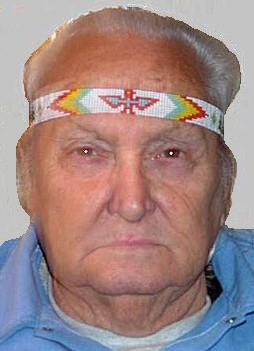
Clarence Ray Allen
Murderer Ervil LeBaron
Murderer · USA · 1972
Ervil Morrell LeBaron (1925 to August 16, 1981) was the leader of a polygamous…
35 victims
Ervil LeBaron
Murderer · USA · 1972
Ervil Morrell LeBaron (1925 to August 16, 1981) was the leader of a polygamous…
35 victims
 Marvin Gray
Murderer · USA · 1975
Marvin Gray was convicted killer who claimed responsibility for 23 slayings and…
23 victims
Marvin Gray
Murderer · USA · 1975
Marvin Gray was convicted killer who claimed responsibility for 23 slayings and…
23 victims
 Yahweh ben Yahweh
Murderer · USA · 1980
Yahweh ben Yahweh was born and legally named Hulon Mitchell Jr. (October 27, 19…
23 victims
Yahweh ben Yahweh
Murderer · USA · 1980
Yahweh ben Yahweh was born and legally named Hulon Mitchell Jr. (October 27, 19…
23 victims
 Charles Manson
Murderer · USA · 1969
Charles Milles Manson (born November 12, 1934) was an American criminal and mus…
9 victims
Charles Manson
Murderer · USA · 1969
Charles Milles Manson (born November 12, 1934) was an American criminal and mus…
9 victims
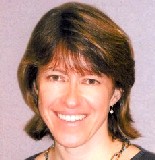 Mine An Ener
Murderer · USA · 2003
Mine An Ener was a Villanova University history professor specializing in Middl…
1 victim
Mine An Ener
Murderer · USA · 2003
Mine An Ener was a Villanova University history professor specializing in Middl…
1 victim
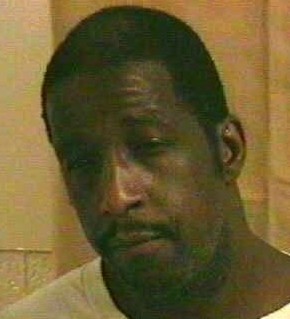 Larry Darnell Williams
Murderer · USA · 1979
Larry Darnell Williams was an inmate on death row. He was convicted in Gaston C…
2 victims
Larry Darnell Williams
Murderer · USA · 1979
Larry Darnell Williams was an inmate on death row. He was convicted in Gaston C…
2 victims
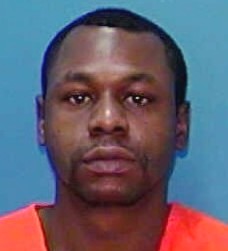 Jermaine Foster
Murderer · USA · 1992
Jermaine Foster was tried together with codefendants Booker, Henderson, and Cat…
2 victims
Jermaine Foster
Murderer · USA · 1992
Jermaine Foster was tried together with codefendants Booker, Henderson, and Cat…
2 victims
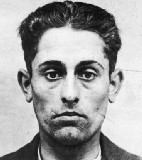 Tony Mancini
Murderer · United Kingdom · 1934
Tony Mancini was the resident of the house at number 52 Kemp Street in Brighton…
1 victim
Tony Mancini
Murderer · United Kingdom · 1934
Tony Mancini was the resident of the house at number 52 Kemp Street in Brighton…
1 victim
 James Brewer
Murderer · USA · 1977
James Brewer was convicted of murder on February 17, 1978, after a jury trial,…
1 victim
James Brewer
Murderer · USA · 1977
James Brewer was convicted of murder on February 17, 1978, after a jury trial,…
1 victim
 Jason Hann
Murderer · USA · 1999
Jason Hann was convicted of killing his 2-month-old daughter, Montana, and also…
2 victims
Jason Hann
Murderer · USA · 1999
Jason Hann was convicted of killing his 2-month-old daughter, Montana, and also…
2 victims
- Gender
- male
- Country
- USA
- Location
- California, USA
- Date of birth
- January 16, 1930
- Age at first offence
- 44
- Characteristics
- robbery, murder for hire, revenge
- Victim profile
- Mary Sue Kitts, 17 / Byron Schletewitz, 27; Douglas White, 18, and Josephine Rocha, 17
- Method of murder
- Strangulation / Shooting
- Date(s) of murder
- 1974 / 1980
- Years active
- 1974–1980
- Date of arrest
- —
- Status
-
Executed
Executed by lethal injection in California on January 17, 2006
Case information
Clarence Ray Allen was executed by lethal injection in California on January 17, 2006.
Timeline
- June 1974 — Allen decided to burglarize Fran’s Market in Fresno.
- August 12, 1974 — Allen committed an armed robbery at the Safina Jewelry Store in Fresno in which $18,000 worth of jewelry was taken from the store safe.
- August 1980 — Allen asked his eldest son Kenneth and Kenneth’s wife Kathy to visit him, and told them that Ray and Bryon Schletewitz were going to be murdered and that other witnesses against him would also be eliminated.
- September 4, 1974 — Allen committed an armed robbery at Don’s Hillside Inn in Porterville in which $3,600 was taken from the store safe and hundreds of dollars in cash and credit cards were taken from patrons at the scene.
- September 4, 1980 — Hamilton and Barbo aborted the planned execution at Fran’s Market because Connie Barbo objected to killing a 15-year-old Mexican boy in the store that night.
- September 5, 1980 — Hamilton entered Fran’s Market shortly before closing time, ordered the store employees to lie on the floor, and shot multiple people with a sawed-off shotgun; Joe Rios survived.
- September 4, 1980 — Allen received help from Charles Jones, Carl Mayfield, and Eugene Furrow in connection with his plans relating to Mary Sue Kitts.
- October 21, 1976 — Allen committed an armed robbery at Skagg’s Drug Store in Bakersfield in which Raoul Lopez accidentally shot himself.
- November 20, 1976 — Allen committed an armed robbery at a Sacramento Lucky’s market in which grocery clerk Lee McBride was shot and sustained permanent damage to his nervous system.
- February 10, 1977 — Allen committed a robbery at the Tulare K-Mart in which over $16,000 in cash was taken.
- March 16, 1977 — Allen committed a Visalia K-Mart robbery in which Larry Green held a gun to the head of employee Bernice Davis and subsequently shot employee John Attebery in the chest, permanently disabling him.
- August 22, 1982 — The jury found Allen guilty as charged after three days of deliberation.
- November 22, 1980 — Allen was sentenced to death.
- November 22, 1982 — Allen was sentenced to death by a Glenn County court.
- December 31, 1986 — The California Supreme Court affirmed Allen’s conviction and sentence.
- September 5, 1980 — Hamilton was arrested after the Fran’s Market killings.
- December 2, 2005 — Court-ordered execution date was set for January 17, 2006.
- January 16, 2006 — Allen was scheduled to be housed in the death chamber area (death-watch cell) prior to execution; protesters remained outside the prison (as described in accounts).
- January 17, 2006 — Allen was executed by lethal injection at San Quentin State Prison; he was pronounced dead at 12:38 a.m.
Background
Allen was of Choctaw descent and claimed Native American ancestry; his mother was part Choctaw and his father was part Cherokee. He became “professed to be a Native American” in about 1988. In accounts of his execution, Allen wore a beaded headband and an Indian necklace and placed a ceremonial feather on his chest.
Allen was largely disabled at the time of execution. Multiple accounts described him as legally blind and confined to a wheelchair, and as suffering from diabetes and heart disease. He had a nearly fatal heart attack and was legally blind.
Allen was incarcerated at Folsom Prison when he orchestrated the triple murder for which he received a death sentence.
The offence
Fran’s Market burglary and murder of Mary Sue Kitts (1974)
Allen decided in June 1974 to burglarize Fran’s Market in Fresno. He had known the owners, Ray and Frances Schletewitz, for over a decade.
Allen enlisted the assistance of his son Roger Allen, Carl Mayfield, and Charles Jones. Roger Allen invited the Schletewitz’s 19-year-old son Bryon to an evening swimming party at Allen’s house. While Bryon was swimming, keys were taken from his pants pocket. Later that night, Allen, Mayfield, and Jones used Bryon’s keys to burglarize Bryon’s parents’ market. They removed a safe and divided the booty into $500 in cash and over $10,000 in money orders.
Allen arranged for the money orders to be cashed in southern California shopping centers with Allen’s assistance and others using false identifications. Mary Sue Kitts was the 17-year-old girlfriend of Allen’s son Roger at the time; she later contacted Bryon Schletewitz and tearfully confessed that Allen had burglarized Fran’s Market and that she had helped cash the stolen money orders using a fake identification and a wig provided by Allen.
After Roger told his father of Bryon’s accusation, Allen responded that Bryon and Mary Sue Kitts would have to be “dealt with.” Allen then threatened the Schletewitzes by hinting someone was planning to burn down their house, and by having Roger pay Eugene Furrow $50 to fire several gunshots at their home one midnight.
A meeting was held at Allen’s house with Jones, Mayfield, and Furrow. Allen told them that Kitts had been talking too much and should be killed. Allen called for a vote on the issue of Mary Sue Kitts’s execution and the vote was unanimous.
Allen developed a plan to poison Mary Sue Kitts by tricking her into taking cyanide capsules at a party held at Shirley Doeckel’s Fresno apartment. Allen sent Mayfield and Furrow to pick up cyanide and arranged stones to weigh down Kitts’s body to be dumped into a canal after the murder. Allen overruled suggestions about delaying action and dismissed Doeckel’s objection to having the murder committed in her apartment.
Mary Sue Kitts arrived and refused to take the cyanide “pills” without wine. Allen met Furrow outside the apartment, stressed that he “didn’t care how it was done but do it,” and told Furrow he would be killed if he tried to leave. Furrow began to strangle Kitts only to be interrupted by a phone call from Allen asking if Furrow had killed her yet. Furrow answered “no,” Allen ordered “do it” and hung up. Furrow strangled Mary Sue Kitts to death.
After the killing, Allen warned those involved that they were equally involved, and directed that stones be tied to the wrapped body and thrown into a canal while he watched for traffic.
Allen then threatened and bragged to multiple cohorts about the killing. Allen told Barbara Carrasco that he had “offed Mary Sue Kitts because she was opening her mouth about the money orders.” Allen said he involved Furrow because he wanted to get him “in deep so he couldn’t talk.” Allen stated he would have put Furrow in the same hole if Furrow did not go along with the murder. Allen also told others that “talking was a spreading disease and that the only way to kill it was to kill the person talking.”
Kitts’s body was never found.
Witness-retaliation scheme while incarcerated at Folsom Prison
While incarcerated at Folsom Prison, Allen called and wrote his second son Kenneth for copies of a magazine article about Kitts’s murder, stating he wanted to send them to other prisons to solicit help retaliating against those who had testified against him.
Allen met Billy Ray Hamilton in Folsom. Hamilton was a fellow inmate and convicted robber working with Allen in the prison’s kitchen for two months in mid-1980. Hamilton was nicknamed “Country” and became Allen’s “dog,” running errands and taking care of problems in return for cash. Another inmate, Gary Brady, assisted Hamilton occasionally.
Allen informed Hamilton and Brady that he had an appeal coming and wanted certain people taken “out of the box, killed” because “they had been onto his appeal” and “messed him around on a beef.” Allen mentioned the names Bryon Schletewitz, Charles Jones, and “Sharlene” (Charlotte) as witnesses to be killed, and offered Hamilton $25,000 for the job.
Allen confided to Joseph Rainier that he had been convicted of first-degree murder based on testimony from “the guy who did the actual killing” and wanted to see that person and four other witnesses killed. Rainier saw Allen and Hamilton huddled together and talking on the prison yard bleachers and track for four to six weeks before Hamilton’s release on parole in late August 1980.
Allen asked Kenneth and Kathy to visit him with their baby on August 15. Allen told them that Ray and Bryon Schletewitz were going to be murdered and that other witnesses against him would be eliminated so he would prevail on retrial if his appeal succeeded. Allen stated Shirley Doeckel had agreed to change her testimony if there were a new trial.
Allen gave Hamilton’s mug shot to Kenneth and directed Kenneth to burn it after memorizing Hamilton’s face. Allen expected Kenneth to supply “Country” with guns and transportation.
Allen sent letters describing the plan using coded language; one described “country music” in connection with a planned event. Allen described “Country” as someone who would do what he was told. Kenneth arranged for Hamilton’s transportation and supplied weapons.
Fran’s Market triple murder (1980)
After Hamilton was paroled, Kenneth wired transportation money and met Hamilton at the Fresno bus depot. Hamilton confirmed he was there to murder Bryon and Ray Schletewitz and asked to see the weapons he would use. Hamilton stated he would not kill Doeckel yet because she was helping locate other witnesses.
Hamilton’s girlfriend Connie Barbo joined him in Fresno. Accounts described her as objecting to killing a 15-year-old Mexican boy who was in the store on September 4, 1980, leading them to abort that plan.
On September 5, 1980, Hamilton entered Fran’s Market shortly before closing time. Hamilton used a sawed-off shotgun and Barbo produced a .32 caliber revolver. Hamilton ordered Bryon Schletewitz and employees Douglas Scott White, Josephine Rocha, and Joe Rios to lie on the floor.
Hamilton told White to get up and walk toward the freezer, warning White there was a safe inside. White said there was no safe. Hamilton responded “get out ‘Briant.’” Bryon then volunteered, “I am Bryon.” Bryon gave up his keys and assured Hamilton he would give Hamilton all the money he wanted.
Hamilton then shot Bryon Schletewitz from close range in the center of his forehead with the sawed-off shotgun. Hamilton asked White where the safe was, and White responded “Honest, there’s no safe.” Hamilton shot White in the neck and chest at point-blank range.
As Josephine Rocha began crying, Hamilton shot her through the heart, lung, and stomach. Joe Rios escaped to the women’s restroom. Hamilton swung open the restroom door, pointed the shotgun at Rios’ face, and shot him from three feet away. Rios put up his arm in time to take the blast in the elbow, saving his life.
Hamilton then fled with Barbo. A neighbor, Jack Abbott, who had come outside after hearing the shooting, exchanged fire with Hamilton. Abbott shot Hamilton in the foot; Hamilton fled.
Barbo was apprehended at the scene. Rios survived.
A “hit list” containing names and addresses connected to the retaliation plan was later found on Hamilton when he was arrested after a liquor store robbery.
Investigation
After Hamilton was arrested, police seized a hit list with names and addresses of people Allen wanted killed. The hit list connected Hamilton to Allen. Investigators also seized from Hamilton an address book listing names and addresses of people who had testified against Allen at the 1977 murder trial, including Eugene Furrow, Barbara Carrasco, Benjamin Meyer, Charles Jones, Carl Mayfield, Shirley Doeckel, and Ray and Bryon Schletewitz.
Arrest and detention
Hamilton was arrested about a week after the Fran’s Market murders after he was caught holding the hit list while attempting to rob a liquor store.
Barbo was arrested at the scene.
Allen remained incarcerated throughout the retaliatory scheme while orchestrating events from prison.
Trial
Trial for burglary, conspiracy, and murder of Mary Sue Kitts (1977)
A jury convicted Allen of burglary, conspiracy, and first-degree murder related to Mary Sue Kitts in 1977.
Allen was sentenced to life without parole.
Trial for Fran’s Market triple murder and conspiracy (1982, Glenn County)
Allen pleaded not guilty at his arraignment before Roy G. MacFarland. The case was prosecuted by officials of the Attorney General’s office after a change of venue.
The jury heard evidence including testimony from 58 witnesses over 23 days.
The information charged Allen with murdering Bryon Schletewitz (count 1), murdering Douglas Scott White (count 2), murdering Josephine Rocha (count 3), and conspiring to murder Bryon Schletewitz, Ray Schletewitz, Eugene Furrow, Barbara Carrasco, Benjamin Meyer, Charles Jones, and Carl Mayfield (count 4).
The jury returned guilty verdicts after three days of deliberation and found special circumstances, with eleven special circumstances alleged.
The trial included a penalty phase of seven days. After deliberating one day in the penalty phase, the jury returned a verdict of death.
Allen was sentenced to death by a Glenn County court.
Evidence and witness issues at trial
Allen testified in his own defense and denied involvement in the Fran’s Market murders and the conspiracy to execute witnesses, while admitting aspects of his letters and involvement in prior crimes.
Kenneth Ray Allen testified for the prosecution and described providing weapons and transportation and describing Allen’s plan for Hamilton to kill witnesses.
Kathy Allen tried to exculpate Allen and implicate Kenneth, and admitted trying to falsify evidence and transmitting messages to Hamilton.
Sentencing
A jury sentenced Allen to death after a penalty phase. The sentencing included death eligibility special circumstance findings.
Appeals
Direct appeal (California Supreme Court)
The California Supreme Court affirmed the verdict of guilt, the finding of special circumstances, and the judgment of death.
The appellate review addressed special circumstance counting issues and jury instruction issues. The judgment was affirmed.
Federal habeas
Allen pursued habeas relief in federal court.
In 2004, a Ninth Circuit decision affirmed denial of habeas relief; it involved findings including constitutionally deficient performance by trial counsel in the penalty phase but no reasonable probability of a different outcome.
In 2005, another Ninth Circuit habeas decision affirmed denial of relief and denied petition for rehearing and suggestion for rehearing en banc.
Outcome
Allen was executed by lethal injection in California on January 17, 2006 at San Quentin State Prison.
Allen was pronounced dead at 12:38 a.m.
Aftermath
Following the execution, multiple accounts described reactions and statements from those connected to the victims, and described protesters outside San Quentin.
Allen’s final meal included buffalo steak, Kentucky Fried Chicken, sugar-free pecan pie and sugar-free black walnut ice cream, and whole milk. Allen made a final statement in which he said:
“all of the inmates on death row that I'm leaving behind that they will be joining me one day.” He also said: “My last words will be 'Hoka Hey, it's a good day to die.' Thank you very much, I love you all. Good-bye.”
Spotted an error, or have more information about this case?