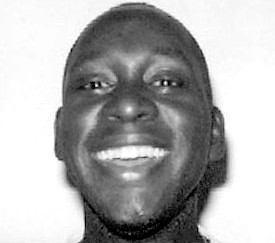
James Brewer
Murderer Ervil LeBaron
Murderer · USA · 1972
Ervil Morrell LeBaron (1925 to August 16, 1981) was the leader of a polygamous…
35 victims
Ervil LeBaron
Murderer · USA · 1972
Ervil Morrell LeBaron (1925 to August 16, 1981) was the leader of a polygamous…
35 victims
 Brian Kevin Rosenfeld
Murderer · USA · 1985
Brian Kevin Rosenfeld Brian Kevin Rosenfeld was sentenced to three concurrent l…
23 victims
Brian Kevin Rosenfeld
Murderer · USA · 1985
Brian Kevin Rosenfeld Brian Kevin Rosenfeld was sentenced to three concurrent l…
23 victims
 Marvin Gray
Murderer · USA · 1975
Marvin Gray was convicted killer who claimed responsibility for 23 slayings and…
23 victims
Marvin Gray
Murderer · USA · 1975
Marvin Gray was convicted killer who claimed responsibility for 23 slayings and…
23 victims
 Yahweh ben Yahweh
Murderer · USA · 1980
Yahweh ben Yahweh was born and legally named Hulon Mitchell Jr. (October 27, 19…
23 victims
Yahweh ben Yahweh
Murderer · USA · 1980
Yahweh ben Yahweh was born and legally named Hulon Mitchell Jr. (October 27, 19…
23 victims
 John Mills
Murderer · USA · 1982
John Mills Jr. was a Florida prison inmate. In 1982, a jury convicted him of fi…
1 victim
John Mills
Murderer · USA · 1982
John Mills Jr. was a Florida prison inmate. In 1982, a jury convicted him of fi…
1 victim
 Robert Blake
Murderer? · USA · 2001
Robert Blake, an American actor most famous for starring in the U.S. television…
1 victim
Robert Blake
Murderer? · USA · 2001
Robert Blake, an American actor most famous for starring in the U.S. television…
1 victim
 Robert Jackson
Murderer · USA · 1992
Robert W. Jackson, III — defendant; male; white · Elizabeth Girardi — victim ·…
1 victim
Robert Jackson
Murderer · USA · 1992
Robert W. Jackson, III — defendant; male; white · Elizabeth Girardi — victim ·…
1 victim
 Edward Fitzgerald
Murderer · USA · 1980
Edward B. Fitzgerald Sr. was put to death in Virginia’s electric chair for the…
1 victim
Edward Fitzgerald
Murderer · USA · 1980
Edward B. Fitzgerald Sr. was put to death in Virginia’s electric chair for the…
1 victim
- Gender
- male
- Country
- USA
- Location
- Lake County, Indiana, USA
- Date of birth
- June 10, 1956
- Age at first offence
- 21
- Characteristics
- murder for hire, armed robbery, robbery
- Victim profile
- Stephen Skirpan, 29
- Method of murder
- Shooting
- Date(s) of murder
- December 4, 1977
- Years active
- 1977
- Date of arrest
- Same day
- Status
-
Sentenced to death
Sentenced to death on March 1, 1978.
Case details
James Brewer was convicted of murder on February 17, 1978, after a jury trial, and was sentenced to death on March 1, 1978, in accordance with the jury’s recommendation.
After exhausting state court remedies, Brewer petitioned the federal district court for a writ of habeas corpus pursuant to 28 U.S.C. § 2254. The district court rejected Brewer’s assertion that the guilt phase of his trial was constitutionally defective, but found ineffective assistance of counsel during the penalty phase. The judge entered an order granting the writ of habeas corpus unless the State of Indiana provided Brewer with a new sentencing hearing within 90 days. The district court ordered a permanent stay of execution pending the outcome of the new sentencing hearing. The decision was affirmed on appeal.
Timeline
- December 4, 1977 (about 5:00 p.m.) — Brewer and an accomplice gained entrance to the Skirpan residence in Gary, Indiana, by representing that they were police detectives investigating an accident involving one of the Skirpan cars; they announced a robbery and held the family at gunpoint; during the robbery, Brewer fatally wounded Steven Skirpan.
- December 4, 1977 (about 4:30 p.m.) — Witnesses later identified Brewer as the man, along with Kenneth Brooks, who perpetrated an armed robbery of a gas station.
- December 4, 1977 (about 7:45 p.m.) — Witnesses later identified Brewer as the man, along with Kenneth Brooks, who perpetrated three other armed robberies in an apartment building earlier during the day of the Skirpan murder.
- February 17, 1978 — Brewer was convicted of murder after a jury trial.
- March 1, 1978 — Brewer was sentenced to death in accordance with the jury’s recommendation.
- (After state remedies exhausted) — Brewer petitioned the federal district court for a writ of habeas corpus under 28 U.S.C. § 2254.
- (District court order) — The writ of habeas corpus was granted unless the State of Indiana provided Brewer a new sentencing hearing within 90 days; a permanent stay of execution was ordered pending that outcome.
- (Appeal outcome) — The district court’s order was affirmed.
- (Appeals discussed in the record) — Brewer’s conviction and sentence were affirmed in Brewer v. State, 275 Ind. 338, 417 N.E.2d 889 (1981) (Brewer I), and post-conviction relief was denied; Brewer v. State, 496 N.E.2d 371 (Ind. 1986) (Brewer II) addressed a continuance and prejudice related to failure to present psychiatric history.
Background
The underlying facts supporting Brewer’s murder conviction were described as uncontested on appeal.
Brewer had counsel at trial and was the first defendant prosecuted under Indiana’s new death penalty statute.
The offence
About 5:00 p.m. on December 4, 1977, Brewer and an accomplice, Kenneth Brooks, gained entrance into the Skirpan residence in Gary, Indiana, by representing that they were police detectives investigating an accident involving one of the Skirpan cars. Once inside the house, the two well-dressed men announced a robbery and held the family at gunpoint. During the robbery, Brewer fatally wounded Steven Skirpan, who was 29 years old.
During the investigation, witnesses identified Brewer as the man who, along with Brooks, perpetrated:
- an armed robbery of a gas station at 4:30 p.m.; and
- three other armed robberies in an apartment building about 7:45 p.m. earlier during the day of the Skirpan murder.
Investigation
Law enforcement questioned Brewer about the Skirpan murder. Brewer initially denied being present during the Skirpan murder. He later informed his court-appointed attorney that he had been at his girlfriend’s house when Brooks and another man robbed the Skirpans in their home.
Arrest and pretrial conduct
Brewer asked his attorney to present his girlfriend and another woman as alibi witnesses at trial. Shortly before trial, Brewer informed his attorney that he had participated in the Skirpan robbery and that he had written a letter to his girlfriend instructing her and her friend to present a fictitious alibi.
Despite counsel’s knowledge that the two alibi witnesses would provide perjured testimony, counsel called both women to testify. Upon cross-examination, it became evident that the alibi had been contrived.
Brewer’s cross-examination later included admissions that he fired his pistol at police officers who arrested him and that he had been deliberately vague in telling the police where his alibi witness lived because he wanted the opportunity to speak with her and give the false alibi before the police had an opportunity to question her. Cross-examination also included damaging testimony about the murder and robbery, including that Brewer had to step over the body of the murder victim in order to perpetrate the robbery.
Trial
Brewer was tried by jury and convicted of murder on February 17, 1978, after a jury trial. The jury reached a guilty verdict in short order and the case moved into the sentencing phase.
Penalty phase procedure and counsel preparation
Although defense counsel was an experienced criminal defense attorney, he was unaware that the sentencing hearing would immediately follow the guilt phase. Brewer was noted as the first defendant prosecuted under the new Indiana death penalty statute.
Shortly after the guilty verdict, the judge held an informal conversation with the prosecutor and defense counsel to discuss the method of procedure for the sentencing phase of the newly instituted bifurcated trial procedure. In this conference, defense counsel requested a continuance of a week or more to collect his thoughts and prepare for the penalty phase, and to follow up on information he had just received regarding Brewer’s extensive psychiatric history and problems commencing with his boyhood. The trial judge refused the request, based on the jury being sequestered.
The off-the-record conference occurred about 2:45 p.m. on Friday afternoon, and the court reconvened for the penalty phase the following day around 9:00 a.m. Due to the lack of time, counsel stated he was unable to verify and investigate the information he had received regarding Brewer’s mental history.
Defence strategy at sentencing
Counsel felt that his only hope of avoiding a jury recommendation of the death penalty was to “humanize” Brewer in the eyes of the jury by putting Brewer on the stand as a truthful witness denying that he was the one who pulled the trigger at the time of the murder. Counsel waived opening argument at the penalty phase without explanation and deliberately chose not to present character witnesses because he believed placing the defendant’s character at issue would do more harm than good.
Based on expectations during the informal conference that cross-examination would be limited in scope and that other crimes testimony would not be allowed, counsel persuaded Brewer to testify at the penalty phase despite Brewer’s misgivings.
Evidence presented during penalty phase
The court ruled that, in view of Brewer’s testimony that it was Brooks who shot Steven Skirpan, questions concerning another robbery in which Brewer and Brooks participated that day would be admissible only as to impeachment.
While questioned concerning the earlier robbery, Brewer admitted having knowledge that Brooks would shoot at people during the course of a robbery, based on conduct during the shooting incident in the earlier robbery that day. Brewer also admitted firing his pistol at police officers who arrested him.
In closing argument, defense counsel focused on who actually pulled the trigger and highlighted evidence counsel believed demonstrated that Brooks shot Steven Skirpan.
No mitigating evidence was presented to counter the negative impression created by the evidence adduced at the penalty phase, and the jury recommended the death sentence.
Sentencing
As part of the presentence investigation, the court ordered a psychological exam of Brewer “to determine the performance I.Q. of the defendant.” The psychologist’s report stated:
“examined Mr. James Brewer and tested him with the Wechsler Adult Intelligence Scale (WAIS), the Rorschach and the Thematic Apperception Test. ”
His intelligence as obtained on the WAIS was given as:
“Verbal I.Q. 73 Performance I.Q. 82 Full Scale I.Q. 76 ”
The report described his results as:
“He reaches into the dull-normal range of intelligence in some of his tests but has overall intellectual functioning in the borderline range of intelligence. That is, that range which includes the lowest seven (7%) percent of the population. ”
In personality testing, the psychologist reported:
“In his personality as obtained on the other two tests, he reveals a shallow mind that perceives the superficial aspects of reality. Does not analyze. Does not reflect within himself the events of his life or of others. Consequently, he lacks real understanding. He simply acts on feeling and impulse. He appears to live pretty much on the moment without thinking ahead nor looking much behind. Consequently, he tends not to learn from his experiences.”
The presentence investigation report included information that Brewer had received two or three shock therapy treatments at about age 10, had participated in a number of psychiatric conferences, and had failed to complete the 9th grade in school.
After considering the jury’s recommendation and the presentence report, the state judge sentenced Brewer to death, stating:
“Having given this matter thoughtful and prayerful consideration for the last ten (10) days, having undertaken a truly agonizing reappraisal of my personal values and judgments, and being fully cognizant of the awesome responsibility that is mine, I am now prepared to follow the recommendation of the jury. ”
The judge then described Brewer’s institutional history and stated that Brewer was before the court with an ultimate charge, stating:
“James Brewer was introduced to the system at the age of 11. Eleven years old, he was committed to Indiana Boys' School. He was there for a short period of time, paroled, returned again as a parole-violator at age 12. Paroled for a short time, returned again at the age of 14 as a parole-violator. Was again paroled, returned again at age 15 for the fourth time to the Indiana Boys' School. Thereafter, James Brewer graduated from Indiana Boys' School, went to the Indiana State Farm for the crime of theft. Was paroled, thereafter, returned again for Assault and Battery With Intent to Commit a Robbery. Entering with Intent to Commit a Felony; was again returned to the Indiana State Farm. Released again. Now, he is before the Court with an ultimate charge. ”
The judge stated:
“I had your client examined, not to determine comprehension, but to get some idea of the intelligence level of your client. I find him to be of borderline intelligence. I find that our institutions in the State of Indiana, who is now requesting that the Defendant be put to death, had an opportunity to work with the Defendant from the age of 11. Again, having been returned four times to the Indiana Boys' School, served a total of two years during that period of time. He was sent to the Indiana State Farm twice. He has been unable to probe the mind of James Brewer. We have been unable to find any potential to rehabilitate him. It is unfortunate; his life has been a brutal life. He lost his mother, father at an early age. But we cannot tolerate the James Brewers of our community. We cannot tolerate their commission of crimes, for which he is here before the Court today. I am sure there will be tears shed for James Brewer. But there also were tears shed for Stephen Skirpan, the 29-year old man who did nothing at all. Who happened to be in his living room at the time James Brewer came to rob him.”
Appeals
Brewer’s automatic appeal of the death sentence was presented to the Indiana Supreme Court after trial counsel was replaced by replacement counsel. Brewer’s second counsel presented numerous allegations of error on appeal, which the Indiana Supreme Court rejected in Brewer v. State, 275 Ind. 338, 417 N.E.2d 889 (1981) (Brewer I).
Brewer later moved for post-conviction relief in the Superior Court, which was denied. The Indiana Supreme Court also affirmed Brewer’s conviction and sentence on appeal from the denial of post-conviction relief.
Post-conviction issues and prejudice finding
Brewer argued that it was error for the trial judge to refuse to grant a continuance to allow trial counsel to investigate and prepare evidence regarding Brewer’s psychiatric history. The Indiana Supreme Court held there was no prejudice arising from trial counsel’s failure to present Brewer’s mental history to the jury during the penalty phase.
The Indiana Supreme Court reasoned:
“Petitioner also fails to demonstrate any prejudice warranting relief. He introduced twelve (12) documents at the post-conviction hearing, alleging they comprised the material for which he requested a continuance. The materials consisted of reports dated no later than Petitioner's sixteenth (16th) year, primarily demonstrating a record of juvenile delinquency and a low I.Q., often labeling Petitioner as mentally retarded. However, the trial court, having denied the motion for a continuance due to the sequestration of the jury, appointed a psychologist to examine Petitioner before the trial court imposed sentence. The psychologist's report contained mitigating information equivalent to the reports entered at the post-conviction hearing. Therefore, the trial court took into consideration the psychologist's opinion that Petitioner is in the lowest seven percent of the population as to general intelligence, acts on feelings and impulses without intelligent reflection or analysis and tends not to learn from experiences. Further, the trial court had before it the pre-sentence report demonstrating that Petitioner had problems conforming his behavior to the law from an early age. Accordingly, Petitioner was not prejudiced as the major factors he desired to have considered were presented before a final determination of sentencing was made by the trial judge.”
The Indiana Supreme Court’s statement appeared as Brewer II, 496 N.E.2d at 374.
Brewer II also addressed waiver related to the false alibi issue, stating:
“Although this particular argument [that the alibi witnesses prejudiced Brewer's case] was not advanced on appeal, Petitioner has failed to indicate why he was precluded from raising it at that time. Because post-conviction relief is unavailable for issues available to Petitioner upon original appeal, Petitioner in the instant case has waived this issue. Bailey v. State (1985), Ind., 472 N.E.2d 1260, reh. denied.”
Habeas proceedings and federal appeal
Brewer’s habeas petition argued that the guilt phase was constitutionally defective and that counsel was ineffective during the penalty phase.
The district court rejected the claim of ineffective assistance during the guilt phase but found ineffective assistance during the penalty phase. The district court held that Brewer received ineffective assistance of counsel due to the false alibi presented during the guilt phase and counsel’s failure to present evidence in mitigation to the jury.
The district judge stated:
“Counsel acknowledged that he knew petitioner was of 'borderline intelligence' and 'minimal educational level.' A reasonable preparation for the penalty phase would have included the discovery of this evidence and the procurement of testimony on these issues. Such testimony was readily available as the conduct of the hearing on the Belated Motion to Correct Errors and the Post-Conviction Remedy revealed.
Counsel's failure to present the evidence of low intelligence and an excessively compliant personality and the choice to make petitioner the only witness at the penalty phase, after being shown to have suborned perjury, effectively left petitioner with no defense at all.”
On the state argument that failure to present Brewer’s psychiatric history to the jury was cured because the information was presented to the sentencing judge, the district court stated:
“the failure to present an adequate defense to the sentencing jury is not rendered non-prejudicial by its advisory nature or the sentencing judge's subsequent consideration of similar evidence.”
The State of Indiana appealed the district court’s holding that Brewer received ineffective assistance of counsel during the penalty phase.
The federal appellate court addressed two issues:
- whether Brewer received ineffective assistance during the penalty phase due to trial counsel putting witnesses on the stand during the guilt phase who presented a false alibi; and
- whether Brewer received ineffective assistance due to counsel failing to present mitigating evidence to the jury during the penalty phase.
Outcome
The federal appellate court held that defense counsel’s almost complete lack of investigation into Brewer’s mental and family history, and his failure to argue mitigating factors to the jury, constituted ineffective assistance sufficient to undermine confidence in the jury’s death penalty recommendation. The appellate court agreed with the district court’s order that the writ should issue unless the State of Indiana provided Brewer a new sentencing hearing.
The appellate court affirmed the order of the district court.
Concurring opinion
EASTERBROOK, Circuit Judge, concurred in the judgment, stating that counsel treated sentencing as an afterthought and that counsel submitted perjured testimony, backfiring. The concurrence also discussed the Strickland standard for prejudice and considered how the judge and jury roles functioned under Indiana law. The concurrence stated:
“The court's opinion, which I join, concludes that Brewer did not receive the sort of legal assistance that was his due at the sentencing hearing. Counsel invested all his time in attempting to get Brewer off and treated sentencing as an afterthought--a blunder, because counsel should have appreciated from the beginning that there was not much chance of acquittal. ”
The concurrence further concluded:
“I therefore agree with my colleagues that there is a 'reasonable probability' that the jury would have recommended against death had it known of Brewer's limited intellect and passive personality.”
The concurrence also included statements about jury evidence, studies, and the importance of law and fact before imposing execution.
Other details
Parties
Counsel listed included:
- Jessie A. Cook, Trueblood, Harmon, Carter & Cook, Terre Haute, Ind., for petitioner-appellee.
- Linley E. Pearson, Atty. Gen., David A. Arthur, Deputy Atty. Gen., Federal Litigation, Indianapolis, Ind., for respondents-appellants.
The panel included COFFEY, EASTERBROOK and KANNE, Circuit Judges.
Psychological testing
The psychological testing used the Wechsler Adult Intelligence Scale (WAIS), the Rorschach, and the Thematic Apperception Test. The WAIS results were given as Verbal I.Q. 73, Performance I.Q. 82, Full Scale I.Q. 76. The report described Brewer as operating on feelings and impulse, perceiving superficial aspects of reality, lacking understanding, living in the moment, and tending not to learn from experiences.
Counsel preparation testimony
At a hearing on a Belated Motion to Correct Errors filed in state court by appellate counsel, Dennis Kramer testified to preparation time by defense counsel. Defense counsel testified that he spent 150 to 200 hours preparing for the guilt phase, while preparation for the penalty phase consisted of only “a couple of hours of discussion with Mr. Brewer.”
Additional medical/psychological and childhood-related information discussed for mitigation
The appellate discussion included assertions that Brewer received several shock therapy treatments at age 10, had brain damage from blows to the head as a young boy, was classified as mentally defective, and was evaluated at age 11 as “fixated at a very dependent and infantile level, a level of development that comes prior to any real concern or ability to control impulses, in short, self-control.”
The discussion also included that at age 12 Brewer’s I.Q. was rated from 58 to 67, depending on the test. It stated that a later evaluation performed by the same psychologist some 7 months later resulted in a score of 68, described as more consistent with that attributed to Brewer at age 12.
It also included testimony from the court-appointed psychologist that Brewer was:
“like a little sheep to people he liked or considered his friends.... He needs companionship and took [sic] it any way he could.”
Dr. Vargus also testified:
“there might be times when somebody told him to jump off a 10-story building, he might not. But if it had been a companion or a certain friend, he would most likely go along with it.... We are subject to the influence of other people. He is especially susceptible to that.”
The discussion described Brewer’s mother dying when he was 12 and that he was “shuttled ‘from one member of the family to another.’” It stated that Brewer’s father was 70 at the time and demonstrated minimal interest.
It included that after his mother’s death, Brewer was returned to the Indiana Boys’ School for parole violations, and it was recommended that he “not be placed under the supervision of the Gary District Office, due to the criminal and anti-Social behavior of the entire family.... [T]here is no family life--the family serves the purpose of room and board to each other, and if returned to this area any constructive assistance or treatment given him would be of no value.”
The discussion included that Brewer was described as:
“an emotionally needy, dependent, deprived, sad, overwhelmed, confused young lad who has little going for him socially, physically, intellectually, personality-wise or family-wise.”
Legal standards quoted
The opinion included citations and quoted parts of legal standards, including:
- Strickland v. Washington, 466 U.S. 668 (1984) standards about falling below an objective standard of reasonableness and prejudice.
- 28 U.S.C. § 2254 limits and de novo review references.
- Indiana death penalty statutory provisions at I.C. 35-50-2-9, quoted in the opinion.
Disciplinary rule quoted
The prevailing norm regarding perjured testimony in Indiana during 1978 was described as Disciplinary Rule 7-102. The opinion quoted:
“(A) In his representation of a client, a lawyer shall not: * * *
(4) Knowingly use perjured testimony or false evidence. * * *
(7) Counsel or assist his client in conduct that the lawyer knows to be illegal or fraudulent.”
District court disagreement on false alibi ineffective assistance
The appellate opinion discussed the district court’s reasoning that counsel’s performance did not satisfy an objective standard because counsel knowingly called witnesses who testified falsely and that perjury undermined confidence in the penalty phase. The district court’s reasoning included:
“[b]ecause counsel knowingly called witnesses who testified falsely, this Court concludes that counsel's performance did not satisfy an objective standard of reasonableness.”
It also stated:
“If Brewer 'had not been caught in a scheme to deceive the jury [he] might well have been believable in his denial of shooting the victim since there was physical evidence at trial that corroborated his denial. However, counsel's plea for mercy on behalf of his client, proved a thief and a murderer and now admitted [sic] a liar, simply fell flat. Under these circumstances, the Court cannot say that this result would be no different without the perjured testimony. Instead there is a reasonable probability that a jury, unburdened by the perjury, might have declined to impose the death penalty and thus this Court's confidence in the penalty phase is in fact undermined by the effects of counsel's misconduct. Accordingly, on this ground, the writ should issue unless petitioner is resentenced.'”
The appellate court disagreed and stated that ineffective assistance claims did not hinge on the disputed ethical characterization because the rule against presenting false evidence protected the truth-finding function of courts rather than the defendant’s rights.
Substitution of Indiana prison officials
The appellate opinion noted a substitution of officials after the appeal was filed, stating that James E. Aiken had succeeded John T. Shettle as Commissioner, Indiana Department of Corrections, and G. Michael Broglin had succeeded Norman Hunt as Director, Diagnostic Center, Plainfield, Indiana. The court substituted Mr. Aiken’s name for Mr. Shettle’s and Mr. Broglin’s name for Mr. Hunt’s.
Spotted an error, or have more information about this case?