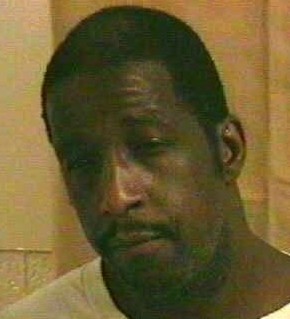
Larry Darnell Williams
Murderer Ervil LeBaron
Murderer · USA · 1972
Ervil Morrell LeBaron (1925 to August 16, 1981) was the leader of a polygamous…
35 victims
Ervil LeBaron
Murderer · USA · 1972
Ervil Morrell LeBaron (1925 to August 16, 1981) was the leader of a polygamous…
35 victims
 Brian Kevin Rosenfeld
Murderer · USA · 1985
Brian Kevin Rosenfeld Brian Kevin Rosenfeld was sentenced to three concurrent l…
23 victims
Brian Kevin Rosenfeld
Murderer · USA · 1985
Brian Kevin Rosenfeld Brian Kevin Rosenfeld was sentenced to three concurrent l…
23 victims
 Marvin Gray
Murderer · USA · 1975
Marvin Gray was convicted killer who claimed responsibility for 23 slayings and…
23 victims
Marvin Gray
Murderer · USA · 1975
Marvin Gray was convicted killer who claimed responsibility for 23 slayings and…
23 victims
 Yahweh ben Yahweh
Murderer · USA · 1980
Yahweh ben Yahweh was born and legally named Hulon Mitchell Jr. (October 27, 19…
23 victims
Yahweh ben Yahweh
Murderer · USA · 1980
Yahweh ben Yahweh was born and legally named Hulon Mitchell Jr. (October 27, 19…
23 victims
 Gerald James Holland
Murderer · USA · 1986
Defendant: Gerald James Holland · Victim: Krystal Dee King (15) · Victim’s sist…
1 victim
Gerald James Holland
Murderer · USA · 1986
Defendant: Gerald James Holland · Victim: Krystal Dee King (15) · Victim’s sist…
1 victim
 Camia Gamet
Murderer · USA · 2013
Camia Gamet was sentenced to life in prison without parole on April 16, 2014, f…
1 victim
Camia Gamet
Murderer · USA · 2013
Camia Gamet was sentenced to life in prison without parole on April 16, 2014, f…
1 victim
 Mijailo Mijailovic
Murderer · Sweden · 2003
Mijailo Mijailović was sentenced to life imprisonment on December 2, 2004. Mija…
1 victim
Mijailo Mijailovic
Murderer · Sweden · 2003
Mijailo Mijailović was sentenced to life imprisonment on December 2, 2004. Mija…
1 victim
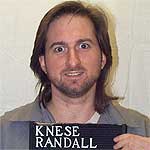 Randall Knese
Murderer · USA · 1996
State of Missouri v. Randall Knese, 985 S.W.2d 759 (Mo. banc 1999) The case was…
1 victim
Randall Knese
Murderer · USA · 1996
State of Missouri v. Randall Knese, 985 S.W.2d 759 (Mo. banc 1999) The case was…
1 victim
 Emma Wilson
Murderer · United Kingdom · 2011
Emma Wilson was 25 when she was sentenced to life in prison with a minimum of 1…
1 victim
Emma Wilson
Murderer · United Kingdom · 2011
Emma Wilson was 25 when she was sentenced to life in prison with a minimum of 1…
1 victim
 Victor Kennedy
Murderer · USA · 1980
Victor Kennedy was 37 at the time of his execution. He was executed by electroc…
1 victim
Victor Kennedy
Murderer · USA · 1980
Victor Kennedy was 37 at the time of his execution. He was executed by electroc…
1 victim
- Gender
- male
- Country
- USA
- Location
- Gaston County/Cabarrus County, North Carolina, USA
- Date of birth
- August 29, 1954
- Age at first offence
- 25
- Characteristics
- robbery, armed robbery
- Victim profile
- Eric Joines / Susan Verle Pierce (store clerks)
- Method of murder
- Shooting (.20 gauge sawed-off shotgun)
- Date(s) of murder
- June 2/3, 1979
- Years active
- 1979
- Date of arrest
- 4 days after
- Status
-
Life imprisonment
Sentenced to death on June 13, 1980; commuted to life in prison on June 24, 2006
Case record: Larry Darnell Williams
Background
Larry Darnell Williams was an inmate on death row. He was convicted in Gaston County Superior Court and sentenced to death. His execution dates were stayed multiple times during federal and state post-conviction proceedings.
The offence
On the early morning of June 3, 1979, Eric Joines was robbed and shot in the back of his head at close range with a .20 gauge sawed-off shotgun. At the time he was shot, Joines was working the late shift at the Service Distributors station on Highway 321 North in Gastonia, North Carolina. Joines died one week later as a result of his injuries.
At Williams's trial, two accomplices, Linda Massey and her cousin, Darryl Brawley, testified that on the night of June 2, 1979, Williams, Massey, Brawley, and an unidentified fourth person were riding around together in Charlotte, North Carolina in a car belonging to another of Massey's cousins, Robert Brown. Massey and Brawley testified that Williams had a .20 gauge sawed-off shotgun with him in the car.
After drinking alcohol, smoking marijuana, and taking Valium during the course of the evening, the group traveled on Interstate 85 from Charlotte to Gastonia. The group got off at an exit in Gastonia and traveled past the station where Joines worked. Shortly thereafter, the group returned to the station, where Williams and the unidentified fourth person got out of the car. Williams was armed with his sawed-off shotgun. Williams and the unidentified fourth person entered the station and robbed Joines of approximately $274. Williams ordered Joines to lie face down on the floor. After Joines's compliance, Williams shot Joines in the back of his head.
After the Joines shooting, the group traveled to Concord, North Carolina, where they stopped at a "7-11" convenience store. Williams and the unidentified fourth person got out of the car and entered the store. Shortly thereafter, Williams returned to the car, got his sawed-off shotgun, and went back into the store where he robbed and fatally shot the store clerk, Susan Verle Pierce.
Investigation
On September 10, 1979, a Gaston County grand jury indicted Williams for the first-degree murder and armed robbery of Joines.
Trial
Following a jury trial in June 1980, Williams was convicted of both charges.
Armed robbery and murder convictions
The State presented evidence in a bifurcated proceeding of only one aggravating circumstance: that Joines's murder was part of a course of conduct in which Williams engaged, which included the commission by Williams of other crimes of violence against another person or persons—specifically, the robbery and murder of Susan Verle Pierce. This was based on North Carolina General Statutes § 15A-2000(e)(11).
The jury found beyond a reasonable doubt that the aggravating circumstance outweighed the mitigating circumstances and recommended that Williams be sentenced to death. The trial court sentenced Williams in accordance with the jury's recommendation.
Mitigating circumstances findings
The trial court submitted ten mitigating circumstances. The jury found the existence of seven:
- Williams had no significant history of prior criminal activities.
- Williams was twenty-four years old at the time of the murder.
- Williams had a good employment record.
- Williams had voluntarily submitted himself for drug treatment.
- Williams had a good character and reputation.
- Williams was considerate and loving to his mother and sisters.
- Williams was a considerate and loving father.
The jury declined to find these mitigating circumstances:
- Williams had an I.Q. of sixty-nine.
- Williams had acted appropriately in connection with a personal injury claim.
- There were other circumstances of mitigating value which arose from the evidence.
Procedural and conviction details concerning Susan Verle Pierce
Prior to his conviction in Gaston County Superior Court, Williams was convicted of first-degree murder in Cabarrus County Superior Court for the murder of Susan Verle Pierce. Williams was sentenced to death, but on appeal, the North Carolina Supreme Court remanded for resentencing because the trial court erroneously submitted the aggravating circumstance that the murder "was committed for the purpose of avoiding or preventing a lawful arrest," N.C. Gen.Stat. § 15A-2000(e)(4). See State v. Williams, 304 N.C. 394, 284 S.E.2d 437, 455-57 (1981).
In February 1985, Williams was resentenced, and the jury again recommended that Williams be sentenced to death. On appeal, the North Carolina Supreme Court remanded for a new sentencing hearing because of the prosecutor's improper closing argument. See State v. Williams, 317 N.C. 474, 346 S.E.2d 405 (1986). The record stated: "To date, Williams has not been resentenced".
Correction noted regarding armed robbery conviction (procedural detail)
Williams's armed robbery conviction was set aside because the indictment identified Massey, instead of Williams, as the perpetrator of the armed robbery. See State v. Williams, 305 N.C. 656, 292 S.E.2d 243, 247 n. 1 (1982).
Sentencing
Williams received the death sentence for the murder of Joines.
The record also referenced jury instructions and sentencing phase issues. The trial court instructed the jury to answer four issues in reaching its decision at the sentencing phase of the trial:
- Whether the jury unanimously found, beyond a reasonable doubt, the existence of the aggravating circumstance.
- Whether the jury unanimously found, beyond a reasonable doubt, that the aggravating circumstance was sufficiently substantial to call for imposition of the death penalty.
- Whether the jury found one or more mitigating circumstances.
- Whether the jury unanimously found, beyond a reasonable doubt, that the aggravating circumstances outweighed the mitigating circumstances.
The trial court instructed the jury that it had to be unanimous as to its sentencing recommendation. Just before releasing the jury to deliberate at the sentencing phase, the trial court instructed: "When you have agreed upon--unanimously agreed upon your recommendation according to the instructions I have given you, have your foreman write in your recommendation at the bottom part of the second page of this form."
On the heels of this instruction, the trial court instructed: "When you agree upon your recommendation unanimously and are ready to deliver it, have it filled in and signed as I instructed you, notify the bailiff, and you will be returned into the courtroom."
Appeals
Direct appeal
On direct appeal, the North Carolina Supreme Court affirmed Williams's conviction and sentence. See State v. Williams, 305 N.C. 656, 292 S.E.2d 243, 264 (1982).
On November 29, 1982, the United States Supreme Court denied Williams's petition for a writ of certiorari. See Williams v. North Carolina, 459 U.S. 1056, 103 S.Ct. 474, 74 L.Ed.2d 622 (1982).
Federal habeas proceedings and Fourth Circuit appeal
On April 5, 1983, Williams filed a petition for a writ of habeas corpus pursuant to 28 U.S.C. § 2254 in the United States District Court for the Western District of North Carolina, alleging approximately seventeen grounds for relief.
On June 9, 1983, United States District Judge James B. McMillan entered an order granting a motion to consolidate.
After further briefing, the district court addressed a claim related to "death-qualified" juries and Witherspoon v. Illinois. On January 12, 1984, Judge McMillan entered an order holding that the use of "death-qualified" juries violated the Sixth and Fourteenth Amendments, and that one of the prospective jurors at Williams's trial was improperly excused for cause in violation of Witherspoon. See Keeten v. Garrison, 578 F.Supp. 1164 (W.D.N.C.1984).
On March 5, 1984, Judge McMillan granted Williams a new trial and sentencing, but stayed his judgment pending appeal by the State.
On August 21, 1984, the Fourth Circuit reversed the grant of habeas relief, holding that the use of "death qualified" juries did not violate the Sixth and Fourteenth Amendments, and that none of the prospective jurors in Williams's petit jury was excluded in violation of Witherspoon. See Keeten v. Garrison, 742 F.2d 129, 133-35 (4th Cir.1984).
On May 27, 1986, the Supreme Court denied certiorari review in Keeten. See Keeten v. Garrison, 476 U.S. 1145, 106 S.Ct. 2258, 90 L.Ed.2d 702 (1986).
Procedural default analysis in federal appeal
Williams appealed the district court's denial of his petition for a writ of habeas corpus. The decision stated that each of the claims raised in the appeal, save two, was found in state court to be procedurally defaulted under North Carolina General Statutes § 15A-1419(a)(3).
The decision addressed standards for cause and prejudice to excuse procedural default, referencing:
- Harris v. Reed, 489 U.S. 255 (1989)
- Johnson v. Mississippi, 486 U.S. 578 (1988)
- Ake v. Oklahoma, 470 U.S. 68 (1985)
- McCleskey v. Zant, 499 U.S. 467 (1991)
- Murray v. Carrier, 477 U.S. 478 (1986)
- Strickland v. Washington, 466 U.S. 668 (1984)
- United States v. Frady, 456 U.S. 152 (1982)
Conflict of interest claim (procedurally defaulted)
Williams initially contended that an actual conflict of interest infected the Public Defender's Office's representation of him. Williams argued that the Public Defender's Office's brief representation of Massey while simultaneously representing him created an actual conflict that adversely affected his trial counsels' performance.
The decision summarized the underlying facts:
- At Williams's initial appearance in Gaston County District Court on June 12, 1979, the Public Defender's Office was appointed to represent Williams. Assistant Public Defender R.C. Cloninger, Jr., and Jesse B. Caldwell, III continued to represent Williams until the conclusion of the trial.
- After the Public Defender's Office's appointment, David Wells (investigator with the Public Defender's Office) met with Williams in the Gaston County Jail sometime between 2:00 and 3:00 p.m. that afternoon.
- At approximately 4:10 p.m., Wells returned to the Public Defender's Office and informed Public Defender Curtis Harris about the appointment to represent Williams.
- Because of concern about Massey making incriminating statements to the police and expecting appointment to represent Massey, Harris and Wells proceeded to the Gastonia Police Department to meet with Massey while she was being interviewed.
- Between 4:30 and 4:45 p.m., Harris and Wells met briefly with Massey to determine if she was indigent. Harris testified that Massey was hysterical and unable to communicate verbally, but Massey informed them that she had been told she was going to be the first woman to be executed in the gas chamber.
- Harris and Wells met with Massey again at approximately 8:30 p.m., but she was again unable to communicate.
- The following morning between 10:00 a.m. and noon, they met a third time. Harris and Wells testified she was in the same emotional state but able to communicate by writing on a legal pad.
- In one such writing, Massey wrote: (1) that she had talked to a man named Larry Currus one day; (2) that Currus had lots of guns, and talked about killing all the time; (3) that if Currus thought Massey had told the police about him, he would kill her; (4) that she told Currus that the police were looking for Williams, and Currus said that his name must not be mentioned or Massey's family would be in trouble; (5) that Massey did not say anything to the police about Currus because of her two children being at home; and (6) that Williams was a "little mean," but Currus was "very mean."
- At 2:00 p.m. that afternoon, Massey was charged as an accessory after the fact to the murder of Joines.
- Massey was found indigent, and the Public Defender's Office was appointed to represent Massey.
- The following morning, Harris made an oral motion in Gaston County District Court to withdraw from his appointment to represent Massey on the basis of, among other things, statements given by Massey incriminating Williams. The District Court granted the motion.
- The Gaston County District Court appointed James R. Funderburk to represent Massey, and Funderburk was replaced by Joe Roberts in December 1979.
- The conflict of interest issue was not developed at trial by Cloninger or Caldwell.
- Following Williams's trial, Appellate Public Defenders Adam Stein and Ann Petersen were appointed to represent Williams.
- On direct appeal, appellate counsel raised eighty-nine assignments of error but did not assert a conflict of interest claim.
- At the state habeas hearing, Stein testified he was aware of general conflict of interest law at the time Williams's brief on direct appeal was prepared, but he had no recollection of making a decision on whether to raise a conflict of interest claim.
- Stein also testified that Harris's testimony at the sentencing phase should have alerted him to a potential conflict of interest.
- In Williams's brief on direct appeal, counsel preserved an issue about the trial court's denial of Williams's motion for new trial by noting the issue and explaining counsel felt additional evidence needed to be developed.
The decision concluded Williams had not established cause and prejudice to excuse the procedural default and did not establish that the conflict adversely affected counsel’s performance.
Jury foreman selection claim (procedurally defaulted)
Williams argued that the foreman of the grand jury that indicted him was selected in a racially discriminatory manner in violation of the Equal Protection Clause.
The decision described Williams's premise:
- Gaston County had a black population of 12.1% in 1970 and 12.2% in 1980.
- In the years preceding the indictment, a "substantial number" of blacks served on Gaston County grand juries.
- Prior to the date of the indictment, no black had served as grand jury foreman in Gaston County.
The state habeas court dismissed the claim under North Carolina General Statutes § 15A-1419(a)(3) because it could have been raised on direct appeal. The North Carolina Supreme Court denied certiorari review. The decision concluded Williams had failed to establish cause.
The decision also referenced the Rose v. Mitchell framework and concluded Williams had legal tools to construct the constitutional claim.
Enmund claim (addressed on merits)
Williams argued he was sentenced to death for the murder of Joines in the absence of a finding that he actually killed Joines, intended to kill Joines, or was a major participant in Joines's murder in violation of Enmund v. Florida.
The decision described Enmund as a felony-murder rule that death sentences violate the Eighth Amendment when the defendant lacked intent to kill or cause death. The decision also described that the intent requirement is satisfied when the defendant is a major participant in either the killing or underlying felony and is recklessly indifferent to human life, referencing Tison v. Arizona. The decision concluded the evidence satisfied the Enmund standard because Williams was a major participant and showed reckless indifference.
McKoy mitigating circumstances instruction claim (procedurally defaulted)
Williams argued the jury was improperly instructed regarding its consideration of mitigating circumstances in violation of McKoy v. North Carolina. The decision evaluated the instruction scheme and determined there was no McKoy violation, concluding Williams could not establish cause through ineffective assistance of counsel.
Additional mitigation statutory mitigating circumstance claim (procedurally defaulted)
Williams argued that the evidence required submission to the jury of two statutory mitigating circumstances under:
- North Carolina General Statutes § 15A-2000(f)(2) (crime committed under the influence of mental disturbance)
- North Carolina General Statutes § 15A-2000(f)(6) (defendant lacked the capacity to appreciate the criminality of his actions)
The decision concluded the claim was procedurally defaulted. It also determined the decision not to submit these statutory mitigators was tactical based on psychiatric reports and stipulations, and that counsel reviewed the psychiatric reports and concluded evidence did not support submission of either statutory mitigating circumstance.
Ineffective assistance for failure to investigate witness statements (procedurally defaulted)
Williams argued trial counsel were ineffective for failing to investigate certain witness statements.
The decision summarized that during the trial on June 4, 1980, Joel Groves (investigator in the Public Defender's Office) interviewed four Gaston County Jail inmates: John Poag, Bernard Taylor, Marvin Ledbetter, and Michael Johnson. Poag told Groves that Brawley told him that Brawley had lied about Williams at Williams's Cabarrus County trial and that, contrary to Brawley's testimony, Brawley had not witnessed Williams rob or shoot anyone. Johnson, Ledbetter, and Taylor corroborated all or part of Poag's account of his conversation with Brawley.
The decision concluded that even if cause existed, Williams did not establish prejudice because counsel extensively cross-examined Brawley during the guilt phase regarding inconsistent statements Brawley made at the Gaston County Jail and to the police.
Remaining arguments dismissed
The decision noted remaining arguments were meritless, including:
- challenges to the felony murder instruction and the "course of conduct" aggravating circumstance instruction, including alleged violations of the Sixth, Eighth, and Fourteenth Amendments; and
- claims that the trial court excused three prospective jurors during a private, unrecorded bench conference in violation of the right to be present during all critical stages.
Outcome
The judgment of the district court was affirmed.
Other details
Timeline
- June 12, 1979 — Public Defender's Office was appointed to represent Williams at his initial appearance in Gaston County District Court; Assistant Public Defender R.C. Cloninger, Jr., and Jesse B. Caldwell, III continued representation until conclusion of trial.
- September 10, 1979 — Gaston County grand jury indicted Williams for first-degree murder and armed robbery of Joines.
- February 21, 1980 — Williams was convicted in Cabarrus County Superior Court for the shotgun slaying of Concord convenience store employee Susan Verle Pierce (the same night as the Joines incident).
- June 1980 — Following a jury trial, Williams was convicted of both charges for the murder and armed robbery of Joines; the trial court sentenced him to death.
- June 13, 1980 — Williams was convicted in Gaston County and received the death sentence for the Feb. 21, 1980 murder of Gastonia convenience store employee Eric Joines.
- April 5, 1983 — Williams filed a federal habeas corpus petition under 28 U.S.C. § 2254.
- November 29, 1982 — United States Supreme Court denied certiorari in Williams v. North Carolina.
- June 9, 1983 — Judge James B. McMillan entered an order granting the motion to consolidate.
- January 12, 1984 — Judge McMillan held that the use of "death-qualified" juries violated the Sixth and Fourteenth Amendments and that a prospective juror was improperly excused for cause in violation of Witherspoon.
- March 5, 1984 — Judge McMillan granted a new trial and sentencing but stayed the judgment pending appeal.
- August 21, 1984 — Fourth Circuit reversed the grant of habeas relief in Keeten v. Garrison.
- May 27, 1986 — Supreme Court denied certiorari review in Keeten.
- September 7, 1990 — Judge McMillan entered a stay pending further order to allow adjudication of Williams's federal habeas petition.
- April 1994 — Williams was permitted to return to state court to exhaust state remedies.
- November 17, 1995 — A motion for appropriate relief in state court was denied following an evidentiary hearing.
- November 7, 1996 — North Carolina Supreme Court denied Williams's petition for a writ of certiorari.
- January 16, 1997 — Williams filed an amended petition for a writ of habeas corpus.
- March 31, 1997 — Magistrate judge filed a report and recommendation recommending denial and dissolution of the prior stay.
- May 28, 1997 — Judge Mullen adopted the recommendation and entered an order denying Williams's amended habeas petition.
- March 2, 1998 — Appeal was argued in the United States Court of Appeals, Fourth Circuit.
- May 18, 1998 — Fourth Circuit decided the case; judgment of the district court was affirmed.
- April 9, 1999 — Williams was scheduled for execution at 2 a.m. at Central Prison in Raleigh; the execution was halted by a stay issued earlier.
- March 19, 1999 — Gaston County Superior Court Judge Timothy Patti issued a stay halting the scheduled execution.
- April 19, 2001 — Gaston Superior Court Judge Timothy Patti issued a stay of execution pending a hearing on Williams's mental status.
- March 26, 2001 — Correction Secretary Theodis Beck set April 27 as the execution date for Death Row inmate Larry Darnell Williams (#0442913); execution was tentatively scheduled for 2 a.m.
- June 24, 2006 — Sentence was commuted to life in prison.

Spotted an error, or have more information about this case?