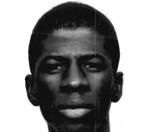
Bernard Eugene Amos
Murderer Russell Ellwood
Murderer · USA · 1991
Russell Ellwood was a former taxi driver. Authorities suspected him of killing…
20 victims
Russell Ellwood
Murderer · USA · 1991
Russell Ellwood was a former taxi driver. Authorities suspected him of killing…
20 victims
 Robert Martines Perez
Murderer · USA · 1994
Name: Robert Martines Perez · Other name used in proceedings: Robert Martinez P…
15 victims
Robert Martines Perez
Murderer · USA · 1994
Name: Robert Martines Perez · Other name used in proceedings: Robert Martinez P…
15 victims
 Billy Frank Vickers
Murderer · USA · 1993
Billy Frank Vickers Vickers was executed by lethal injection in Texas on Januar…
14 victims
Billy Frank Vickers
Murderer · USA · 1993
Billy Frank Vickers Vickers was executed by lethal injection in Texas on Januar…
14 victims
 James Glenn Robedeaux
Murderer · USA · 1978
James Glenn Robedeaux was charged with and convicted of first degree murder inv…
2 victims
James Glenn Robedeaux
Murderer · USA · 1978
James Glenn Robedeaux was charged with and convicted of first degree murder inv…
2 victims
 Mario Cesar Frieiro
Murderer · Argentina · 1998
Mario Cesar Frieiro was an Argentine murderer. Frieiro had a discussion with hi…
1 victim
Mario Cesar Frieiro
Murderer · Argentina · 1998
Mario Cesar Frieiro was an Argentine murderer. Frieiro had a discussion with hi…
1 victim
 Reginald Perkins
Serial killer · USA · 1980
Reginald Perkins was convicted in Tarrant County of capital murder and was sent…
6 victims
Reginald Perkins
Serial killer · USA · 1980
Reginald Perkins was convicted in Tarrant County of capital murder and was sent…
6 victims
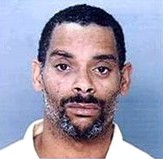 Juan Covington
Serial killer · USA · 1998
Juan Covington was an American serial killer in Philadelphia, Pennsylvania. Cov…
3 victims
Juan Covington
Serial killer · USA · 1998
Juan Covington was an American serial killer in Philadelphia, Pennsylvania. Cov…
3 victims
 Anthony Bertolotti
Murderer · USA · 1983
Anthony Bertolotti was executed in Florida by electrocution on July 27, 1990. H…
1 victim
Anthony Bertolotti
Murderer · USA · 1983
Anthony Bertolotti was executed in Florida by electrocution on July 27, 1990. H…
1 victim
- Gender
- male
- Country
- USA
- Location
- Dallas County, Texas, USA
- Date of birth
- December 22, 1961
- Age at first offence
- 37
- Characteristics
- convicted rapist
- Victim profile
- James Joe, 34 (off-duty police officer)
- Method of murder
- Shooting (handgun)
- Date(s) of murder
- January 14, 1998
- Years active
- 1998
- Date of arrest
- Same day (shot by police)
- Status
-
Executed
Executed by lethal injection in Texas on December 6, 1995
Case record: Bernard Eugene Amos
Background
Bernard Eugene Amos was a Texas death row prisoner. He made a final statement before his execution in which he said his life was being taken in error and accused the courts of racism, saying: “I just say in this case the State of Texas made a big mistake.” He said: “It doesn't do any good to have a lawyer. Fifty percent of the cases go before the Court of Criminal Appeals. They only hear the white ones. May the grace of God have mercy on them.” As lethal drugs began to flow, he gulped twice and gasped once. He was pronounced dead seven minutes later.
Chaplain J.K. Wilcox of the Ellis Unit said that Amos was always smiling and in a good mood. Wilcox said: “You couldn't see the ‘criminal element’ in Amos, unlike other inmates,” and: “Amos was the last person you’d expect to shoot someone. He was always worried about others and tried not to judge people.” Wilcox, who was with Amos on the day of his death, said Amos claimed he was innocent, and Wilcox said: “But I had no doubt that Amos was at peace with himself and God when he was executed.”
Larry Fitzgerald of the Public Information Office also said Amos was always smiling and was very friendly. Fitzgerald said: “He was known as ‘Famous Amos’ and went by the nickname of ‘Sweet Pea.’”
In his final words, Amos spoke of God and said the State of Texas was making a mistake executing him, stating: “The State of Texas will take my life with 11 unanswered claims. May the Grace of God have mercy on them.”
The offence
On January 14, 1988, Amos and his cousin, Gary Von Bennett, drove to a Dallas apartment complex looking for something to steal or an apartment to burglarize. After the two men burglarized one apartment and returned to their car to cache the stolen goods, they were approached by James Joe, an off-duty Dallas police officer and part-time apartment complex security guard.
James Joe identified himself and proceeded to question Amos and Bennett. Amos became upset during the exchange with Joe, and at some point “flinched,” turned, drew a pistol, and shot Joe in the chest at point blank range.
Bennett testified that he immediately ran toward one of the apartment buildings, ducked down, heard three or four more shots, and then “nothing.” When Bennett returned to the car, he saw both Amos and Joe lying on the ground. Bennett was told by Amos that he had been shot and needed help. Bennett helped Amos into the car and drove to a neighboring apartment complex. When the police arrived at that apartment complex, Bennett ran and hid.
Amos was unable to run, got out of the car, and tried to hide under a parked truck. Police found Amos, arrested him, and transported him to a hospital for treatment.
The officer murdered was James Joe, who was 34.
Investigation
Police officers followed a trail of blood and discovered Bernard Eugene Amos hiding under a pickup truck. Police shot Amos in the leg and arm.
The suspects got away in a red Mustang, which was later found by a police helicopter at the Willow Lake Apartments nearby.
Bennett was found later.
Arrest
Amos was arrested after police found him hiding under a parked truck and he was transported to a hospital for treatment.
Trial
Amos was indicted for the capital murder of James Joe in the course of committing and attempting to commit burglary.
Amos entered a plea of “not guilty” to the offense and a trial followed. Bennett, as the State’s key witness, testified to the events at the guilt-innocence phase.
Amos testified in his own defense, admitting to seven prior felony convictions, one misdemeanor conviction, and four incarcerations in the Texas Department of Corrections. The charges included burglary and auto theft.
The jury returned a verdict of guilty as charged in the indictment.
Following a separate hearing on punishment, the jury sentenced Amos to death by lethal injection in response to the Texas special issues.
Amos’ motion for a new trial was denied following a hearing on that motion.
Sentencing
After a separate punishment hearing, the jury sentenced Amos to death by lethal injection.
Appeals
The appeal history included an affirmation by the Texas Court of Criminal Appeals (TCCA) in an en banc decision.
Amos’ conviction and sentence were automatically appealed to the TCCA, and the TCCA affirmed Amos’ conviction and sentence in an en banc decision.
The United States Supreme Court denied Amos’ petition for writ of certiorari.
Amos filed his first petition for writs of habeas corpus simultaneously in the TCCA and the Criminal District Court of Dallas County. The state habeas court denied Amos’ petition in an order adopting the State’s proposed findings of fact and conclusions of law and adding the court’s own supplemental findings of fact and conclusions of law. The TCCA also denied Amos’ petition, holding that the trial court’s findings were supported by the record.
Amos filed a petition for federal writ of habeas corpus and stay of execution in the district court. The district court granted the stay pending examination of Amos’ habeas petition. Following oral argument, the district court granted summary judgment in favor of the State, dismissing Amos’ petition and vacating the stay of execution.
The district court held:
- Six of Amos’ eleven grounds for relief were procedurally barred under state law.
- Amos’ claim that the State failed to disclose material impeachment evidence and to correct perjured testimony was meritless.
- Amos did not satisfy the standard necessary to establish ineffective assistance of counsel on the grounds that counsel failed to: (a) conduct a reasonable punishment phase investigation, (b) adequately voir dire the jury panel, and (c) present evidence that Amos did not knowingly waive his Fifth Amendment rights.
- Amos showed no basis for relief on his claim challenging the Texas special issues, as interpreted and applied in his case.
The district court denied Amos’ motion to alter or amend its judgment.
Amos timely filed notice of appeal, but the district court denied a certificate of probable cause (CPC) to appeal. Amos filed a second notice of appeal and another motion for CPC; the district court again denied it. Amos then filed a request for CPC with the United States Court of Appeals for the Fifth Circuit, and the court granted the request and proceeded to the merits.
In the Fifth Circuit appeal identified as 61 F.3d 333, Bernard Eugene AMOS, Petitioner-Appellant, v. Wayne SCOTT, Director, Texas Department of Criminal Justice, Institutional Division, Respondent-Appellee, No. 94-10576, the United States Court of Appeals, Fifth Circuit (Before KING, DAVIS and WIENER, Circuit Judges) reviewed Amos’ habeas claims and affirmed the judgment of the district court.
The Fifth Circuit held that the Texas contemporaneous objection rule was an “independent and adequate state-law procedural ground sufficient to bar federal court habeas review of federal claims.” The Fifth Circuit affirmed the denial of an evidentiary hearing on Amos’ Giglio/Napue claim and affirmed the denial of an evidentiary hearing on Amos’ ineffective assistance of counsel claim.
Other appellate claims and disputes
Amos asserted claims about the trial and state habeas proceedings, including:
- A claim that the district court erred by relying on the Texas contemporaneous objection rule as an independent and adequate state-law ground.
- A claim that the district court erred in denying him an evidentiary hearing on his Giglio/Napue claim.
- A claim that the district court erred in denying him an evidentiary hearing on his ineffective assistance of counsel claim.
Amos did not re-urge on appeal his challenge to the Texas special issues.
Bennett’s testimony and “deal” allegation
One of Amos’ claims against the State of Texas was that he thought the State had made “a deal” with Bennett in exchange for Bennett’s testimony. During the trial, Bennett testified that he did not receive any “deal” from the State. Later, in an affidavit, Bennett said he was certain there was a deal and it would be okay to testify.
The court said that “there was no factual dispute whether the State had entered into an agreement with Bennett.” The court concluded: “No deal was made; therefore, there was no need for a federal evidentiary hearing.”
Counsel and mitigating evidence
Another claim by Amos was that his counsel did not disclose his background in his defense and that he thought the punishment phase would have turned out differently if it were known he was abused by his father.
The State said Amos did not want any witnesses to testify on his behalf and therefore anything they could have said was academic.
In the federal review, the district court noted Amos’ opposition to witnesses during the punishment phase and treated counsel’s failure to investigate potential witnesses as non-prejudicial.
Aftermath
Amos was executed by lethal injection in Texas on December 6, 1995.
Spotted an error, or have more information about this case?