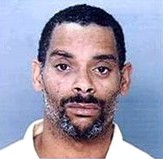
Juan Covington
Serial killer Glen Edward Rogers
Serial killer · USA · 1993
Glen Edward Rogers was a spree killer whose cross-country rampage in 1994-95 le…
70 victims
Glen Edward Rogers
Serial killer · USA · 1993
Glen Edward Rogers was a spree killer whose cross-country rampage in 1994-95 le…
70 victims
 Efren Saldivar
Serial killer · USA · 1989
Efren Saldivar (born 30 September 1969) was an American serial killer who murde…
50 victims
Efren Saldivar
Serial killer · USA · 1989
Efren Saldivar (born 30 September 1969) was an American serial killer who murde…
50 victims
 Ronald Dominique
Serial killer · USA · 1997
Ronald Joseph Dominique (born 1964) was an American serial killer from the Bayo…
23 victims
Ronald Dominique
Serial killer · USA · 1997
Ronald Joseph Dominique (born 1964) was an American serial killer from the Bayo…
23 victims
 Jeremy Jones
Serial killer · USA · 1992
Name: Jeremy Jones · Aliases/identities mentioned: John Paul Chapman · Age (as…
21 victims
Jeremy Jones
Serial killer · USA · 1992
Name: Jeremy Jones · Aliases/identities mentioned: John Paul Chapman · Age (as…
21 victims
 Desmond Jennings
Serial killer · USA · 1993
Desmond Jennings declined to make a last statement. Texas Attorney General John…
20 victims
Desmond Jennings
Serial killer · USA · 1993
Desmond Jennings declined to make a last statement. Texas Attorney General John…
20 victims
 John Eric Armstrong
Serial killer · USA · 1992
John Eric Armstrong was a former USS Nimitz sailor of Dearborn Heights, Michiga…
18 victims
John Eric Armstrong
Serial killer · USA · 1992
John Eric Armstrong was a former USS Nimitz sailor of Dearborn Heights, Michiga…
18 victims
 Craig Godineaux
Mass murderer · USA · 2000
Craig Godineaux was accused of entering a Wendy's in Flushing, Queens, and taki…
5 victims
Craig Godineaux
Mass murderer · USA · 2000
Craig Godineaux was accused of entering a Wendy's in Flushing, Queens, and taki…
5 victims
 Rocky Barton
Murderer · USA · 2003
Defendant: Rocky Barton · Victim: Kimbirli Jo Barton (fourth wife) · The grand…
1 victim
Rocky Barton
Murderer · USA · 2003
Defendant: Rocky Barton · Victim: Kimbirli Jo Barton (fourth wife) · The grand…
1 victim
 Timothy McKinney
Murderer · USA · 1997
Timothy McKinney was the defendant, convicted in Tennessee. · Don Williams was…
1 victim
Timothy McKinney
Murderer · USA · 1997
Timothy McKinney was the defendant, convicted in Tennessee. · Don Williams was…
1 victim
 John Yancey Schmitt
Murderer · USA · 1999
John Yancey Schmitt was convicted of capital murder and related non-capital off…
1 victim
John Yancey Schmitt
Murderer · USA · 1999
John Yancey Schmitt was convicted of capital murder and related non-capital off…
1 victim
 Paul Kreutzer
Murderer · USA · 1992
Paul Kreutzer lived less than a quarter of a mile from the Hemphill residence i…
1 victim
Paul Kreutzer
Murderer · USA · 1992
Paul Kreutzer lived less than a quarter of a mile from the Hemphill residence i…
1 victim
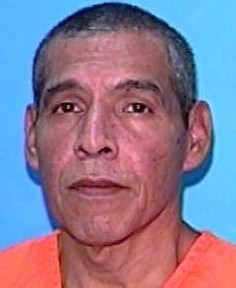 Henry Garcia
Murderer · USA · 1983
Henry Garcia was sentenced to death on August 19, 1988. He was indicted on 10/0…
2 victims
Henry Garcia
Murderer · USA · 1983
Henry Garcia was sentenced to death on August 19, 1988. He was indicted on 10/0…
2 victims
- Gender
- male
- Country
- USA
- Location
- Philadelphia, Pennsylvania , USA
- Date of birth
- March 3, 1962
- Age at first offence
- 36
- Characteristics
- serial rapist
- Victim profile
- His cousin, Rev. Thomas Lee Devlin, 49 / Odies Bosket, 36 / Patricia McDermott, 48
- Method of murder
- Shooting
- Date(s) of murder
- 1998 / 2005
- Years active
- 1998–2005
- Date of arrest
- J uly 12, 2005
- Status
-
Life imprisonment
Sentenced to three life terms in prison in March 2006
Case record: Juan Covington
Background
Juan Covington was an American serial killer in Philadelphia, Pennsylvania.
Covington worked at Pennsylvania Hospital and was later arrested in 2005 after security camera footage linked him to the murder of co-worker Patricia McDermott, 48, an X-Ray technician.
Covington had lived a working-class life in Logan with his parents and older brother. He attended Roman Catholic High School and enjoyed basketball. He tried college but dropped out after a year.
In May 1983, SEPTA hired Covington as a bus driver, and he kept that job for many years. Two years later, he began dating a woman who attended Temple University. The woman moved in with Covington and his parents, and they had a child a year later; they never married. The boy, Joe, was later 18. Covington was described as a reluctant parent who made promises to his son and broke them.
Covington sought mental-health treatment in the late 1980s at an area hospital. His father died in 1989, after which Covington went into a depression. His behavior grew erratic, and his brother James recalled times when Covington would forgetfully repeat himself.
Covington visited a psychiatrist and a psychologist in the early 1990s. He withdrew and refused to care for his mother while she was succumbing to diabetes and other illnesses.
In 1993, Covington told family members he was off medication. He privately told his brother that his medicines “were making him the devil,” according to his attorney.
The woman who bore his child moved out. Covington met another woman and moved with her to Elkins Park, but by 1997 he returned to his parents’ home alone. His mother had died while living with his brother in West Oak Lane during Covington’s absence. When he moved back to Logan, he gave his parents’ furniture to his neighbor Harold Belcher, including a china cabinet, TV cabinet, chairs, and a glass table.
A fellow bus driver caught his eye in 1998. Covington asked Brenwanda Smith, 24, for a date, and she turned him down. The last time Smith was reported seen, she was arguing with Covington in a Hunting Park SEPTA lot. Investigators said they had no proof that she was murdered or that Covington had anything to do with her disappearance. After Smith’s rejection, Covington withdrew further.
The offence
Covington’s murders involved multiple victims between 1998 and 2005, including shooting killings and an attempted murder.
Murder of Rev. Thomas Lee Devlin (1998)
In 1998, Covington shot and killed his cousin, Rev. Thomas Lee Devlin, 49, as Devlin was leading a prayer service.
Covington confessed that he killed Devlin because “he had the power to wipe me off the face of the Earth,” and he said he used witchcraft to swell his gums and cause puss to pour out of his forehead.
Murder of David Stewart (attempted; 2003)
In 2003, Covington shot David Stewart, 43, nine times as Stewart walked home. Stewart survived the attack.
Murder of William Bryant Jr. (attempted; 2004)
In 2004, Covington shot William Bryant, 33, nine times as Bryant walked to work. Bryant also survived the attack. Covington’s weapon was later tied to these shootings by ballistics tests.
Murder of Odies Bosket (March 2005)
In March 2005, Covington shot and killed Odies Bosket, 36, at a subway station. Family said Bosket was rushing to pick up his daughter from day-care. Police said Bosket and Covington lived a few blocks apart and the two did not know each other.
Murder of Patricia McDermott (May 2005)
In May 2005, Covington shot and killed Patricia McDermott.
McDermott was killed at 4:42 a.m. near Ninth and Chestnut Streets as she hurried to her job as an X-ray technician at Pennsylvania Hospital. The shooting was captured on an outside security camera and aired repeatedly on television newscasts. The footage showed McDermott, 48, getting off the bus at her regular stop at the post office on the corner of Ninth and Market streets. A man wearing a light jacket and dark pants got off the same bus, followed behind her, and then raised his arm and shot her once in the back of the head.
In a written statement to police, Covington said he had to kill McDermott because she was poisoning him with X-rays. He said:
“I could feel the radiation when I went into the room.”
“That's when I came to the conclusion that nobody would believe me about what she was doing to me.”
Family members said this explanation left them scratching their heads. McDermott’s daughter, Angela Amarhanov, said:
“To me it's a little ridiculous.”
“Honestly, it blows my mind that someone thought that my mom had a mean bone in her body, and that she would be capable of doing evil things.”
McDermott’s sister, Mary Moran, said:
“I feel like my soul was shattered in two,”
“like a windshield that's together but in pieces.”
Moran also said:
“I hate to say that he's crazy. Because to me he was very calculating, and he had a gun, and he went up and he shot my sister in the head, very cold-bloodedly.”
Investigation
Investigators initially responded to the discovery of McDermott’s body with uncertainty about the cause. Howard Peterman, one of the first detectives to respond, said:
“There was blood on the sidewalk,”
“We looked around for evidence for weapons. No ballistic evidence. We looked up to see if she had jumped from the building. … [There was] no evidence to show us what had happened.”
Peterman noticed surveillance cameras around the post office.
The cameras were installed by the Department of Homeland Security as part of an effort to beef up security around federal buildings. Investigators said the cameras were made by the Canadian company Extreme CCTV and were sensitive to light and emitted infrared rays that could make night look like day.
Investigators said the camera angles did not provide individual faces clearly, and the killer wore a baseball cap that further obscured identification.
Discovery and use of additional video
After examining multiple systems, investigators found key footage from a camera in a parking lot across from the scene. The camera recorded in real time. Peterman said:
“It solidified the fact there was no interaction between Patricia McDermott and her killer. There was distance between them, and they had no interaction,”
“Peterman said.”
Peterman also said that camera captured the killer running through the parking lot as he left the scene and gave investigators a clue about the direction of the getaway.
Investigators said they followed the killer using footage from multiple cameras for more than half a mile to the corner of Sixth and Spruce, where the trail grew cold. They attempted to enhance images through their in-house audiovisual unit, the District Attorney’s Office, the FBI, and NFL Films.
Detectives said they could not clearly see the killer’s face in the videos and that zooming reduced clarity.
Police released images of the killer hoping someone would recognize his clothes or how he walked. A bus company employee identified the man in the grainy image as resembling Juan Covington, who was a regular rider on the No. 33 bus.
Philadelphia District Attorney Lynne Abraham stated:
“When we looked at the footage, and saw it was the same man wearing the same baseball hat, the same clothing, we knew we had our man,”
“I mean, there he was, the guy. Our killer.”
When confronted with the video, Covington confessed.
Arrest and custody
Police captured Covington near his home on July 12. The following day, he sobbed to his son in Police Headquarters that he had killed McDermott because she had picked on him.
Covington was under suicide watch at the Curran-Fromhold Correctional Facility in Northeast Philadelphia, according to his lawyer.
The narrative included that Covington had been in police custody for more than 24 hours and finally appeared ready to open “the gates of his demented mind” and flood investigators with details of a string of murders he had committed.
Confession and links to additional shootings
Covington confessed that he murdered Patricia McDermott and linked to two other shootings through ballistics tests.
Investigators said they were also wondering if Covington had a role in the disappearance of a co-worker who would not date him eight years ago.
Investigators said that by the time they finished investigating and “counting bodies,” Covington could be one of modern Philadelphia’s most prolific serial killers. A source close to the investigation said:
“I find it hard to believe that he only killed between 1998 and '05,”
Psychiatric experts called Covington an “extremely rare breed of serial killer,” on par with “Son of Sam” slayer David Berkowitz and Milwaukee cannibal Jeffrey Dahmer.
Bruce Eimer, a clinical psychologist based in Huntingdon Valley, said:
“These killings weren't motivated by lust or pleasure,”
“He decided these people needed to be taken out. He did them efficiently and coldly, and avoided capture.”
Eimer also theorized that Covington would have killed again if not arrested:
“People like that can go on forever until they die or get caught. The cycle keeps going,”
Covington’s lawyer, Charles Peruto Jr., suggested Covington was a paranoid schizophrenic who could not help committing the murders to which he confessed.
Eimer said no amount of medicine or therapy could cure Covington’s illness:
“He's a blooming maniac. If he were ever released, he'd go back and kill again.”
Police were also investigating claims of a Center City lawyer who said he encountered Covington on June 17. Christopher Evarts, 41, said he was walking home from work near 4th and Spruce streets in the afternoon when Covington began closely following him. Evarts said:
“I stopped to look at a historical sign and he was right behind me. I thought he'd rob me, but then he stared me down. He had a blue knapsack, and I thought, 'My God, he's going to shoot me. I'm dead,' “
Evarts recalled Covington was wearing the same clothes he wore in a video image from the morning he shot McDermott:
“Though Evarts - 6 foot 4, 270 pounds - towered over Covington, he was terrified by the killer's beady eyes and silent stare.”
Evarts said:
“But then 'he changed his mind, walked across the street and started closely following an old lady. She turned the corner and he kept following her.'”
A police source said it was likely Covington would confess to a number of other murders in exchange for life in prison.
Trial
Covington was sentenced in Common Pleas Court by Judge Benjamin Lerner.
Sentencing
On March 4, 2006, Juan Covington was sentenced by Common Pleas Court Judge Benjamin Lerner.
The court imposed three consecutive life terms for murder. The court also gave Covington two 20- to 40-year sentences for attempted murder.
Relatives described fear and impact of the murders. Odies Bosket’s aunt, Dorothy Bosket Wright, told the courtroom:
“You slaughtered Odies as if he was prey,”
Lerner said his sentence would halt “the circle of victimization.”
It was stated that Covington was not eligible for parole.
Defense attorney A. Charles Peruto Jr. said Covington was “severely mentally ill” and described a history of psychotic episodes going back 15 years. Peruto said Covington could hold down a job, argue with neighbors and an ex-girlfriend “without shooting them,” but that with murder victims he felt he had a mission to exterminate the devil. Peruto said Covington also saw himself as “the chosen one” and did not originally want to plead guilty. Covington told the judge he was not currently taking medication or being treated for mental illness.
Judge Lerner sentenced Covington to the state correctional facility in Waymart, Pa., which houses inmates needing psychiatric care.
Appeals
No appeal information was included.
Outcome
Covington received three life sentences for his crimes.
Two other men were wrongfully jailed for the shootings of David Stewart and William Bryant. They were released after ballistic tests linked bullets in those shootings to Covington’s gun.
Assistant District Attorney Edward Cameron stated all victims were targeted because Covington thought each was “the devil” and “doing things to him.”
Aftermath
After sentencing, the McDermotts and the Boskets lingered in the courtroom. Their families had never met. Angela Amarhanov hugged Dorothy Bosket Wright, and both groups said they took comfort in knowing a serial killer had been stopped.
Angela Amarhanov said:
“We're glad justice was brought to us,”
“We're glad that justice was brought to us and that he's not gonna be able to hurt anyone else,”
Moran said the surveillance video gave her peace of mind because it showed McDermott’s last moments were not filled with fear:
“When I would watch it, I didn't sense that she was scared,”
“She was just walking normally.”
Other details
Covington worked as a SEPTA bus driver and later drove a truck for a medical waste hauler.
He applied for a gun permit in 2001, according to police.
Covington was fired from SEPTA in September 2001. He told his son he had fallen asleep while driving a bus and had had several altercations with co-workers.
Covington also worked at a Home Depot in Upper Darby, where he was fired after he slugged a customer in the face, according to what he told his son. Home Depot officials declined to comment.
In 2003, Covington’s brother James petitioned Family Court for custody of Joe. The court ordered Joe to move in with his uncle in West Oak Lane and told Covington to seek counseling before he could see his son again.
The disappearance investigation involving Brenwanda Smith had no proof she was murdered or that Covington had anything to do with her disappearance.
Investigators said Covington confessed that he killed Devlin because “he had the power to wipe me off the face of the Earth,” and he said he used witchcraft to swell his gums and cause puss to pour out of his forehead.
Investigators said police captured Covington after a video link and that his confession involved the McDermott murder and additional killings.
Covington’s lawyer said the court needs to realize that no amount of medicine or therapy can cure Covington’s illness.
Covington’s age at sentencing was stated as 44, and his age during custody was stated as 43 in other parts of the narrative.
Spotted an error, or have more information about this case?