
Anthony Bertolotti
Murderer Brian Kevin Rosenfeld
Murderer · USA · 1985
Brian Kevin Rosenfeld Brian Kevin Rosenfeld was sentenced to three concurrent l…
23 victims
Brian Kevin Rosenfeld
Murderer · USA · 1985
Brian Kevin Rosenfeld Brian Kevin Rosenfeld was sentenced to three concurrent l…
23 victims
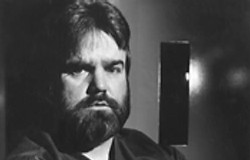 Marvin Gray
Murderer · USA · 1975
Marvin Gray was convicted killer who claimed responsibility for 23 slayings and…
23 victims
Marvin Gray
Murderer · USA · 1975
Marvin Gray was convicted killer who claimed responsibility for 23 slayings and…
23 victims
 Yahweh ben Yahweh
Murderer · USA · 1980
Yahweh ben Yahweh was born and legally named Hulon Mitchell Jr. (October 27, 19…
23 victims
Yahweh ben Yahweh
Murderer · USA · 1980
Yahweh ben Yahweh was born and legally named Hulon Mitchell Jr. (October 27, 19…
23 victims
 Russell Ellwood
Murderer · USA · 1991
Russell Ellwood was a former taxi driver. Authorities suspected him of killing…
20 victims
Russell Ellwood
Murderer · USA · 1991
Russell Ellwood was a former taxi driver. Authorities suspected him of killing…
20 victims
 Dante Arthurs
Murderer · Australia · 2006
Dante Wyndham Arthurs was born 8 August 1984 and was from Perth, Western Austra…
1 victim
Dante Arthurs
Murderer · Australia · 2006
Dante Wyndham Arthurs was born 8 August 1984 and was from Perth, Western Austra…
1 victim
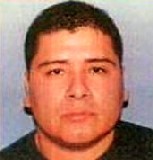 Gabriel Avila
Murderer · USA · 2003
Gabriel Avila was a 27-year-old Mexican national. Katie Sepich was 22 and from…
1 victim
Gabriel Avila
Murderer · USA · 2003
Gabriel Avila was a 27-year-old Mexican national. Katie Sepich was 22 and from…
1 victim
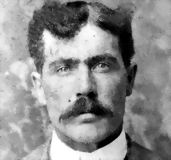 Wallace Wilkerson
Murderer · USA · 1877
Wallace Wilkerson (c. 1834 – May 16, 1879) was an American stockman. He was bor…
1 victim
Wallace Wilkerson
Murderer · USA · 1877
Wallace Wilkerson (c. 1834 – May 16, 1879) was an American stockman. He was bor…
1 victim
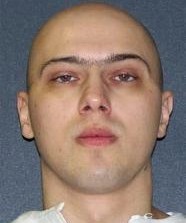 Joshua Maxwell
Murderer · USA · 2000
Joshua Maxwell was convicted of capital murder and sentenced to death for the r…
2 victims
Joshua Maxwell
Murderer · USA · 2000
Joshua Maxwell was convicted of capital murder and sentenced to death for the r…
2 victims
 De'Marquise Elkins
Homicide · USA · 2013
De'Marquise Elkins was a Georgia teenager who fatally shot a baby in a stroller…
1 victim
De'Marquise Elkins
Homicide · USA · 2013
De'Marquise Elkins was a Georgia teenager who fatally shot a baby in a stroller…
1 victim
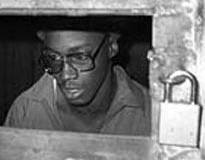 Edward Earl Johnson
Murderer · USA · 1979
Edward Earl Johnson (1961 – May 20, 1987) was an African American convicted mur…
1 victim
Edward Earl Johnson
Murderer · USA · 1979
Edward Earl Johnson (1961 – May 20, 1987) was an African American convicted mur…
1 victim
- Gender
- male
- Country
- USA
- Location
- Orange County, Florida, USA
- Date of birth
- 1952
- Age at first offence
- 31
- Characteristics
- rape
- Victim profile
- Carol Miller Ward
- Method of murder
- St abbing with two knives
- Date(s) of murder
- September 27, 1983
- Years active
- 1983
- Date of arrest
- —
- Status
-
Executed
Executed by electrocution in Florida on July 27, 1990
Case details
Anthony Bertolotti was executed in Florida by electrocution on July 27, 1990. He was 38 at the time of execution.
Victim
Carol Ward was stabbed and raped. Her body was discovered in her home by her husband when he returned from work. She had been repeatedly stabbed with two knives; one knife broke and the other was left in the body. She was naked from the waist down. Medical tests showed intercourse had taken place, though there was no evidence of physical trauma to the vaginal area. Carol Ward had been strangled and beaten, and bruises indicated she had fought back during the attack. She had been robbed of $30, and her car had been stolen.
Timeline
- September 27, 1983 — Carol Ward was killed; Anthony Bertolotti was later charged with first-degree murder for her death.
- March 31, 1984 — Anthony Bertolotti was convicted.
- April 12, 1984 — The judge imposed the death penalty.
- October 30, 1987 — Florida Supreme Court docket #71286: Anthony Bertolotti, Petitioner, vs. Richard L. Dugger, etc., Respondent (briefs and opinion petition for extraordinary relief; response to petition for writ of habeas corpus and application for stay execution).
- April 7, 1988 — Florida Supreme Court docket #71432: Anthony Bertolotti, Appellant, vs. State of Florida, Appellee (opinion answer brief of appellees from the denial of post-conviction relief).
- July 24, 1990 — Florida Supreme Court docket #76344: Anthony Bertolotti, Appellant, vs. State of Florida, Appelle. (opinion application for stay of execution; response to application; answer brief of appellee).
- July 27, 1990 — Anthony Bertolotti was executed by electrocution in Florida.
- August 31, 1989 — Federal appellate opinion: 883 F.2d 1503 (Anthony Bertolotti, Petitioner-Appellant, v. Richard Dugger, Secretary, Florida Department of Corrections, Respondent-Appellee), 11th Circuit.
Background
Anthony Bertolotti was a Florida prisoner under sentence of death and appealed the denial of his federal petition for a writ of habeas corpus.
The offence
Anthony Bertolotti approached Carol Ward while she was working in her yard in Orange County and asked to use the telephone; she let him in. He found a knife and robbed her of $30 at knifepoint. He became angry and stabbed her repeatedly until the knife broke. He found another knife and stabbed her until she died. Carol Ward was also raped.
Investigation and arrest
After a few days, Anthony Bertolotti was arrested following information from his girlfriend to police that she suspected his involvement in the murder. Anthony Bertolotti gave police two voluntary confessions preserved on audio tape. In the first confession, he admitted murdering the victim; in the second, he admitted the murder and also attempted to implicate his girlfriend.
Trial
Charges and verdict
Anthony Bertolotti was convicted of first-degree murder for the September 1983 slaying of Carol Miller Ward in Orlando, Florida. The jury returned a general verdict of guilty upon a charge of felony murder and premeditated murder, both of which were death-eligible crimes under Florida law.
Jury recommendation
By a vote of nine to three, the jury recommended the death penalty.
Sentencing
On April 12, 1984, the judge imposed the death penalty.
Sentencing details and statutory aggravation
The sentencing judge found the capital felony was especially heinous, atrocious or cruel. After hearing the defendant’s own account of the murder and considering the physical evidence, the judge concluded:
The capital felony was especially heinous, atrocious, or cruel. After hearing the Defendant's own account of this murder and considering the physical evidence it is difficult for the mind to imagine the horror and pain that Carol Ward must have suffered during the defendant's clumsy and protracted efforts to kill her. There is no question that she was stripped or forced to disrobe, threatened, bludgeoned, strangled and repeatedly stabbed. Her wounds clearly demonstrate that she tried to defend herself. A knife was actually broken from its handle in the first series of stabbings. Because she was "still moving" the defendant left the area and then returned with a second knife to continue the stabbing. See Palmes v. Wainwright, 725 F.2d 1511, 1523-24 & n. 12 (11th Cir.), reh. in banc den., 729 F.2d 1468 (11th Cir.), cert. denied, 469 U.S. 873 , 105 S.Ct. 227, 83 L.Ed.2d 156 (1984) .
Post-conviction proceedings and habeas litigation
Florida Supreme Court dockets
- Docket #71286 — Anthony Bertolotti, Petitioner, vs. Richard L. Dugger, etc., Respondent (514 So. 2d 1095; October 30, 1987): opinion petition for extraordinary relief; response to petition for writ of habeas corpus and application for stay execution.
- Docket #71432 — Anthony Bertolotti, Appellant, vs. State of Florida, Appellee (534 So. 2d 386; April 7, 1988): opinion answer brief of appellees from the denial of post-conviction relief.
- Docket #76344 — Anthony Bertolotti, Appellant, vs. State of Florida, Appelle. (565 So. 2d 1343; July 24, 1990): opinion application for stay of execution; response to application; answer brief of appellee.
Federal appeal (writ of habeas corpus)
Anthony Bertolotti appealed the district court’s denial of his petition for the writ of habeas corpus. The 11th Circuit affirmed the denial of relief, concluding his claims lacked merit.
Procedural history described in the federal opinion
The Florida Supreme Court affirmed Bertolotti’s conviction and sentence on direct appeal (Bertolotti v. State, 476 So.2d 130 (Fla. 1985)). After the Governor signed a warrant for Bertolotti’s execution, Bertolotti filed two collateral attacks in Florida courts. The Florida courts held an evidentiary hearing, granted a temporary stay of execution, and ultimately denied relief: Bertolotti v. Dugger, 514 So.2d 1095 (Fla. 1987) (denying state writ of habeas corpus) and Bertolotti v. State, 534 So.2d 386 (Fla. 1988) (denying Fla.R.Crim.P. 3.850 motion for post-conviction relief). On January 31, 1989, the Governor signed a second warrant for Bertolotti’s execution. On February 14, 1989, Bertolotti filed in federal district court a motion for stay of execution and a petition for the writ of habeas corpus. The petition was his first in federal court and presented eleven grounds for relief.
Federal habeas grounds (listed)
- Trial counsel provided ineffective assistance of counsel by failing to adequately investigate, develop, and present defenses at the guilt and penalty phases.
- Trial court erred by denying motions for a mistrial based on improper closing argument at the sentencing phase.
- Denial of a requested penalty phase instruction informing the jury of its ability to exercise mercy deprived him of a reliable and individualized capital-sentencing determination.
- Instructions at sentencing unconstitutionally shifted the burden of proof to Bertolotti.
- Florida courts gave an impermissibly broad construction to “especially heinous, atrocious or cruel” as used in a statutory aggravating circumstance.
- Death sentence was predicated upon an automatic, non-discretionary-channeling statutory aggravating circumstance.
- Right to a reliable capital-sentencing proceeding was violated by the state’s urging death on the basis of impermissible “victim impact” evidence.
- Comments by the judge and the prosecutor throughout the trial impermissibly diminished the jury’s sense of responsibility for the awesomeness of its sentencing task.
- Conviction was void because it may have been based on an impermissible ground and there may not have been juror unanimity.
- A state witness introduced impermissible evidence of propensity to crime.
- Trial judge unconstitutionally failed to grant a change of venue and impermissibly limited the ability to voir dire the jury venire.
Oral argument and district court decision
The district court heard oral argument the morning of February 15, 1989, but declined to hold an additional evidentiary hearing. Later that afternoon, the district judge denied Bertolotti relief and refused to issue a certificate of probable cause to appeal; the district court did enter a twenty-four hour stay of execution to allow time to appeal.
Ineffective assistance of counsel (federal analysis)
The federal opinion addressed ineffective assistance under the Strickland v. Washington two-prong test, requiring deficient performance and prejudice.
Trial counsel
Defense was undertaken by attorneys Joseph DuRocher, Clyde Wolfe, and Peter Kenny. DuRocher was the elected public defender for the Ninth Judicial Circuit in Florida and initially interviewed Bertolotti and assigned the case to Wolfe and Kenny. Wolfe was responsible for the guilt phase and Kenny for the penalty phase.
Evidence and contested signals regarding mental health
In discussing the ineffective assistance claim, the federal opinion described the murder evidence: the victim was repeatedly stabbed with two knives; one knife broke and the other remained in the body; she was naked from the waist down; forensic tests showed intercourse took place with no physical trauma to the vaginal area; she was strangled and beaten; she had bruises indicating she fought back; she was robbed of thirty dollars and her car was stolen. It also described the confessions and the girlfriend’s involvement in informing police.
The opinion described several matters Bertolotti argued counsel should have recognized as signals of psychological impairment, including emotional state during confession tapes, a statement during the confession that “I just, I don't know what was happening to me.” and the girlfriend’s claim that he needed psychiatric help and had a “split personality.” It also described the girlfriend’s report and the claim that Bertolotti had been placed under psychiatric observation while being held for the murder. The opinion included discussion of taped confessions and noted that Bertolotti appeared to understand what he was doing, who he was talking to, and what he was talking about, with the second confession described as calm and rational.
Prosecutorial misconduct and sentencing-phase arguments
The federal opinion addressed a prosecutor’s penalty-phase argument and considered it improper under Florida law but not a fifth-amendment violation.
Prosecutor’s comment (verbatim quote)
During sentencing the prosecutor argued:
And he says he didn't rape her.... But the evidence would show otherwise. And here she is found nude from the waist down, her underwear and pants and shoes on the floor of the kitchen. And what does that tell you? The man raped her. And yet he comes in here with the audacity to tell us, "I didn't have sex with her."
The Florida Supreme Court decided the remark was “fairly susceptible” of being interpreted as a comment on the defendant’s exercise of his right to remain silent and was improper. The Florida Supreme Court determined it was not so outrageous as to taint the validity of the jury’s recommendation in light of evidence of aggravation.
Jury instructions and burden of proof
The federal opinion addressed the claim that jury instructions shifted the burden of proof. It included the trial judge’s instructions (as quoted) describing the advisory sentence structure and aggravating and mitigating circumstances. The federal opinion stated the jury was instructed that aggravating circumstances must be established beyond a reasonable doubt and that mitigating circumstances need not be so established, and it described that the jury was not instructed to presume death.
The trial judge’s instructions quoted in the federal opinion were:
[I]t is your duty to follow the law that will now be given you by the court and render to the court an advisory sentence based upon your determination as to whether sufficient aggravating circumstances exist to justify the imposition of the death penalty and whether sufficient mitigating circumstances exist to outweigh any aggravating circumstances found to exist.
and
If you find the aggravating circumstances do not justify the death penalty, then your advisory sentence should be one of life imprisonment without possibility of parole for twenty-five years.
and
Should you find sufficient aggravating circumstances do exist, it will then be your duty to determine whether mitigating circumstances exist that outweigh the aggravating circumstances.
Requested jury instruction on mercy
Bertolotti requested this jury instruction:
The Death Penalty is warranted only for the most aggravated and unmitigated of crimes. The law does not require that death be imposed in every conviction in which a particular set of facts occur. Thus, even though the factual circumstances may justify the sentence of death by electrocution, this does not prevent you from exercising your reasoned judgment and recommending life imprisonment without eligibility for parole for twenty-five years.
The trial judge denied the instruction, and the Florida Supreme Court affirmed, holding it was subsumed within the standard jury charge.
“Especially heinous, atrocious or cruel” narrowing construction
The federal opinion rejected a claim based on Maynard v. Cartwright, and discussed Florida’s appellate construction and the sentencing judge’s explicit finding that the capital felony was especially heinous, atrocious, or cruel.
“Automatic” aggravating circumstance
The federal opinion addressed the claim that felony murder created an automatic death sentence because the sentencer found aggravation that the murder occurred while in the course of a robbery. It relied on Lowenfield v. Phelps.
“Victim impact” evidence
The federal opinion described a colloquy with the victim’s husband during sentencing. The colloquy included these statements:
A: If I was home, my wife would open a door, although she would prefer I do so. Throughout our marriage she often was upset if I opened the door to strangers, mentioning the danger there might be. I did not feel that danger, but my wife did.
Q: All right, sir. Now, was she particularly concerned with black strangers?
Defense: Your Honor, I'm going to object to leading the witness and suggesting the answer. Court: Sustained. Reframe your question.
Q: Did she have any particular concerns about who the strangers were that would come to the door?
A: All strangers upset my wife if they were young and male.
The federal opinion stated this was introduced to rebut Bertolotti’s defense to burglary that he had been invited into the Ward home.
Change of venue and voir dire
The federal opinion recounted news coverage and the proceedings on March 19 and March 26, 1984, including individual voir dire. It described that of fifty prospective jurors called, individual voir dire revealed thirteen sufficiently biased to be excused for cause, with six excused due to preconceived notion of guilt. It described selection of twelve jurors and two alternates; three had no knowledge, nine had some knowledge, and two knew of the existence of the confession. It stated counsel did not move for a change of venue after voir dire commenced.
General verdict and unanimity
The federal opinion described that the jury returned a general verdict of guilty upon premeditated murder and felony murder. It stated the Florida Supreme Court found a unanimity claim procedurally barred because trial counsel did not request a special verdict or object to use of the general verdict form.
Evidence of propensity to crime
The federal opinion discussed testimony by Bertolotti’s girlfriend at direct examination:
I just about had him talked into going [to the police] with me, and he asked me if he could have one more day of freedom because he knew he was going to prison again....
The defense moved for a mistrial; the trial judge denied. The prosecutor explained the statement was inadvertent and that the witness had been warned not to mention Bertolotti’s criminal record. The prosecutor would not oppose a cautionary instruction; defense counsel objected, arguing a cautionary instruction would do more harm than good; the trial judge instructed as requested. The federal opinion found the error harmless beyond any reasonable doubt.
Appeals and outcomes
The federal appellate court affirmed the denial of Bertolotti’s federal habeas corpus petition. The opinion included a concurrence and dissent by Judge Clark. The dissent argued that the failure to have Bertolotti examined by a psychiatrist was clearly unreasonable and prejudicial with respect to the penalty phase, and sought a resentencing hearing so that evidence could be considered as mitigating evidence. The dissent described the trial attorneys’ testimony about why the examination was not obtained earlier and discussed Dr. James R. Merikangas’s testimony at the Rule 3.850 hearing, as well as the state’s psychiatric witnesses and the dissent’s disagreement with the majority’s evaluation of prejudice.
Execution details and related reporting
Anthony Bertolotti’s execution took place by electrocution in Florida on July 27, 1990. A report described the United States Supreme Court rejecting assertions that Florida’s electric chair was not working properly, and noted that the execution was carried out at 7:07 P.M. apparently without problems. It also described a delay of executions for five other Florida inmates because of assertions the chair malfunctioned, referencing the May 4 execution of Jesse Tafero and noting that prison officials and an Auburn University expert conducted a test of the chair earlier in the week concluding it was working properly. It stated that the Supreme Court rejected Bertolotti’s last appeal about 30 minutes before execution and upheld a ruling earlier in the day by a three-judge panel of the United States Court of Appeals for the 11th Circuit that the chair’s 2,000 volts were sufficient to cause painless termination of life. It also noted that Bertolotti was the 23d convict to die in the chair since capital punishment was resumed in Florida in 1979.
Spotted an error, or have more information about this case?