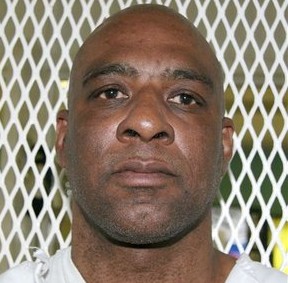
Reginald Perkins
Serial killer Carl Eugene Watts
Serial killer · USA · 1974
Carl Eugene Watts (born November 7, 1953; died September 21, 2007), also known…
100 victims
Carl Eugene Watts
Serial killer · USA · 1974
Carl Eugene Watts (born November 7, 1953; died September 21, 2007), also known…
100 victims
 Rodney Alcala
Serial killer · USA · 1977
Rodney James Alcala (born August 23, 1943) was also known as Rodrigo Jacques Al…
100 victims
Rodney Alcala
Serial killer · USA · 1977
Rodney James Alcala (born August 23, 1943) was also known as Rodrigo Jacques Al…
100 victims
 Donald Harvey
Serial killer · USA · 1970
Donald Harvey was known as an American serial killer and a self-professed “Ange…
87 victims
Donald Harvey
Serial killer · USA · 1970
Donald Harvey was known as an American serial killer and a self-professed “Ange…
87 victims
 Donald Leroy Evans
Serial killer · USA · 1975
Donald Leroy Evans (born July 5, 1957) was an American serial killer who murder…
60 victims
Donald Leroy Evans
Serial killer · USA · 1975
Donald Leroy Evans (born July 5, 1957) was an American serial killer who murder…
60 victims
 Michael Swango
Serial killer · USA · 1981
Michael Swango (Joseph Michael Swango) was a physician and American serial kill…
60 victims
Michael Swango
Serial killer · USA · 1981
Michael Swango (Joseph Michael Swango) was a physician and American serial kill…
60 victims
 Efren Saldivar
Serial killer · USA · 1989
Efren Saldivar (born 30 September 1969) was an American serial killer who murde…
50 victims
Efren Saldivar
Serial killer · USA · 1989
Efren Saldivar (born 30 September 1969) was an American serial killer who murde…
50 victims
 Holly Wood
Murderer · USA · 1993
Holly Wood (DOC# 00Z573) was sentenced to death in Alabama and was executed on…
1 victim
Holly Wood
Murderer · USA · 1993
Holly Wood (DOC# 00Z573) was sentenced to death in Alabama and was executed on…
1 victim
 Karu White
Murderer · USA · 1979
Karu White was sentenced to death on March 29, 1980 in Powell County for the mu…
3 victims
Karu White
Murderer · USA · 1979
Karu White was sentenced to death on March 29, 1980 in Powell County for the mu…
3 victims
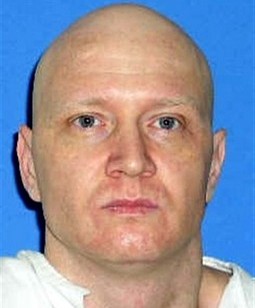 Newton Burton Anderson
Murderer · USA · 1999
Newton Burton Anderson was executed in Texas on February 22, 2007. Anderson was…
2 victims
Newton Burton Anderson
Murderer · USA · 1999
Newton Burton Anderson was executed in Texas on February 22, 2007. Anderson was…
2 victims
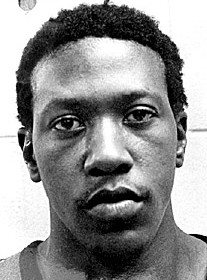 Hastings Wise
Mass murderer · USA · 1997
Arthur Hastings Wise was the defendant. Wise worked for about four years at the…
4 victims
Hastings Wise
Mass murderer · USA · 1997
Arthur Hastings Wise was the defendant. Wise worked for about four years at the…
4 victims
 Salvador Tapia
Mass murderer · USA · 2003
Salvador Tapia, 36, returned to Windy City Core Supply after being fired from t…
6 victims
Salvador Tapia
Mass murderer · USA · 2003
Salvador Tapia, 36, returned to Windy City Core Supply after being fired from t…
6 victims
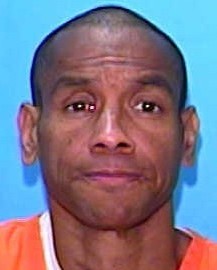 Albert Holland
Murderer · USA · 1990
Defendant: Albert Holland Date of birth: 03/24/58 Jurisdiction: Seventeenth Jud…
1 victim
Albert Holland
Murderer · USA · 1990
Defendant: Albert Holland Date of birth: 03/24/58 Jurisdiction: Seventeenth Jud…
1 victim
- Gender
- male
- Country
- USA
- Location
- Ohio/Texas, USA
- Date of birth
- April 29, 1955
- Age at first offence
- 25
- Characteristics
- parricide, convicted rapist
- Victim profile
- Gertie Mae Perkins, 64 (step-mother) / Paula Nelson, 21 / Jenny Morman, 43 / Terry Thomas / Hattie Wilson, 79 / Shirley Douglas, 44
- Method of murder
- Strangulation
- Date(s) of murder
- 1980 - 2000
- Years active
- 1980–2000
- Date of arrest
- December 5, 2000
- Status
-
Executed
Executed by lethal injection in Texas on January 22, 2009
Overview
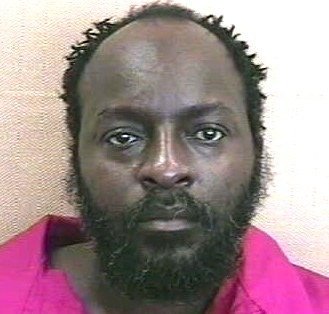
Reginald Perkins was convicted in Tarrant County of capital murder and was sentenced to death for the December 2000 robbery and murder of his stepmother, Gertie Perkins. He was executed by lethal injection in Texas on January 22, 2009.
Timeline
- December 4, 2000 — Gertie Perkins went missing from her home; police later found a small bloodstain on the carpet and observed the line cord from the bedroom telephone was missing; Perkins sold Gertie’s wedding ring at a pawn shop and cash two checks; later on the same day police arrested Reginald Perkins and Perkins directed his father and police to a parking garage where Gertie’s car was found with her body in the trunk.
- December 1, 2000 — Perkins told his stepbrother’s wife that he needed $1,000 by Monday and that he was planning to rob a lady who worked in a store by herself.
- December 3, 2000 — Perkins told his sister that he was having money problems.
- February 22, 2005 — The U.S. Supreme Court denied certiorari review of Perkins’ direct-appeal decision.
- September 13, 2006 — Perkins’ state petition for writ of habeas corpus was denied after the state court held an evidentiary hearing.
- March 1, 2007 — The federal district court denied Perkins’ federal petition for writ of habeas corpus.
- April 2, 2007 — The federal district court denied Perkins’ request for a certificate of appealability (COA).
- November 15, 2007 — The Fifth U.S. Circuit Court of Appeals denied Perkins’ request for a COA.
- May 27, 2008 — The Supreme Court denied certiorari review of the Fifth Circuit Court's decision.
- January 22, 2009 — Perkins was scheduled for execution and was executed by lethal injection in Texas.
- March 18, 2002 — Perkins, after being convicted for his stepmother’s murder, was sentenced to death.
- June 30, 2004 — The Texas Court of Criminal Appeals affirmed Perkins’ conviction and sentence on direct appeal.
- 2004 — The Texas Court of Criminal Appeals decision in Perkins v. State was issued as Perkins v. State, Not Reported in S.W.3d, 2004 WL 3093239 (Tex.Crim.App. 2004) (Direct Appeal).
- 2007 — Perkins v. Quarterman, 254 Fed.Appx. 366 (5th Cir. 2007) (Habeas) was issued.
Background
Personal details
Reginald Perkins was born in Arkansas and was raised in Texas. His native county was Arkansas. He was male with black hair and brown eyes, and was 6 ft 2 in and 190 pounds. He was received on 03/22/2002, and at that time he was 46. His age at the offense was 45 on 12/04/2000.
Prior criminal history in Ohio
In 1980, Perkins pled guilty to the rape of a 12-year-old girl and was sentenced to Life, but was paroled in 1986. In 1982, Perkins was convicted of rape of a minor, attempted rape of a minor, and gross sexual imposition, with concurrent sentences: life in prison for the rape, a term of four to fifteen years for the attempted rape, and a term of two to ten years for the gross sexual imposition. He was incarcerated in 1981, released on parole in 1990, returned to prison in 1994, and was paroled again in 2000. In 1999, an Ohio court found by clear and convincing evidence that Perkins was a sexual predator, based on the convictions’ victims being two 12-year-old girls.
Two additional Ohio murders were described as involving Perkins:
- Perkins was connected in an account to the strangling death of Jenny Morman (43) with a scarf-like object.
- Perkins was also connected in an account to the murder of Jerry Thomas after the victim’s mother learned of the rape of her daughter, and there was testimony that Perkins was arrested as a suspect but was never tried.
- Ramola Washington testified that Perkins killed Paula Nelson on October 23, 1980 by strangling her with something soft like a scarf; Perkins was never tried for that murder.
Further connected murders after the capital conviction
After his conviction and sentence of death for the murder of Gertie Perkins, Perkins was described as being connected by DNA evidence to at least two other murders, and suspected in a third.
The additional victims identified were:
- Paula Nelson, 21
- Jenny Morman, 43
- Terry Thomas, with additional murder details discussed in multiple accounts
- Hattie Wilson, 79
- Shirley Douglas, 44
Family relationships and employment
Gertie Perkins was the stepmother of Reginald Perkins and had been married to Perkins’ father for 45 years. Gertie Perkins set up Perkins in the family’s trucking business, providing a dump truck, and she gave him a mobile home in Fort Worth. Perkins was described as living with Gertie Perkins and working for the family business. Prior occupation was described as woodruff truck driver, plumber, laborer.
Willie Perkins was Gertie Perkins’ husband and Reginald Perkins’ father. Reginald Perkins had a sister and a stepbrother, and he had additional relatives mentioned in witness accounts.
The offence
On December 4, 2000, police were called after Gertie Perkins was reported missing because she had failed to pick up their grandson from school. Police found a small bloodstain on the carpet in the Perkins home and observed that the line cord from the bedroom telephone was missing. The body of Gertie Perkins was found in the trunk of her car parked in a parking garage.
Injuries and forensic observations
An autopsy and medical examiner information described bruises on Gertie Perkins’ head and mouth and strangulation with something thin and smooth, described as a phone cord in multiple parts of the record.
Local police discovered that the phone cord from the bedroom telephone had been disconnected.
Robbery and financial activity on the day of the disappearance
On the day Gertie disappeared:
- Perkins used his driver’s license to sell her wedding ring at a pawn shop for $150.
- Two checks from the family business were cashed: one for $600 and one for $700.
- Perkins paid a known crack user $200 to cash the checks, described in one account as valued at $1,300 total.
In accounts describing motive, Perkins was stated to have said his motive was robbery.
Police discovery and direction to the body
Later that day, police arrested Reginald Perkins. Perkins called his father, Willie Perkins. Willie Perkins told his son, “I sure hope you’ve got good news for me,” and Reginald Perkins replied, “I’m afraid not; she’s dead.”
Perkins directed his father and police to a parking garage, where they found Gertie Perkins’ car parked. When Willie Perkins asked if he could get out of the car, Perkins said, “Daddy, no, don’t get out. Don’t go.”
Police then found Gertie Perkins’ body in the trunk of the car.
Investigation
Investigators found:
- A small bloodstain on the edge of the carpet in the Perkins home.
- The bedroom telephone line cord was missing or disconnected.
Testimony at trial included an account that Perkins confessed to a fellow inmate while awaiting trial for murder, saying the evidence was only “a body and a phone cord and no witnesses” and stating that he had beaten the victim to death, and that he had been involved with a telephone cord but that another man cashed the checks.
Trial
Conviction and sentencing
Perkins was convicted and sentenced to death in March 2002. The Texas Court of Criminal Appeals affirmed his conviction on direct appeal on June 30, 2004.
At sentencing, his death sentence was imposed under Texas Code of Criminal Procedure article 37.071, including jury answers to special issues set forth in article 37.071 §§ 2(b) and 2(e), with the trial judge sentencing appellant to death under art. 37.071 § 2(g). Direct appeal was automatic under art. 37.071 § 2(h).
Trial issues described in the direct appeal decision
Perkins raised eleven points of error in the direct appeal decision:
- The death penalty scheme’s failure to place the burden on the State of disproving the mitigation special issue beyond a reasonable doubt did not violate due process. The Court of Criminal Appeals overruled points of error one, two, and three.
- The trial court’s instruction defining “beyond a reasonable doubt” in guilt/innocence and punishment did not constitute reversible error. The Court of Criminal Appeals overruled points of error four and five.
- The admission of a witness statement indicating Perkins had been in prison did not warrant a mistrial. The Court of Criminal Appeals overruled point of error six.
- The trial court did not err in admitting statements Perkins made to Detective Scott Campbell because Perkins’ objection on appeal did not comport with his objections at trial. The Court of Criminal Appeals overruled point of error seven.
- The court’s rulings on the admissibility of Washington’s testimony involving a spousal privilege issue were procedurally defaulted under Rule 33.1, and the Court of Criminal Appeals overruled point of error eight.
- Perkins’ claim of ineffective assistance of counsel regarding denial of retroactive exercise of peremptory challenges was overruled as failing under the Strickland standard. The Court of Criminal Appeals overruled point of error nine.
- A claim that the trial court relied on juror race in overruling a challenge for cause was overruled due to failure to preserve error. The Court of Criminal Appeals overruled point of error ten.
- A claim that the State improperly bound a venireperson to specific facts while rehabilitating her was overruled. The Court of Criminal Appeals overruled point of error eleven.
Verbatim quotations from trial-related narrative in the direct appeal decision
During the guilt/innocence phase, the direct-examination exchange included:
- “Now, was there a time-did [appellant], though-eventually did he come back to live with the family?”
- “Yes. He came back like-”
- “Q. Just as best-just as best as you can. Sometime in the last ten years?”
- “A. Yeah. I think he was in prison”
The trial court instructed the jury:
“Now, ladies and gentlemen, I want you to pay real close attention. I'm going to read a statement to you. I'm going to ask the jury to hold an answer to the question. Then I'm going to go through each one of you individually and call your name, okay, and ask you some questions. You have heard testimony from [the witness] that, open quotes, “Yeah, I think he was in prison,” close quotes. The Court makes no comment as to the truthfulness of this testimony. You are, however, ordered to disregard such testimony, whether true or not, and strike it from your mind. You're ordered not to consider this testimony for any purpose whatsoever during your deliberations, as such would be a violation of this Court's instructions as well as a violation of your oath to follow the law as given to you by this Court.”
In another voir dire-related excerpt, the prosecutor’s questioning of Linda Croft Warren included:
- “Okay, Ms. Warren. First off, I want to talk to you about Special Issue Number One and I think the defense had asked you a question if you had found someone guilty of the offense of capital murder without legal justification or excuse, would you answer this Special Issue Number One yes. And I think you said yes and I also remember you making some comments that you would want to look at the things I put up earlier that you couldn't remember.”
- “Right.”
- “Q. Now, do you understand that in answering this special issue, you could be faced with many, many different fact situations with a capital murder. It could be as-it could be as heinous as a career criminal who goes into a store-”
- “Q. I mean, you could be dealing with facts of a career criminal who walks into a convenience store with the intent to kill the clerk. He kills the clerk. Makes a statement, if I get a chance, I'm going to rob another convenience store and kill the clerk. Or it could be a fact situation where you've got a 17-year-old kid who-”
- “Q. Or it could be a 17-year-old kid who walks in to rob a convenience store, panics in the middle, closes his eyes, points that gun and shoots with the intent to kill the clerk, and that person is remorseful for their actions. So there are a lot of situations-and I'm not trying to bind you, but I remember when I asked you this question when I had you on voir dire. I asked you would you let the evidence guide you in answering this question. And would you do that?”
- “A. Yes, sir.”
Juror challenge and trial court statement about a venireperson
The direct appeal decision included a statement by the trial court about venireperson Marion King Lewis:
“The Court does think she vacillated back and forth, but I do think she was having a hard time understanding it, as many jurors do. But she brought up on her own, without prompting, early on in the voir dire process, that her personal feelings would not get in the way of what the law was and I came back and asked her about that later. I do not-and I think she is-I've got to get a feel for the whole juror and I don't think we've had anybody that we've had up here yet that would try to be fairer on a case than this lady. She hasn't got any axe to grind. I think she will answer these questions. Sure, they're tough, but they're tough-most attorneys have a hard time with this. And I also want the record to reflect that she's African-American. And having looked ahead at those left, the composition of the jury, I think she'd make a good juror.”
Sentencing
Perkins was sentenced to death in March 2002 after being convicted of capital murder under Tex. Pen. Code § 19.03(a). The sentencing was based on jury answers to special issues under Texas Code of Criminal Procedure article 37.071 §§ 2(b) and 2(e), with the trial judge sentencing appellant to death under art. 37.071 § 2(g).
Appeals
Direct appeal (Texas Court of Criminal Appeals)
The Texas Court of Criminal Appeals affirmed Perkins’ conviction and sentence on June 30, 2004 in Perkins v. 2004) (Direct Appeal). The Court of Criminal Appeals affirmed the judgment, with Holcomb, J., delivering the opinion for a unanimous Court.
Federal habeas proceedings (Fifth Circuit)
Perkins v. Quarterman, 254 Fed.Appx. 366 (5th Cir. 2007) (Habeas) denied a request for a COA and upheld the district court’s denial of habeas relief. The Fifth Circuit held:
- Perkins was not mentally retarded;
- Perkins was not deprived of effective assistance of counsel;
- actual innocence was not independently cognizable in a habeas petition. The Fifth Circuit also denied a COA on an actual innocence issue.
Outcome
Perkins’ conviction and death sentence remained affirmed through direct appeal and were not overturned through subsequent habeas proceedings. His execution occurred by lethal injection in Texas on January 22, 2009.
Aftermath
Clemency and parole-related status
The Texas Board of Pardons and Paroles on Wednesday unanimously rejected a clemency request seeking commutation to life in prison.
Execution
Perkins was executed by lethal injection at the Texas Department of Criminal Justice Walls Unit in Huntsville, Texas. He was pronounced dead at 6:24 p.m., eight minutes after the lethal injection began.
Verbatim statements made by Perkins around execution
When asked by the warden if he wanted to make a statement, Perkins replied:
- “I already made my statement. Appreciate it. Love y'all. I can feel it going in.”
A statement about innocence was given during the hour before execution, including:
- “I am innocent and I did not do this”
- “They didn’t link me to nothing. I did not kill my stepmom. I loved her, and Texas is going to kill an innocent man.”
He also said:
- “They didn’t link me to nothing. I did not kill my stepmom. I loved her. Texas is going to kill an innocent man.”
- “There’s other suspects they questioned besides me, and they let them go,”
- “I can’t tell you who killed them — I ain’t killed nobody.”
- “I already made my statement. Appreciate it. Love y'all.”
He told Gertie’s sister he loved her, then he lost consciousness.
Prosecutorial and family statements included in the record narrative
The district attorney Kevin Rousseau was quoted:
- “He’s a consummate liar and a con artist,”
- “I wouldn’t believe anything he said. He’s a serial killer. People look for more complicated rationale. But the bottom line is, he’s a killer. He goes through quite a bit of trouble to kill folks.”
Victim’s sisters were quoted:
- Barbara Ward: “I think he waited a little bit too late to tell me that he loved me,”
- Barbara Ward also said, if Perkins insisted he was innocent, “He should have told who did it.”
- Delores Hill: “All the evidence did lead to him,”
- The family prepared statement included: “God will deal with him now,” “What a great state to live in to know justice was served.”
Victims and related individuals mentioned
Primary victim of the capital murder case
- Gertie Mae Perkins, 64 — stepmother; body found in the trunk of her car in a parking garage; bruises on her head and mouth; strangled with something thin and smooth described as a phone cord.
Other victims referenced in connection with Perkins
The record listed these victims as connected by DNA evidence to at least two other murders, and suspected in a third:
- Paula Nelson, 21
- Jenny Morman, 43
- Terry Thomas (age 43 appears in one list; other parts refer to Terry Thomas as mother of a victim)
- Hattie Wilson, 79
- Shirley Douglas, 44
Additional named people
- Willie Perkins — father/husband of Gertie Perkins; was contacted after Gertie was reported missing.
- Jason Clark — TDCJ public information officer.
- Barbara Ward — Gertie’s sister.
- Delores Hill — another sister of Gertie.
- Kevin Rousseau — Tarrant County district attorney/prosecutor in Perkins’ case.
- William Harris — Perkins’ lawyer.
- Manny Reyes — Fort Worth police detective.
- Greg Abbott — Texas Attorney General.
- Frank Moore and Samuel Boyd and Patrick Clark — referenced in a narrative about other executions and killings, but not as victims in Perkins’ case.
- Larry Swearingen and Melissa Trotter — referenced in a narrative about other executions, but not as victims in Perkins’ case.
- Curtis Moore and Larry Swearingen — referenced in the execution narrative.
Other details
Medical examiner description
The medical examiner indicated Gertie was killed with a thin, fairly smooth object like a phone cord.
Additional domestic and case specifics in accounts of the offense
Carpeting, sheets, and telephone cord details were described as:
- Carpet removed from the floor in the home.
- Sheets missing from a bed.
- Bedroom telephone cord disconnected.
Prison and identification details
TDCJ number was 999407. The date of offense was 12/04/2000 and the date received was 03/22/2002. Perkins’ education level was recorded as 7.
Co-defendants
The record stated co-defendants: None.
Final meal and last statement formatting
Final words were provided in a narrative: “I already made my statement. Appreciate it. Love y’all. I can feel it going in.” He then looked at Gertie’s sister and told her he loved her, then he lost consciousness.

Spotted an error, or have more information about this case?