John Etter Clark
Mass murderer Robert Raymond Cook
Mass murderer · Canada · 1959
Robert Raymond Cook (also known as Bobby Cook): convicted murderer; eldest son…
7 victims
Robert Raymond Cook
Mass murderer · Canada · 1959
Robert Raymond Cook (also known as Bobby Cook): convicted murderer; eldest son…
7 victims
 Marc Lepine
Mass murderer · Canada · 1989
Marc Lépine committed a shooting at the École Polytechnique engineering school…
14 victims
Marc Lepine
Mass murderer · Canada · 1989
Marc Lépine committed a shooting at the École Polytechnique engineering school…
14 victims
 Roger Warren
Mass murderer · Canada · 1992
Roger Warren was convicted of 9 counts of second-degree murder in connection to…
9 victims
Roger Warren
Mass murderer · Canada · 1992
Roger Warren was convicted of 9 counts of second-degree murder in connection to…
9 victims
 Victor Ernest Hoffman
Mass murderer · Canada · 1967
Victor Ernest Hoffman (born 1946; died May 21, 2004) was found not guilty by re…
9 victims
Victor Ernest Hoffman
Mass murderer · Canada · 1967
Victor Ernest Hoffman (born 1946; died May 21, 2004) was found not guilty by re…
9 victims
 Darrell Glenn Carr
Murderer · 1991
Darrell Glenn Carr was sentenced to death on March 10, 1993.
1 victim
Darrell Glenn Carr
Murderer · 1991
Darrell Glenn Carr was sentenced to death on March 10, 1993.
1 victim
 Charles Daniel Thacker
Murderer · USA · 1993
Charles Daniel Thacker was a white male convicted in Harris County, Texas, of c…
1 victim
Charles Daniel Thacker
Murderer · USA · 1993
Charles Daniel Thacker was a white male convicted in Harris County, Texas, of c…
1 victim
 Lyndon Mosley
Homicide · USA · 1997
Defendant: Lyndon Mosley (also identified as Lyndon Dechard Mosley) · Case name…
1 victim
Lyndon Mosley
Homicide · USA · 1997
Defendant: Lyndon Mosley (also identified as Lyndon Dechard Mosley) · Case name…
1 victim
 Dr. John Robert Hill
Murderer? · USA · 1950
Dr. John Robert Hill was a prominent Houston surgeon. His wife was Joan Robinso…
5 victims
Dr. John Robert Hill
Murderer? · USA · 1950
Dr. John Robert Hill was a prominent Houston surgeon. His wife was Joan Robinso…
5 victims
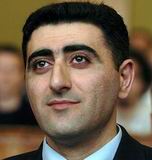 Ramil Safarov
Murderer · Hungary · 2004
Ramil Safarov was a lieutenant in the Azerbaijani Army. He was born in 1977 in…
1 victim
Ramil Safarov
Murderer · Hungary · 2004
Ramil Safarov was a lieutenant in the Azerbaijani Army. He was born in 1977 in…
1 victim
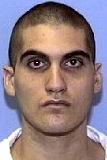 Steven Michael Woods
Murderer · USA · 2001
Steven Michael Woods was a white male. He had 10 years of education. He worked…
2 victims
Steven Michael Woods
Murderer · USA · 2001
Steven Michael Woods was a white male. He had 10 years of education. He worked…
2 victims
- Gender
- male
- Country
- Canada
- Location
- Erskine, Alberta, Canada
- Date of birth
- March 29, 1915
- Age at first offence
- 41
- Characteristics
- parricide
- Victim profile
- His wife Margaret Clark, 37; his son Ross, 7; her three daughters, Jenena, 8, Ann, 5, Linda, 4; a hired farm hand and a visitor to the farm
- Method of murder
- Shooting ( single-shot .22 caliber rifle)
- Date(s) of murder
- June 3, 1956
- Years active
- 1956
- Date of arrest
- —
- Status
-
Died in custody
Committed suicide by shooting himself the same day John Etter Clark (March 29, 1915 – June 3, 1956) was discovered following a mass murder in Erskine, Alberta
Background
John Etter Clark (March 29, 1915 – June 3, 1956) was a provincial politician, teacher and farmer from Alberta, Canada. He served as a member of the Legislative Assembly of Alberta from 1952 until his death in 1956.
Clark was born in Alberta, Canada in 1915. He became a part-time school teacher and a farmer. He inherited the farm founded by his father and farmed a total of 1,000 acres (4.0 km²) of land.
Clark married his wife Margaret Dinwoodie in 1947 and had four children with her.
Political career
Clark ran for a seat to the Alberta Legislature in the 1952 Alberta general election as a Social Credit candidate in the electoral district of Stettler. The four race was hotly contested with Clark winning on the second vote count to hold the district for his party.
Clark ran for a second term in the 1955 Alberta general election. He won a sizable majority defeating two other candidates to hold his seat.
Murders and suicide
On June 3, 1956, Pete Parrott, a neighbor residing on a farm leased from Clark next to his farm in Erskine, Alberta, stopped over for a social visit. Parrott happened upon a grisly mass murder scene finding seven people who were shot at least once through the head with one victim being shot multiple times. Six of the victims were already deceased with a seventh barely clinging to life when Parrott arrived. The seventh victim was taken to a local hospital but died shortly after.
The victims had been shot with .22 caliber bullets.
The Royal Canadian Mounted Police descended on scene with 14 special field agents. Clark was not among the dead, and had fled the scene. A mass search began to locate his whereabouts.
The dead included his wife Margaret Clark, his son and three daughters: a hired farm hand and a visitor to the farm were also among the victims.
The murder weapon was a single-shot .22 caliber rifle that Clark had borrowed from his uncle.
Clark was supposed to have traveled to Saskatchewan on June 1, 1956 to help manage the Social Credit campaign in the 1956 Saskatchewan general election, but failed to show without any explanation.
Police found the body of Clark lying just on the edge of a dugout approximately 600 yards from the farmhouse where the murders took place. He had a single self-inflicted bullet hole through the head and was found with murder weapon lying at his feet. Clark was found adorned in night attire as if he had been preparing to go to bed.
The search was conducted by 32 RCMP Officers who traveled the range on horseback with a team of tracking dogs. A separate aerial search was conducted by a team of three mounties on a Royal Canadian Air Force Otter. The mounties spotted the body of Clark from the air a few hours after the search began.
At the time of the mass murder, it was considered the worst such event in Alberta's history.
Mental health
Clark had been suffering from frequent nervous breakdowns in recent years. He was hospitalized for a month and a half in 1954 after one such breakdown. He also had one during the spring session of the legislature in 1956.
Spotted an error, or have more information about this case?