Richard Andrade
Murderer Brian Kevin Rosenfeld
Murderer · USA · 1985
Brian Kevin Rosenfeld Brian Kevin Rosenfeld was sentenced to three concurrent l…
23 victims
Brian Kevin Rosenfeld
Murderer · USA · 1985
Brian Kevin Rosenfeld Brian Kevin Rosenfeld was sentenced to three concurrent l…
23 victims
 Marvin Gray
Murderer · USA · 1975
Marvin Gray was convicted killer who claimed responsibility for 23 slayings and…
23 victims
Marvin Gray
Murderer · USA · 1975
Marvin Gray was convicted killer who claimed responsibility for 23 slayings and…
23 victims
 Yahweh ben Yahweh
Murderer · USA · 1980
Yahweh ben Yahweh was born and legally named Hulon Mitchell Jr. (October 27, 19…
23 victims
Yahweh ben Yahweh
Murderer · USA · 1980
Yahweh ben Yahweh was born and legally named Hulon Mitchell Jr. (October 27, 19…
23 victims
 Russell Ellwood
Murderer · USA · 1991
Russell Ellwood was a former taxi driver. Authorities suspected him of killing…
20 victims
Russell Ellwood
Murderer · USA · 1991
Russell Ellwood was a former taxi driver. Authorities suspected him of killing…
20 victims
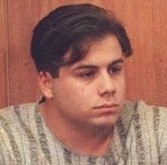 Anthony & Damian Clemente
Murderers · USA · 1995
November 6, 1995 — Anthony and Damian went to the 99 Restaurant; Anthony used a…
4 victims
Anthony & Damian Clemente
Murderers · USA · 1995
November 6, 1995 — Anthony and Damian went to the 99 Restaurant; Anthony used a…
4 victims
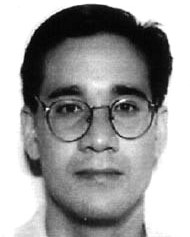 Andrew Cunanan
Spree killer · USA · 1997
Andrew Phillip Cunanan (August 31, 1969 – July 23, 1997) was an American spree…
5 victims
Andrew Cunanan
Spree killer · USA · 1997
Andrew Phillip Cunanan (August 31, 1969 – July 23, 1997) was an American spree…
5 victims
 Clifford Fortner
Homicide · USA · 1959
Clifford Fortner was a 15-year-old boy from the neighborhood. Lorna Lax was a 1…
1 victim
Clifford Fortner
Homicide · USA · 1959
Clifford Fortner was a 15-year-old boy from the neighborhood. Lorna Lax was a 1…
1 victim
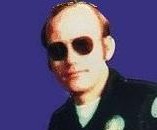 William Ernest Leasure
Murderer · USA · 1977
William Ernest Leasure was called “Mild Bill” by his fellow Los Angeles police…
3 victims
William Ernest Leasure
Murderer · USA · 1977
William Ernest Leasure was called “Mild Bill” by his fellow Los Angeles police…
3 victims
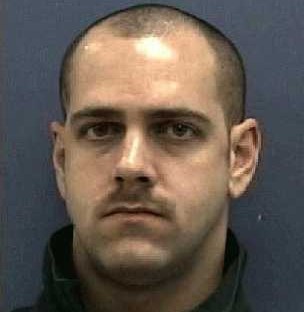 Ashley Jones
Murderer · USA · 1993
Ashley Lyndol Jones, 23, was sentenced to death on June 19, 1995. Jones was con…
1 victim
Ashley Jones
Murderer · USA · 1993
Ashley Lyndol Jones, 23, was sentenced to death on June 19, 1995. Jones was con…
1 victim
- Gender
- male
- Country
- USA
- Location
- Nueces County, Texas, USA
- Date of birth
- 1961
- Age at first offence
- 23
- Characteristics
- rape
- Victim profile
- Cordelia Mae Guevara, 28
- Method of murder
- St abbing with knife 14 times
- Date(s) of murder
- March 29, 1984
- Years active
- 1984
- Date of arrest
- —
- Status
-
Executed
Executed by lethal injection in Texas on December 18, 1986
Case record: Richard Andrade
Background
Richard Andrade was a death-sentenced Texas prisoner. He was 25 years old when he was pronounced dead following his execution.
Andrade was indicted for the capital murder of Cordelia Mae Guevara while attempting an aggravated sexual assault.
The offence
Near midday on March 20, 1984, the body of Cordelia Mae Guevara was found in a lounge she operated in Corpus Christi, Texas.
Guevara’s body lay in a pool of blood. Her skirt was torn and pulled above her waist. Her panties were removed, and her legs were spread and flexed. It appeared the lounge had been in the process of being closed at the time of the offense, and the general scene reflected a struggle.
The autopsy revealed at least 12 stab wounds to Guevara’s heart, lungs, stomach, face, arms, and legs. The presence of prostatic acid phosphatase in her vagina indicated recent sexual activity. When found, she had been dead for several hours.
Witnesses identified Andrade as the last person in the bar the night of the murder. A blue shirt found at the scene was identified by witnesses as the one worn by Andrade that night.
Andrade’s fingerprints were found on a beer can near the door, and his palm-print was lifted from the jukebox. Blood on the shirt had the same characteristics as Guevara’s blood, and hair found on the shirt matched her head and pubic hairs. Ink on the shirt was the same as ink in Guevara’s broken pen found at the scene.
Andrade did not testify during the guilt phase, but in his testimony at the punishment phase he admitted the shirt was his and that he had worn it the night of the murder.
Investigation
Physical evidence included:
- A blue shirt at the scene identified as the one Andrade wore that night
- Andrade’s fingerprints on a beer can near the door
- Andrade’s palm-print lifted from the jukebox
- Blood on the shirt matching Guevara’s blood characteristics
- Hair on the shirt matching Guevara’s head and pubic hairs
- Ink on the shirt matching ink in Guevara’s broken pen found at the scene
Trial
Andrade was indicted for the capital murder of Cordelia Mae Guevara on March 20, 1984 while attempting an aggravated sexual assault.
Andrade was found guilty of capital murder by a jury. The jury subsequently affirmatively answered two special issues submitted pursuant to Tex.Code Crim.Proc.Ann. art. 37.071 (Vernon 1981).
Andrade’s conviction and death sentence were affirmed by the Texas Court of Criminal Appeals. Andrade v. State, 700 S.W.2d 585 (Tex.Crim.App.1985).
Sentencing
During the punishment phase deliberations, the jury asked if Andrade would be eligible for parole if he received a life sentence.
Andrade asked the court to instruct the jury that one convicted of capital murder would not be eligible for parole until after serving 20 years. The court declined to answer the inquiry.
The punishment assessed for capital murder was death.
Appeals
The Supreme Court denied Andrade’s petition for certiorari. Andrade v. Texas, --- U.S. ----, 106 S.Ct. 1524, 89 L.Ed.2d 921 (1986).
Andrade filed an application for a writ of habeas corpus, which was denied by the Texas Court of Criminal Appeals. The instant application was filed urging identical grounds previously presented to the state court.
After reviewing the record, the district court denied habeas relief and vacated its earlier order staying Andrade’s execution.
The trial court denied a requested certificate of probable cause stating that Andrade had “failed to make a substantial showing of the denial of a federal right.”
Andrade sought a certificate of probable cause and a stay of execution.
Federal habeas proceedings and grounds raised
Andrade appealed the district court’s rejection of federal habeas relief under 28 U.S.C. Sec. 2254. He requested a certificate of probable cause and moved for a stay of the execution set for December 18, 1986.
Andrade alleged four grounds in his application for habeas corpus and stated them as substantial federal issues he would raise on appeal:
- He was denied his right to due process under the Fourteenth Amendment and his right to be free from cruel and unusual punishment under the Eighth Amendment when the trial court refused to instruct the jury on the parole laws of the State of Texas during the punishment phase.
- The Texas capital sentencing scheme violated his rights under the Fourteenth Amendment and the Eighth Amendment because it did not allow the jury the option of assessing a penalty of life imprisonment without the possibility of parole.
- He was denied his Sixth and Fourteenth Amendment right to confront and cross-examine witnesses against him when the trial court admitted the report of an expert witness who was not present at trial and unavailable for cross examination.
- The death penalty was improperly imposed in his case in violation of the Eighth and Fourteenth Amendments because Article 37.071 of the Texas Code of Criminal Procedure mandates that all three special issues be submitted to the jury during the punishment phase of the trial, but only two were submitted in his case.
Analysis on the federal appeal
The appellate court considered each contention and found all without merit.
- Failure to instruct jury on parole law During punishment phase deliberations, the jury asked if Andrade would be eligible for parole if he received a life sentence. The court declined Andrade’s request to instruct the jury that one convicted of capital murder would not be eligible for parole until after serving 20 years.
The appellate court cited that under Texas law a jury may not consider the possibility of parole in its deliberation on punishment, and it held there was no merit to Andrade’s claim that the refusal to instruct a jury on the law of parole amounted to a constitutional violation.
- The Texas capital sentencing scheme Andrade claimed the Texas sentencing scheme was constitutionally infirm because Texas did not provide a sentence of life without benefit of parole as a sentencing option in a capital murder case. He maintained the death penalty was unevenly applied in Texas, and he offered nothing more than speculation. His request for an evidentiary hearing was denied for failing to present “specific, non-conclusory allegations justifying issuance of the writ,” quoting Prejean v. Maggio, 765 F.2d 482, 486-87 (5th Cir.1985).
The appellate court stated that the Texas capital punishment statute passed constitutional muster in Jurek v. Texas. It concluded neither sentence of death and life imprisonment was constitutionally disproportionate and that a constitutional sentencing scheme did not require a third sentencing option.
- Admission into evidence of absent expert’s report Andrade contended the trial court erred by admitting into evidence the report of a chemist who compared ink-stains on the shirt found at the scene with ink in a ballpoint pen also found at the scene.
During the testimony of one FBI agent, the prosecutor developed that the shirt and the pen had been turned over to an FBI chemist for examination. The chemist was unavailable during Andrade’s trial because he was then a witness in a trial in Alaska.
Andrade objected to introduction of the chemist’s report through the other agent, including on the ground that he was denied his rights of confrontation and cross-examination. The objection was overruled and the agent read from the report of the chemist that there was no chemical difference between the ink on the shirt and that in the pen.
On cross-examination, Andrade’s counsel cast doubt on the conclusion in the chemist’s report by drawing concessions that the testifying agent did not know: (1) the manufacturer of the pen; (2) the tests that were performed; (3) the number of companies that used similar ink in their pens; (4) the number of pens in the city of Corpus Christi using this ink; and (5) whether the ink stains on the shirt were made by the pen found at the scene.
In reviewing state evidentiary rulings, the appellate court stated its role was limited to determining whether a trial judge’s error was so extreme it constituted denial of fundamental fairness.
The appellate court concluded that even if there was error, it did not carry such prejudice as would warrant issuance of habeas relief. It treated any such error as harmless error.
- Failure to submit the third special issue Andrade maintained there was constitutional error from the trial court’s failure to submit the third special issue prescribed by Tex.Code Crim.Proc.Ann. art. 37.071.
The appellate court quoted the statutory provision:
On conclusion of the presentation of the evidence, the court shall submit the following issues to the jury:
(3) if raised by the evidence, whether the conduct of the defendant in killing the deceased was unreasonable in response to the provocation, if any, by the deceased.
The appellate court concluded there was neither constitutional error nor trial court error in refusal to present this special issue because, under Texas law, the issue was to be posed only if provocation was raised by the evidence. It cited that to raise provocation it was necessary there be evidence of the deceased’s conduct just prior to his death and that it be sufficient to be considered provocation. The appellate court stated the record contained no such evidence and that Andrade suggested none.
The appellate court concluded Andrade failed to demonstrate that the issues were debatable among jurists of reason.
Outcome
Andrade’s request for a certificate of probable cause was denied and the motion for a stay of execution was denied. The judgment was affirmed.
Andrade was pronounced dead at 12:32 A.M. on December 18, 1986, after being injected with poison. Assistant Attorney General Monroe Clayton said that Andrade was pronounced dead at 12:32 A.M.
Timeline
- March 20, 1984 — The body of Cordelia Mae Guevara was found in a lounge she operated in Corpus Christi, Texas; Andrade was indicted for the capital murder of Guevara while attempting an aggravated sexual assault.
- December 1, 1986 — The United States Court of Appeals for the Fifth Circuit heard Andrade’s appeal, docketed as No. 86-2875.
- December 18, 1986 — The United States Supreme Court refused to stay Andrade’s execution; Andrade was executed by lethal injection in Texas and pronounced dead at 12:32 A.M.
Aftermath
Andrade was executed by lethal injection in Texas on December 18, 1986.
“failed to make a substantial showing of the denial of a federal right.”
Spotted an error, or have more information about this case?