William Andrews
Murderer Ervil LeBaron
Murderer · USA · 1972
Ervil Morrell LeBaron (1925 to August 16, 1981) was the leader of a polygamous…
35 victims
Ervil LeBaron
Murderer · USA · 1972
Ervil Morrell LeBaron (1925 to August 16, 1981) was the leader of a polygamous…
35 victims
 Marvin Gray
Murderer · USA · 1975
Marvin Gray was convicted killer who claimed responsibility for 23 slayings and…
23 victims
Marvin Gray
Murderer · USA · 1975
Marvin Gray was convicted killer who claimed responsibility for 23 slayings and…
23 victims
 Yahweh ben Yahweh
Murderer · USA · 1980
Yahweh ben Yahweh was born and legally named Hulon Mitchell Jr. (October 27, 19…
23 victims
Yahweh ben Yahweh
Murderer · USA · 1980
Yahweh ben Yahweh was born and legally named Hulon Mitchell Jr. (October 27, 19…
23 victims
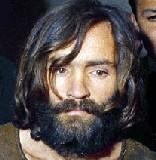 Charles Manson
Murderer · USA · 1969
Charles Milles Manson (born November 12, 1934) was an American criminal and mus…
9 victims
Charles Manson
Murderer · USA · 1969
Charles Milles Manson (born November 12, 1934) was an American criminal and mus…
9 victims
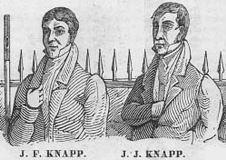 Francis & Joseph Knapp
Murderers · USA · 1930
Francis Knapp and Joseph Jenkins Knapp were the brothers known as the Knapps. T…
1 victim
Francis & Joseph Knapp
Murderers · USA · 1930
Francis Knapp and Joseph Jenkins Knapp were the brothers known as the Knapps. T…
1 victim
 John Martin Scripps
Murderer · Singapore / Thailand · 1995
John Martin Scripps was executed by hanging in Singapore on April 19, 1996. · 8…
3 victims
John Martin Scripps
Murderer · Singapore / Thailand · 1995
John Martin Scripps was executed by hanging in Singapore on April 19, 1996. · 8…
3 victims
 Anthony Carr
Mass murderer · USA · 1990
Anthony Carr v. State of Mississippi (Supreme Court of Mississippi; En Banc). N…
4 victims
Anthony Carr
Mass murderer · USA · 1990
Anthony Carr v. State of Mississippi (Supreme Court of Mississippi; En Banc). N…
4 victims
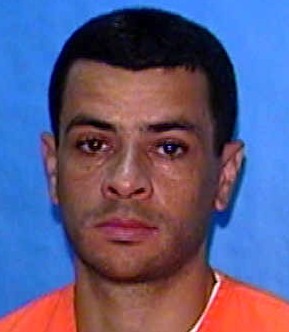 Rory Conde
Serial killer · USA · 1994
Rory Conde was convicted in Florida of the first-degree murder of Rhonda Dunn a…
6 victims
Rory Conde
Serial killer · USA · 1994
Rory Conde was convicted in Florida of the first-degree murder of Rhonda Dunn a…
6 victims
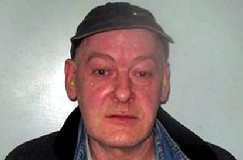 John Sweeney
Murderer · United Kingdom · 1990
John Sweeney was a jobbing carpenter. He worked under assumed names on construc…
2 victims
John Sweeney
Murderer · United Kingdom · 1990
John Sweeney was a jobbing carpenter. He worked under assumed names on construc…
2 victims
 Jacqueline Gibons
Murderer · USA · 1982
Jacqueline Gibons (only child; adoptive daughter of Benjamin and Sybil Gibons;…
2 victims
Jacqueline Gibons
Murderer · USA · 1982
Jacqueline Gibons (only child; adoptive daughter of Benjamin and Sybil Gibons;…
2 victims
- Gender
- male
- Country
- USA
- Location
- Weber County, Utah, USA
- Date of birth
- 1954
- Age at first offence
- 20
- Characteristics
- robbery, rape, torture, drugs, domestic violence
- Victim profile
- Carol Naisbitt, 52; Michelle Ansley, 19, and Stanley Walker, 20
- Method of murder
- Shooting
- Date(s) of murder
- April 22, 1974
- Years active
- 1974
- Date of arrest
- Next day
- Status
-
Executed
Executed by lethal injection in Utah on July 30, 1992
Case overview
William Andrews was convicted for his role in the “Hi-Fi Murders,” a case involving murder, rape and robbery at the Hi-Fi Shop in Ogden, Utah on April 22, 1974. Andrews and Pierre Dale Selby, United States Air Force airmen, took five people hostage, killed three of them, and left two who survived with severe injuries. Both Andrews and Selby were found guilty and sentenced to death, and Andrews was executed by lethal injection in Utah on July 30, 1992.
Background
The crimes occurred in the Hi-Fi Shop in Ogden, Utah on April 22, 1974. Andrews and Selby entered the store just before closing time, brandishing handguns.
The offence
Andrews and Selby took two employees, Stanley Walker, age 20, and Michelle Ansley, age 19, hostage. They took the two into the basement, bound them, and began robbing the store.
A 16-year-old boy, Cortney Naisbitt, entered the store to thank Walker for helping him with an errand. He was also taken hostage and tied up in the basement with Walker and Ansley.
Later that evening, Orren Walker, Stanley Walker’s 43-year-old father, became worried that his son had not returned home and arrived at the store. Orren was taken hostage and placed in the basement. Ansley began begging and crying.
Carol Naisbitt entered the store looking for her son. She was taken to the basement, bound, and placed next to her son, Cortney Naisbitt.
Andrews and Selby forced the hostages to drink a liquid they described as vodka laced with sleeping pills. The liquid was an industrial drain cleaner with active ingredient sodium hydroxide. As the drain cleaner touched the hostages’ lips, enormous blisters rose, and it burned their tongues and throats and peeled away flesh around their mouths. Ansley was not forced to drink the drain cleaner.
Andrews and Selby tried to duct-tape the hostages’ mouths shut to hold quantities of drain cleaner in and silence their screams, but pus oozing from the blisters prevented the adhesive from sticking.
Orren Walker was given the drain cleaner last. Seeing what was happening to the other hostages, he allowed it to pour out of his mouth and then faked convulsions and screams of his son and fellow hostages.
Selby became angry because the deaths were taking too long and were too loud and messy. Selby shot both Carol and Cortney Naisbitt in the backs of their heads. Selby then shot at Orren Walker but missed, then fatally shot Stan Walker. Selby again shot at Orren Walker, striking him in the back of the head.
Selby then took Ansley to a far corner of the basement. At gunpoint, Selby forced her to remove her clothes, then repeatedly and brutally raped her while Andrews watched. After this, Selby dragged her, still naked, back to the other hostages, threw her on her face, and fatally shot her in the back of the head.
Andrews and Selby noted that Orren was still alive. Selby mounted Orren Walker, wrapped a wire around Orren Walker’s throat, and tried to strangle him. When this failed, Selby and Andrews inserted a ballpoint pen into Orren’s ear and Selby stomped it until it punctured his eardrum, broke, and exited the side of Orren’s throat.
After the murders, Andrews and Selby went upstairs, finished loading equipment into their van, and departed.
Investigation
The victims were discovered four hours later when Orren’s wife and other son came to the store looking for them. Orren’s son heard noises coming from the basement and broke down the back door while Mrs. Walker called 9-1-1.
Stanley Walker and Ansley were already dead. Carol Naisbitt lived long enough to be loaded into an ambulance but was pronounced dead on arrival at hospital. Cortney was not expected to live but survived with severe and irreparable brain damage. He required hospitalization for 266 days before being released. Orren Walker survived with extensive burns to his stomach and esophagus.
Hours after news of the crime broke, an Air Force officer called the Ogden police and told them that Andrews had confided in him months earlier: “One of these days I'm going to rob that hi-fi shop, and if anybody gets in the way, I'm going to kill them.”
Hours after that call was received, two teenage boys Dumpster diving near Hill Air Force Base discovered the victims’ wallets and purses. Recognizing the pictures on the drivers’ licenses, they called the police. A crowd of airmen quickly formed, including Selby and Andrews.
The detective who responded believed the killers might be in the crowd and put on a show, speaking dramatically and waving each piece of evidence in the air with tongs as he removed them from the Dumpster. The detective later noted in his report that, out of all the airmen gathered around the dumpster, most stood still and watched in relative silence, but two in particular paced around the crowd, spoke loudly, and made frantic gestures with their hands. The detective later identified these two airmen as Selby and Andrews. The detective later received an award from the Utah branch of the Justice Department for proactive techniques.
Based on Selby’s and Andrews’s reactions to the evidence being removed from the trash bin and the officer’s implication of Andrews, Andrews and Selby were taken into custody and a search warrant was issued for their barracks. Police found fliers for the hi-fi shop and a rental contract for a unit at a public storage facility.
Police obtained a warrant for the storage unit, where they discovered several pieces of stereo equipment later identified from serial numbers as having been taken from the hi-fi store. During removal of the equipment from the storage unit, detectives discovered the half-empty bottle of industrial drain cleaner used on the hostages.
Based on this evidence, Selby and Andrews were formally charged with the crimes. Keith Roberts was also charged.
Arrest
Andrews and Pierre Dale Selby were arrested after a tip to Ogden City Police. The tip described an airman overhearing two fellow airmen discussing robbing a store and reenacting violent scenes from the movie, Magnum Force, which they had seen the night before the murders. Later, Keith Roberts was also arrested.
Trial
Selby, Andrews and Roberts were tried and jointly for first-degree murder and robbery. Selby and Andrews were convicted of all charges and sentenced to death. Roberts was convicted only of robbery and sentenced to imprisonment.
During the trial, it was revealed that Selby and Andrews robbed the store intending to kill anyone they came across. It was also revealed that, in the months prior to the robbery, they had been looking for a way to commit the murders quietly and cleanly.
Selby and Andrews saw the film Magnum Force, in which a prostitute is forced to drink Drano and is then shown immediately dropping dead. They decided that this would be an efficient method of murder and used it in their crime.
Orren Walker and Cortney Naisbitt were prosecution witnesses, and both testified despite Naisbitt’s brain damage and Walker’s mutilated throat.
Sentencing
After conviction, Selby and Andrews were sentenced to death.
Appeals
The United States Supreme Court refused to hear William Andrews’s appeal; rehearing was denied. The Supreme Court matter was docketed as 485 U.S. 919, William ANDREWS v. Kenneth SHULSEN, Warden, et al., No. 87-5449, Supreme Court of the United States, with certiorari petition denied and Justice Marshall dissenting.
Justice Thurgood Marshall dissented and wrote:
Adhering to my view that the death penalty is in all circumstances cruel and unusual punishment prohibited by the Eighth and Fourteenth Amendments, see Gregg v. Georgia, 428 U.S. 153, 231-241, 2973-2977 (1976) (MARSHALL, J., dissenting), I would grant the petition for certiorari and vacate petitioner's death sentence. Even if I did not hold this view, I would grant the petition because petitioner William Andrews was convicted of murder and sentenced to death under circumstances raising grave concerns of impermissible racial bias. These circumstances include a midtrial incident in which a juror handed the bailiff a napkin with a drawing of a man on a gallows above the inscription, "Hang the Niggers." The District Court in this case refused even to undertake an evidentiary hearing to investigate petitioner's substantial allegations of racial prejudice. The Constitution cannot countenance such indifference and summary treatment when a person's life is at stake. I Petitioner was convicted for his role in a multiple murder during the robbery of a hi-fi shop in Ogden, Utah. The ringleader of the crimes, Dale Pierre, was executed last year. Evidence at trial indicated that petitioner had a substantially less active role in the murders than Pierre. The two men entered the shop together and forced five people into the store's basement. There the victims were forced to drink liquid drain cleaner, which induced violent vomiting. One of the two victims who survived the robbery testified that petitioner said, "I can't do it, I'm scared," and that petitioner left the scene shortly thereafter. Only after petitioner left did Pierre carry out, in particularly gruesome fashion, the multiple murders for which petitioner has been sentenced to die. Pet. for Cert. 3. The murders understandably attracted substantial attention in the local press and the community from which the jury venire was drawn. The incident also may have generated racist sentiments, inasmuch as the defendants were black people and the victims were white members of the local community. The single black member of the venire was excluded, and an all-white jury was empaneled. An ugly racial incident involving the jury occurred during the trial. The jury was eating lunch in a separate dining room when a juror presented the bailiff with a drawing that had been made on a napkin. The drawing represented a stick figure hanging on a gallows. Underneath the figure were the words, "Hang the Niggers." The bailiff was unable to say who had made the drawing or how many other jurors had seen it, although he did inform the court that "some of the jurors" had asked him "what the court may do about this." The only action the trial court took in response was to issue a general instruction to the jury to "ignore communications from foolish people." Id., at 9-10, and n. 4. After petitioner and Pierre were convicted, the court ordered a 5-day recess. The jury was not sequestered. During this time, media coverage of the conviction was widespread and, petitioner alleges, racially inflammatory. Petitioner alleges, for example, that one newspaper ran a false report that petitioner had directed a "Black Power" closed-fist gesture at one of the surviving victims after the verdict was read. Id., at 10. The jury returned for the separate sentencing hearing and voted unanimously to sentence petitioner to death. In his petition for a writ of habeas corpus, petitioner alleged that adverse publicity and hostile community sentiment had injected racial animus into his trial and undermined his right to a fair trial. The District Court refused to convene an evidentiary hearing to consider this claim. 600 F.Supp. 408, 415-416 (Utah 1984). The Court of Appeals for the Tenth Circuit upheld this refusal with little discussion, stating: " Having reviewed the briefs and the appellate record, we conclude that no hearing is required under the principles of Townsend v. Sain, 372 U.S. 293 [ ] (1963), and that the constitutional standard for a fair trial has been met." 802 F.2d 1256, 1260 (1986) (citations omitted). II "This Court has long held that the remedy for allegations of juror partiality is a hearing in which the defendant has the opportunity to prove actual bias." Smith v. Phillips, 455 U.S. 209, 215, 945 (1982). Such a hearing is, of course, especially vital when the defendant has been condemned to die. In Turner v. Murray, 476 U.S. 28 (1986), the Court vacated a death sentence entered in a case in which the trial court had refused the defendant's request to question the prospective jurors on racial prejudice. The plurality recognized that "in light of the complete finality of the death sentence," the Constitution requires district courts to be especially solicitous of allegations of racial prejudice in capital cases. Id., at 35, 106 S.Ct. at 1688. The plurality therefore vacated the sentence, even though no specific allegations of racial prejudice had been made other than the fact that the case involved a black defendant and a white victim. The Court concluded that "the risk that racial prejudice may have infected petitioner's capital sentencing [was] unacceptable in light of the ease with which that risk could have been minimized." Id., at 36. This case involves far more serious and specific allegations of racial animus than did Turner, including a vulgar incident of lynch-mob racism reminiscent of Reconstruction days. Moreover, petitioner is not asking this Court to decide whether there is sufficient evidence of racial prejudice to impeach the conviction and sentence. He seeks only to have the District Court undertake an evidentiary hearing to consider his charges. I would think it clear that the Constitution, not to mention common decency, requires no less than this modest procedure. See Tanner v. United States, 483 U.S. 107, 142, 2759 (1987) (MARSHALL, J., concurring in part and dissenting in part). III Was it one (or more) of petitioner's jurors who drew a black man hanging on a gallows and attached the inscription, "Hang the Niggers"? How many other jurors saw the incendiary drawing before it was turned over to the bailiff? Might it have had any effect on the deliberations? Was the jury's decision to sentence petitioner to die influenced by racially-charged media coverage of the trial between the guilt and penalty phases? These are among the questions that petitioner deserves to have at least considered before he is put to death for a series of murders in which he played only a secondary role. It is conscience shocking that all three levels of the federal judiciary are willing to send petitioner to his death without so much as investigating these serious allegations at an evidentiary hearing. Not only is this less process than due; it is no process at all. I dissent.
Outcome
Andrews was executed by lethal injection in Utah on July 30, 1992.
Selby was executed by lethal injection in 1987. Roberts was paroled in 1987.
Aftermath
After the death sentences were issued, the NAACP demanded that Selby and Andrews’s sentences be reduced to life with the possibility of parole. It claimed the defendants had been unfairly convicted because they were both black and the victims and jury were all white.
Andrews accused the judicial system of racism following the NAACP’s request for reduced sentences. In an interview with USA Today, Andrews claimed he had never intended to kill anyone; detectives rebutted this by citing a statement by Andrews admitting that he was the one who purchased the drain cleaner and brought it to the store on the night of the killings.
Selby and Andrews became notably hated prisoners, even among the black population, and were especially reviled on death row. Gary Gilmore, imprisoned at the same facility, said to fellow inmates before he was taken to face the firing squad: “I'll see you in Hell, Pierre and Andrews!” Gilmore laughed at Selby and Andrews as he passed by their cells.
Cortney Naisbitt later died on June 4, 2002 at the age of 44. His father, Byron Naisbitt, declined comment except to say: “This is the end of the Hi-Fi story. I want this to be the end of it.”
Orren Walker died on February 13, 2000.
The incident was the basis for a 1991 CBS Television movie called Aftermath: A Test of Love, starring Richard Chamberlain and Michael Learned.
Cortney Naisbitt’s story became the basis for the book Victim: The Other Side of Murder by Gary Kinder. The story was credited by many with starting the victims’ rights movement.
Andrews and Selby were executed after movements by the NAACP and Amnesty International.
The Hi-Fi Murders remained among the worst crimes ever committed in the state of Utah. The case was taught to FBI trainees at the FBI Academy at Quantico, Virginia, and it was included as a sample case in the FBI’s Crime Classification Manual.
Spotted an error, or have more information about this case?