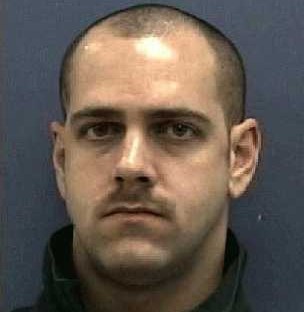
Ashley Jones
Murderer Brian Kevin Rosenfeld
Murderer · USA · 1985
Brian Kevin Rosenfeld Brian Kevin Rosenfeld was sentenced to three concurrent l…
23 victims
Brian Kevin Rosenfeld
Murderer · USA · 1985
Brian Kevin Rosenfeld Brian Kevin Rosenfeld was sentenced to three concurrent l…
23 victims
 Russell Ellwood
Murderer · USA · 1991
Russell Ellwood was a former taxi driver. Authorities suspected him of killing…
20 victims
Russell Ellwood
Murderer · USA · 1991
Russell Ellwood was a former taxi driver. Authorities suspected him of killing…
20 victims
 Robert Martines Perez
Murderer · USA · 1994
Name: Robert Martines Perez · Other name used in proceedings: Robert Martinez P…
15 victims
Robert Martines Perez
Murderer · USA · 1994
Name: Robert Martines Perez · Other name used in proceedings: Robert Martinez P…
15 victims
 Billy Frank Vickers
Murderer · USA · 1993
Billy Frank Vickers Vickers was executed by lethal injection in Texas on Januar…
14 victims
Billy Frank Vickers
Murderer · USA · 1993
Billy Frank Vickers Vickers was executed by lethal injection in Texas on Januar…
14 victims
 Mary Edmondson
Murderer · United Kingdom · 1759
Mary Edmondson Mary Edmondson was the daughter of a farmer who lived near Leeds…
1 victim
Mary Edmondson
Murderer · United Kingdom · 1759
Mary Edmondson Mary Edmondson was the daughter of a farmer who lived near Leeds…
1 victim
 Karen Tobie
Murderer · USA · 2004
Karen Tobie was convicted of paying a man $4,000 to kill her husband, John Cata…
1 victim
Karen Tobie
Murderer · USA · 2004
Karen Tobie was convicted of paying a man $4,000 to kill her husband, John Cata…
1 victim
 Stephen Epperly
Murderer · USA · 1980
Stephen Epperly was convicted of first degree murder of Gina Renee Hall. Her bo…
1 victim
Stephen Epperly
Murderer · USA · 1980
Stephen Epperly was convicted of first degree murder of Gina Renee Hall. Her bo…
1 victim
- Gender
- male
- Country
- USA
- Location
- Coffee County, Georgia, USA
- Date of birth
- 1973
- Age at first offence
- 20
- Characteristics
- armed robbery
- Victim profile
- Keith Holland, 39
- Method of murder
- Beating with a wrench and a sledgehammer
- Date(s) of murder
- March 31, 1993
- Years active
- 1993
- Date of arrest
- —
- Status
-
Sentenced to death
Sentenced to death on June 19, 1995
Case overview
Ashley Lyndol Jones, 23, was sentenced to death on June 19, 1995. Jones was convicted of the malice murder of Keith Holland and also felony murder, armed robbery, theft by taking a motor vehicle, and misdemeanor theft by taking. The jury recommended the death penalty and found aggravating circumstances that the murder was committed during the commission of an armed robbery and that the murder was outrageously and wantonly vile, horrible and inhuman in that it involved torture, depravity of mind, or aggravated battery to the victim. The trial court sentenced Jones to death, and Jones appealed. The Georgia Supreme Court affirmed the conviction and death sentence in JONES v. THE STATE. S96P1662. (267 Ga. 592) (481 SE2d 821) (1997). THOMPSON, Justice. Murder.
Timeline
- March 31, 1993 — Jones and co-defendant Allen Brunner were drinking and driving in a stolen vehicle when it developed car trouble in Ware County.
- April 7, 1993 — Jones was indicted in Ware County.
- July 22, 1993 — The State filed its notice of intent to seek the death penalty.
- March 1993 — The crimes occurred on March 31, 1993.
- June 14, 1995 — Jones was convicted on all counts and sentenced to death for malice murder in Coffee County pursuant to a change of venue.
- June 19, 1995 — Jones was sentenced to death (as reflected in the status field).
- July 14, 1995 — Jones filed a motion for new trial.
- June 20, 1996 — The trial court denied Jones’ motion for new trial.
- July 1, 1996 — Jones filed a notice of appeal.
- July 11, 1996 — The case was docketed in the Georgia Supreme Court.
- October 21, 1996 — The case was orally argued.
- March 10, 1997 — The Georgia Supreme Court decided the case.
The offence
Jones and co-defendant Allen Brunner began a crime spree that led to the death of Keith Holland on the night before the murder. The jury was authorized to find that Jones and Brunner stole four cases of beer from a convenience store in Ware County. The co-defendants fled in an automobile with three other companions who were waiting outside the store, and the group spent the remainder of the night driving around aimlessly and drinking the stolen beer until the car broke down. Jones and Brunner left the others, stating they were going to find a truck. They stole a Ford truck belonging to Rudolph Melton, which was parked in front of Melton’s residence. After driving around for several more hours in the stolen truck, they arrived at the home of the victim, Keith Holland.
Bunner knocked on Holland’s front door at approximately 5:00 a.m. and asked Holland’s wife, Mamie Holland, for assistance on the pretext that the truck’s battery was dead. Mamie Holland woke her husband, and Keith Holland went outside to assist Bunner. As Holland was leaning over to look in the engine compartment, Jones struck Holland in the head from behind with a sledgehammer. Mamie Holland witnessed the first blow from her dining room window, screamed for Jones to stop, and banged on the window. Jones turned and looked at Mamie Holland but continued to pound the victim, inflicting at least six blows to the head and face, which were potentially fatal. Prior to leaving in the victim’s truck, Jones got out of the vehicle and hit the victim again while he was lying on the ground.
EMS workers arrived within minutes after the co-defendants’ departure. Because of the injuries to Keith Holland’s face, EMS workers were unable to perform CPR or intubate the victim, and Holland died before reaching the hospital. Jones and Bunner drove to Florida in Holland’s truck. They tossed Holland’s personal belongings out of the truck along the way and pawned two chain saws belonging to Melton. They drove to Florida in the victim’s truck and pawned two chain saws belonging to Melton. The victim’s truck, which Jones and Bunner had burned, was found in the woods a short distance away.
Investigation and arrest
Police learned of Jones and Brunner’s whereabouts through telephone calls made by the co-defendants to a friend in Georgia. Jones and Brunner were arrested at a welcome station south of the Georgia–Florida line.
Trial
Jones was tried before a jury in Coffee County pursuant to a change of venue. The jury convicted Ashley Jones of the malice murder of Keith Holland and also felony murder, armed robbery, theft by taking a motor vehicle, and misdemeanor theft by taking.
Jones raised issues relating to the jury panel. On the first day of voir dire, the jurors were divided into panels of 12, and after the first juror was called, the remaining 11 jurors were placed in the same jury room. Prospective juror number eight, Michael Maxwell, stated that he had opined to the other prospective jurors in the jury room that Jones was guilty and that many of the other jurors in the room had expressed their opinions regarding Jones’ guilt. Jones moved to disqualify Maxwell, moved for a mistrial, and renewed his motion for change of venue. The trial court denied motions for mistrial and change of venue, but granted Jones’ requests to disqualify Maxwell and to re-examine the jurors who had been questioned before Maxwell. The trial court instructed the jurors not to discuss the case among themselves. Only three jurors who were in the jury room at the time of the improper comments were qualified for the jury panel. These jurors stated they had formed no fixed opinion regarding Jones’ guilt or innocence and could decide the case on the evidence presented at trial and the instructions of the trial court. Jones did not move to disqualify these jurors. The Georgia Supreme Court described the trial court’s remedial measures as sufficient to ensure that Jones received a fair trial and found no abuse of discretion in denying Jones’ motion for mistrial.
Jones also challenged victim impact testimony given by Mamie Holland during the sentencing phase. Jones objected to what he deemed an excessive display of emotion, argued the district attorney should have advised the victim’s family to avoid such displays, and argued that the prosecutor’s leading questions to Holland were improper. The Georgia Supreme Court explained that under OCGA 17-10-1.2 and Livingston v. State, victim impact evidence was limited to the impact of the offense upon the victim’s family or community. The trial court held a hearing ten days prior to trial to determine the scope of the testimony allowed and the particular questions asked. The trial court ruled that Holland’s testimony would be brief and the questions allowed would be related to Jones’ culpability. Holland was permitted to testify that she was married to the victim for 21 years, that she witnessed his brutal murder by Jones, that she still suffers because of the crime, and that she fears for herself and her family. The court found the content and extent of Holland’s testimony to be proper. It also found that the record reflected only that the victim sobbed while testifying, with no indication that her testimony was prolonged or that her display of emotion disrupted the trial. The Georgia Supreme Court further addressed Jones’ argument that the trial court should have issued an order requiring the district attorney to warn the victim’s family members against any visible display of emotion that would be disruptive, and it held there was no authority for imposing such “prophylactic measures.” It stated that the trial court’s order in John Mark Waldrip’s trial had been directed at family members seated in the courtroom, and not family members who appeared as witnesses. The court concluded that allowing the prosecutor to ask leading questions to ensure testimony remained within OCGA 17-10-1.2 parameters was within discretion.
Jones also argued the trial court erred in denying a motion for mistrial based on improper comments during closing argument in the sentencing phase. The Georgia Supreme Court noted that granting a motion for mistrial was within the discretion of the trial court and that the ruling would not be disturbed unless a mistrial was required to preserve fair trial rights. The court held the statement did not deny Jones a fair trial when construed in the context of the argument as a whole and found it was not the prosecutor’s manifest intention to comment on Jones’ status as an indigent prisoner. It concluded the prosecutor was arguing that although Jones had not suffered a violation of his rights, the law provided for punishment sought in his case, and Jones had violated the victim’s rights by acting as his judge, jury, and executioner. It held arguments of this type were not improper and that the trial court did not abuse its discretion in denying Jones’ motion for mistrial.
Sentencing
The jury found aggravating circumstances under OCGA 17-10-30 (b) (2), that the murder was committed while the defendant was engaged in the capital felony of armed robbery, and under OCGA 17-10-30 (b) (7), that the murder was outrageously and wantonly vile, horrible and inhuman in that it involved torture, depravity of mind, or aggravated battery. The evidence supported these findings and the Georgia Supreme Court found the sentence of death was not imposed under the influence of passion, prejudice, or other arbitrary factor under OCGA 17-10-35 (c) (1). It also stated that the death sentence was not excessive or disproportionate to penalties imposed in similar cases, listing similar cases in an appendix.
The trial court sentenced Jones to death.
Jones’ co-defendant, Allen Bunner, was tried separately and received a sentence of life without parole. Bunner did not appeal his conviction.
Sentencing-related parties
The court’s decision listed the prosecutors and counsel for the case: Richard E. Currie, District Attorney, Michael J. Bowers, Attorney General, and Wesley S. Horney, Assistant Attorney General, for appellee. John R. Thigpen, Sr., appeared for appellant. THOMPSON, Justice authored the decision.
Appeals
Jones appealed his conviction and death sentence. In March, the state Supreme Court affirmed Jones’ conviction and death sentence, citing JONES v. THE STATE, S96P1662, with references (267 Ga. 592) and (481 SE2d 821) (1997). The Georgia Supreme Court addressed each of Jones’ claims of trial error raised in his appeal, including the denial of his motion for change of venue, denial of motions for mistrial connected to juror statements by Michael Maxwell, denial of motions for mistrial connected to victim impact testimony by Mamie Holland, denial of motions for mistrial connected to closing argument, and the sufficiency of evidence supporting aggravating circumstances. It affirmed the trial court’s imposition of the death sentence.
Outcome
The Georgia Supreme Court affirmed Jones’ conviction and death sentence. The decision stated “We affirm.”
Other details
- Jones was convicted of malice murder and also felony murder, armed robbery, theft by taking a motor vehicle, and misdemeanor theft by taking.
- The crimes occurred on March 31, 1993.
- Jones was indicted in Ware County on April 7, 1993.
- The State filed its notice of intent to seek the death penalty on July 22, 1993.
- Jones was tried before a jury in Coffee County pursuant to a change of venue and was convicted on all counts and sentenced to death for malice murder on June 14, 1995.
- Jones was also sentenced to life in prison for armed robbery; 20 years in prison for theft by taking a motor vehicle; and 12 months in prison for misdemeanor theft by taking, all sentences to run consecutive to each other.
- Jones filed a motion for new trial on July 14, 1995, which was denied by the trial court on June 20, 1996.
- Jones filed a notice of appeal on July 1, 1996.
- The case was docketed in the Georgia Supreme Court on July 11, 1996 and was orally argued on October 21, 1996.
- The Georgia Supreme Court decided the case on March 10, 1997.
- Mamie Holland testified that she was married to Keith Holland for 21 years and witnessed his brutal murder by Jones.

Spotted an error, or have more information about this case?