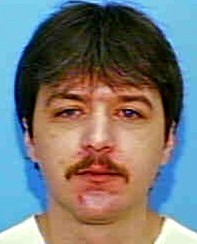
Herman Dale Ashworth
Murderer Russell Ellwood
Murderer · USA · 1991
Russell Ellwood was a former taxi driver. Authorities suspected him of killing…
20 victims
Russell Ellwood
Murderer · USA · 1991
Russell Ellwood was a former taxi driver. Authorities suspected him of killing…
20 victims
 Robert Martines Perez
Murderer · USA · 1994
Name: Robert Martines Perez · Other name used in proceedings: Robert Martinez P…
15 victims
Robert Martines Perez
Murderer · USA · 1994
Name: Robert Martines Perez · Other name used in proceedings: Robert Martinez P…
15 victims
 Billy Frank Vickers
Murderer · USA · 1993
Billy Frank Vickers Vickers was executed by lethal injection in Texas on Januar…
14 victims
Billy Frank Vickers
Murderer · USA · 1993
Billy Frank Vickers Vickers was executed by lethal injection in Texas on Januar…
14 victims
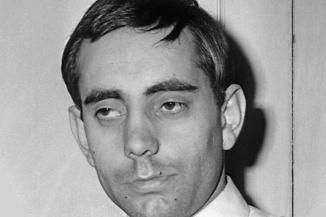 Lucien Leger
Murderer · France · 1964
Lucien Léger was a French national who lived in Landas (France). He was describ…
1 victim
Lucien Leger
Murderer · France · 1964
Lucien Léger was a French national who lived in Landas (France). He was describ…
1 victim
 Brenda Wiley
Homicide · USA · 1990
Brenda Wiley was convicted in 1992 of fatally stabbing her mother, Bonnie Wiley…
2 victims
Brenda Wiley
Homicide · USA · 1990
Brenda Wiley was convicted in 1992 of fatally stabbing her mother, Bonnie Wiley…
2 victims
 Orlando Magaña Dorantes
—
Orlando Magaña Dorantes was sentenced for the seven homicides of five members o…
Orlando Magaña Dorantes
—
Orlando Magaña Dorantes was sentenced for the seven homicides of five members o…
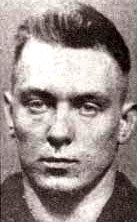 Anthony Chebatoris
Murderer · USA · 1937
Anthony Chebatoris Anthony Chebatoris (1898–1938) was executed by hanging at Mi…
1 victim
Anthony Chebatoris
Murderer · USA · 1937
Anthony Chebatoris Anthony Chebatoris (1898–1938) was executed by hanging at Mi…
1 victim
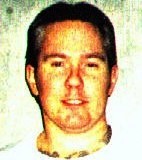 Loyd Lafevers
Murderer · USA · 1985
Loyd Winford Lafevers — defendant; Oklahoma County death row inmate · Randall C…
1 victim
Loyd Lafevers
Murderer · USA · 1985
Loyd Winford Lafevers — defendant; Oklahoma County death row inmate · Randall C…
1 victim
- Gender
- male
- Country
- USA
- Location
- Licking County, Ohio, USA
- Date of birth
- February 26, 1973
- Age at first offence
- 23
- Characteristics
- armed robbery, alcohol, abuse, rape, robbery
- Victim profile
- Daniel Baker (female, 40)
- Method of murder
- Beating with a board
- Date(s) of murder
- September 10, 1996
- Years active
- 1996
- Date of arrest
- Same day
- Status
-
Executed
Executed by lethal injection on September 27, 2005 in Ohio
Case details
Herman Dale Ashworth was convicted of aggravated murder and aggravated robbery arising from the beating death of Daniel L. Baker during the course of an aggravated robbery. Ashworth pleaded guilty, waived the presentation of mitigating evidence, and was sentenced to death by a three-judge panel. Ashworth was executed by lethal injection on September 27, 2005 in Ohio.
Timeline
- April 1996 — Ashworth moved to Newark, Ohio from Louisiana.
- September 10, 1996 — Ashworth went to the Wagon Wheel Bar and began drinking; he assaulted and robbed Daniel Baker for about $40 in drinking money.
- September 23, 1996 — The trial court appointed two attorneys to represent Ashworth upon his request.
- September 30, 1996 — At arraignment, Ashworth entered pleas of not guilty.
- September 11, 1996 — Daniel Baker’s body was found on the Salvation Army loading dock.
- June 16, 1997 — Judgment sentencing Ashworth to death was entered.
- June 17, 1997 — Ashworth was received at the Ohio Department of Corrections.
- January 5, 1998 — Merit brief was filed in Ashworth’s direct appeal to the Supreme Court of Ohio.
- March 24, 1999 — The Ohio Supreme Court issued a decision rejecting Ashworth’s propositions of law and affirming the death sentence after independent review.
- April 24, 1999 — The Ohio Supreme Court summarily denied Ashworth’s motion for reconsideration.
- March 16, 1998 — Ashworth filed a state postconviction action to vacate or set aside the judgment.
- May 15, 1998 — The trial court denied Ashworth’s postconviction action.
- May 3, 1999 — The appellate court issued a decision affirming the trial court’s decision.
- March 17, 2000 — The Ohio Supreme Court declined to hear Ashworth’s discretionary appeal.
- July 7, 2000 — Attorneys Carol Wright and Herman Carson were appointed.
- July 14, 2000 — A motion for a stay of execution was granted.
- November 14, 2000 — Ashworth filed his formal habeas corpus petition.
- September 23, 2005 — Governor Bob Taft denied clemency.
- September 25, 2005 — Governor Bob Taft denied clemency to Ashworth.
- September 27, 2005 — Ashworth was executed by lethal injection.
The offence
On September 10, 1996, Ashworth assaulted and robbed Daniel Baker for about $40 in drinking money. Ashworth and Baker had never met before. They had a few drinks while walking to a bar in Newark.
Ashworth called Baker over to an alley and beat him with his fists and a 6-foot board and kicked him. After beating Baker, Ashworth took about $40 from him and went back to a bar in Newark about 30 miles east of Columbus.
Ashworth told police that Baker came onto him and he “freaked out.” Ashworth maintained that Baker’s alleged advances prompted the attack and that Baker was a divorced father of a then-12-year-old girl. Ashworth’s girlfriend at the time, Tanna Brett, testified that Ashworth told her about the beating and said he had to go back to the alley to kill Baker to prevent Baker from identifying him.
Brett described hearing a metal sound coming from the alley and found Baker in a different position near a metal loading dock door. Brett testified that there was a lot of blood, and she observed papers and articles strewn about. She heard Baker breathing and saw him move his hand a little bit. She left because it made her sick to her stomach. Brett later grabbed Ashworth and said, “You robbed him.”
Baker was beaten so badly that a deputy coroner said his injuries were consistent with a high-speed traffic accident or plane crash. The coroner found Baker died as a result of numerous blunt force injuries, which the coroner said were typical of injuries more likely seen as a result of a car accident or airplane crash. In twenty years of practice, the coroner had seen only one other case with such severe injuries as a result of a beating. The coroner opined that with such injuries, death would normally occur in ten to twenty minutes.
Around 3:45 a.m. on September 11, 1996, Daniel Baker’s body was found on the Salvation Army loading dock. By the time police arrived, Baker was already dead. Blood was observed around Baker’s head and upper shoulder area, and blood had seeped underneath the garage door. Items belonging to Baker were strewn about the area. Bloody footprints surrounded the area and were evident on Baker’s chest.
Ashworth’s statement to police described Baker “reached down and grabbed me on my butt,” and Ashworth said he told Baker to stop that he was not “that way,” but Baker would not stop. Ashworth said they ended up on the loading dock, and Baker kept moving toward him and again tried grabbing him. Ashworth stated he began to hit Baker with his fist and “freaked out.” He stated Baker did not fight back but kept coming at him saying, “it’s okay,” and “it’ll be all right.” Ashworth said he picked up a board about six inches wide and five feet long and struck Baker with it, and after Baker fell down, Ashworth kicked him. Ashworth stated that he took the wallet out of Baker’s pants but denied keeping the wallet, instead saying he took the money about $42. He stated the remaining contents spilled out. Ashworth said he had not planned to take the wallet or money but thought of it at the time. Ashworth also said he went back to bars and then home but did not remember how he got there.
Police recovered shoes and pants with blood. The police found Baker’s driver’s license and credit cards in the front pants pocket. The soles of Ashworth’s shoes matched bloody footprints found at the scene and on the victim’s shirt.
Ashworth was charged with two counts of aggravated murder of Daniel L. Baker and a separate count of aggravated robbery, with specifications that the aggravated murder was committed during the course of an aggravated robbery attached to each murder count and that the murder was committed to escape detection for the aggravated robbery attached to the second murder count.
Investigation and evidence
A 911 call came into the police station around 4:13 a.m., from a public telephone located less than a mile from Ashworth’s house. The caller said he had beaten a man badly and left him on the loading dock of the Salvation Army.
Police traced the call and went to the home of Ron Sillin, where Ashworth was residing. Officers initially knocked and rang the doorbell but no one answered. Officers called Ron Sillin and obtained permission to enter. They found Ashworth asleep in the back bedroom and woke him, asked him to come down to the police station for questioning, and he agreed and dressed.
After being informed of Miranda rights, Ashworth agreed to make a taped statement.
During the statement, Ashworth indicated that the clothes he had worn were at his house and that he was wearing the shoes he had on during the encounter with Baker. Police confiscated shoes with blood. Officers obtained Ashworth’s consent to obtain clothing he had worn, and the police also obtained a search warrant. The pants recovered had blood on them, and in the front pants pocket police found Baker’s driver’s license and credit cards.
Brett observed blood on one of Ashworth’s shoes earlier in the evening.
Arrest and custody
After police located Ashworth, he agreed to come to the station for questioning, and he made a taped statement after being informed of Miranda rights.
Ashworth later received at the Ohio Department of Corrections and was held at Mansfield Correctional Institution. Inmate number 348155 was recorded.
Trial
Ashworth was indicted by the Licking County Grand Jury on September 20, 1996.
At his arraignment on September 30, 1996, Ashworth entered pleas of not guilty.
Ashworth waived his right to trial by jury. He changed his pleas to guilty and waived his right to present mitigation evidence. Following competency evaluation, the three-judge panel found a sufficient basis to find him guilty of aggravated murder, all capital specifications, and aggravated robbery, and sentenced him to death.
During sentencing, no mitigating evidence was presented at Ashworth’s insistence. Defense counsel made no objections and did not cross-examine witnesses pursuant to Ashworth’s wishes. Ashworth agreed to the facts presented by the state. The trial court accepted the plea and found him guilty as charged.
Ashworth withdrew his original lead counsel, George C. Luther, and new lead counsel, W. Joseph Edwards, was appointed. Edwards requested that Ashworth be examined for competency to waive further proceedings, including mitigation, under the standard set forth in State v. Berry (1996), 74 Ohio St.3d 1504, 659 N.E.2d 796, and the trial court appointed a clinical psychologist agreed upon by both parties. Edwards also asked the trial court to appoint an independent counsel to present mitigating evidence during sentencing, but the court denied that request.
The case was heard, and Ashworth was found competent to waive the presentation of mitigation and all appeals. Ashworth changed his plea to guilty, and the state set forth a factual basis pursuant to Crim.R. 11(C)(3) through the presentation of witnesses.
After the guilty finding, defense counsel renewed a motion for independent counsel, which was denied by the entire panel. The defense presented no mitigating evidence, and the panel sentenced Ashworth to death.
Sentencing
A three-judge panel sentenced Ashworth to death. The Ohio Supreme Court later conducted independent review and affirmed the convictions and sentence.
Ashworth waived the presentation of mitigating evidence. The Ohio Supreme Court held that when a capital defendant wishes to waive presentation of all mitigating evidence, the trial court must inquire on the record to determine whether the waiver was knowing and voluntary, and that a defendant is mentally competent to forgo presentation of mitigating evidence if he has mental capacity to understand the choice between life and death and to make a knowing and intelligent decision not to pursue the presentation of evidence. The court further held that the defendant must comprehend the ramifications of his decision and possess the ability to reason logically. The Ohio Supreme Court affirmed the procedure as adequate and concluded proportionality was appropriate.
Appeals
Ashworth raised five propositions of law in his direct appeal to the Supreme Court of Ohio:
- The Eighth Amendment precludes imposing a sentence of death unless the sentencing authority actually considers all relevant evidence of mitigation, and a capital defendant cannot interpose the Sixth Amendment right to self-representation as a bar to the introduction of mitigation evidence.
- When a trial court is predisposed to sentence a defendant to death, the defendant is denied due process rights.
- A person may elect to forgo capital mitigation proceedings if he has capacity to appreciate his position and make a rational choice with respect to presenting or waiving mitigation, and a person is not competent to forgo capital mitigation proceedings if he suffers from a mental disease, disorder, or defect that may substantially affect capacity to make that decision.
- Sentencing an individual to death in violation of treaties violates the Supremacy Clause.
- The death penalty authorized by the Ohio Revised Code deprives capitally-charged defendants of their lives without due process of law, denies equal protection, and imposes cruel and unusual punishment.
The Ohio Supreme Court issued a decision rejecting Ashworth’s propositions of law on March 24, 1999, and summarily denied reconsideration on April 24, 1999.
Post-conviction relief
Ashworth filed a petition for post-conviction relief. In his state postconviction action, Ashworth argued that amendments to the Ohio post-conviction process violated his constitutional rights to procedural due process; that the death penalty was administered arbitrarily, capriciously, and whimsically; and that the Sixth, Eighth, and Fourteenth Amendments require sentencing authorities to actually consider all relevant mitigation evidence, with failure rendering a death sentence void.
Ashworth also argued he was deprived of counsel because the trial court rejected the suggestion for appointment of independent counsel to present mitigation evidence, resulting in preclusion of expert assistance, including expert testimony regarding “Southern culture” and a toxicologist regarding the effect of Ashworth’s alcohol consumption.
Ashworth additionally argued his sentencer was prevented from considering mitigating evidence regarding abandonment by birth parents, his adoptive parents’ divorce, the death of his brother Ricky, and an abusive, alcoholic environment, and he asserted other mitigation evidence regarding a community and culture of violence and alcoholism. He also alleged evidence that he was highly homophobic and that the victim’s death was precipitated by an inappropriate homosexual advance made on petitioner. He argued the denial of independent counsel eliminated any notion that the death sentence was appropriate.
The trial court denied Ashworth’s postconviction action on May 15, 1998, and the appellate court affirmed on May 3, 1999. The Ohio Supreme Court declined to hear the discretionary appeal on March 17, 2000.
Federal habeas corpus
Ashworth filed a habeas corpus petition under 28 U.S.C. § 2254. Grounds raised in the federal habeas petition included:
- Eighth Amendment restrictions on Ohio’s power to execute were paramount to self-representation rights, and permitting Sixth Amendment right to self-representation to trump the Eighth Amendment denied rights to reliable sentencing determination and circumvented statutory and constitutional requirements.
- Providing an opportunity to present mitigation evidence was insufficient to guarantee an Eighth Amendment-compliant death sentence; the proceeding lacked adversarial testing required for reliability.
- Ashworth was deprived of counsel in violation of the Sixth Amendment when the trial court refused to appoint independent counsel.
- Ashworth was not competent to waive the right to present mitigation evidence.
- The state Supreme Court’s independent review failed to consider and give effect to mitigating circumstances.
- A valid waiver of a fundamental constitutional right requires intentional relinquishment; Ashworth did not validly waive the right to present mitigation evidence.
- Ashworth was denied effective assistance of counsel.
- The trial court was predisposed to sentence him to death, depriving him of a fair trial and sentencing determination.
- Ashworth was factually innocent of the offenses.
- A sentence of death by electrocution violated the Eighth Amendment, and forcing a death-sentenced individual to elect execution means violated the Eighth Amendment.
- Death sentence violated treaties and the Supremacy Clause.
- Statutory provisions governing Ohio capital scheme violated the Fifth, Sixth, Eighth, and Fourteenth Amendments on its face.
On March 12, 2001, the respondent filed a motion to dismiss procedurally defaulted claims. The motion to dismiss procedurally defaulted claims was granted as to grounds nine and ten, and granted in part as to paragraphs 107, 108, and 115 in part of ground seven; it was denied as to grounds five, six, and the remaining claims of ground seven.
Clemency and final statement
Governor Bob Taft issued a denial of clemency. The clemency denial statement said:
“On the evening of September 10, 1996, Mr. Ashworth assaulted and robbed Daniel Baker for $40 dollars in drinking money. Hours later, Mr. Ashworth returned to where he had left Mr. Baker unconscious and brutally beat Mr. Baker to death to avoid being identified. Mr. Ashworth pled guilty to charges of aggravated murder and aggravated robbery. He was convicted by a three-judge panel, and was sentenced to death.
“Mr. Ashworth’s decision to plead guilty and failure to offer any mitigating evidence has been exhaustively reviewed by both the state and federal courts, and five medical experts have confirmed his competency to do so. He has steadfastly maintained his desire to waive any further appeals of his sentence, and has not asked for clemency.
“The Ohio Parole Board thoroughly considered Mr. Ashworth’s case in anticipation of his pending execution date. Mr. Ashworth declined to participate in the Parole Board’s review. Based upon the unanimous report and recommendation of the Parole Board, judicial opinions, the arguments of the Ohio Attorney General’s Office and Licking County Prosecutor, and other relevant materials, I have decided to deny clemency.
“May God bless the family and friends of Daniel Baker.”
Ashworth made a final statement before execution: “A life for a life, let it be done and justice will be served.”
Execution
Ashworth was executed by lethal injection. He was pronounced dead at 10:19 a.m. at the Southern Ohio Correctional Facility.
Prison medical technicians in a neighboring room had trouble inserting a shunt into Ashworth’s right arm where the lethal drugs were administered. Workers ran their hands up his right arm looking for another location for the second shunt after the one in his left arm went in easily. Within 10 minutes, they had inserted the shunt. Ashworth stayed calm throughout and talked with workers in the room.
The execution attracted about 120 protesters.
Three witnesses for the state attended the execution, including Samuel Overly, the husband of Baker’s niece, Tangee Overly, who sat largely motionless in one room. Ashworth had no witnesses on his behalf.
Tangee Overly said: “I can't lie and say that I'm sorry that this conclusion happened because I'm not,” and “Dan was very brutally murdered.”
A lawyer who served as Ashworth’s standby attorney after he removed her and another attorney from legal counsel, Carol Wright, described Ashworth’s demeanor and said: “He was very resolute. I think he felt good. I think he was very certain of his decision and pleased that it was finally happening.”
After the execution, Tangee Overly said: “No mother can sleep at night knowing that her son was murdered in the fashion that my uncle was murdered in,” and “My grandparents live with this every day, for the last nine years. And this has brought closure to my family.”
Other details
Victim
Daniel L. Baker, a divorced father of a then-12-year-old girl, was killed.
Other named individuals
- Tanna Brett — Ashworth’s girlfriend at the time of the offence; she testified about the events and later returned to confront Ashworth.
- Tangee Overly — Baker’s niece’s husband; she sat with other witnesses and made statements during/after the execution.
- Samuel Overly — husband of Baker’s niece; was among witnesses for the state.
- Ron Sillin — Ashworth was living with him when police located Ashworth and obtained permission to enter.
- Louis Dalton — a cousin who stopped off at the Wagon Wheel Bar; he testified about Ashworth asking to borrow money.
- Lloyd Thompson — owner of the Wagon Wheel Bar.
- James Ashworth — Ashworth’s adoptive parent.
- Anna Mae Dalton — Ashworth’s adoptive parent.
- George C. Luther — original lead counsel who withdrew.
- W. Joseph Edwards — new lead counsel appointed after Luther withdrew.
- Alice Robie Resnick — the Ohio Supreme Court justice listed in the appeal materials as writing the opinion.
- Carol Wright — counsel who served as standby attorney after removal and who was quoted.
- Bob Taft — Governor of Ohio who denied clemency.
Personal details and custody records
Herman Dale Ashworth was listed as a male, white, with date of birth 02/26/73, and age 32 at execution. The records also stated Ashworth arrived on death row in June 1997.
Legal citations and procedural references
- State v. Ashworth, 85 Ohio St.3d 56, 706 N.E.2d 1231 (Ohio 1999).
- State v. Ashworth, Not Reported in N.E.2d, 1999 WL 1071742 (Ohio App. 5 Dist., 1999) (direct appeal referenced in the materials).
- Ashworth v. Bagley, Not Reported in F.Supp.2d, 2002 WL 485006 (S.D. Ohio, 2002) (habeas referenced in the materials).
Jury and counsel conduct described
Defense counsel made no objections and declined to cross-examine witnesses pursuant to Ashworth’s wishes. Ashworth waived his right to present mitigation evidence.
Alcohol and related assertions in the materials
Ashworth’s case materials described him as having a problem with alcohol abuse, and his habeas grounds included expert testimony regarding the effect of his alcohol consumption.

Spotted an error, or have more information about this case?