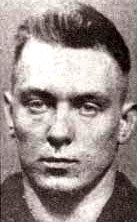
Anthony Chebatoris
Murderer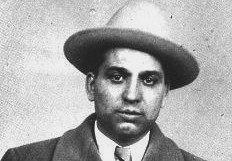 Harry Maione
Murderer · USA · 1937
Harry “Happy” Maione (1908 – February 19, 1942) was a New York mobster who serv…
12 victims
Harry Maione
Murderer · USA · 1937
Harry “Happy” Maione (1908 – February 19, 1942) was a New York mobster who serv…
12 victims
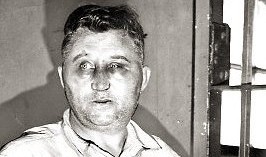 Harry Powers
Murderer · USA · 1931
Harry Powers was executed by hanging on March 18, 1932, at the West Virginia Pe…
5 victims
Harry Powers
Murderer · USA · 1931
Harry Powers was executed by hanging on March 18, 1932, at the West Virginia Pe…
5 victims
 Herman Drenth
Murderer · USA · 1931
Herman Drenth was also known by the aliases Harry F. Powers and Cornelius O. Pi…
5 victims
Herman Drenth
Murderer · USA · 1931
Herman Drenth was also known by the aliases Harry F. Powers and Cornelius O. Pi…
5 victims
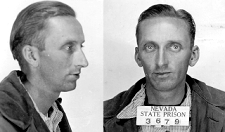 Luther Jones
Murderer · USA · 1936
Luther Jones Luther Jones was executed by asphyxiation-gas in Nevada on January…
4 victims
Luther Jones
Murderer · USA · 1936
Luther Jones Luther Jones was executed by asphyxiation-gas in Nevada on January…
4 victims
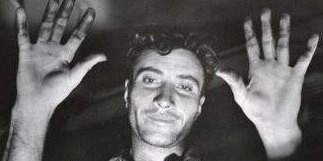 Albert Dyer
Murderer · USA · 1937
Albert Dyer was a 32-year-old WPA crossing guard and traffic guard at Centinela…
3 victims
Albert Dyer
Murderer · USA · 1937
Albert Dyer was a 32-year-old WPA crossing guard and traffic guard at Centinela…
3 victims
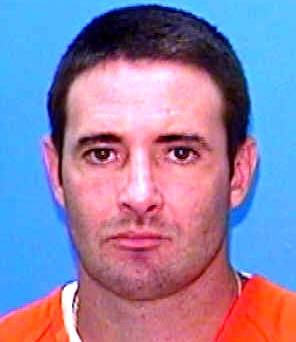 John Troy
Murderer · USA · 2001
Name: John Troy · Date of birth (DOB): 12/05/69 · Twelfth Judicial Circuit: Sar…
1 victim
John Troy
Murderer · USA · 2001
Name: John Troy · Date of birth (DOB): 12/05/69 · Twelfth Judicial Circuit: Sar…
1 victim
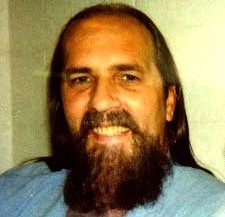 Jeffrey Dale Tiner
Murderer · USA · 1993
Name: Jeffrey Dale Tiner · Case title: State of Oregon, Plaintiff on Review, v.…
1 victim
Jeffrey Dale Tiner
Murderer · USA · 1993
Name: Jeffrey Dale Tiner · Case title: State of Oregon, Plaintiff on Review, v.…
1 victim
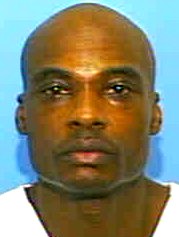 Willie Williams
Mass murderer · USA · 1991
08-13-93 — Received at DOC. · 09/02/91 — Date of offense. · 09/1/91 — Williams…
4 victims
Willie Williams
Mass murderer · USA · 1991
08-13-93 — Received at DOC. · 09/02/91 — Date of offense. · 09/1/91 — Williams…
4 victims
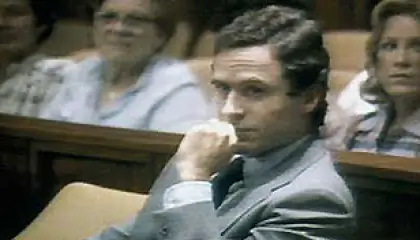 Ted Bundy
Serial killer · USA · 1973
Ted Bundy (born Theodore Robert Cowell; November 24, 1946 – January 24, 1989),…
14 victims
Ted Bundy
Serial killer · USA · 1973
Ted Bundy (born Theodore Robert Cowell; November 24, 1946 – January 24, 1989),…
14 victims
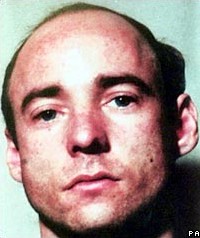 Alun Kyte
Murderer · United Kingdom · 1993
Alun Kyte was a British convicted double murderer. He was convicted of murderin…
2 victims
Alun Kyte
Murderer · United Kingdom · 1993
Alun Kyte was a British convicted double murderer. He was convicted of murderin…
2 victims
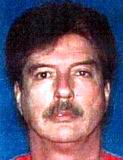 David Roland Waters
Murderer · USA · 1995
David Roland Waters was an American office manager for American Atheists. He wa…
4 victims
David Roland Waters
Murderer · USA · 1995
David Roland Waters was an American office manager for American Atheists. He wa…
4 victims
- Gender
- male
- Country
- USA
- Location
- Midland County, Michigan, USA
- Date of birth
- 1898
- Age at first offence
- 39
- Characteristics
- rape
- Victim profile
- Henry Porter, 50
- Method of murder
- Shooting
- Date(s) of murder
- September 29, 1937
- Years active
- 1937
- Date of arrest
- Same day
- Status
-
Executed
Executed by hanging at Milan Federal Prison on July 8, 1938
Title
Anthony Chebatoris
Background
Anthony Chebatoris (1898–1938) was executed by hanging at Milan Federal Prison on July 8, 1938.
Chebatoris’s first conviction for a crime was in 1918 for armed robbery in Detroit, and in 1927 he was arrested for violating the Dyer Act in Louisville, Kentucky. In 1928, he went to prison at Marquette for armed robbery.
In 1937, Chebatoris and fellow prison inmate Jack Gracy made plans to rob the Chemical State Savings Bank located in downtown Midland, Michigan.
The offence
On September 29, Gracey entered the Chemical State Savings Bank first with a sawed-off shotgun hiding under his long coat. Chebatoris followed Gracey into the bank. Gracey approached bank president Clarence Macomber and shoved the sawed-off shotgun into his ribs. Macomber and Gracey grappled with the weapon; Macomber forced the gun down while trying to push Gracey towards the front of the bank. Chebatoris, standing back from the fight, aimed his revolver at Macomber, wounding him in the shoulder. Paul Bywater, the head teller, came to the front counter to see what the commotion was about. Chebatoris took aim and fired at Bywater, shooting him in the stomach. Chebatoris and Gracy then fled the bank in their black two-door Ford.
After hearing gunshots, Dr. Frank Hardy, a dentist on the second floor of the bank building, grabbed a deer rifle he kept by the window in case of a bank holdup and fired at the getaway car as it sped towards the Benson Street Bridge. One of Hardy’s shots hit the driver and the car careened into another parked car along the road. Chebatoris and Gracy got out of the car and started looking for the shots, firing at the people they encountered. Mistaking Henry Porter, a truck driver from Bay City, as a police officer, Chebatoris fired his gun and seriously wounded Porter. Gracy tried to commandeer a truck, and Hardy shot Gracy in the head, killing him instantly. Chebatoris then ran along some railroad tracks and tried to get away by stealing a car, but was stopped by Sheriff Ira Smith.
Chebatoris was charged with attempted bank robbery and then murder when Henry Porter died 12 days later from his gunshot wound.
Investigation
Dr. Frank Hardy fired at the getaway car after hearing gunshots from inside the bank building.
Arrest
Chebatoris ran along railroad tracks after Gracy was killed and was stopped by Sheriff Ira Smith.
Trial
Chebatoris faced trial at Federal Court in Bay City, with Judge Arthur C. Tuttle presiding. His trial included a jury trial in which the jury of 7 men and 5 women found him guilty of murder.
The jury found Chebatoris guilty of murder on October 29, 1937. Chebatoris was sentenced to death under the National Bank Robbery Act of 1934.
Prosecution and defence
The United States District Attorney John Lehr argued for the death penalty, labeled Chebatoris a “brutal” and “sly” killer, and told the jury:
“this is not time for sympathy. You have the responsibility of protecting innocent American citizens against bandits, gangsters and ruthless beasts.”
Defense attorneys James Brooker and Dell Thompson, both from Bay City, did not refute the government’s case or call any witness to rebut testimony. Chebatoris did not testify in his defense. His attorneys argued against capital punishment as “a holdover from the Middle Ages.”
Judge Tuttle said:
“there won't be any hesitancy on my part in imposing the sentence, and I will always know, as long as I live, that no injustice has been done by the sentence.”
For security reasons, deputies took Chebatoris to the Saginaw County Jail, where guards kept an around-the-clock suicide watch over him.
Chebatoris told the guards hours after the verdict:
“You don't have to worry about me killing myself,”
“To hell with 'em. Let 'em kill me.”
Sentencing
Appeals
Governor Frank Murphy tried to get Chebatoris’s sentence commuted to life imprisonment or to move the execution to another state, arguing Michigan had no capital punishment. Murphy appealed all the way to President Franklin D. Roosevelt. Judge Tuttle refused to change the location of the execution.
In 1963, the Michigan Legislature abolished capital punishment for treason.
Outcome
On July 8, 1938, Chebatoris was hanged at Milan Federal Prison at dawn.
On the morning of July 8, 1938, Chebatoris was hooded and hanged. He turned to speak to Phil Hanna, the man who brought the hanging equipment to Milan and was known as an expert in its use. Chebatoris asked Hanna:
“are you paid for this?'
Hanna responded:
“No, I am just here to make it easy for you. I am here to give you an easy death, and may God have mercy on your soul.”
Chebatoris smiled before a black hood was placed over his head at 5:07 in the morning. Smith pushed with both hands on an iron lever and a trap door sprung open; Chebatoris dropped 9 feet. Doctors checked his pulse four times and pronounced him dead at 5:21 a.m.
Twenty-three witnesses had waited for the news.
Aftermath
Gov. Frank Murphy condemned the execution as “uncivilized” and said:
“it's always the poor man who has no money or power who pays with his life, while another criminal may have committed an identical crime, but who is wealthy and powerful and escapes the chair or noose.”
Minnie Porter, widow of Henry Porter, did not want to see Chebatoris put to death and said:
“I don't feel that we have the right to say whether people could be killed. It isn't up to us. There is a greater judge.”
In a 1968 interview, Sheriff Ira Smith said:
“I did it for my county. It was my duty.”
During his time at the Saginaw County Jail, Chebatoris attempted suicide by slashing his left wrist and throat with a razor blade. Officers wrestled the blade out of his hand, and near death they rushed him to Saginaw General Hospital, where he recovered. Authorities then transferred him to the federal detention farm in Milan.
Other details
Chebatoris consumed socialist writings and was described as an avowed atheist. He had ignored a priest who walked with him and chanted prayers in Latin the night before the execution.
Spotted an error, or have more information about this case?