
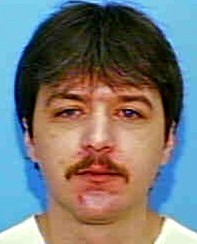
Joseph Ernest Atkins
Murderer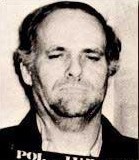 Ervil LeBaron
Murderer · USA · 1972
Ervil Morrell LeBaron (1925 to August 16, 1981) was the leader of a polygamous…
35 victims
Ervil LeBaron
Murderer · USA · 1972
Ervil Morrell LeBaron (1925 to August 16, 1981) was the leader of a polygamous…
35 victims
 Marvin Gray
Murderer · USA · 1975
Marvin Gray was convicted killer who claimed responsibility for 23 slayings and…
23 victims
Marvin Gray
Murderer · USA · 1975
Marvin Gray was convicted killer who claimed responsibility for 23 slayings and…
23 victims
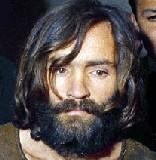 Charles Manson
Murderer · USA · 1969
Charles Milles Manson (born November 12, 1934) was an American criminal and mus…
9 victims
Charles Manson
Murderer · USA · 1969
Charles Milles Manson (born November 12, 1934) was an American criminal and mus…
9 victims
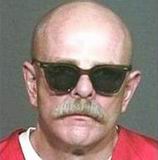 Barry Byron Mills
Murderer · USA · 1979
Barry Byron Mills (born 1948) was a leader of the Aryan Brotherhood (AB) prison…
8 victims
Barry Byron Mills
Murderer · USA · 1979
Barry Byron Mills (born 1948) was a leader of the Aryan Brotherhood (AB) prison…
8 victims
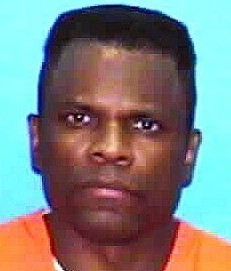 John Errol Ferguson
Murderer · USA · 1977
John Errol Ferguson was sentenced to death and was executed by lethal injection…
8 victims
John Errol Ferguson
Murderer · USA · 1977
John Errol Ferguson was sentenced to death and was executed by lethal injection…
8 victims
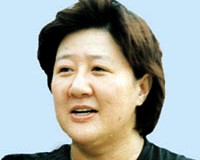 Masumi Hayashi
Mass murderer · Japan · 1998
Masumi Hayashi (林 真須美, Hayashi Masumi, born July 22, 1961) was a Japanese woman…
4 victims
Masumi Hayashi
Mass murderer · Japan · 1998
Masumi Hayashi (林 真須美, Hayashi Masumi, born July 22, 1961) was a Japanese woman…
4 victims
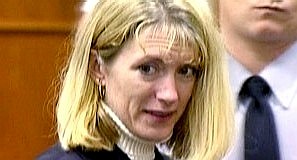 Ann Miller Kontz
Murderer · USA · 2000
Ann Miller Kontz was the widow of Eric Miller and the defendant in the arsenic…
1 victim
Ann Miller Kontz
Murderer · USA · 2000
Ann Miller Kontz was the widow of Eric Miller and the defendant in the arsenic…
1 victim
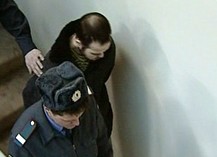 Dmitry Voronenko
Serial killer · Russia · 2006
Dmitry Voronenko was a Ukrainian man who was convicted of murder and rape. He r…
4 victims
Dmitry Voronenko
Serial killer · Russia · 2006
Dmitry Voronenko was a Ukrainian man who was convicted of murder and rape. He r…
4 victims
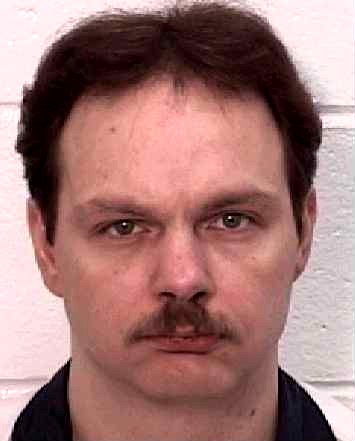 James Randall Rogers
Murderer · USA · 1980
James Randall Rogers was convicted in Floyd County of murder and aggravated ass…
1 victim
James Randall Rogers
Murderer · USA · 1980
James Randall Rogers was convicted in Floyd County of murder and aggravated ass…
1 victim
- Gender
- male
- Country
- USA
- Location
- North Charleston, South Carolina, USA
- Date of birth
- June 1947
- Age at first offence
- 22
- Characteristics
- parricide, alcohol, armed robbery
- Victim profile
- H is brother, 23 / His adoptive father, 75, and a neighbor girl, 13
- Method of murder
- Shooting
- Date(s) of murder
- December 31, 1969 / October 27, 1985
- Years active
- 1969–1985
- Date of arrest
- —
- Status
-
Executed
Executed by lethal injection in South Carolina on January 23, 1999
Case overview
Joseph Ernest Atkins was convicted of the 1985 murders of his father Benjamin Atkins and a 13-year-old neighbor girl, Karen Patterson. He was executed by lethal injection in South Carolina on January 23, 1999.
Timeline
- January 23, 1999 — Joseph Ernest Atkins was executed by lethal injection in South Carolina.
- 31 December 1969 — Joe Atkins killed his half-brother Charles after Charles had violently attacked him after the two had been drinking.
- October 1969 — Joe Atkins returned home from fighting in Vietnam.
- 1980 — Joe Atkins was paroled.
- 27 October 1985 — After a night of drinking, Atkins armed himself with a machete and shotgun and killed his adoptive father and the 13-year-old daughter of his neighbours.
- 1985 — Atkins was convicted of murders committed in 1985; he was also described as being on parole at the time of the killings.
- Five years earlier — Benjamin Atkins convinced parole officials to release his son from prison.
- 1986 — At his trial, he was found guilty of murder and sentenced to life imprisonment (described in the later narrative as having been in 1986). His sentence was later resentenced to death by a jury in 1988.
- 1988 — Atkins was resentenced to death by a jury.
- 1984 — A law in South Carolina allowing for a “guilty but mentally ill” verdict was referenced.
- 18 December 1998 — Andy Lavern Smith was the last person executed in South Carolina.
- 1985 — South Carolina resumed executions in 1985, after which the state had resumed executions in 1985 (execution context described in the narrative).
Background
Atkins was described as the unwanted child of a prostitute. He was adopted by B.F. Atkins and Gladys Atkins. He was subjected to frequent beatings and verbal tirades by his adoptive father, who insulted him with racist epithets because of his dark skin (his race was unknown, possibly partly African American). Atkins was also often attacked by his older half-brother, Charles, including an assault in which Charles repeatedly knifed him in the stomach, leading to surgery. On three occasions, Charles split Joe Atkins’s head open by hitting him with a rifle butt, a pool cue and a bottle.
Atkins also witnessed repeated violence, including rape, by his father against Gladys. Atkins believed that this brutality against his adoptive mother, including having her head hit against walls and floors, caused the brain tumour that killed her when he was 15.
Atkins was called up to fight in the war in Vietnam when he was about 21. He was involved in fighting on the border with Cambodia and Laos, and he reportedly witnessed extreme violence, including seeing people killed and mutilated. He also reported hearing fellow soldiers who had been captured being tortured to death.
On his return home in October 1969, he was awarded a Vietnam Campaign Medal, the Vietnam Service Medal and the National Defense Ribbon.
Three months later, on 31 December 1969, Joe Atkins killed his half-brother Charles after the latter had violently attacked him after the two had been drinking. The defense lawyer and the prosecutor agreed that a manslaughter plea was appropriate. However, due to poor defence advice, the plea collapsed in court when Atkins unwittingly led the judge to believe that a self-defence plea was possible. The trial proceeded, but with inadequate defence counsel, Atkins was found guilty of murder and sentenced to life imprisonment. The trial lasted a day.
Atkins was paroled in 1980. With a criminal record, and possible Post-Traumatic Stress Disorder (PTSD) from his Vietnam experience, he struggled to make a new life, but became alcoholic.
The offence
Atkins lived with his father. He was angry with his next-door neighbors, according to trial testimony. He got drunk and broke into their house armed with a machete, a shotgun and a revolver. He shot Karen Patterson with the 12-gauge, sawed-off shotgun as she slept. He then chased her mother back to the Atkins’ house, where he shot his father, Benjamin Atkins, who had convinced parole officials to release his son from prison 5 years earlier.
Atkins was also described as having, after a night of drinking on 27 October 1985, dressed in military fatigues, armed himself with a machete and shotgun, and engaged in other behaviour possibly indicative of a PTSD flashback, and killed his adoptive father and the 13-year-old daughter of his neighbours.
The 13-year-old victim was Karen Patterson. Atkins shot his father, Benjamin Atkins, age 75. The later narrative also described that Karen Patterson was the 13-year-old daughter of his neighbours.
Fifteen years prior to Karen’s murder, Atkins had served 10 years of a life sentence for killing his 23-year-old brother, Charles.
Investigation and arrest
A county police officer arrived at the neighbors’ house during the break-in sequence. Prosecutors said Atkins cut the telephone lines to his neighbors’ house before breaking in and fled when the county police officer arrived.
Trial
At his trial, Atkins offered no final statement. Prosecutors said Atkins knew enough to cut the telephone lines to his neighbors’ house before breaking in and to flee when a county police officer arrived.
The later narrative described that, at his trial in 1986, the only aggravating factor making his crime capital was the fact that he had a previous murder conviction. Without this, or if he had been convicted of manslaughter in 1970, he would not have been eligible for the death penalty.
Atkins’s 1986 defense lawyers had no experience of a capital case in South Carolina. They did not raise the possibility of a verdict of “guilty but mentally ill” under the 1984 law allowing for that verdict.
The later narrative described that Atkins’s subsequent death sentence was overturned on a technicality, but that in 1988 he was resentenced to death by a jury that was not told the full range of mitigating evidence. It also described that Atkins’s lawyers failed to fully investigate his background and that expert witnesses later admitted their original diagnoses were faulty because they were not in possession of all the facts about his upbringing or the effects of his war experience.
Sentencing
Atkins had previously been convicted of killing his brother Charles and received a life sentence. He served 10 years and was paroled in 1980.
In the 1985 killings, Atkins was described as having been convicted of murder and sentenced to death, and he was resentenced to death in 1988 after his death sentence was overturned on a technicality. Atkins was sentenced to death for the murder of his adoptive father and a young girl in his home town of North Charleston in 1985.
Appeals
Atkins’s death sentence was overturned on a technicality. In 1988, he was resentenced to death by a jury.
Clemency and executive outcome
Atkins’s clemency petition was denied by Gov. Jim Hodges. Atkins offered no final statement, and no relatives attended.
Aftermath
Atkins was described as the 6th inmate executed in the past 7 weeks in South Carolina and as the 2nd condemned inmate in South Carolina to be put to death in that year, and the 22nd overall since the state resumed executions in 1985. The later narrative also described the last person executed in the state before Atkins was Andy Lavern Smith on 18 December 1998. It further described that Smith was the 500th prisoner to be put to death in the USA since executions resumed in 1977.
Other details
Atkins’s lawyers suggested he was having a flashback to the Vietnam War during the 1985 killings. Atkins lived with his father and attacked the neighbors’ house while armed with a machete, a shotgun and a revolver. The 12-gauge, sawed-off shotgun was used to shoot Karen Patterson while she was in bed.
Atkins’s status was summarized as “Joseph Atkins 99-01-22, South Carolina In Columbia” in the scraped text, and it described Columbia in connection with the execution context.

Spotted an error, or have more information about this case?