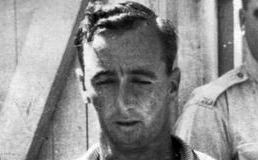
Raymond Bailey
Murderer Leonard Keith Lawson
Murderer · Australia · 1961
Leonard Keith Lawson (b. 16 August 1927) was a commercial artist and photograph…
2 victims
Leonard Keith Lawson
Murderer · Australia · 1961
Leonard Keith Lawson (b. 16 August 1927) was a commercial artist and photograph…
2 victims
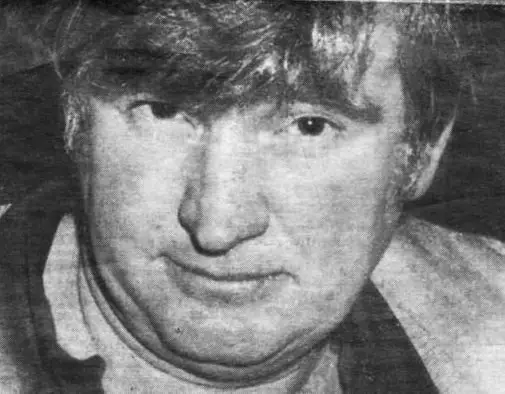 Raymond Edmunds
Murderer · Australia · 1966
Raymond Edmunds Raymond Edmunds was serving a life sentence for the 1966 murder…
2 victims
Raymond Edmunds
Murderer · Australia · 1966
Raymond Edmunds Raymond Edmunds was serving a life sentence for the 1966 murder…
2 victims
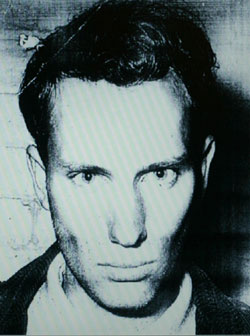 Derek Percy
Murderer · Australia · 1965
Derek Ernest Percy was declared not guilty by reason of insanity in April 1970…
1 victim
Derek Percy
Murderer · Australia · 1965
Derek Ernest Percy was declared not guilty by reason of insanity in April 1970…
1 victim
 Glen Valance
Murderer · Australia · 1964
Glen Sabre Valance Glen Sabre Valance was executed by hanging on November 24, 1…
1 victim
Glen Valance
Murderer · Australia · 1964
Glen Sabre Valance Glen Sabre Valance was executed by hanging on November 24, 1…
1 victim
 Ronald Joseph Ryan
Murderer · Australia · 1965
Ronald Joseph Ryan (c. 21 February 1925 - 3 February 1967) was executed by hang…
1 victim
Ronald Joseph Ryan
Murderer · Australia · 1965
Ronald Joseph Ryan (c. 21 February 1925 - 3 February 1967) was executed by hang…
1 victim
 Stephen Leslie Bradley
Murderer · Australia · 1960
Stephen Leslie Bradley was convicted of the murder of eight-year-old Graeme Tho…
1 victim
Stephen Leslie Bradley
Murderer · Australia · 1960
Stephen Leslie Bradley was convicted of the murder of eight-year-old Graeme Tho…
1 victim
 Kaspars Petrovs
Serial killer · Latvia · 2000
Kaspars Petrovs was a convicted serial killer who was sentenced to life in pris…
38 victims
Kaspars Petrovs
Serial killer · Latvia · 2000
Kaspars Petrovs was a convicted serial killer who was sentenced to life in pris…
38 victims
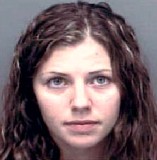 Ashley Humphrey
Murderer · USA · 2003
Ashley Humphrey was the wife of Timothy "Tracey" Humphrey. She was born Oct. 13…
1 victim
Ashley Humphrey
Murderer · USA · 2003
Ashley Humphrey was the wife of Timothy "Tracey" Humphrey. She was born Oct. 13…
1 victim
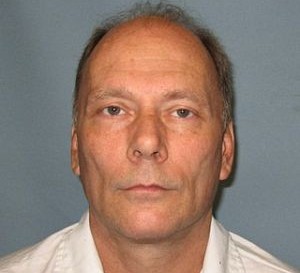 Danny Joe Bradley
Murderer · USA · 1983
Danny Joe Bradley was tried in Alabama and convicted of capital murder in conne…
1 victim
Danny Joe Bradley
Murderer · USA · 1983
Danny Joe Bradley was tried in Alabama and convicted of capital murder in conne…
1 victim
 Haji Mammadov
Murderer · Azerbaijan · 1995
Haji Mammadov was a former officer of the Crime Investigation Department of the…
11 victims
Haji Mammadov
Murderer · Azerbaijan · 1995
Haji Mammadov was a former officer of the Crime Investigation Department of the…
11 victims
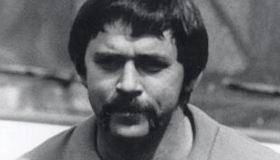 David Tamihere
Murderer · New Zealand · 1972
David Tamihere was sentenced to life imprisonment with a 10-year non-parole per…
3 victims
David Tamihere
Murderer · New Zealand · 1972
David Tamihere was sentenced to life imprisonment with a 10-year non-parole per…
3 victims
- Gender
- male
- Country
- Australia
- Location
- South Australia, Australia
- Date of birth
- December 3, 1932
- Age at first offence
- 25
- Characteristics
- robbery
- Victim profile
- Sally (Thyra) Bowman (43), her daughter Wendy Bowman (14), and family friend Thomas Whelan (22)
- Method of murder
- Shooting
- Date(s) of murder
- December 5, 1957
- Years active
- 1957
- Date of arrest
- January 21, 1958
- Status
-
Executed
Executed by hanging in Adelaide Gaol on June 24, 1958
Case overview
Raymond Bailey was convicted of the murder of Sally (Thyra) Bowman (43), her daughter Wendy Bowman (14), and family friend Thomas Whelan (22) at Sundown Station in northern South Australia outback in December 1957. All three victims had been beaten about the head and then shot.
Timeline
- December 1957 — Sally (Thyra) Bowman, Wendy Bowman (14), and Thomas Whelan (22) were murdered at Sundown Station in northern South Australia outback.
- 4 December 1957 — Pete and Sally Bowman reached Alice Springs by car; Pete and Marion then took a plane and flew to Adelaide.
- December 1957 — The remaining three travelled south by car with two family dogs; they had ₤85 in cash and were last spotted at Kulgera Homestead near the South Australian border where the party purchased petrol.
- December 13, 1957 — A Royal Australian Air Force aircrew spotted the vehicle under a clump of trees at deserted Sundown Station; Aboriginal trackers later found the bodies.
- September 1957 — David Iles met Bailey when both men worked around Wirrulla, South Australia.
- September 1957 — Bailey purchased a Desoto in Renmark.
- Tuesday 21 January 1958 — Bailey was arrested in Mount Isa, Queensland, on charges of false pretences in relation of a motor vehicle and being in possession of a unlicenced weapon.
- Two days later (January 1958) — Bailey was charged with the murder of Thyra Bowman.
- May 21, 1958 — Bailey was sentenced to death by Mr. Justice Reed in the Criminal Court after a jury found him guilty of murdering Mrs. Thyra Bowman near Sundown Station.
- June 24, 1958 — Bailey was hanged in Adelaide Gaol.
- February 2013 — Stephen Bishop appealed to the Governor of South Australia, Kevin Scarce, to grant a posthumous pardon for Bailey; the appeal was declined.
Background
Sally (Thyra) Bowman (43) and her husband Pete lived at Glen Helen Station in the Northern Territory. They managed Glen Helen station with their two daughters Wendy and Marion.
In November 1957, Thomas Whelan (22) travelled north to visit the family while on holiday. The Bowmans agreed to travel with Whelan back to Adelaide via Alice Springs by car. After arriving in Alice Springs on 4 December 1957, Pete and Marion took a plane and flew to Adelaide.
The remaining three travelled by car towards Adelaide with two family dogs and had ₤85 in cash. They were last spotted at Kulgera Homestead near the South Australian border, where the party purchased petrol, and they continued south towards Adelaide but never arrived.
The offence
After the murders, all three victims were found beaten about the head and then shot. The bodies were under blankets and canvas a mile away from the car after the discovery at deserted Sundown Station.
The prosecution case described a sequence in which Raymond John Bailey held up the Bowman party at gunpoint and demanded money for petrol for the journey to Mount Isa, 1,000 miles away. The prosecution case then described that Whelan went for his gun and was shot in the back. Bailey was described as clubbing the women with Whelan’s gun (a Remington), placing the bodies in the Bowmans’ Vanguard, and driving to the opposite side of the road to hide them. The prosecution described that Bailey helped himself to Whelan’s wallet before hiding the bodies.
Investigation and searches
A huge ground search was launched after the group did not arrive in Adelaide after 3 days and had not made contact. Bosses and workers from nearby properties joined the search.
Eight days later, a Royal Australian Air Force aircrew spotted the vehicle under a clump of trees at deserted Sundown Station. When the car was reached some hours later, Aboriginal trackers found the bodies.
The trackers found the spot where the killer had parked his car and noted that the car was towing a two wheel trailer.
First reports described that witnesses had seen a grey Ford Zephyr towing a green trailer travelling north to Alice Springs around the time of the slayings. The car was later sighted east of Tennant Creek.
Police investigated with NT and SA Police. Detectives Charles Hopkins and Kevin Moran from the SA Homicide Squad worked on the case from the outset under the oversight of Detective Inspector Gil Gully and travelled to the crime scene, which was just on the SA side of the border. They travelled by Holden vehicle accompanied by two Port Augusta detectives in a Ford 1-ton utility and took 30 hours to reach the crime scene. Police officers from Oodnadatta and Finke assisted along with local residents and six Aboriginal Trackers from local stations. In the Northern Territory, Bill McKinnon, Pat Grant, Ron Hughes, and Jim Conmee worked on the case. Charles Hopkins described the investigation as the “longest, most arduous and most testing” investigation he had experienced.
Arrest and charges
Raymond John Bailey was born at Gilgandra on 3 December 1932. He had four brothers and a sister. Bailey left school at 14 and got work as a carpenter. He married young and for a time was an itinerant worker.
Bailey purchased a Desoto in Renmark in September 1957 and took a rifle he had agreed to buy but never paid for in Wirrulla. He was travelling north in the Desoto car and caravan.
Bailey was arrested in Mount Isa in Queensland. He was arrested on Tuesday 21 January 1958 on charges of false pretences in relation of a motor vehicle and being in possession of a unlicenced weapon.
Two days later he was charged with the murder of Thyra Bowman. He was extradited to Adelaide where he stood trial.
Trial
People involved in the proceedings
David Iles met Bailey when both men came to work around Wirrulla, South Australia in September 1957. Bailey and Iles struck up a friendship and the men went rabbit shooting. Iles later agreed to sell to Bailey his huntsman rifle, but Bailey skipped town without paying for it.
Constable Grope accompanied Iles to the spot where the men fired the rifle and Grope recovered used cartridge cases, and the cartridges later matched cartridges found at the murder scene.
The trial took place in Adelaide. Bailey’s counsel was Mr. A. L. Pickering, Q.C. Bailey was sentenced by Mr. Justice Reed.
Det. G. Hallahan of Adelaide and Inspector N. W. Bauer of Queensland were cited as saying that Bailey could not bear his wife crying.
Jury finding and sentencing
The jury found Bailey guilty of the murder of Mrs. Thyra Bowman near Sundown Station in the far north of South Australia on December 5. The jury took 96 minutes to reach its verdict.
Bailey was sentenced to death by Mr. Justice Reed in the Criminal Court tonight. Bailey stood calmly when the jury was entered and announced the verdict and while sentence was passed, and he left the dock without any sign of emotion.
The trial occupied seven days.
His two brothers had visited him the day before he was hanged.
Prosecution case
The Crown prosecutor, Mr. E. B. Scarfe, told the jury that the evidence had proved that Bailey was guilty of “a particularly brutal and cal lous murder.”
“Hold-up” Mr. Scarfe stud that what really happened might never be known. He sug gested, however, that bailey held up the Bowman party at gunpoint and de manded money for petrol for the journey to Mt. Isa, 1,000 miles away. Whelan went for his g"n and was shot in the back. Bailey then. clubbed the women with Whelan'g gun (a Remington), put , the bodies in the : Bowman'8 Vanguard, and drove to: the opposite side of the. road to hide them. He helped himself to Whelan's wallet before, he hid the bodies. “Petrol is dear up in that neck of the woods and Bailey's old car and cara van would not be doing more than 10 or 12 miles to the gallon,” Mr. Scarfe said.
The prosecution also argued that Bailey’s confession was “the clearest confirmation of what had already been found at the scene” and that the Crown’s case did not rest on the confession alone.
Mr. Scarfe said the jury had been presented with evidence about Bailey’s movements, whereabouts, and traces at the scene sufficient for a verdict of guilty, including evidence about tracks.
Defence case and challenge to confession
Mr. A. L. Pickering, Q.C. told the jury that circumstantial evidence was like a circle and that whenever the circle was not closed the accused was entitled to the benefit of the doubt.
The trial record described that Bailey did not deny being at the scene, and defence counsel argued about whether the cartridges proved Bailey had the rifle at the time of the killings. The defence also argued that the murder weapon had not been produced and that police had not searched thoroughly for it, and asked how a stranger could have approached the camp at night without rousing the two dogs, one of which was reported to be fierce.
It was stated that Bailey had made remarks from the dock in an unaworn statement and did not give sworn evidence and called no witnesses.
Confession claims and disputed description of killings
Bailey claimed he signed the confession because he could hear his wife weeping in another room while police questioned her. He told the court:
“They (detectives) also said: ‘do you love you wife?’ I said, ‘yes I do’ and they said: ‘then sign it and we will leave her alone’.”
The alleged confession described that the victims died when shot while running from the murderer, but this contradicted the facts as described in the trial accounts.
In the trial account, it was said that the description of the murder in the alleged confession was contested. Stephen Bishop later argued that the description in the alleged confession was “completely and utterly untrue,” and that post mortems revealed that she and her daughter had been bashed unconscious before they were shot and “They were definitely not shot as they ran in an upright position.”
“The description of the murder of Thyra Bowman in the alleged confession is completely and utterly untrue,” Mr. Bishop said. “The post mortems revealed she and her daughter had been bashed unconscious before they were shot. They were definitely not shot as they ran in an upright position.”
Evidence about weapons, vehicles, tracks, and clothing sizes
It was stated that the murder weapon had been taken from a Wirrulla man several months before the murder when he skipped town without paying for it, and that ballistic tests showed it to be the same rifle used in the murder.
In court, Bailey said he sold the rifle before the murders to a “dark-skinned fellow” near Coober Pedy. A witness mentioned a grey Zephyr towing a green trailer travelling north to Alice Springs, while Bailey was said to have been driving a black 1938 DeSoto when arrested.
Footprints believed to belong to the killer were found at the murder scene and were estimated as being a size 7 or 8, while Bailey wore a size 5½ shoe. The account also described that Bailey later said: “I take size 5½ shoe or if I can’t get that size, I wear a size 6.”
“I have nothing more to say.”
It was also stated in connection with Bailey’s claim that his story about the confession was challenged by other prosecution evidence.
Appeals and clemency efforts
Bailey sought a stay of execution stating that he had killed the real killer and that he was flown to the crime scene to attempt to locate a body. It was stated that a stay of execution of one week was managed by claiming he was not the trio’s killer but that he killed the real killer in self defence.
The State Cabinet made a decision to test the accuracy of Bailey’s new statement. Police flew Bailey back to the scene of the crime so Bailey could produce a body. Bailey and a fourteen man team of police trackers, lawyers, and gaol wardens flew to Alice Spring and then drove south to Sundown station.
Bailey’s story during this attempt was that on the night of the murders he came across a man removing Mrs Bowman's shoes, and after a fight he stabbed the man to death and then buried the man four miles north of where the victims’ bodies were found. After a three and a half hour search found no body, Bailey stated:
Posthumous pardon application
In February 2013, author and investigative journalist Stephen Bishop appealed to the Governor of South Australia, Kevin Scarce, to grant a posthumous pardon for Bailey, but the request was declined. Bishop said the alleged confession did not tally with other evidence given by the prosecution at the trial and that “a massive miscarriage of justice” had been engineered by Queensland detective Glen Patrick Hallahan.
Kevin Scarce decided he would “not take action” on the request. Attorney-General John Rau’s office was described as not commenting for legal reasons.
Bishop also appealed to the SA Ombudsman Wayne Lines to re-examine the evidence.
Outcome
Bailey was convicted and executed in Adelaide Gaol. He was hanged on 24 June 1958. It was stated that Bailey left the dock without emotion when sentenced and that there was no demonstration even though public seats were filled.
Aftermath and later allegations
Author and investigative journalist Stephen Bishop claimed that detective Glen Patrick Hallahan lied on oath and in records of police interviews with Raymond Bailey. Bishop said Hallahan was one of the three high ranking Queensland detectives known as the “Rat Pack,” exposed as corrupt by the Fitzgerald Inquiry in the late 1980s.
Bishop’s main points included that the murder weapon was never found and that the description of the murders in Bailey’s confession contradicted the post mortem results. Bishop also argued that Bailey’s confession conflicted with prosecution evidence, including evidence about footprints and shoe sizes.
It was stated that Bishop appealed to the Governor in February 2013 to grant a posthumous pardon and that the Governor declined the request. It was also stated that a Freedom of Information request for documents generated during the Attorney-General’s considerations failed to explain why Bishop’s application for mercy was denied.
Other details
Bailey’s movements and relationships
Bailey told another traveller on the Alice Springs road that he was heading north looking for work. He was said to be working at Mt Isa Hospital when the law caught up with him. Bailey had his wife and young son with him during travel north in the Desoto car and caravan.
David Iles met Bailey and they went rabbit shooting. Iles agreed to sell Bailey his huntsman rifle, but Bailey skipped town without paying for it.
Investigative reporting details included in the accounts
The Crown prosecutor described petrol costs and car economy, stating:
“Petrol is dear up in that neck of the woods and Bailey's old car and cara van would not be doing more than 10 or 12 miles to the gallon,” Mr. Scarfe said.
People named in the records
Raymond John Bailey; Sally (Thyra) Bowman; Wendy Bowman (14); Marion Bowman; Pete Bowman; Thomas Whelan; David Iles; Constable Grope; Detective Glen Patrick Hallahan; Detective Inspector Gil Gully; Detective Charles Hopkins; Detective Kevin Moran; Inspector N. W. Bauer; Stephen Bishop; Kevin Scarce; John Rau; Solicitor-General; Wayne Lines; Doug Robertson; Noel Coulthard; Roy Coulthard; Bill McKinnon; Pat Grant; Ron Hughes; Jim Conmee; Charles Hopkins; Gil Gully; A. L. Pickering, Q.C.; Mr. Justice Reed; Mr. E. B. Scarfe; Attorney-General’s spokeswoman (unnamed).
Vehicles, weapon types, and ballistic evidence
A grey Ford Zephyr towing a green trailer was described by witnesses. A black 1938 DeSoto was described for Bailey. A Remington gun was described as Whelan’s gun that Bailey used to club the women. The firearm at issue was described as a Huntsman .22 calibre rifle, with casings and cartridges matching between the weapon associated with the Wirrulla man and cartridges found at the murder scene.
Footprints were estimated as size 7 or 8, and Bailey wore a size 5½ shoe.
Location details
Sundown Station was described as deserted and located about 40 miles south of Kulgera in one account. Another account described the bodies as found about 34km south of the NT border on Sundown Station. The vehicle was found under a clump of trees at Sundown Station.
Spotted an error, or have more information about this case?