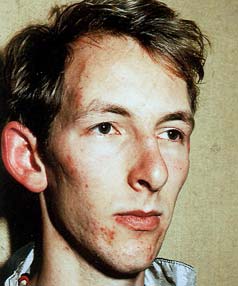
David Bain
Mass murderer ? David Malcolm Gray
Mass murderer · New Zealand · 1990
David Malcolm Gray was an unemployed resident of Aramoana, New Zealand, who car…
13 victims
David Malcolm Gray
Mass murderer · New Zealand · 1990
David Malcolm Gray was an unemployed resident of Aramoana, New Zealand, who car…
13 victims
 Raymond Ratima
Mass murderer · New Zealand · 1992
Raymond Wahia Ratima was an unemployed shearer and was aged 25. At the beginnin…
7 victims
Raymond Ratima
Mass murderer · New Zealand · 1992
Raymond Wahia Ratima was an unemployed shearer and was aged 25. At the beginnin…
7 victims
 Brian Schlaepfer
Mass murderer · New Zealand · 1992
Brian Schlaepfer was a farmer in Paerata, New Zealand, and he owned over one hu…
6 victims
Brian Schlaepfer
Mass murderer · New Zealand · 1992
Brian Schlaepfer was a farmer in Paerata, New Zealand, and he owned over one hu…
6 victims
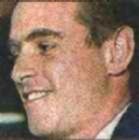 Stephen Lawrence Anderson
Mass homicide · New Zealand · 1997
1995 — Stephen Lawrence Anderson was diagnosed with schizophrenic. · 8 February…
6 victims
Stephen Lawrence Anderson
Mass homicide · New Zealand · 1997
1995 — Stephen Lawrence Anderson was diagnosed with schizophrenic. · 8 February…
6 victims
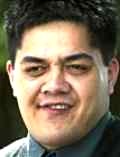 William Dwane Bell
Murderer · New Zealand · 2001
William Dwane Bell (born 1978) was a convicted murderer in New Zealand. Bell wa…
3 victims
William Dwane Bell
Murderer · New Zealand · 2001
William Dwane Bell (born 1978) was a convicted murderer in New Zealand. Bell wa…
3 victims
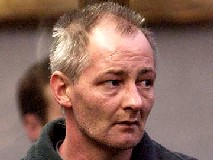 Bruce Howse
Murderer · New Zealand · 2001
Bruce Howse was the partner of Charlene Aplin and the stepfather of Saliel Apli…
2 victims
Bruce Howse
Murderer · New Zealand · 2001
Bruce Howse was the partner of Charlene Aplin and the stepfather of Saliel Apli…
2 victims
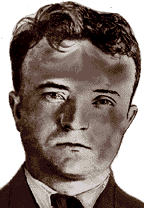 Paul Jaworski
Murderer · USA · 1926
Paul Jaworski was born in Poland as Paul Poluszynski in 1900. He later immigrat…
20 victims
Paul Jaworski
Murderer · USA · 1926
Paul Jaworski was born in Poland as Paul Poluszynski in 1900. He later immigrat…
20 victims
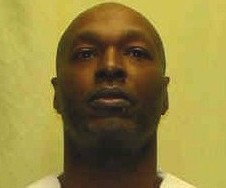 Rommel Broom
Murderer · USA · 1984
Romell Broom was an American convicted of murder, kidnap and rape. He was born…
1 victim
Rommel Broom
Murderer · USA · 1984
Romell Broom was an American convicted of murder, kidnap and rape. He was born…
1 victim
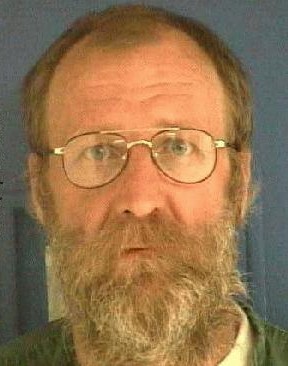 Devon Stuart Olson
Murderer · USA · 1986
Devon Stuart Olson was a transient. Texas authorities arrested California parol…
2 victims
Devon Stuart Olson
Murderer · USA · 1986
Devon Stuart Olson was a transient. Texas authorities arrested California parol…
2 victims
 Richard Wade Farley
Mass murderer · USA · 1988
Richard Wade Farley (born 1948) was an American convicted mass murderer. He sta…
7 victims
Richard Wade Farley
Mass murderer · USA · 1988
Richard Wade Farley (born 1948) was an American convicted mass murderer. He sta…
7 victims
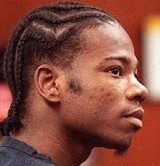 Donte Johnson
Mass murderer · USA · 1998
Donte Johnson was sentenced to death on May 3, 2005 after a jury returned a dea…
4 victims
Donte Johnson
Mass murderer · USA · 1998
Donte Johnson was sentenced to death on May 3, 2005 after a jury returned a dea…
4 victims
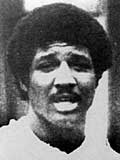 Pernell Ford
Murderer · USA · 1983
Defendant: Pernell Ford, also described as 18 during the 1983 murders and as 35…
2 victims
Pernell Ford
Murderer · USA · 1983
Defendant: Pernell Ford, also described as 18 during the 1983 murders and as 35…
2 victims
- Gender
- male
- Country
- New Zealand
- Location
- Dunedin, Otago, New Zealand
- Date of birth
- March 27, 1972
- Age at first offence
- 22
- Characteristics
- miscarriage of justice
- Victim profile
- Robin Bain, 59, his wife Margaret, 50, their daughters Arawa, 19, Laniet, 18, and son Stephen, 14 (his parents and siblings)
- Method of murder
- Shooting ( .22 rifle)
- Date(s) of murder
- June 20, 1994
- Years active
- 1994
- Date of arrest
- 4 days after
- Status
-
Acquitted / overturned
Sentenced to life in prison on June 21, 1995; found not guilty when retried on the same charges 14 years later, on June 5, 2009
Case overview
David Cullen Bain (born 27 March 1972) was a New Zealander who featured in one of New Zealand’s most notable murder cases.
On the morning of 20 June 1994, five members of the Bain family were shot dead. Four days after the murders, David Bain (then aged 22) was charged by the police with the murder of his family. He was convicted by a jury in May 1995 and sentenced in June 1995. He was later found not guilty when retried on the same charges 14 years later.
People
- David Cullen Bain — accused; son of Robin Bain and Margaret Bain; brother of Arawa Bain, Laniet Bain, and Stephen Bain.
- Robin Bain — victim; David’s father.
- Margaret Bain — victim; David’s mother; wife of Robin Bain.
- Arawa Bain — victim; David’s sister.
- Laniet Bain — victim; David’s sister.
- Stephen Bain — victim; David’s brother.
Victims
Five members of the Bain family were shot dead:
- Robin Bain (59, later also referred to as 58),
- Margaret Bain (50),
- their daughters Arawa (19) and Laniet (18),
- their son Stephen (14).
Timeline
- 20 June 1994 — Five members of the Bain family were shot dead.
- (four days after the murders) — David Bain (then aged 22) was charged by police with the murder of his family.
- 5 July 1994 — The house at 65 Every Street was burnt down by the New Zealand Fire Service at the request of the trustees of the Bain family trust and with David Bain’s consent.
- May 1995 — David Bain was convicted of the murders of his parents and siblings.
- 29 May 1995 — After a three week trial at the Dunedin High Court, David Bain was convicted by the jury on five counts of murder.
- 21 June 1995 — Justice Neil Williamson sentenced David Bain to life imprisonment with a 16 year non-parole period.
- 10 May 2007 — Privy Council appeal hearing/outcome period described as: “privy council appeal - 10 may 2007”.
- 10 May 2007 — The Privy Council quashed David Bain’s murder convictions, concluding that “a substantial miscarriage of justice has actually occurred.”
- 15 May 2007 — Bain was released on bail following a hearing at the Christchurch High Court.
- 21 June 2007 — Solicitor-General David Collins announced the retrial.
- March 2009 — Retrial-related dates included: hearings in February 2009; four days of arguments over whether to stay the retrial; and dismissal of the application for a stay on 2 March 2009.
- 6 March 2009 — The jury for the retrial was sworn in; Bain pleaded not guilty to the five murder charges; opening statements were made.
- 27 May 2009 — The last evidence was presented in the retrial.
- 5 June 2009 — At 4:45pm, the jury returned verdicts finding David Bain not guilty on all five charges.
The offence
The account of the prosecution’s theory included that David woke around 5 am, selected and prepared his .22 rifle (including attaching a silencer), put on white gloves, and wore a pair of his mother’s glasses. The prosecution theory described the sequence of shootings, including:
- shooting Laniet twice in the head while she was lying sleeping,
- shooting Margaret in the forehead,
- a struggle with Stephen after he woke and pushed away the rifle,
- David twisting Stephen’s T-shirt to strangle him and then finishing him off with a bullet to the head,
- turning on a light, picking up glasses (leaving one lens on the floor), returning to his bedroom, and placing them on his chair,
- shooting Arawa after she had heard shots and was praying for help,
- shooting Laniet again in the top of the head after hearing gurgling,
- throwing bloodied clothing into a washing machine and turning it on,
- changing into fresh clothes and going out with his dog Casey to do his Otago Daily Times paper run,
- returning home, turning on the computer, and typing a message ostensibly from his father: “SORRY, YOU ARE THE ONLY ONE WHO DESERVED TO STAY”,
- waiting for Robin Bain to come in to pray,
- shooting Robin in the head and dialing 111.
The alternative scenario described was that Robin Bain might have killed the other family members, then switched on the computer, typed the message, and shot himself. The alternative account included claims about motives and investigative issues, including alleged incest allegations involving Laniet, relationships described as over, and firearms residue testing timing, among other points. The Court of Appeal and subsequent appellate decisions addressed these issues as part of the appellate review process.
Investigation
After the murders, the case involved disputes about evidence and investigative handling.
The Police Complaints Authority reviewed the Police investigation into the Bain family murders in 1997 and issued a 123-page report supporting its conduct. Later developments after Bain petitioned for pardon included further inquiry and ministerial advice to seek the Court of Appeal’s view on specific items of evidence.
During appellate discussion, the Privy Council later reviewed nine important items and concluded that there had been a substantial miscarriage of justice.
Arrest / charge
Trial
Venue and judge
The three week trial took place at the Dunedin High Court in May 1995 and was presided over by Justice Neil Williamson.
Prosecution case (summary of what was described)
The Prosecution’s case included that:
- David got up by 5 am on 20 June 1994, took his rifle and ammunition from the wardrobe, and unlocked the trigger lock using the spare key.
- The spare key was used because he had left the usual key in the pocket of a raincoat in his father’s caravan.
- David shot all his family members except his father, who was out in the caravan.
- David fought violently with Stephen, losing a lens from his glasses in the struggle.
- David put his blood-stained clothes in the washing machine, started it, washed himself and changed into clean clothes, leaving marks in the laundry/bathroom.
- David’s paper run occurred roughly at 5:45 am, arriving home slightly earlier than usual at about 6:42 am.
- David switched on the computer at 6:44 am and typed a message: “SORRY, YOU ARE THE ONLY ONE WHO DESERVED TO STAY”.
- David waited for his father to come in from the caravan to pray around 7 am.
- When Robin knelt to pray in the lounge, David shot him in the head from very close range.
- The prosecution case described that David rearranged the scene to seem like a suicide and then called 111 to report the killings, pretending to be very agitated.
The defendant’s own story was that he:
- got up at the usual time, put on running shoes and the yellow newspaper bag, and went on his paper run with the dog,
- arrived back about 6:42–6:43 am via the front door, went to his room, then went downstairs to the bathroom where he washed his hands black from the newsprint,
- put coloured clothes in the machine including the sweatshirt worn during his paper run over the last week and set it going,
- went back upstairs, turned on the light, noticed bullets and the trigger lock on the floor,
- went to his mother’s room finding her dead, heard Laniet gurgling, and found his father dead in the lounge,
- was devastated and rang the emergency number in great distress.
Defence case (summary of what was described)
The defence proposed that Robin killed the other family members before switching on the computer, typing the message, and then shooting himself.
The defence described Robin as depressed due to incest allegations coming to light and claimed Robin had lived in a van behind the school and was banished to a caravan behind the house when he came home for the weekend, with Laniet staying with him in the caravan.
Verdict and conviction
On 29 May 1995, after a three week trial, David Bain was convicted by the jury on five counts of murder.
Sentencing
On 21 June 1995, Justice Neil Williamson sentenced David Bain to life imprisonment with a 16 year non-parole period.
Appeals
Appeals against conviction
Bain maintained his innocence and supporters sought a rehearing.
- An initial appeal to the New Zealand Court of Appeal was dismissed in 1995.
- The Privy Council declined to hear his appeal in 1996.
After Bain petitioned the Governor-General for a pardon:
- The Ministry of Justice held an inquiry from 1998 to 2000, which found no miscarriage of justice.
- The Minister of Justice, Phil Goff, advised the Governor-General to seek the Court of Appeal’s view on four items of evidence.
- The Court of Appeal reconsidered the case in 2003 and again dismissed Bain’s appeal.
2007 Privy Council appeal
The Privy Council agreed to hear Bain’s appeal in 2006, and the hearing took place over five days in March 2007.
On Thursday, May 10, 2007, the Privy Council quashed David Bain’s murder convictions, concluding:
“a substantial miscarriage of justice has actually occurred.”
The Privy Council also noted:
“nothing in this judgement should influence the verdict in any way.”
They recommended a retrial, and the Solicitor-General later confirmed the retrial would take place.
Retrial (2009)
Bail
Although the Privy Council said Bain should be kept in custody, he was released on bail on 15 May 2007 after a hearing at the Christchurch High Court.
More than 100 people attended the bail hearing, and the gallery erupted in cheers after the judge’s decision. It was ruled that Bain posed no threat of offending if released. He was bailed to live with one of his longest supporters, former All Black Joe Karam, but later moved to west Auckland.
Suppression and evidentiary disputes
Various appeals and applications were made regarding the conduct of the retrial.
- Justice Panckhurst decided the retrial would be held in Christchurch instead of Dunedin.
- In February 2009, Justice Panckhurst and Chief High Court Judge Tony Randerson heard four days of arguments on whether to stay the retrial, and dismissed the application for a stay on 2 March 2009.
- An earlier stay application to the Privy Council in 2008 was made on the grounds that several witnesses had died since the 1994 trial, many exhibits had been lost or destroyed, and new evidence had arisen. The Privy Council referred the application back to New Zealand courts after assurances by the Solicitor-General.
Details of the New Zealand hearings were suppressed by the Solicitor-General. Both sides appealed to the Court of Appeal against High Court decisions on admissibility of various pieces of evidence. Some items were not presented to the jury and any mention of them was suppressed until after the verdict. This included:
- suppressed statements from two high school friends that David told them in 1989 how he could commit a sexual offence against a woman jogger and use his paper round as an alibi, arriving at the usual time at houses where he was often seen but delivering much earlier,
- suppressed evidence from a friend of Arawa Bain that David Bain had been intimidating the family with his gun, later used in the murders.
Bain’s lawyers also appealed to the Supreme Court against a High Court decision about new evidence being presented at the retrial. They won their appeal, so the disputed evidence was excluded from the retrial and was under a suppression order until the week after the verdict, when the evidence and reasons for suppression were released.
The disputed evidence concerned a portion of the recording of David’s 111 call in which he was audibly breathing heavily at the time, and a detective reviewing it in 2007 believed he heard the words “I shot the prick”. Expert witnesses agreed it was unclear whether the sounds were in fact speech and, if so, what Bain may have said. One expert suggested he might have said “I can’t breathe”, and another expert gave the analogy of an image glimpsed in the clouds. The Supreme Court decided allowing it as evidence would be unfairly prejudicial because of the uncertainty and experts’ cautions.
Opening statements
The jury for the retrial was sworn in on 6 March 2009. David Bain pleaded not guilty to the five murder charges. Opening statements were made by:
- Crown prosecutor Robin Bates,
- defence lawyer Michael Reed.
Robin Bates told the jury that all the evidence showed David Bain killed his family, describing the evidence as circumstantial but strong, and he said the Crown case would show that the father, Robin Bain, was not the killer. He described the Crown case as consistent with David killing each family member in turn, including:
- David had called 111 at about 7:10 am,
- when police arrived at 7:30 am they found him hysterical in his room, wailing “they are all dead”,
- Stephen’s injuries and struggle, with Stephen strangled with a t-shirt and then killed by another gunshot,
- injuries consistent with the struggle and Stephen’s blood on his clothes,
- a lens from glasses David was wearing found on the floor of Stephen’s room, with the frame and other lens found in David’s room,
- David’s bloody gloves found in Stephen’s room,
- Bates’ statement that David must have had to remove them to deal with rifle misfeeding or jamming,
- Bates’ statement that David heard Laniet gurgling, meaning he was present between her second gunshot wound and the final shot,
- Arawa and his mother being killed by a shot to the head,
- Robin being found in the lounge lying on his side between a coffee table and a bean bag, dead from a single shot to the head, with the .22 calibre rifle next to him and Robin’s fingerprints not found on it,
- trigger lock and its key found in David’s room,
- laundry described as consistent with trying to destroy evidence, especially the green jersey he wore during the killings,
- doing his paper round as an alibi and him being sure to be seen along his route,
- evidence of a conversation David had with a friend six days before the murders where he said he had a feeling “something horrible” would happen and that afterwards he told her the killings were what he had told her about before.
Michael Reed described the Crown’s case as absurd, saying they glossed over the killer’s motive and pointed to an argument between Robin and David over a chainsaw. He told the jury the defence case would be that Robin killed the other family members before killing himself. Reed said Robin did this because his incestuous relationship with Laniet came to light, that she was “going around telling everybody” he molested her, and had come home to tell her mother about the abuse that night. Reed said Robin, a missionary and school teacher, was depressed and said his life would be ruined by the incest allegations, and Reed described Robin’s living arrangements and Laniet’s presence with him in the caravan. Reed said the defence would call “startling evidence” showing Robin was the killer, including forensic evidence. He said he was scathing about the police investigation, describing a one-track focus on David and dropping other leads.
Reed said some evidence was lost, destroyed, or never collected, including blood samples from under Robin’s fingernails. He said that despite a neighbour telling Police about the incest allegations, “Laniet’s diaries and letters written to her mother were destroyed” though they might have contained allegations of incest from Laniet.
Testimony
A teacher at Laniet’s school testified that Laniet had been very open in conversations with him, in which she said that she gave birth to a black child in Papua New Guinea after being raped. The teacher said she later changed her story, saying she had an abortion.
Verdict
The retrial lasted three months, with 130 witnesses being called by the Crown and 54 by the defence. The last evidence was presented on 27 May 2009.
The jury retired for several hours the following week to consider their verdict after hearing closing statements and the judge’s summing up. They asked two questions the following morning:
“What are the rules of reasonable doubt?” and “Can you please clarify your statement 'It must be David to the exclusion of Robin'?”
The judge replied, in part, that they must be sure the accused was guilty after careful consideration of all the evidence, and that the Crown case had excluded Robin as killer. The judge said that reasonable doubt was “an honest and reasonable uncertainty about guilt.”
At 4:45pm on the afternoon of 5 June 2009, the jury gave their verdict. They found David Bain not guilty on all five charges.
Aftermath
Jurors’ conduct and concerns
After the verdict, one of the jurors was hugged by David Bain outside the court building and another juror shook Bain’s hand. That evening these two jurors briefly joined a party being held by Bain supporters, to which they had been invited by Joe Karam.
Reports varied on why and when they left, either “after only a few moments” because they then felt it might be inappropriate, or minutes later because they were asked to leave. These actions were described as questionable and prompted calls for review of how jurors are prepared for such cases.
Opposition justice spokesperson Lianne Dalziel said the jury should have been debriefed together after giving their verdict. Journalist Martin Van Beynen noted that the two jurors spent the last three weeks of the trial giggling and writing messages to each other.
One juror said that each of the jurors had been approached during the retrial by people who believed David Bain was guilty.
Possible compensation
Bain’s lawyer said Bain should receive compensation for spending 13 years in prison. Justice Minister Simon Power said no application for compensation had been received as of 5 June 2009, but any application would be considered on its merits.
Otago University’s Dean of Law Mark Henaghan said Bain did not meet one of four current criteria for compensation, namely that the convictions be quashed with no retrial ordered. Henaghan said it was possible rules could change, but Bain would also have to show it was more likely he was innocent than not.
It was also described that it was not enough to be found not guilty and noted that this was not the same as exoneration that DNA evidence may provide.
A “Justice For Robin Bain group” was described as having been founded to work against the David Bain lobby. A group of Robin Bain supporters launched a petition calling for David Bain to be denied compensation for the years he spent in prison after being convicted of murdering his family.
Bain asked that his belongings used as evidence at trial, including the rifle used to kill his family, be returned.
Interview and claims among family members
After the final appeal, Michael Bain, brother of Robin Bain, gave an interview to the Listener. He was prompted by troubled feelings about the hearsay evidence brought against Robin and the rest of the murdered family while attention focused on David. Michael Bain said the wider Bain and Cullen families had been saddened by the allegations against Robin and believed the police “did a magnificent job.”
Joe Karam responded by claiming Michael was in “denial” and questioning how well he knew Robin. Rosemary McLeod described “the most salient” point rebutting that claim as the three weeks the Bain brothers spent repainting their mothers house in January 1994, followed by a stay by Robin at Michael’s house on the way back to Dunedin. Four months later, Robin was dead.
Coroner’s inquests
In 1994, the Dunedin Coroner decided no inquest was needed because he was satisfied that the evidence shown in court had established the cause of the deaths.
After the retrial, New Zealand’s Chief Coroner consulted with the local coroner and others to decide whether to conduct inquests into the deaths, as the verdict implied the death certificates may not be accurate. The Chief Coroner announced that an inquest would only be held if requested and if the High Court or solicitor-general granted the request.
A Law Society spokesman said that even if the coroner’s findings disagreed with the retrial verdict, this could not lead to any further legal action against David Bain.
Other details
Early life
David was described as the first child of Margaret Arawa and Robin Irving Bain. After he was born, the family moved to outback Papua New Guinea where Robin worked as a missionary teacher. The family returned to New Zealand in 1988 when Margaret and Robin were having relationship problems. The family returned to their home at 65 Every Street, Andersons Bay, Dunedin. David took a year to settle back into school, joined the school choir, and in the seventh form his marks improved and he went to university encouraged by his parents. He dropped out of university, was on the unemployment benefit, and worked at Opera Alive for a period before returning to university to study classical music and professional voice training lessons.
Additional described timeline items
The following dated or time-stamped items were listed in a timeline as part of the narrative:
- 5:30am — David Bain’s alarm clock set to activate 6:30am; the caravan alarm clock is set to activate.
- 6:45am — opposing times of the computer being switched on; David seen at the front gate of 65 Every Street.
- 7:00am — neighbour awakened by a barking dog.
- 7:09am — 111 call made; referred to St John’s ambulance; 15–20 mins later referred to police.
- 7:33am — Police arrive at 65 Every Street, no reply; they make their entry.
Trial venue details
The trial at Dunedin High Court occurred in May 1995, and the retrial in Christchurch followed.
House and arson detail
The house at 65 Every Street was burnt down on 5 July 1994 by the New Zealand Fire Service, at the request of the trustees of the Bain family trust and with David Bain’s consent.
References to suppression and juror movements
The narrative included that some evidence was suppressed until after verdict, that details of New Zealand hearings were suppressed by the Solicitor-General, and that jurors briefly joined a party by Bain supporters after verdict.
Publications
Four books were described as published about David Bain and the murders:
- David and Goliath: the BAIN family murders by Joe Karam ISBN 0-7900-0564-6
- Bain and Beyond by Joe Karam ISBN 0-7900-0747-9
- In the Grip of Evil: The Bain Murders by Judith Wolfe and Trevor Reeves ISBN 0-908562-64-0
- The Mask of Sanity: The Bain Murders by James McNeish ISBN 0-908990-46-4.
Spotted an error, or have more information about this case?