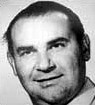
Stephen Leslie Bradley
Murderer Raymond Bailey
Murderer · Australia · 1957
Raymond Bailey was convicted of the murder of Sally (Thyra) Bowman (43), her da…
3 victims
Raymond Bailey
Murderer · Australia · 1957
Raymond Bailey was convicted of the murder of Sally (Thyra) Bowman (43), her da…
3 victims
 Leigh Robinson
Murderer · Australia · 1968
Leigh Robinson murdered Valerie Dunn, his teenage girlfriend, in 1968. He was o…
2 victims
Leigh Robinson
Murderer · Australia · 1968
Leigh Robinson murdered Valerie Dunn, his teenage girlfriend, in 1968. He was o…
2 victims
 Leonard Keith Lawson
Murderer · Australia · 1961
Leonard Keith Lawson (b. 16 August 1927) was a commercial artist and photograph…
2 victims
Leonard Keith Lawson
Murderer · Australia · 1961
Leonard Keith Lawson (b. 16 August 1927) was a commercial artist and photograph…
2 victims
 Raymond Edmunds
Murderer · Australia · 1966
Raymond Edmunds Raymond Edmunds was serving a life sentence for the 1966 murder…
2 victims
Raymond Edmunds
Murderer · Australia · 1966
Raymond Edmunds Raymond Edmunds was serving a life sentence for the 1966 murder…
2 victims
 Derek Percy
Murderer · Australia · 1965
Derek Ernest Percy was declared not guilty by reason of insanity in April 1970…
1 victim
Derek Percy
Murderer · Australia · 1965
Derek Ernest Percy was declared not guilty by reason of insanity in April 1970…
1 victim
 Glen Valance
Murderer · Australia · 1964
Glen Sabre Valance Glen Sabre Valance was executed by hanging on November 24, 1…
1 victim
Glen Valance
Murderer · Australia · 1964
Glen Sabre Valance Glen Sabre Valance was executed by hanging on November 24, 1…
1 victim
 Willie Earl Pondexter
Murderer · USA · 1993
Willie Earl Pondexter was convicted of capital murder for the robbery and slayi…
1 victim
Willie Earl Pondexter
Murderer · USA · 1993
Willie Earl Pondexter was convicted of capital murder for the robbery and slayi…
1 victim
 Robert Black
Serial killer · United Kingdom · 1969
Robert Black was sentenced to life in prison (minimum 35 years) on May 19, 1994…
4 victims
Robert Black
Serial killer · United Kingdom · 1969
Robert Black was sentenced to life in prison (minimum 35 years) on May 19, 1994…
4 victims
 Darrell Keith Rich
Serial killer · USA · 1978
Darrell Keith Rich Darrell Keith Rich was executed by lethal injection in Calif…
4 victims
Darrell Keith Rich
Serial killer · USA · 1978
Darrell Keith Rich Darrell Keith Rich was executed by lethal injection in Calif…
4 victims
 Jean-Pierre Vaquier
Murderer · United Kingdom · 1924
Jean-Pierre Vaquier was 45 years old when he was sentenced to death. Alfred Jon…
1 victim
Jean-Pierre Vaquier
Murderer · United Kingdom · 1924
Jean-Pierre Vaquier was 45 years old when he was sentenced to death. Alfred Jon…
1 victim
 Wilford Lee Berry
Murderer · USA · 1989
Wilford Lee Berry, Jr. was executed by lethal injection in Ohio on February 19,…
1 victim
Wilford Lee Berry
Murderer · USA · 1989
Wilford Lee Berry, Jr. was executed by lethal injection in Ohio on February 19,…
1 victim
 Dr. Teet Härm
Murderer? · S weden · 1984
The District Court jury returned a guilty verdict, but the High Court overturne…
9 victims
Dr. Teet Härm
Murderer? · S weden · 1984
The District Court jury returned a guilty verdict, but the High Court overturne…
9 victims
- Gender
- male
- Country
- Australia
- Location
- Bondi, Sydney, New South Wales, Australia
- Date of birth
- 1926
- Age at first offence
- 34
- Characteristics
- kidnapping, rape, convicted rapist
- Victim profile
- Graeme Thorne, 8 (the first person kidnapped for ransom in Australia)
- Method of murder
- A sphyxiation or a head injury or a combination of the two
- Date(s) of murder
- July 7, 1960
- Years active
- 1960
- Date of arrest
- October 10, 1960
- Status
-
Died in custody
Sentenced to life in prison on 29 March 1961; died in prison on October 6, 1968
Case record
Stephen Leslie Bradley was convicted of the murder of eight-year-old Graeme Thorne and was sentenced to life imprisonment on 29 March 1961. Bradley died in prison on October 6, 1968, after a heart attack.
Background
In 1960, the construction of the Sydney Opera House was proving expensive and the New South Wales Government initiated a lottery to help raise money. The £100,000 prize in the 10th Opera House Lottery, drawn on Wednesday 1 June 1960, was won by travelling salesman Bazil Thorne.
The Thornes lived in Edward Street in the Sydney suburb of Bondi. Bazil Thorne was 37; his wife was Freda; they had two children, Graeme (eight) and Belinda (three). Graeme’s customary morning routine involved waiting at the corner of Wellington and O’Brien streets, about 300 metres from the house, where a family friend, Mrs. Phyllis Smith, would pick him up and take him (along with her two sons) to The Scots College in Bellevue Hill.
Stephen Bradley was born Istavan Baranyay in Budapest and emigrated in 1950. He worked as an electroplater. He later worked in other roles including as a life-insurance salesman and a male nurse. Bradley had previously been charged with false pretences in Sydney in November 1957, but that charge was allowed to lapse. Bradley had been married previously and later married Magda Wittman (née Klein), a Hungarian divorcee with two children, who owned a boarding house at Katoomba. In 1959, the guest house burnt down, and Bradley failed to make any money on the insurance settlement.
Bradley was described by prison authorities as tense, insecure and intelligent, with a sociable and engaging personality, but also as a hopeless liar, a confidence man and an opportunist who was desperate to make money quickly. In prison, he was subjected to repeated bashings but was later kept protected from other prisoners.
The offence
On 7 July 1960, Graeme Thorne, an eight-year-old boy, was abducted from the intersection of Wellington and O’Brien streets in Bondi as he waited to be collected for school. Bradley was later convicted of Graeme Thorne’s murder.
Timeline
- Wednesday 1 June 1960 — The £100,000 prize in the 10th Opera House Lottery was won by travelling salesman Bazil Thorne.
- Thursday 7 July 1960 — Graeme Thorne left for school as usual at 8:30am; he was later abducted; at 9:40am a man telephoned the Thorne household demanding £25,000; at 9:47pm the kidnapper phoned again.
- 8 July 1960 — The empty school case was found near the Wakehurst Parkway at 6 p.m.
- 16 August 1960 — Five weeks after he went missing, Graeme Thorne’s body was discovered in Grandview Grove, Seaforth in Sydney.
- 10 October 1960 — The SS Himalaya arrived at Colombo (then known as Ceylon), and two Sydney policemen were waiting for Bradley.
- 19 November 1960 — Detectives arrived back in Sydney with Bradley in handcuffs after an extradition hearing; Bradley allegedly made a confession just before the aircraft landed at Sydney airport.
- 21 November 1960 — Mrs. Thorne identified Bradley from a line up of sixteen men.
- 29 March 1961 — Bradley was sentenced to life imprisonment.
- 6 October 1968 — Bradley died in Goulburn gaol while playing tennis, aged 42.
Investigation
The kidnapping and ransom demand caused a huge public outcry. Acting chief of the Criminal Investigation Bureau held an immediate press conference rather than wait for the deadline or keep the kidnapping under wraps. That afternoon every newspaper in the country carried the story on the front page. The NSW Police Commissioner made a personal appeal for the return of Graeme Thorne on evening television, and television stations screened photos of the missing boy.
Graeme Thorne’s empty school case was found near the Wakehurst Parkway on 8 July at 6 p.m. On 11 July, Graeme Thorne’s school cap, raincoat, lunch bag (with an apple still in it) and math books were found about a mile from the school case on the opposite side of the highway.
Police launched a massive search operation on a scale Australia had never seen before, searching every house and flat in the vicinity of the Thorne home. Known criminals across the country were questioned, and officers on leave were called back to duty. Officers also investigated motels, boarding houses and boat moorings around Sydney Harbour.
Examination of the body established that Graeme had died from either asphyxiation or a head injury or a combination of the two, and that he had been alive when hit on the head. His hands and feet were tied with rope and a silk scarf had been tightly knotted around his neck. The examination also established that he was murdered within 24 hours of the kidnapping and that his body had been dumped soon afterwards.
Additional evidence included a short time after the lottery win, a man with a heavy European accent and wearing dark glasses knocked on Mrs. Thorne’s door, asked for “a Mr. Bognor,” asked her to confirm their telephone number, and left after chatting with the upstairs neighbours.
Several witnesses had seen an iridescent blue 1955 Ford Customline double-parked at the corner of Francis and Wellington streets near where Graeme was usually picked up.
Dozens of police worked through 260,000 Ford index cards. Investigations eventually established that there were 4000 cars matching this general description.
Forensic examination of the blue tartan rug found with the body showed two plant types, Chamaecyparis pisifara and Cupressus glabra, that were not present at the vacant lot where the body was found. Soil scrapings from the body showed tiny fragments of pink mortar, and forensic experts deduced that the body had been lying under a brick building at some stage. The rug brand “Onkaparinga” was described as relatively traceable.
Detectives found discarded 35 mm film negatives among weeds at the Bradleys’ last known address on Osborne Road, Manly. One photo showed Mrs. Bradley and her children sitting on a car rug with the same pattern as the rug found around Graeme. Other frames showed Stephen Bradley himself.
Police forensic experts reported that hair found on the car rug, hair found in the trunk of the Ford Customline and hair in the bag of the vacuum cleaner all came from a single source, a Pekinese dog. The Bradleys owned a Pekinese dog called Cherry, and hair was matched forensically.
Police searched for a house with pink mortar and with the two plant types growing in the yard. A pink house was identified with a blue Ford outside and the two plant species in the garden. The house was in Moore Street in the suburb of Clontarf. Police visited the house on 3 October and learned that it had been rented by Bradley with his second wife Magda and their three children.
Bradley had left Australia on 26 September, sailing for London with his family aboard the SS Himalaya. Police impounded Bradley’s car and took scrapings from the trunk and took possession of a vacuum cleaner among household items Bradley had sold.
A tip-off from a postman was used to identify the pink house.
Arrest and extradition
The SS Himalaya arrived at Colombo, Sri Lanka (then known as Ceylon) on 10 October. Two Sydney policemen were waiting for Bradley, but Australia had no extradition treaty with Ceylon. After a lengthy hearing, an extradition order was granted and detectives arrived back in Sydney on November 19 with Bradley in handcuffs.
Bradley was taken to Central Police Station for questioning. He admitted the kidnapping but said that Graeme Thorne had accidentally suffocated while locked in the back of his car. Forensic experts disproved this by connecting a breathing mask to the inside of the boot and breathing the air from the boot for seven hours, without ill effect, indicating that Thorne had been killed by the blow to the head rather than asphyxiation.
On 21 November 1960, Mrs. Thorne was asked to identify the man from a line up of sixteen men. The policeman asked: “Please place your hand on him.” Mrs. Thorne replied: “No.” She then said: “I will not put my hand near him.”
Trial
Bradley’s trial for murder lasted nine days. At trial, the prosecution presented multiple forensic findings. Bradley was sentenced to life imprisonment on 29 March 1961 amid jeers from the gallery. Bradley remained emotionless, with his hands on the dock rail. The Thornes were in court throughout the entire proceedings and remained quiet.
Bradley’s appeal to the full bench of Supreme Court judges was unanimously rejected.
Sentencing
Bradley was sentenced to life imprisonment on 29 March 1961.
Aftermath
Magda Bradley divorced her husband in 1965 and went to live in Europe. Bradley never implicated her in any way, despite reports that many believed she had been party to the kidnapping.
In prison, Bradley was subjected to repeated bashings but was later kept protected from other prisoners.
He died of a heart attack in Goulburn gaol on 6 October 1968, aged 42, while playing tennis.
Bazil Thorne died in 1978. Lottery procedures in Australia were changed after the Thorne case so that all lottery winners were given the option of remaining anonymous when collecting winnings.
A change in kidnapping laws in Australia followed the Thorne case, because the New South Wales Crimes Act did not carry a provision for the crime of kidnapping. The nearest listed offence was “abduction,” referring to abduction of a female for the purpose of marriage or carnal knowledge, with a maximum penalty of fourteen-years’ imprisonment.
A late crime journalist Alan Dower expressed the opinion that Graeme was not Bradley’s initial target. Dower’s theory stated that Bradley’s target had been Graeme’s younger sister and that Bradley had no intention of killing her. Dower suggested the sister was young enough that, if she had been kidnapped and then released, she would not have been able to give any useful information that could identify her kidnapper. Dower also suggested that Graeme was abducted instead because she was never away from her parents.
Outcome
Stephen Leslie Bradley was convicted of murder and sentenced to life imprisonment on 29 March 1961. He died in prison on October 6, 1968.

Spotted an error, or have more information about this case?