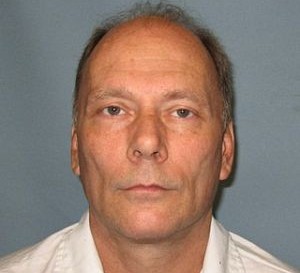
Danny Joe Bradley
Murderer Brian Kevin Rosenfeld
Murderer · USA · 1985
Brian Kevin Rosenfeld Brian Kevin Rosenfeld was sentenced to three concurrent l…
23 victims
Brian Kevin Rosenfeld
Murderer · USA · 1985
Brian Kevin Rosenfeld Brian Kevin Rosenfeld was sentenced to three concurrent l…
23 victims
 Marvin Gray
Murderer · USA · 1975
Marvin Gray was convicted killer who claimed responsibility for 23 slayings and…
23 victims
Marvin Gray
Murderer · USA · 1975
Marvin Gray was convicted killer who claimed responsibility for 23 slayings and…
23 victims
 Yahweh ben Yahweh
Murderer · USA · 1980
Yahweh ben Yahweh was born and legally named Hulon Mitchell Jr. (October 27, 19…
23 victims
Yahweh ben Yahweh
Murderer · USA · 1980
Yahweh ben Yahweh was born and legally named Hulon Mitchell Jr. (October 27, 19…
23 victims
 Russell Ellwood
Murderer · USA · 1991
Russell Ellwood was a former taxi driver. Authorities suspected him of killing…
20 victims
Russell Ellwood
Murderer · USA · 1991
Russell Ellwood was a former taxi driver. Authorities suspected him of killing…
20 victims
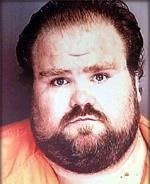 Alan Eugene Miller
Murderer · USA · 1999
Alan Eugene Miller was sentenced to death on July 31, 2000. Miller shot two co-…
3 victims
Alan Eugene Miller
Murderer · USA · 1999
Alan Eugene Miller was sentenced to death on July 31, 2000. Miller shot two co-…
3 victims
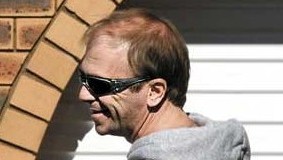 Graham Stafford
Murderer? · Australia · 1991
Graham Stuart Stafford was convicted in 1992 of the murder of twelve-year-old L…
1 victim
Graham Stafford
Murderer? · Australia · 1991
Graham Stuart Stafford was convicted in 1992 of the murder of twelve-year-old L…
1 victim
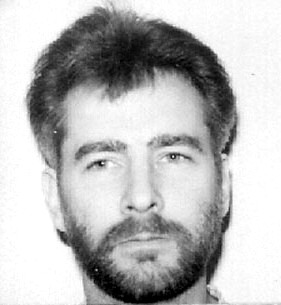 Stuart Kennedy
Murderer · USA · 1986
Stuart Kennedy was a White male from West Chester, Ohio. Stuart Kennedy was con…
1 victim
Stuart Kennedy
Murderer · USA · 1986
Stuart Kennedy was a White male from West Chester, Ohio. Stuart Kennedy was con…
1 victim
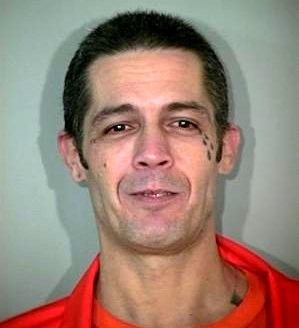 Robert Charles Comer
Murderer · USA · 1987
Robert Charles Comer was executed by lethal injection in Arizona on May 23, 200…
1 victim
Robert Charles Comer
Murderer · USA · 1987
Robert Charles Comer was executed by lethal injection in Arizona on May 23, 200…
1 victim
 Maurice Boucher
Murderer · Canada · 1997
Maurice "Mom" Boucher (born June 21, 1953) was a convicted murderer, a reputed…
2 victims
Maurice Boucher
Murderer · Canada · 1997
Maurice "Mom" Boucher (born June 21, 1953) was a convicted murderer, a reputed…
2 victims
- Gender
- male
- Country
- USA
- Location
- Calhoun County, Alabama, USA
- Date of birth
- September 7, 1959
- Age at first offence
- 24
- Characteristics
- rape, child abuse
- Victim profile
- Rhonda Hardin, 12 (his stepdaughter)
- Method of murder
- Strangulation
- Date(s) of murder
- January 24, 1983
- Years active
- 1983
- Date of arrest
- Next day
- Status
-
Executed
Executed by lethal injection in Alabama on February 12, 2009
Case details
Danny Joe Bradley was tried in Alabama and convicted of capital murder in connection with the rape or sodomy of his 12-year-old stepdaughter, Rhonda Hardin.
Bradley was a resident of Alabama’s Death Row and was executed by lethal injection at Holman Correctional Facility. He was pronounced dead at 6:15 p.m. after the United States Supreme Court denied a request for a stay of execution.
Timeline
- January 24, 1983 — Twelve-year-old Rhonda Hardin and her younger brother, Gary “Bubba” Hardin, were left in the care of their stepfather, Danny Joe Bradley, while their mother, Judy Bradley, had been hospitalized for more than one week.
- January 24, 1983 (around 8:00 p.m.) — Rhonda was watching television with Bubba and Bradley; Bubba went to bed, and Bradley told him not to wake Rhonda but to leave her on the couch and to sleep in the room normally occupied by Mr. and Mrs. Bradley.
- January 24, 1983 (around 9:30 p.m.) — Police Officer Bruce Murphy saw Bradley in his car at 9:30 p.m. in the area where Rhonda’s body was later discovered.
- January 24, 1983 (around 11:30 p.m.) — Bradley arrived at the home of his brother-in-law, Robert Roland, and was described as upset and acting funny; Roland testified Bradley asked if he had seen Rhonda.
- January 25, 1983 (around 12:50 a.m.) — Bradley appeared at his next-door neighbor, Phillip Manus’s home, and said he and Rhonda argued over some pills; he claimed that when he awoke, Rhonda was missing and said, “[l]et me run over to Rhonda's grandma's house and I'll be back in a few minutes.”
- January 25, 1983 (around 3:30 a.m.) — Bradley reported Rhonda’s disappearance to Piedmont Police Officer Ricky Doyle.
- January 25, 1983 (around 7:00 a.m. / around 7:30 a.m.) — Rhonda’s body was found in a wooded area less than six-tenths of a mile from Bradley’s apartment.
- January 25, 1983 (within ninety minutes) — Plainclothes officers from the Piedmont Police Department arrived at Bradley’s residence without an arrest warrant and without probable cause.
- January 25, 1983 (around 9:30 a.m.) — Bradley’s interrogation began at the police station; Miranda rights were read during almost nineteen hours of custody.
- January 25, 1983 (around 10:00 a.m.) — The police began questioning that included routine background information (name, age, date of birth, address, and employment).
- January 25, 1983 (around 10:50 a.m.) — Sergeant Gregory Kiser obtained fingernail scrapings from Bradley.
- January 25, 1983 (at 11:08 a.m.) — Bradley signed a written “permission to search.”
- January 26, 1983 (around 4:00 a.m.) — Bradley was transported home and returned to his residence.
- January 26, 1983 (about twelve o’clock) — Bradley willingly gave blood and saliva samples at the Piedmont Medical Clinic.
- January 27, 1983 — Bradley consented to a second search of his residence and signed a written permission to search; Mrs. Bradley gave the police a soiled pair of Rhonda’s underwear.
- March 22, 1983 — Bradley was arrested after his indictment.
- June 4, 1987 — Bradley filed a Petition for Writ of Error Coram Nobis and/or Motion for Relief from Judgment.
- January 9, 1989 — The Circuit Court for Calhoun County, Alabama denied Bradley’s petition for extraordinary relief.
- February of 1990 — A petition for writ of certiorari to the Alabama Supreme Court was denied.
- February 12, 2009 — Danny Joe Bradley was executed by lethal injection in Alabama.
- February 12, 2009 (afternoon) — The United States Supreme Court denied a request for a stay of execution.
Background
Judy Bradley, the mother of Rhonda Hardin and Bubba Hardin, was hospitalized for more than one week.
Rhonda and Bubba normally slept in one bedroom of the residence, while Danny Joe Bradley and Mrs. Bradley slept in another.
The offence
A jury convicted Danny Joe Bradley of two counts arising from a four-count indictment. The counts were murder during the commission of a rape in the first degree and murder during the commission of a sodomy in the first degree.
The capital murder conviction was tied to Rhonda Hardin, her sexual assault, and her strangling death. The pathologist testified that Rhonda’s body had “evidence of trauma-that is, bruises and abrasions on her neck.” Seven wounds were found on her neck, and the largest was an abrasion over her Adam’s apple.
At sentencing, the trial court found aggravating circumstances, including that the capital offense was committed while Bradley was engaged in the commission of, or flight after committing or attempting to commit, a rape. The trial court also found that the capital offense was especially heinous, atrocious, or cruel compared to other capital offenses.
Investigation and evidence
Statements and claimed movements
Bradley claimed that he had fallen asleep and that when he awoke Rhonda was gone.
When he reported Rhonda’s disappearance, Bradley told Officer Ricky Doyle that he and Rhonda had argued earlier in the evening and that she had left the house sometime around 11:00 or 11:30 p.m. Bradley claimed that after 11:30 p.m. he left the house to go to his neighbor’s house to look for Rhonda, and that he had not left the house until he began searching for her.
Bradley testified at trial that his inconsistent statements to police were explained by his claimed intent to steal a car, remove its motor, and sell it. He claimed that Gary Hardin had asked him to obtain such a motor; Hardin testified that he made no such request.
Witness testimony about unconsciousness
Bubba Hardin testified that Bradley had frequently rendered the children unconscious by squeezing their necks.
Body discovery
Rhonda’s body was found the next day in woods near Bradley’s apartment. Her body was dressed in maroon-colored corduroy pants, a short-sleeved red knit shirt, green, white, brown, and purple striped leg warmers, a bra, and a blue windbreaker. Her tennis shoes were tied in single knots.
Several members of Rhonda’s family testified that she always tied her shoes in double knots.
Police arrival and custody
Within ninety minutes after Rhonda’s body was discovered, two plainclothes officers from the Piedmont Police Department arrived at Bradley’s residence. The officers had neither an arrest warrant nor probable cause.
The government contended Bradley was not placed under arrest at that time; Bradley claimed he was told he was under arrest for suspicion of murder, handcuffed, placed in a police vehicle, and taken to the police station, where interrogation began around 9:30 a.m.
Bradley was in custody of the Piedmont Police from that time until approximately 4:00 a.m. on the following morning, during which time Miranda rights were read and Bradley was questioned.
Searches and seized items
Bradley executed a consent-to-search form authorizing the police to search his residence and his automobile.
After obtaining the consent-to-search form, the police searched and seized physical evidence, including:
- a pillowcase,
- a damp blue towel from a bathroom closet,
- the living room light switch plate cover,
- a red, white, and blue sheet from the children’s bedroom,
- a white “heavy” sheet from the washing machine,
- fiber samples from the trunk of Bradley’s automobile.
The court denied Bradley’s two motions to suppress this evidence prior to trial.
Forensic findings
Blood type and secretor status
An expert in forensic serology testified that Bradley and Rhonda Hardin were of type O blood. Bradley was a non-secretor of the H-antigen; Rhonda was a secretor.
The serology expert testified that the H-antigen was not present in the semen taken from Rhonda’s rectal swab, and that the rectum does not produce secretions or H-antigens.
Semen, fecal-semen, and H-antigen results
On the inside of Rhonda’s pants, a stain containing a mixture of fecal-semen was found with spermatozoa present.
The pillowcase found in the bathroom revealed high levels of seminal plasma and spermatozoa consistent with the type O blood group, and small blood stains mixed with saliva that were also consistent with an O blood group.
The red, white, and blue sheet on the bed in the children’s bedroom contained a four by two and one-half inch stain that included spermatozoa.
The white blanket placed in the washing machine also had two large stains consistent with fecal-semen. In both stains, spermatozoa was present and no H-antigens were detected.
A combination of semen and sperm with the H-antigen was found on the blue towel located in the bathroom.
Although the written report indicated the blue towel contained a fecal-semen stain containing the H-antigen, the expert testified at trial that analysis revealed the towel contained a vaginal-semen stain not a fecal-semen stain, and that “the word fecal instead of vaginal had been essentially a scriveners' error.”
The expert testified that because the blue towel contained a vaginal semen stain, the H-antigen secretions could have come from Rhonda’s vaginal secretions.
The serology expert testified that the low level of H-antigen was consistent with a female secretor because H-antigen is present in low levels in the vagina.
The mattress cover contained a number of seminal stains.
Fibers and fingernail scrapings
The State’s forensic evidence demonstrated that Bradley’s fingernail scrapings matched the red, white, and blue sheet taken from the children’s bedroom, the fibers from the leg warmers found on Rhonda’s body, and the cotton from the pants Rhonda was wearing on January 24, 1983.
The State also proved that fibers found in the trunk of Danny Joe Bradley’s car matched fibers from Rhonda’s clothing.
Trial
Charges and verdict
Bradley was indicted for capital murder of Rhonda Hardin.
The jury returned a verdict of guilty of capital murder on counts one and three of the indictment. These counts charged murder during the commission of a rape or sodomy in the first degree.
During the punishment phase, the same jury deliberated and recommended twelve to zero that Bradley be sentenced to death.
Defense testimony
Bradley testified in his own defense and explained his inconsistent statements to police by claiming he intended to steal a car, remove its motor, and sell it.
He stated that Gary Hardin asked him to obtain such a motor; Hardin testified that he had made no such request.
Sentencing
After a sentence hearing, the trial court sentenced Bradley to death.
The trial court made written findings of fact and found two aggravating circumstances:
- The capital offense was committed while Bradley was engaged in the commission of, or flight after committing or attempting to commit, rape.
- The capital offense was especially heinous, atrocious, or cruel compared to other capital offenses.
The trial court did not find statutory mitigating circumstances and stated it considered evidence and testimony presented regarding Bradley’s background and character in relation to mitigating circumstances.
Appeals and post-conviction proceedings
Direct appeal
On direct appeal, the Court of Criminal Appeals affirmed. It addressed issues including an illegally arrested contention, admissibility of consent-to-search and statements, sufficiency of the evidence to prove Rhonda was murdered during the commission of rape and sodomy, and propriety of the death sentence in light of aggravating circumstances. The court affirmed the judgment and sentence and included that the trial court had found as aggravating circumstances the fact that the capital offense was committed while Bradley was engaged in rape and that the offence was especially heinous, atrocious, or cruel.
Post-conviction relief (Brady claims and newly discovered evidence)
After affirmance, Bradley sought post-conviction relief. The circuit court denied the petition, and the Court of Criminal Appeals affirmed.
Bradley claimed that the State failed to disclose four items of exculpatory information prior to trial as required by Brady v. Maryland and also argued that the exculpatory material qualified as newly discovered evidence.
The claimed items of exculpatory information were:
- An alleged confession to the murder of Rhonda Hardin by Ricky McBrayer to Glenn “Coffee” Burns.
- A similar confession by Keith Sanford.
- A police file note implicating Ricky Maxwell.
- Forensic test results alleged to be invalid or inconsistent with the conclusion that Bradley alone had sexual contact with the victim prior to her death.
The Court of Criminal Appeals held that the McBrayer confession claim was procedurally barred from review and also addressed findings about credibility and whether the alleged confession was groundless. The court rejected the Sanford confession allegation as without merit. It rejected the Ricky Maxwell note allegation as without merit and found no reasonable probability of a different outcome. It also rejected the forensic serology test inconsistency claim, finding counsel familiarity and no suppression.
The Court of Criminal Appeals concluded that Bradley did not carry his burden to show entitlement to relief and affirmed denial of the petition.
Federal habeas review
Bradley later filed a petition for habeas corpus under 28 U.S.C. § 2254.
The court of appeals affirmed denial of relief. It addressed that Fourth Amendment claims were not reviewable in habeas, concluded Bradley’s statement was voluntary, found no Brady violation, and found sufficient evidence supported conviction and aggravating circumstances.
The federal habeas opinion also included that:
- Rhonda was found strangled and seven wounds or bruises were present on her neck.
- Evidence including semen, forensic serology, and fiber matches supported findings that Rhonda was murdered during or in connection with a rape and sodomy.
- Forcible compulsion was supported based on the relationship between child victim and defendant and the strangulation evidence.
- The aggravating circumstance that the offense was committed during a rape was supported.
- The “especially heinous, atrocious or cruel” aggravating circumstance was upheld, including that the state appellate court recounted facts supporting it.
Outcome and execution
Bradley’s execution occurred on February 12, 2009. The U.S. Supreme Court denied a stay of execution sought by Bradley’s attorney.
At the execution, Bradley had no final statement.
His sister was one of the witnesses.
Other details
Names and roles mentioned
- Rhonda Hardin was the victim and Rhonda’s age was stated as 12-year-old.
- Gary “Bubba” Hardin was Rhonda’s younger brother.
- Judy Bradley was Rhonda’s mother and Bubba’s mother and had been hospitalized for more than one week.
- Danny Joe Bradley was Rhonda’s stepfather and parent custodian of Rhonda and Bubba.
- Robert Roland was Bradley’s brother-in-law.
- Ed Bennett was Bradley’s father-in-law.
- Phillip Manus was Bradley’s next-door neighbor.
- Officer Ricky Doyle was an officer to whom Bradley reported Rhonda’s disappearance.
- Police Officer Bruce Murphy identified Bradley and testified about seeing him at 9:30 p.m.
- Assistant Attorney General Clay Crenshaw urged the court not to delay the execution.
- Attorney Theodore A. Howard sought a Supreme Court stay to allow more court review of Bradley’s civil rights lawsuit on a DNA-related issue.
Prison and execution facility details
Bradley was executed at Holman Correctional Facility. He was held on Alabama’s death row and spent 25 years on Alabama’s death row.
Inmate details
- Danny Joe Bradley was listed as gender male.
- His race was stated as M.
- His date of birth was listed as 9/7/1959.
- He was received by prison on 8/8/1983.
- The DOC number was listed as 00Z438.
- The county was listed as CALHOUN.
- Charge was listed as MURDER.
Statement attributed to Bradley
The record included testimony that a sister-in-law heard Bradley say: “I know deep down in my heart that I done it.”
Spotted an error, or have more information about this case?