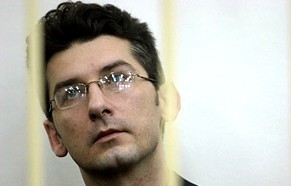
Krystian Bala
Murderer Karol Kot
Murderer · Poland · 1964
Karol Kot (December 18, 1946 - May 16, 1968) was a Polish serial killer. Kot wa…
2 victims
Karol Kot
Murderer · Poland · 1964
Karol Kot (December 18, 1946 - May 16, 1968) was a Polish serial killer. Kot wa…
2 victims
 Dr. Wouter Basson
Murderer · 1992
Wouter Basson (born July 6, 1950) was a South African cardiologist and the form…
230 victims
Dr. Wouter Basson
Murderer · 1992
Wouter Basson (born July 6, 1950) was a South African cardiologist and the form…
230 victims
 Ershad Sikder
Murderer · Bangladesh · 1990
Ershad Sikder was an influential political figure in the south-western city of…
30 victims
Ershad Sikder
Murderer · Bangladesh · 1990
Ershad Sikder was an influential political figure in the south-western city of…
30 victims
 Russell Ellwood
Murderer · USA · 1991
Russell Ellwood was a former taxi driver. Authorities suspected him of killing…
20 victims
Russell Ellwood
Murderer · USA · 1991
Russell Ellwood was a former taxi driver. Authorities suspected him of killing…
20 victims
 Charles Singleton
Murderer · USA · 1979
Defendant: Charles Singleton Race: BLACK Sex: MALE Birth date: 10/24/79 ADC num…
1 victim
Charles Singleton
Murderer · USA · 1979
Defendant: Charles Singleton Race: BLACK Sex: MALE Birth date: 10/24/79 ADC num…
1 victim
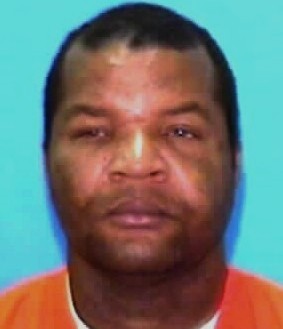 Harry Butler
Murderer · 1997
03/13/97 — Date of offense: Harry Butler was convicted and sentenced to death f…
1 victim
Harry Butler
Murderer · 1997
03/13/97 — Date of offense: Harry Butler was convicted and sentenced to death f…
1 victim
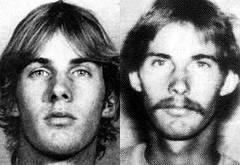 Patrick Purdy
Mass murderer · USA · 1989
January 17, 1989 — An anonymous person phoned the Stockton Police Department wa…
5 victims
Patrick Purdy
Mass murderer · USA · 1989
January 17, 1989 — An anonymous person phoned the Stockton Police Department wa…
5 victims
 Steve Nunn
Murderer · USA · 2009
Stephen Rob Nunn, known as Steve Nunn, was born November 4, 1952, in Glasgow, K…
1 victim
Steve Nunn
Murderer · USA · 2009
Stephen Rob Nunn, known as Steve Nunn, was born November 4, 1952, in Glasgow, K…
1 victim
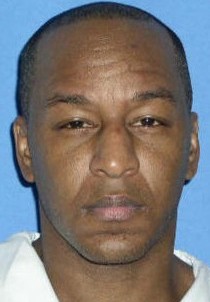 Kenneth Wayne Morris
Murderer · USA · 1991
Kenneth Wayne Morris was convicted of capital murder in connection with the mur…
1 victim
Kenneth Wayne Morris
Murderer · USA · 1991
Kenneth Wayne Morris was convicted of capital murder in connection with the mur…
1 victim
 Donald Gene Miller
Serial killer · USA · 1977
Donald Gene Miller was a graduate in criminal justice from Michigan State Unive…
4 victims
Donald Gene Miller
Serial killer · USA · 1977
Donald Gene Miller was a graduate in criminal justice from Michigan State Unive…
4 victims
- Gender
- male
- Country
- Poland
- Location
- Wroclaw, Poland
- Date of birth
- 1973
- Age at first offence
- 27
- Characteristics
- jealousy, torture
- Victim profile
- Dariusz Janiszewski, 35
- Method of murder
- St abbing with knife
- Date(s) of murder
- November 13, 2000
- Years active
- 2000
- Date of arrest
- 2005
- Status
-
Imprisoned
Sentenced to 25 years in prison on September 5, 2007; resentenced in December 2008
Case overview
Krystian Bala (born 1973) was a Polish writer and photographer. In 2007, he was sentenced to 25 years in prison for planning and orchestrating the murder of Dariusz Janiszewski. In December 2008, he was tried again and was found guilty, continuing to serve a twenty-five year sentence.
Timeline
- December 2000 — Fishermen found the body of Dariusz Janiszewski in the river Oder near Wrocław.
- 2003 — Krystian Bala published the novel Amok.
- September 5, 2007 — A court in Wrocław sentenced Bala to 25 years in prison.
- April 2006 — During questioning by prosecutors, Bala confessed to killing Janiszewski, then retracted the statement and suffered a fainting spell.
- 2005 — Bala was arrested after a tip-off.
- December 2008 — Bala had a new trial and was again found guilty.
Background
Krystian Bala was a writer of fiction and was also working on a second novel tentatively titled De Liryk. The case drew widespread media coverage in Poland, and readers’ interest in Amok increased sales of the novel.
Bala’s first novel, Amok (2003), featured a narrator named Chris who recounted a murder in which the victim’s hands were bound behind her back with a cord that was then looped to form a noose around her neck. Amok was described as a gory tale about a bunch of sadists and as a sex-driven potboiler. In the novel, the villain gets away with kidnapping, mutilating and murdering a young woman, and the narrator Chris is never caught and gets away with murder.
A judge in Wrocław found that the murder scene in Amok shared characteristics with Bala’s own experience, and the court treated the similarities as relevant to the case.
The offence
Dariusz Janiszewski was abducted and murdered. His body was discovered in the river Oder near Wrocław. When found, he was stripped almost naked and tortured, with his wrists bound behind his back and tied to a noose around his neck. Prosecutors and the court described the murder as a crime of passion connected to jealousy and the suspicion that Janiszewski was sleeping with Bala’s ex-wife.
Janiszewski had gone missing about four weeks before the body was found in December 2000. Police later described his body as showing signs of starvation and torture, and as being bound with a cord.
Investigation
For a period of time, Wrocław police failed to solve the murder. The investigation was later reopened based on an anonymous tip about contents of Bala’s novel.
The case remained closed for five years despite the publication of Amok. A detective who led the investigation and later received a tip-off advised that the thriller be read, and further evidence led to the case being reopened.
Investigators found physical clues linking the murder to Bala, including similarities between the fictional and real-life killings. Police also uncovered evidence that Bala had known the dead man, and that Bala had telephoned Janiszewski around the time of Janiszewski’s disappearance. Police said that Janiszewski’s mobile phone was sold on the internet within days of the murder, and that the mobile phone sale was traced to an account registered to Bala.
Calls were also traced: a phone card was used to place calls to Janiszewski on the morning of his disappearance, and calls were also placed to Bala’s girlfriend and Bala’s parents using the same card. The case also included information that Janiszewski and Bala’s wife had become friends and spent a night together in a Wrocław hotel in the fall of 2000.
A Polish television program aired a segment on the murder. After the broadcast, the programme’s website received messages from various places in the far east, including Singapore, South Korea and Japan, and prosecutors said Bala was visiting those countries at the time of the messages.
Arrest
Bala was arrested in 2005 after Commissar Jacek Wroblewski received a tip-off about the “perfect crime” and was advised to read the thriller. Bala was released after three days for insufficient evidence. After further evidence came to light, Bala was re-arrested.
Trial
Court and legal actors
At sentencing in 2007, Judge Lidia Hojenska delivered the verdict. Prosecutor Liliana Lukasiewicz spoke about the sentence in relation to the crime.
Findings and reasoning
The court heard expert and witness evidence. The judge said Bala could not be found directly guilty of carrying out the murder, but that the evidence sufficed to find him guilty of planning and orchestrating the crime.
The judge stated:
“The evidence gathered gives sufficient basis to say that Krystian Bala committed the crime of leading the killing of Dariusz Janiszewski,” she said.
The Associated Press report added that the judge said it was not clear who actually did the killing and who might have aided Bala in the crime, but that evidence pointed to Bala’s involvement in the events that led to Janiszewski’s disappearance.
Jealousy and control
The judge described Bala as “pathologically jealous” and inclined to sadism, stating:
“He was pathologically jealous of his wife,” Judge Hojenska said.
“He could not allow his estranged wife to have ties with another man.”
Another account stated:
“He was pathologically jealous of his wife,” the judge said. “He could not allow his estranged wife, whom he treated as property, to have ties with another man.”
The court also noted that a psychological assessment found Bala had “sadistic tendencies” and a need to demonstrate superiority. Experts said the narrator-killer in Amok bore psychological resemblance to Bala, while also noting differences between the fictional and actual crimes.
Bala’s position and explanations
Bala protested his innocence. He insisted that he derived details for Amok from press reports about the Janiszewski murder. He also had confessed during questioning by prosecutors in April 2006, then immediately retracted the statement and suffered a fainting spell, after which a doctor declared there was nothing physically wrong with him. The account also said Bala had not spoken to prosecutors since then.
Bala maintained he had never met or talked to Janiszewski. Despite that, police tracked down a phone card used to make calls from a public phone to Janiszewski’s office and then to his cell phone on the morning he disappeared, and investigators described further inconsistencies including Bala being unable to explain the internet auction sale traced to his account.
Defence and expected appeal
Bala’s lawyer said that Bala would appeal against the verdict and sentence. After sentencing, family and lawyer said they planned to appeal.
Sentencing
On September 5, 2007, Bala was sentenced to 25 years in prison for planning and directing the murder of Dariusz Janiszewski.
Bala remained in prison during proceedings. In December 2008, he had a new trial and was again found guilty, continuing to serve the twenty-five year sentence.
Outcome
Bala was found guilty in 2007 and again found guilty at the retrial in December 2008. He continued to serve a 25-year prison sentence.
Aftermath
Bala worked on a second novel tentatively titled De Liryk. Police reported evidence found on his computer of plans for killing a new victim to tie in with the second novel.
The case was also the subject of a 2008 investigative article by David Grann in The New Yorker, called “True Crime,” which was later published in The Devil and Sherlock Holmes: Tales of Murder, Madness, and Obsession (2010). In 2010, Grann’s article was optioned to be made into a movie by Focus Films.
Spotted an error, or have more information about this case?