
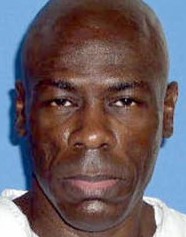
Kenneth Wayne Morris
Murderer Brian Kevin Rosenfeld
Murderer · USA · 1985
Brian Kevin Rosenfeld Brian Kevin Rosenfeld was sentenced to three concurrent l…
23 victims
Brian Kevin Rosenfeld
Murderer · USA · 1985
Brian Kevin Rosenfeld Brian Kevin Rosenfeld was sentenced to three concurrent l…
23 victims
 Russell Ellwood
Murderer · USA · 1991
Russell Ellwood was a former taxi driver. Authorities suspected him of killing…
20 victims
Russell Ellwood
Murderer · USA · 1991
Russell Ellwood was a former taxi driver. Authorities suspected him of killing…
20 victims
 Robert Martines Perez
Murderer · USA · 1994
Name: Robert Martines Perez · Other name used in proceedings: Robert Martinez P…
15 victims
Robert Martines Perez
Murderer · USA · 1994
Name: Robert Martines Perez · Other name used in proceedings: Robert Martinez P…
15 victims
 Billy Frank Vickers
Murderer · USA · 1993
Billy Frank Vickers Vickers was executed by lethal injection in Texas on Januar…
14 victims
Billy Frank Vickers
Murderer · USA · 1993
Billy Frank Vickers Vickers was executed by lethal injection in Texas on Januar…
14 victims
 Auto Shankar
Serial killer · India · 1988
Auto Shankar was an Indian serial killer known as “Auto Shankar”. · 27 April 19…
9 victims
Auto Shankar
Serial killer · India · 1988
Auto Shankar was an Indian serial killer known as “Auto Shankar”. · 27 April 19…
9 victims
 Óscar López Rodríguez
Murderer · Chile · 2012
Óscar López Rodríguez beheaded two people, María José Reyes Moore and Juan René…
2 victims
Óscar López Rodríguez
Murderer · Chile · 2012
Óscar López Rodríguez beheaded two people, María José Reyes Moore and Juan René…
2 victims
 Guy Allen
Murderer · USA · 2002
Guy Allen was born on June 15, 1963. He is a male with black hair and brown eye…
2 victims
Guy Allen
Murderer · USA · 2002
Guy Allen was born on June 15, 1963. He is a male with black hair and brown eye…
2 victims
 Matthew Beck
Mass murderer · USA · 1998
On March 6, 1998, Matthew Beck killed four of his supervisors at the Connecticu…
4 victims
Matthew Beck
Mass murderer · USA · 1998
On March 6, 1998, Matthew Beck killed four of his supervisors at the Connecticu…
4 victims
- Gender
- male
- Country
- USA
- Location
- Harris County, Texas, USA
- Date of birth
- March 4, 1971
- Age at first offence
- 20
- Characteristics
- burglary, robbery
- Victim profile
- James Moody Adams, 63
- Method of murder
- Shooting
- Date(s) of murder
- May 1, 1991
- Years active
- 1991
- Date of arrest
- May 13, 1991
- Status
-
Executed
Executed by lethal injection in Texas on March 4, 2009
Case details
Kenneth Wayne Morris was convicted of capital murder in connection with the murder of James Moody Adams. Morris was executed by lethal injection in Texas on March 4, 2009.
The facts of the crime involved a home invasion in which Morris and two accomplices kicked in the front door of the Houston home of James and Marcena Adams and looked for guns they thought would be there. After demanding guns, the intruders demanded money when Mr. Adams said there were no guns. Morris later stated that, when Mr. Adams looked at them even though they told him not to, Mr. Adams appeared to recognize one of the accomplices. The accomplice then told Morris, “Shoot him, shoot him.”
Mrs. Adams testified that she was hiding in the bedroom closet, heard her husband say “Oh, no!”, and then heard four shots. The bullets struck Adams in the face, neck and back. After Adams fell into the closet at his wife’s feet and she heard him die, Mrs. Adams heard either Morris or one of his accomplices say, “Let’s get out of here.” The intruders rushed out, leaving behind the trash bags they had brought to bundle up whatever property they stole.
A latent print on one of the trash bags recovered from the Adams’ residence belonged to an accomplice, who was arrested and implicated Morris and a third man in a statement.
Morris was arrested on May 13, 1991, in Brenham. Once in custody, he confessed orally and in writing. The written statement was introduced at trial. Police recovered the murder weapon, a .32 caliber revolver.
Timeline
- May 1, 1991 — Morris and two accomplices kicked in the front door of the Houston home of James and Marcena Adams while looking for guns; Mr. Adams confronted the invaders, demanded guns were refused, and the men demanded money; Mr. Adams was shot four times.
- May 9, 1991 — While Houston police were searching for Morris in connection with the capital murder of Mr. Adams, Morris committed another aggravated robbery, stealing a Mercedes Benz automobile at gunpoint from a teenager at a service station near Jersey Village, a Houston suburb.
- May 13, 1991 — Morris was arrested in Brenham.
- Aug. 20, 1991 — A Harris County grand jury indicted Morris for the capital murder of James Adams.
- Dec. 3, 1993 — A jury found Morris guilty of capital murder.
- Dec. 8, 1993 — The trial court sentenced Morris to death after a separate sentencing hearing.
- September 11, 1996 — The Texas Court of Criminal Appeals affirmed the conviction and sentence.
- January 8, 1997 — Morris’s request for rehearing was denied.
- June 16, 1997 — The U.S. Supreme Court denied Morris’s petition for writ of certiorari.
- March 26, 1998 — Morris filed an application for writ of habeas corpus in the trial court.
- January 12, 2000 — The Texas Court of Criminal Appeals adopted the trial court’s findings of fact and conclusions of law and denied relief.
- August 14, 2000 — Morris filed a federal habeas petition in a Houston U.S. district court.
- May 9, 2001 — The district court denied relief.
- April 18, 2002 — The Fifth U.S. Circuit Court of Appeals denied Morris permission to appeal.
- April 15, 2003 — The trial court scheduled Morris for execution.
- April 14, 2003 — The Texas Court of Criminal Appeals dismissed Morris’s successive state habeas application as an abuse of the writ.
- April 15, 2003 — The Fifth U.S. Circuit Court of Appeals granted Morris permission to file a successive federal habeas corpus petition and stayed execution.
- December 5, 2003 — The federal district court dismissed Morris’s petition without prejudice.
- July 21, 2004 — The Fifth Circuit Court granted permission to appeal the dismissal.
- June 16, 2005 — The Fifth Circuit Court heard oral arguments.
- February 2, 2007 — A magistrate determined Morris was not mentally retarded and recommended that the successive petition be denied.
- March 2, 2007 — The district judge adopted the magistrate’s recommendation and denied Morris’s petition.
- April 17, 2008 — The Fifth Circuit Court upheld that determination on appeal.
- October 6, 2008 — The U.S. Supreme Court denied Morris certiorari review.
- March 4, 2009 — Morris was executed by lethal injection in Texas.
The offence
In the early morning hours of May 1, 1991, Morris and two accomplices kicked in the front door of the Houston home of James and Marcena Adams. They began looking for guns that they thought would be there. The noise awakened the Adams, and Mr. Adams got up and left the bedroom to investigate.
Mr. Adams confronted the invaders who demanded guns. Mr. Adams told them there were no guns, so one of the accomplices demanded money. Adams gave the men several hundred dollars bills from his wallet.
Morris later stated that at that point, Mr. Adams looked at them even though they had told him not to, and when Mr. Adams saw one of the accomplices, he appeared to recognize him; the accomplice then told Morris, “Shoot him, shoot him.”
Mrs. Adams testified that while hiding in the bedroom closet, she heard her husband say simply, “Oh, no!” and then heard four shots. He fell into the closet at his wife’s feet, and she heard him die. She then heard either Morris or one of his accomplices say to the other, “Let’s get out of here.”
After the shootings, they rushed out, leaving behind the trash bags they had brought to bundle up whatever property they stole. Police subsequently found Montez’s fingerprint on a trash bag in the home and recovered a latent print that matched Christopher Montez.
Morris contended that the gun accidentally discharged when one of his accomplices bumped him.
Investigation and arrest
A latent print on one of the trash bags recovered from the Adams’ residence belonged to an accomplice, who was arrested as a result. The accomplice gave a statement implicating Morris and a third man.
Once in custody, Morris confessed orally and in writing.
Trial
Morris was indicted by a Harris County grand jury on Aug. 20, 1991, for the capital murder of James Adams.
On Dec. 3, 1993, a jury found Morris guilty of capital murder. On Dec. 8, 1993, the trial court sentenced Morris to death after a separate sentencing hearing.
The direct appeal decision included review of a Batson challenge involving the prospective juror Robert Dreannan. The trial court had denied the Batson challenge, finding the prosecutor’s reasons to be racially neutral. The appeals court stated that its decision was not clearly erroneous and overruled point of error one. It also overruled point of error two, regarding the trial judge’s consideration of the absence of purposeful discrimination by the prosecutor in a separate criminal trial.
On direct appeal, the court addressed challenges related to voir dire and parole ineligibility, mitigating evidence, sufficiency of evidence regarding mitigation, and constitutional arguments about the special issues used in Texas death penalty sentencing.
The direct appeal decision affirmed the conviction and sentence. It cited Morris v. State, 940 S.W.2d 610, and noted that the offense was committed in May 1991 and involved capital murder under Texas Penal Code 19.03(a)(2).
During trial, Mrs. Adams testified about the locked bedroom and the sequence of events as she heard her husband say “Oh, no!” and then heard four gunshots, then heard him die and heard the intruders say “Let’s get out of here.”
Sentencing
After the sentencing hearing, the trial court assessed Morris’s punishment at death in accordance with the jury’s answers to the special issues submitted.
The trial court had sentenced Morris to death on Dec. 8, 1993.
The evidence presented at trial included testimony regarding Morris’s extensive criminal activity prior to Mr. Adams’s murder, including an aggravated robbery car jacking that occurred eight days after the Adams murder and numerous post-arrest infractions.
Evidence of Morris’s prior criminal record was presented to demonstrate an incapacity to conform his conduct to the requirements of law, despite second chances and opportunities to reform, and a tendency to progress to more serious crimes of violence.
Appeals and post-conviction proceedings
Morris appealed to the Texas Court of Criminal Appeals, which affirmed the conviction and sentence on September 11, 1996. Morris sought a rehearing, which was denied January 8, 1997. Morris then filed a petition for writ of certiorari, which was denied on June 16, 1997.
Morris filed an application for writ of habeas corpus in the trial court on March 26, 1998. The trial court filed findings of fact and conclusions of law recommending that Morris be denied relief. The Texas Court of Criminal Appeals adopted those findings and conclusions and denied relief on January 12, 2000.
Morris filed a federal habeas petition in a Houston U.S. district court on August 14, 2000. The district court denied relief on May 9, 2001. Morris sought permission to appeal from the Fifth U.S. Circuit Court of Appeals, but the appellate court denied permission on April 18, 2002.
The trial court scheduled Morris for execution on April 15, 2003. Five days before that scheduled execution date, Morris filed a successive state habeas application claiming for the first time that he was mentally retarded and raising a constitutional challenge to his death sentence under Atkins v. Virginia.
On April 14, 2003, the Texas Court of Criminal Appeals found Morris had failed to satisfy requirements for being granted permission to file a successive state habeas application and dismissed the application as an abuse of the writ. On April 15, 2003, Morris received permission from the Fifth U.S. Circuit Court of Appeals to file a successive federal habeas corpus petition and was granted a stay of execution.
Morris returned to federal district court and presented new and different evidence to support his mental retardation claim. On December 5, 2003, the federal district court dismissed Morris’s petition without prejudice so that state courts could address his new evidence. Morris requested permission to appeal this ruling, and on July 21, 2004, the Fifth Circuit Court granted the request.
After oral arguments on June 16, 2005, the Fifth Circuit vacated the district court’s decision and remanded for an evidentiary hearing regarding Morris’s mental retardation claim. On remand, the district court held a four-day evidentiary hearing.
On February 2, 2007, the magistrate determined Morris was not mentally retarded and recommended that Morris’s successive petition be denied. On March 2, 2007, the district judge adopted the magistrate’s recommendation and denied Morris’s petition. The Fifth Circuit Court upheld that determination on April 17, 2008.
Morris filed a petition for writ of certiorari in the U.S. Supreme Court, but the Court denied certiorari review on October 6, 2008.
A “Media Advisory” stated Morris was scheduled to be executed after 6 p.m. on Wednesday, March 4, 2009, for the murder of James Moody Adams.
Other details
Victims and associated people
James Moody Adams was the victim. His wife was Marcena Adams. Marcena Adams was hiding in a bedroom closet during the episode.
The narrative included James Adams’s sons, Jimmy Adams and Kent Adams, who made statements in the wake of the execution.
The execution was also attended by a grandson, and by two women including Donna Lounton, Morris’s wife, and another woman described as British.
Accomplices and related cases
The accomplices included Orlena Ayers and Christopher Montez.
Orlena Ayers was sentenced to life in prison for his role. Christopher Montez received an 85-year sentence.
Christopher Montez was arrested after a fingerprint was recovered from a trash bag and was identified as an accomplice. Montez gave a confession that implicated Morris and Ayers.
Prior criminal history presented
Morris had prior criminal history beginning with a misdemeanor theft conviction on March 8, 1989, when he was eighteen years of age.
He committed a burglary on February 15, 1990, and was convicted on a plea of guilty on July 3, 1990. He was sent to a boot camp program for youthful offenders, and after his return the sentence was suspended and he was granted ten-years probation. Morris failed to report to his probation officer on three occasions. On November 28, 1990, Morris telephoned his probation officer and said there was no point in reporting because he was going to be arrested anyway.
On January 24, 1991, just over six months into his punishment for burglary of a habitation charge, Morris was convicted for misdemeanor possession of marijuana and served thirty days in jail.
A motion to revoke Morris’s probation was filed in connection with the marijuana charge and other probation violations including failure to report, changing his residence without notifying his probation officer, not paying restitution and supervisory fees and court costs, and not participating in community service. The judge dismissed the motion to revoke.
After that dismissal, Morris was supposed to report to his new probation officer twice a month but never did. He failed to wear an electronic monitoring bracelet ordered by the court and failed to enroll in community service. After his third consecutive failure to report, his new probation officer submitted a new motion to revoke on March 21, 1991. His probation was revoked on May 30, 1991, and he received a sentence of ten years in prison.
Post-arrest infractions and alleged future dangerousness
After incarceration, Morris committed disciplinary violations including assaulting a jailer, assaulting another inmate, creating a disturbance by screaming and pounding in the middle of the night, and possessing a razor blade removed from a disposable razor.
The State presented testimony regarding Morris’s aggravated robbery car jacking that occurred eight days after the Adams murder and numerous post-arrest infractions.
Car jacking and aftermath
On May 9, 1991, Morris committed another aggravated robbery stealing a Mercedes Benz automobile at gunpoint from a teenager at a service station near Jersey Village, a Houston suburb. The following day, the car was found abandoned and had been stripped.
Last statement and execution details
A media advisory and subsequent reporting described Morris’s last meal request and last statements.
The execution involved a request for cake with lemon icing for his last meal. Former state District Judge Caprice Cosper said the setting of the execution on Morris’s birthday was a coincidence.
Morris asked, “Can they hear me?” turning toward the room occupied by his friends. He said, “I love you.” He then turned toward Adams’s relatives and said, “I want to say that I’m sorry for the pain I might have caused you and your family. I carry nothing but love in my heart. I pray that one day you can forgive me.” He addressed Warden Charles O’Reilly, “I’m ready to go home.” He then turned again toward his friends and said, “Bye, Baby. I’ll always be with you.”
The lethal drugs were administered at 6:08 p.m. Morris was declared dead eight minutes later.
Donna Lounton, Morris’s wife, said as the drugs were administered, “I’ll cry when he’s in my arms, not now,” and “I’ve never been a widow so quick in my life.”
In a post-execution news conference, Jimmy Adams said: “We lost a wonderful man. James Moody Adams was our dad. He was a good, humble, giving, kind man,” he said. “… It was sad to see the loss of that other family’s experiencing today. I think we forgave him a long time ago. But the consequences still had to be carried out. It was just.”
Kent Adams said his family witnessed the execution out of a sense of duty: “We all wanted to be here to honor our parents,” he said.
A separate report described Morris apologizing to family members of the victim who witnessed the execution, including the statement: “I’m sorry for all the pain I might have caused you and your family. I pray one day y'all can forgive me.” The report also included: “I'm ready to go home.” and “I'll always be with you.” and later, “I really am sorry.”

Spotted an error, or have more information about this case?