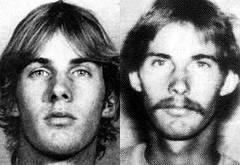
Patrick Purdy
Mass murderer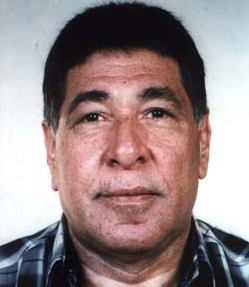 Gameel Al-Batouti
Mass murderer · USA · 1999
Gameel Al-Batouti (also rendered “Gamil ElBatouty” or “El Batouty” in U.S. offi…
216 victims
Gameel Al-Batouti
Mass murderer · USA · 1999
Gameel Al-Batouti (also rendered “Gamil ElBatouty” or “El Batouty” in U.S. offi…
216 victims
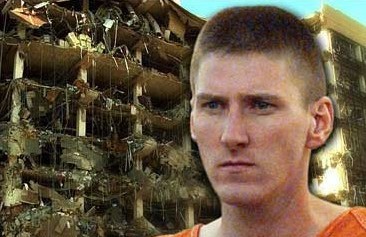 Timothy McVeigh
Mass murderer · USA · 1995
Timothy James McVeigh (April 23, 1968 – June 11, 2001) was a United States Army…
168 victims
Timothy McVeigh
Mass murderer · USA · 1995
Timothy James McVeigh (April 23, 1968 – June 11, 2001) was a United States Army…
168 victims
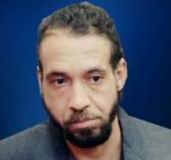 Julio Gonzalez
Mass murderer · USA · 1990
Julio Gonzalez was sentenced to 174 twenty-five-year sentences (a total of 4,35…
87 victims
Julio Gonzalez
Mass murderer · USA · 1990
Julio Gonzalez was sentenced to 174 twenty-five-year sentences (a total of 4,35…
87 victims
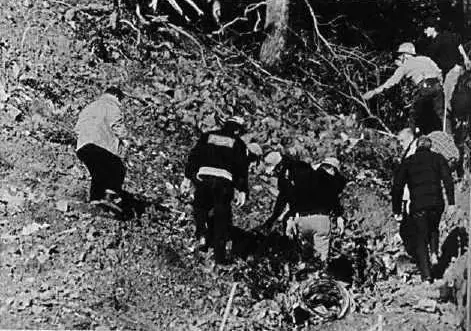 David Burke
Mass murderer · USA · 1987
David Augustus Burke (May 18, 1952–December 7, 1987) was an employee of USAir,…
43 victims
David Burke
Mass murderer · USA · 1987
David Augustus Burke (May 18, 1952–December 7, 1987) was an employee of USAir,…
43 victims
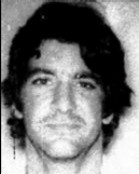 George Jo Hennard
Mass murderer · USA · 1991
George Jo Hennard carried out a mass killing at a Luby’s Cafeteria in Killeen,…
23 victims
George Jo Hennard
Mass murderer · USA · 1991
George Jo Hennard carried out a mass killing at a Luby’s Cafeteria in Killeen,…
23 victims
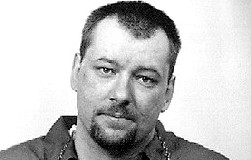 Dennis Roark
Mass murderer · USA · 1989
Dennis Roark Roark returned to the home after a night of drinking at 5:00 a.m.…
4 victims
Dennis Roark
Mass murderer · USA · 1989
Dennis Roark Roark returned to the home after a night of drinking at 5:00 a.m.…
4 victims
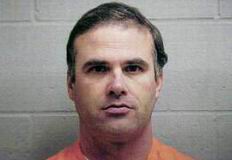 Cary Stayner
Murderer · USA · 1999
Cary A. Stayner (born August 13, 1961) was an American serial killer. Stayner w…
4 victims
Cary Stayner
Murderer · USA · 1999
Cary A. Stayner (born August 13, 1961) was an American serial killer. Stayner w…
4 victims
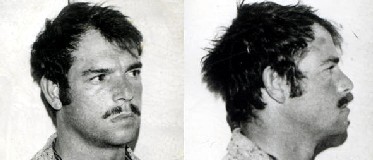 Manuel Delgado Villegas
Serial killer · Spain / Italy / France · 1964
Manuel Delgado Villegas, also known as El Arropiero, was born in Seville, Spain…
48 victims
Manuel Delgado Villegas
Serial killer · Spain / Italy / France · 1964
Manuel Delgado Villegas, also known as El Arropiero, was born in Seville, Spain…
48 victims
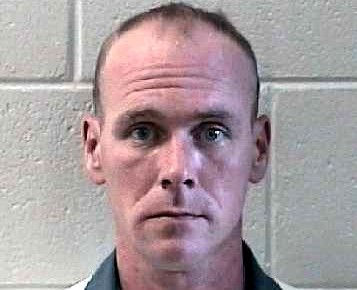 Joseph Martin Barnes
Murderer · USA · 1992
February 12, 1992 — Brown bought a shotgun and Barnes bought a Davis Industries…
1 victim
Joseph Martin Barnes
Murderer · USA · 1992
February 12, 1992 — Brown bought a shotgun and Barnes bought a Davis Industries…
1 victim
 David Funches
Murderer · USA · 1974
David Livingston Funchess was the petitioner and appellant in federal habeas co…
2 victims
David Funches
Murderer · USA · 1974
David Livingston Funchess was the petitioner and appellant in federal habeas co…
2 victims
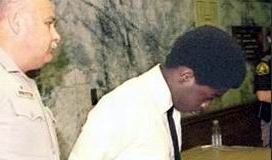 Willard Jimerson
Homicide · USA · 1994
Willard Jimerson was 13 years old when he was charged with the first degree mur…
1 victim
Willard Jimerson
Homicide · USA · 1994
Willard Jimerson was 13 years old when he was charged with the first degree mur…
1 victim
- Gender
- male
- Country
- USA
- Location
- Stockton, California, USA
- Date of birth
- November 10, 1964
- Age at first offence
- 25
- Characteristics
- school shooting
- Victim profile
- Schoolchildren aged between 6 and 9 (Cambodian immigrants)
- Method of murder
- Shooting (Chinese-made Type 56 semi-automatic rifle)
- Date(s) of murder
- January 17, 1989
- Years active
- 1989
- Date of arrest
- —
- Status
-
Died in custody
Committed suicide by shooting himself in the head the same day
Timeline
- January 17, 1989 — An anonymous person phoned the Stockton Police Department warning of a death threat against Cleveland Elementary School; later that day Patrick Purdy opened fire on the school playground and killed five children and wounded twenty-nine others and a teacher; Purdy took his own life by shooting himself in the head.
Background
Patrick Purdy was the gunman in the Stockton school massacre at Cleveland Elementary School in Stockton, California, United States. He was a disturbed drifter and a former Stockton resident.
Patrick Edward Purdy was born on November 10, 1964 in Tacoma, Washington. His father, Patrick Benjamin Purdy, was a staff sergeant in the Army and was stationed at Fort Lewis at the time of Purdy’s birth. His mother was Kathleen Toscano. When Purdy was two years old, his mother divorced her husband after he had threatened her with a weapon, and Kathleen moved with her son to South Lake Tahoe and later to the Sacramento area. Purdy attended Cleveland Elementary School from kindergarten through second grade. Purdy’s mother remarried and was again divorced five years later.
Albert Gulart, Purdy’s stepfather, said Purdy was an overly quiet child who could not cope with things. According to Purdy’s aunt, he was an alcoholic during his childhood. When Purdy was thirteen, he struck his mother in the face and was permanently thrown out of her house. Purdy began living on the streets of San Francisco for a while before being placed in foster care. Purdy was adopted shortly after and settled with his foster family in the West Hollywood area, where he became a drug addict and went to high school only sporadically.
Purdy’s father died in a traffic accident, and the family filed a wrongful-death suit in San Joaquin Superior Court against the driver of the car, asking for $600,000 in damages; the suit was later dismissed. Purdy also accused his mother of taking money his father had left him, using it to buy a car and making a trip to New York, an incident that deepened the animosities between them.
A psychiatric assessment found Purdy to suffer from mild mental retardation, and to be a danger to himself and others. During later events, police stated he had problems with alcohol and drug abuse and had developed a deep hatred for everybody, with hatred especially directed against Vietnamese and other Asian immigrants.
According to friends, who described Purdy as nice and never violent towards anyone, Purdy was suicidal at times and upset and mad about the fact that he failed to “make it on his own”. Steve Sloan, a night-shift supervisor at Numeri Tech, described Purdy as “a real ball of frustration” who “was angry about everything”. Another one of Purdy’s former co-workers noted: “He was always miserable. I've never seen a guy that didn't want to smile as much as he didn't.”
In a notebook found in a hotel where he lived in early 1988, Purdy wrote about himself in a self-loathing perspective: “I'm so dumb, I'm dumber than a sixth-grader. My mother and father were dumb.”
The offence
On January 17, 1989, an anonymous person phoned the Stockton Police Department and warned of a death threat against Cleveland Elementary School. Later that day, Patrick Purdy opened fire on the school playground with a Chinese-made Type 56 semi-automatic rifle.
Purdy began his attack by setting fire to his car, which he had parked behind the school. He then moved to the school playground and began firing with a Chinese-made Type 56 semi-automatic rifle from behind a portable building. Purdy fired more than 100 rounds in three minutes, killing five children and wounding thirty others including one teacher. Later accounts described the shooting as lasting about two minutes, with at least 106 rounds fired.
The fatalities were Raphanar Or, Ram Chun, Sokhim An, Oeun Lim and Thuy Tran. Thuy Tran was from Vietnam, and the others were Cambodian. Four of the dead children were Cambodian and one was Vietnamese. In some accounts, the children were described as Southeast Asian refugees and as Cambodian and Vietnamese immigrants; most were described as being born in Thailand in refugee camps as their parents fled the genocidal regime of Cambodian ruler Pol Pot and the Khmer Rouge. Some accounts stated that the dead and wounded included children of Cambodian, Vietnamese, Chinese and Hispanic origin.
Purdy had carved the words “freedom”, “victory”, and “Hezbollah” on his weapon, and “PLO”, “Libya”, and “death to the Great Satin” (sic) on his flak jacket. He also had carved “Freedom”, “Victory” and “Hezbollah” on the stock of his bayonetted rifle.
After killing the children and wounding others, Purdy ended the attack by taking his own life by shooting himself in the head with a pistol.
Investigation
Deputy Police Chief Ralph Tribble would only say there were “multiple injuries . . . that included some adults and children . . . and we have some fatalities there.”
Capt. Dennis Perry of the Stockton Police Department said:
“Why he did this we may never know,” said Capt. Dennis Perry of the Stockton Police Department, who is in charge of the investigation. “He obviously developed a military hangup.”
A spokesman for the San Joaquin County Office of Emergency Services, Bruce Fernandes, said: five pupils had been killed and 30 people were wounded, most of them pupils.
Detectives and police also described that Purdy stuffed his station wagon with fireworks and set the car ablaze moments before he walked onto the campus and opened fire, which detectives later said was a diversion attempt.
Arson investigator Marty Galindo was at a nearby car wash when he got a radio call of a vehicle fire near Cleveland Elementary School. Galindo said:
“I can still smell the gunpowder. That's what I remember most -- the gunpowder. There were bullet casings everywhere. And I remember walking by a little girl's shoe, it couldn't have been more than a few inches long, that was sitting there on the ground. There was flesh on it. It had to have been cut off. I walked around the corner of a building and saw all those kids down. It was surreal. This was supposed to be where kids are playing games, happy,” Galindo said.
At least one police account stated that police had “no idea” of a motive. Lucian Neely, a Deputy Police Chief in Stockton, said:
“no idea” of a motive, said Lucian Neely, a Deputy Police Chief in this agricultural city 65 miles east of San Francisco.
Police also compiled a portrait of Purdy as a troubled loner with alcohol and drug problems and an extensive criminal background. Investigators disputed suggestions that Purdy nursed a special dislike for Asians, saying he disliked everybody, particularly authority figures like police officers.
Arrest
Purdy had a long criminal history, beginning during early adolescence, and had multiple arrests prior to the school shooting. The record included these arrests and related events:
- An arrest in 1980 related to supporting his drug addiction through prostitution.
- An arrest in 1982 for possession of marijuana and drug dealing.
- An arrest in 1983 for possession of an illegal weapon and receipt of stolen property.
- An arrest in October 1984 for being an accomplice in an armed robbery; he spent 32 days in the Yolo County Jail.
- In 1986, Purdy’s mother called police when he vandalized her car after she refused to give him money for drugs.
- In April 1987, he was arrested for firing a semi-automatic pistol at trees in the Eldorado National Forest while carrying a book about the white supremacist group Aryan Nations and telling a County Sherriff that it was his “duty to help the suppressed and overthrow the suppressor.”
- Later in jail after the April 1987 arrest, he tried to commit suicide twice: once by hanging himself with a rope made out of strips of his shirt, and a second time by cutting his wrists with his fingernails.
- A subsequent psychiatric assessment found him to suffer from mild mental retardation, and to be a danger to himself and others.
Additional earlier arrest detail included a timeline of arrests in the Los Angeles area and other locations, including an arrest in Los Angeles on charges of soliciting a sex act from a police officer, an arrest in Los Angeles County for possession of hashish or marijuana, and arrests in Beverly Hills and by Los Angeles County Sheriff's deputies for possessing a dangerous weapon and receiving stolen property; in one account, the stolen property charge was dismissed for lack of evidence. In one account, on Oct. 1, 1984 he was arrested in Woodland, California on charges of attempted robbery and criminal conspiracy and pleaded guilty to reduced charges of being an accessory to a felony and served 30 days in jail. In another account, in April 1987 he was apprehended in El Dorado County on the Nevada border and charged with firing a 9-millimeter pistol in the El Dorado National Forest and with resisting arrest, pleaded guilty to both charges, and spent 45 days in the county jail.
Trial
There was no trial outcome described. The event ended with Purdy’s suicide.
Sentencing
There was no sentencing described, because Purdy died by suicide after the shooting.
Appeals
No appeals were described.
Outcome
Patrick Purdy shot and killed five schoolchildren and wounded multiple others and a teacher during the Cleveland Elementary School attack, then committed suicide by shooting himself in the head.
The anonymous death threat warning and the subsequent investigation included accounts that Purdy was identified as Patrick Edward Purdy, sometimes using the alias Patrick E. Purdy or Patrick West in various reports and purchases.
Aftermath
The multiple murders at Stockton received national news coverage and spurred calls for regulation of semi-automatic weapons. In California, measures were taken to define and then ban assault weapons, resulting in the Roberti-Roos Assault Weapons Act. On the Federal level, Congress struggled with how to ban weapons like Purdy’s military-style semi-automatic rifle without also including semi-automatic hunting rifles. Congress defined “assault weapons” as semi-automatic weapons with certain military-style secondary features such as flash suppressors, bayonet lugs, and pistol grips. These features were banned in the Federal assault weapons ban enacted in 1994 and expired in 2004. President George H. W. Bush signed an executive order banning importation of assault weapons in 1989. President Bill Clinton signed another executive order in 1994 that banned importation of most firearms and ammunition from China. Some accounts stated that neither California’s Roberti-Roos Assault Weapons Act nor the Federal assault weapons ban would have prevented Purdy from legally purchasing the weapon he used.
After the attack, overnight workmen patched the “60 or so bullet holes” in the south wall of the brown stucco building and scrubbed out bloodstains. Only about a quarter of the 970 pupils showed up, and those who did were greeted by psychologists and nurses trained in treating grief. Interpreters were brought in to help communicate with parents and children who spoke little English. The school superintendent Mary Gonazales Mend said:
“The youngsters need to be in a place where they feel safe,” said the school superintendent, Mary Gonazales Mend. She called the incident “everybody's worst nightmare.”
The Cleveland School principal, Pat Busher, went to an apartment complex where many Cambodians lived to reassure parents that the school was safe. Busher said:
“We need the children back,” she said.
At least one account described the district ordering all schools opened as usual on the next day after the rampage, and another described children returning to class with help from psychologists the day after the shooting. An emergency center was also described at a Lutheran church near the school as police, ambulances, and parents arrived.
A survivor described the shooting as including panic, with people running in every direction.
Other details
A number of details about Purdy’s background and behavior appeared in reports prior to the shooting:
- Police had described Purdy as “a loner” and “an alcoholic” in connection with his childhood and adolescence.
- In the fall of 1987, Purdy began attending welding classes at San Joaquin Delta College and complained about the high number of Southeast Asian students there.
- In early 1988 he worked at Numeri Tech in Stockton and from July to October as a boilermaker in Portland, Oregon, living in Sandy, where he had relatives.
- He rented a room at the El Rancho Motel in Stockton on December 26.
- After the shooting, the room was found decorated with numerous toy soldiers.
Reports described a weapon and ammunition capability:
- The AK-47 was described as a Russian design, with Chinese versions available in gun stores for about $300, and as capable of firing about 600 rounds per minute on full automatic.
- Lieutenant Fred Nixon of the Los Angeles police described the AK-47 as “military assault rifle. You use it for one purpose and one purpose only - to kill a human being.”
A survivor account described hearing and seeing the shooting from a window:
“He was not talking, he was not yelling, he was very straight-faced,'' she said of the gunman, whom she described as about 5 feet 10, with short blonde hair. ''It did not look like he was really angry; it was just matter-of-factly.''
Additional quoted witness statements included:
- Cheryl Torres said: “It was very frightening.”
- Ramon Billedo III said:
- Ricardo Rivera said:
- Roberto Costa said:
- Brian Griggs said:
- One mother, Deborah Copeland, said:
“He didn't see a thing,” she said. “He was playing marbles.”
“I tried to get a pulse, couldn't get a pulse,” he said referring to a pupil. “I was hoping an ambulance would show up. It seemed to take forever.”
“They were shooting at my classroom and at (Rivera's) classroom at reading time. The bullets were hitting the walls. Everybody got scared.”
“Some kids were outside and some man came over here shooting like crazy. A few kids got shot.”
“I just saw him fall down,” Ramon said. “His head hit the ground. The teacher grabbed him and dragged him inside the other classroom.”
Some reports included an additional uncertainty about Purdy’s age in records, stating he gave his age as 26 on his driver’s license but as 24 and 27 in other official records.
Toxicology reports later indicated Purdy had only “a trace of nicotine and caffeine.”
Weapon and clothing details included:
- Purdy was described as dressed in camouflage clothing and wearing a flak jacket.
- A quote from a person describing Purdy during the shooting was included:
“He was not talking, he was not yelling, he was very straight-faced, it did not look like he was really angry.....it was as if he was concentrating on what he was doing.”
A note taped to a door in Oregon was described as begging that no one disturb the wife and stating:
“Pat Purdy did not live here,” it said, “he only stayed with us for two weeks.”
Funeral coverage described five people attending a funeral in Lodi for Purdy, and included a quoted statement from his grandmother, Julia Chumbley:
“This is not just the loss of a grandson," Julia Chumbley, his 63-year-old grandmother said Friday afternoon, hours after the private, family service at a funeral home had ended. "There's more to it than that."

Spotted an error, or have more information about this case?