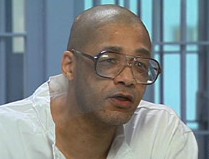
Charles Singleton
Murderer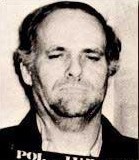 Ervil LeBaron
Murderer · USA · 1972
Ervil Morrell LeBaron (1925 to August 16, 1981) was the leader of a polygamous…
35 victims
Ervil LeBaron
Murderer · USA · 1972
Ervil Morrell LeBaron (1925 to August 16, 1981) was the leader of a polygamous…
35 victims
 Brian Kevin Rosenfeld
Murderer · USA · 1985
Brian Kevin Rosenfeld Brian Kevin Rosenfeld was sentenced to three concurrent l…
23 victims
Brian Kevin Rosenfeld
Murderer · USA · 1985
Brian Kevin Rosenfeld Brian Kevin Rosenfeld was sentenced to three concurrent l…
23 victims
 Marvin Gray
Murderer · USA · 1975
Marvin Gray was convicted killer who claimed responsibility for 23 slayings and…
23 victims
Marvin Gray
Murderer · USA · 1975
Marvin Gray was convicted killer who claimed responsibility for 23 slayings and…
23 victims
 Yahweh ben Yahweh
Murderer · USA · 1980
Yahweh ben Yahweh was born and legally named Hulon Mitchell Jr. (October 27, 19…
23 victims
Yahweh ben Yahweh
Murderer · USA · 1980
Yahweh ben Yahweh was born and legally named Hulon Mitchell Jr. (October 27, 19…
23 victims
 Janjira Smith
Murderer · USA · 2006
Janjira Jeffrey Smith poisoned her ex-boyfriend’s Jägermeister with insecticide…
1 victim
Janjira Smith
Murderer · USA · 2006
Janjira Jeffrey Smith poisoned her ex-boyfriend’s Jägermeister with insecticide…
1 victim
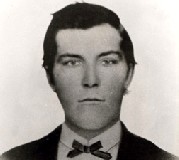 John Wesley Hardin
Murderer · USA · 1867
John Wesley (Wes) Hardin (1853-1895) was an American outlaw, gunfighter, and co…
42 victims
John Wesley Hardin
Murderer · USA · 1867
John Wesley (Wes) Hardin (1853-1895) was an American outlaw, gunfighter, and co…
42 victims
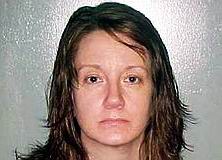 Cheryl McCafferty
Murderer · USA · 2007
Cheryl McCafferty was convicted in the fatal shooting of her husband, Robert Mc…
1 victim
Cheryl McCafferty
Murderer · USA · 2007
Cheryl McCafferty was convicted in the fatal shooting of her husband, Robert Mc…
1 victim
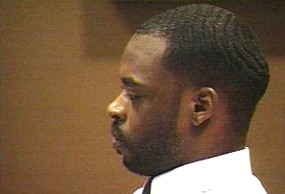 Timothy McKinney
Murderer · USA · 1997
Timothy McKinney was the defendant, convicted in Tennessee. · Don Williams was…
1 victim
Timothy McKinney
Murderer · USA · 1997
Timothy McKinney was the defendant, convicted in Tennessee. · Don Williams was…
1 victim
 Jamie Davis
Murderer · USA · 2010
Jamie Carole Davis was a Lakeland woman who was accused of fatally shooting ano…
1 victim
Jamie Davis
Murderer · USA · 2010
Jamie Carole Davis was a Lakeland woman who was accused of fatally shooting ano…
1 victim
- Gender
- male
- Country
- USA
- Location
- Ashley County, Arkansas, USA
- Date of birth
- March 29, 1959
- Age at first offence
- 20
- Characteristics
- mentally ill, robbery
- Victim profile
- Mary Lou York, 19 (grocer)
- Method of murder
- St abbing with knife
- Date(s) of murder
- June 1, 1979
- Years active
- 1979
- Date of arrest
- —
- Status
-
Executed
Executed by lethal injection in Arkansas on January 6, 2004
Case information
Defendant: Charles Singleton Race: BLACK Sex: MALE Birth date: 10/24/79 ADC number: SK874 County of conviction: Ashley Sentencing date: 10/24/79
Victim: Mary Lou York, age 19, owner of York’s Grocery Store Place: York’s Grocery Store, Hamburg
Other named witnesses and individuals:
- Patti Franklin
- Lenora Howard
- Police Officer Strother
- Dr. J. D. Rankin
- Dinah Tyler (Arkansas Department of Correction spokeswoman)
- John Frank Gibson
- Jeff Rosenzweig (defense attorney)
- Ronald Tabak
- Jason Friedman (reporter for KARK-TV Channel 4)
- Matt DeCample
- State Sen. Jimmy Jeffress
- Mary York Donaldson
- Texas? (no name provided for the Texas execution subject besides “Ynobe Matthews”)
- Karl Roberts (another condemned prisoner scheduled for execution the same night)
- George Howard Jr. (U.S. District Judge)
- Paul K. Roberts, J. (judge named in case citation text)
- Adkisson, C. J. (named in decision text)
- Hickman, J. (named in decision text)
- Dudley, J. (named in decision text)
- Eisele, Chief Judge (named in decision text)
- Arnold, C.J. (named in decision text)
- Thornton, J. (named in decision text)
Background
Charles Laverne Singleton (March 29, 1959 – January 6, 2004) was executed by the State of Arkansas for the June 1, 1979 murder of Hamburg store owner Mary Lou York, age 19. He had been on death row longer than any other Arkansas inmate.
Singleton was later diagnosed as schizophrenic and had a history of severe mental illness. His condition had worsened over the years, and prison doctors treated him with antipsychotic drugs.
The offence
Mary Lou York was murdered in York’s Grocery Store at Hamburg on June 1, 1979. She died from loss of blood as a result of two stab wounds in her neck.
Singleton was identified as the killer by witnesses including Patti Franklin and Lenora Howard. Police Officer Strother was the first to arrive at the scene and found Mary Lou lying in a pool of blood in the rear of the store. The evidence described a robbery involving an empty cash register with about $2.00 in change.
Investigation
Patti Franklin saw Charles Singleton enter York’s Grocery at approximately 7:30 p.m. on the day of the crime. Shortly after Singleton entered, Patti heard Mrs. York scream, “Patti go get help, Charles Singleton is killing me.” Patti ran for help.
Lenora Howard observed Singleton exit the store and shortly thereafter witnessed Mary Lou come to the front door “crying and had blood on her.”
Police Officer Strother testified that Mary Lou told him that Singleton “came in the store, said this is a robbery, grabbed her around the neck, and went to stabbing her.” Mary Lou also told Officer Strother that “there’s no way I can be all right, you know I’m not going to make it. I’ve lost too much blood.”
Mary Lou was taken to the hospital in an ambulance and attended by her personal physician, Dr. J. D. Rankin. En route to the hospital, she told Dr. Rankin several times that she was dying and that Singleton did it. Mary Lou died before reaching the emergency room of the hospital.
During examination of the premises, Officer Strother found a money bag on the floor near the cash register, which was empty except for about $2.00 in change, and the cash register had only a small amount of change.
Trial
After a trial by jury, Singleton was sentenced to death by electrocution for capital felony murder and to life imprisonment for aggravated robbery. The conviction and death sentence for capital felony murder were affirmed by the Arkansas Supreme Court, but the aggravated robbery conviction and sentence were set aside.
The legal dispute included whether an invalidating aggravating circumstance required the death sentence to be set aside and double jeopardy issues preventing reimposition of the death penalty phase.
Sentencing
On October 30, 1979, after a trial by jury, Charles L. Singleton was sentenced to death by electrocution for capital felony murder, and life imprisonment for aggravated robbery.
Arkansas State prisoner sought federal habeas corpus relief. A District Court order prohibited the respondent from retrying the death penalty phase and required reduction of the sentence to life without parole.
Later proceedings addressed Singleton’s competency to be executed and whether the state could administer antipsychotic medication involuntarily.
Appeals
Singleton v. State, 623 S.W.2d 180 (Ark. 1981) (Direct Appeal) The Supreme Court held that:
- defendant failed to show the trial court committed reversible error by failing to excuse for cause three veniremen, where he exercised peremptory challenge on each of the three, but made no showing of record that he would have struck any other juror who actually sat on the trial of the case had he had a peremptory challenge remaining; and
- murder victim's statements relating to defendant's cutting her throat and her victim’s dying fell under the excited utterance exception to rule against hearsay, since they were made under the stress of the event. The decision stated: “Affirmed in part; reversed in part.”
Singleton v. Lockhart, 653 F.Supp. 1114 (E.D.Ark. 1986) (Habeas Granted) The District Court held that presence of invalidating aggravating circumstance required that death sentence be set aside, and later held that double jeopardy prevented state from asking jury to reimpose death penalty. The order accordingly prohibited retrial of the death penalty phase and required reduction to life without parole.
Singleton v. Endell, 870 S.W.2d 742 (Ark. 1994) (Competency) Singleton v. Endell, 964 S.W.2d 366 (Ark. 1998) (Competency) Singleton v. Endell, 992 S.W.2d 768 (Ark. 1999) (Competency) A declaratory judgment action sought to prohibit execution while competency was being obtained through involuntary medication. Following a stay of execution pending decision, the Circuit Court denied relief, and the Supreme Court affirmed, holding that the state had the burden to administer antipsychotic medication as long as the prisoner was alive and was either a potential danger to himself or others, and that collateral effect of involuntary medication rendering him competent did not violate due process.
Singleton v. Norris, 108 F.3d 872 (8th Cir. 1997) (Habeas) Singleton v. Norris, 267 F.3d 859 (8th Cir. 2001) (Habeas-Competency) Singleton v. Norris, 319 F.3d 1018 (8th Cir. 2003) (Habeas-Competency)
Ford v. Wainwright was referenced as barring execution of the mentally insane—those who cannot understand the reality of, or reason for, their punishment.
A federal case history included discussion that a 1986 Supreme Court decision barred executing the insane, and a 1990 Supreme Court decision allowed forced medication in certain cases. The 8th U.S. Circuit Court of Appeals rulings and subsequent full-court decision addressed whether forced medication could render a prisoner eligible for execution. The U.S. Supreme Court declined to hear the final appeal in one stage and declined to hear another appeal without comment.
Multiple citations listed certiorari denied in Singleton v. Arkansas across different Supreme Court terms:
- Singleton v. Arkansas, 124 S.Ct. 74 (2003) (Cert. Denied)
- Singleton v. Arkansas, 120 S.Ct. 808 (2000) (Cert. Denied)
- Singleton v. Arkansas, 118 S.Ct. 118 (1997) (Cert. Denied)
- Singleton v. Arkansas, 115 S.Ct. 419 (1994) (Cert. Denied)
- Singleton v. Arkansas, 110 S.Ct. 207 (1989) (Cert. Denied)
- Singleton v. Arkansas, 103 S.Ct. 184 (1982) (Cert. Denied)
- Singleton v. Arkansas, 102 S.Ct. 1996 (1982) (Cert. Denied)
Outcome
On January 6, 2004, Charles Singleton was executed by lethal injection in Arkansas.
Dinah Tyler, Arkansas Department of Correction spokeswoman, stated that the injection was administered at 8:02 p.m. and Singleton was pronounced dead at 8:06 p.m. at Cummins Prison.
Singleton’s last words were released in written form in a long statement with several religious references.
His final statement included:
- “I was going to speak, but I wrote it down,”
- “I’ll leave it up to the warden.”
- “I am Charles Singleton, anointed by God, Victor Ra Hakim,”
- “The blind think I’m playing a game. They deny me, refusing me existence. But everybody takes the place of another. You have taught me what you want done — and I will not let you down. God bless.”
- “As it is written, I will come forth as you will go,”
- “I too am going to take someone's place. You've taught me what you want done and I will not let you down. God bless, Charles Singleton,”
- God bless.”
Witness Jason Friedman described Singleton’s reaction after the lethal dose was administered:
- “coughed briefly, kind of clearing his throat,” then closed his eyes and never opened them again.
At the time of execution, another condemned prisoner, Karl Roberts, was scheduled for execution and filed a motion before his execution, which was granted by the 8th U.S. Circuit Court of Appeals. The State Attorney General appealed and later litigation to the U.S. Supreme Court was described as turning it down.
Aftermath
Arkansas Gov. Mike Huckabee denied a clemency request for Singleton. Attorney Jeff Rosenzweig visited Singleton and said Singleton wanted to proceed with the execution and begged him not to do anything that would stop it.
Rosenzweig said:
- “He essentially begged us not to do anything ... that would stop the execution,”
- “He was rational, sane and really at peace,”
- “... There wasn't anything from his behavior that gave us anything to fill in the blanks with.”
- “He was adamantly against creating any possibility that he could be electrocuted,”
- “What happened here will be seen as a shameful mark on the state of Arkansas,”
- “He was really at peace.”
Rosenzweig also said:
- “I think what we have here will be seen as a shameful mark on the state of Arkansas,”
- “He’s not a continuing danger to anyone and he’s been here 24 years without causing a problem that was not attributable to his mental illness.”
Singleton had met with family members and his spiritual adviser earlier in the day and ate a last meal. Prison officials said his last meal was “mostly vegetarian,” and it included the foods listed below.
Final meal and final words
Final meal: Cheeseburgers, fried eggplant, green tomatoes and sweet potatoes, baked beans, potato salad, doughnuts and two vanilla milkshakes.
Other descriptions of the last meal included two double-soy patty sandwiches, fried eggplant, fried green tomatoes, and fried sweet potato slices, plus a milkshake and a few soft drinks.
Final words: His final statement was released in written form and included religious references. Prison officials said it was a “long tract.” The statement included multiple quoted passages as listed in the Outcome section.
Other details
Execution details: Execution by lethal injection occurred at the Cummins unit of the Arkansas Department of Correction.
Health and medication context (as described in case history): Singleton was described as taking anti-psychotic drugs and as legally sane only when treated with medication. A legal controversy addressed whether the state could alter Singleton’s condition with medication to make him eligible for execution and whether eligibility for execution was the unwanted consequence of medication.
Clemency-related process: Singleton applied to the Department of Community Corrections Institutional Parole Services for executive clemency. A panel of the Arkansas Post Prison Transfer Board was scheduled to interview Singleton at 10 a.m. on December 12 in the Varner Unit in Grady regarding the request, and a protestors’ hearing was scheduled for 2:30 p.m. on December 12 in the fifth floor office of the Post Prison Transfer Board, Two Union National Plaza at 105 West Capitol in Little Rock.
Additional quoted statements from participants:
- State Attorney General Mike Beebe told Huckabee earlier that Singleton had no appeals pending and nothing should prevent execution.
- Dinah Tyler read Singleton’s written statement.
- John Frank Gibson said: “I do not feel he is being medicated in order to put him to death,” and added: “He's being medicated to ... keep him healthy, to control him.”
- Ronald Tabak said: “If [Singleton] is artificially made to be competent, then the situation is an oxymoron,”
- Charles York said: “I don't believe it,” and “It's just something they use to prolong things to keep it in the court system.”
State Sen. Jimmy Jeffress letter quoted: “Please set an execution date for Charles Singleton,” “I feel that it is time for a conclusion to be composed for this story. You have the power to pick up your pen and write the final chapter.”
Related persons and schedule during the same period: Earlier on Tuesday evening, Texas executed Ynobe Matthews, 27, who raped and murdered a woman in 2000 and then burned her body.

Spotted an error, or have more information about this case?