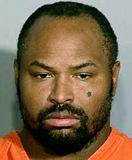
Maurice Clemmons
Mass murderer Gameel Al-Batouti
Mass murderer · USA · 1999
Gameel Al-Batouti (also rendered “Gamil ElBatouty” or “El Batouty” in U.S. offi…
216 victims
Gameel Al-Batouti
Mass murderer · USA · 1999
Gameel Al-Batouti (also rendered “Gamil ElBatouty” or “El Batouty” in U.S. offi…
216 victims
 Omar Mateen
Mass murderer · USA · 2016
Omar Mir Seddique Mateen was an American mass murderer who killed 49 people and…
49 victims
Omar Mateen
Mass murderer · USA · 2016
Omar Mir Seddique Mateen was an American mass murderer who killed 49 people and…
49 victims
 Seung-Hui Cho
Mass murderer · USA · 2007
Seung-Hui Cho was a mass murderer who shot and killed 32 people and wounded man…
32 victims
Seung-Hui Cho
Mass murderer · USA · 2007
Seung-Hui Cho was a mass murderer who shot and killed 32 people and wounded man…
32 victims
 Adam Lanza
Mass murderer · USA · 2012
Adam Lanza, 20, fatally shot twenty children and six adult staff members in a m…
27 victims
Adam Lanza
Mass murderer · USA · 2012
Adam Lanza, 20, fatally shot twenty children and six adult staff members in a m…
27 victims
 Eric Harris
Mass murderer · USA · 1999
Eric Harris committed suicide by gunshot to the roof of the mouth on April 20,…
13 victims
Eric Harris
Mass murderer · USA · 1999
Eric Harris committed suicide by gunshot to the roof of the mouth on April 20,…
13 victims
 Jiverly Wong
Mass murderer · USA · 2009
December 8, 1967 — Jiverly Antares Wong was born. · late 1980s — Wong first cam…
13 victims
Jiverly Wong
Mass murderer · USA · 2009
December 8, 1967 — Jiverly Antares Wong was born. · late 1980s — Wong first cam…
13 victims
 Donnie Lee Roberts
Murderer · USA · 1991
Donnie Lee Roberts was convicted in Texas of capital murder and was sentenced t…
2 victims
Donnie Lee Roberts
Murderer · USA · 1991
Donnie Lee Roberts was convicted in Texas of capital murder and was sentenced t…
2 victims
 Robert Stewart Flores
Murderer · USA · 2002
Robert Stewart Flores Jr. was 41. He was a Gulf War veteran and worked at the S…
3 victims
Robert Stewart Flores
Murderer · USA · 2002
Robert Stewart Flores Jr. was 41. He was a Gulf War veteran and worked at the S…
3 victims
 Robert Mochrie
Mass murderer · United Kingdom · 2000
Robert Mochrie unlawfully killed his family at their home in Barry, near Cardif…
5 victims
Robert Mochrie
Mass murderer · United Kingdom · 2000
Robert Mochrie unlawfully killed his family at their home in Barry, near Cardif…
5 victims
 Katrina Culberson
Murderer · USA · 2012
Katrina Culberson (22) — Canton resident; pleaded guilty to aggravated murder,…
1 victim
Katrina Culberson
Murderer · USA · 2012
Katrina Culberson (22) — Canton resident; pleaded guilty to aggravated murder,…
1 victim
- Gender
- male
- Country
- USA
- Location
- Pierce County, Washington , USA
- Date of birth
- February 6, 1972
- Age at first offence
- 37
- Characteristics
- murder for hire, rape, rape?, rapist, fugitive, armed robbery, kidnapping, domestic violence
- Victim profile
- Sergeant Mark Renninger, 39 / Officer Ronald Owens, 37 / Officer Tina Griswold, 40 / Officer Greg Richards, 42
- Method of murder
- Shooting ( Glock 17 9mm semi-automatic handgun)
- Date(s) of murder
- November 29, 2009
- Years active
- 2009
- Date of arrest
- —
- Status
-
Died in custody
Shot and killed by a Seattle Police Department officer two days after November 29, 2009
Case identification
- Name: Maurice Clemmons
- Life dates: February 6, 1972 – December 1, 2009
- Alleged role in the 2009 incident: gunman who murdered four police officers at a coffee shop in Parkland, Washington
- Status at end of case: Clemmons was shot and killed by a Seattle Police Department officer
Background
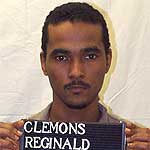
Maurice Clemmons was an American felon responsible for the November 29, 2009, murder of four police officers in Parkland, Washington. Clemmons evaded police for two days following the shooting and was shot and killed by a police officer in Seattle.
Prior to his involvement in the shooting, Clemmons had at least five felony convictions in Arkansas and at least eight felony charges in Washington. His first incarceration began in 1989 at age 17. Facing sentences totaling 108 years in prison, the burglary sentences were reduced in 2000 by Governor of Arkansas Mike Huckabee to 47 years, which made him immediately eligible for parole. The Arkansas Parole Board unanimously moved to release him in 2000. Clemmons was subsequently arrested on other charges and was jailed several times.
In the months prior to the Parkland shooting, Clemmons was in jail on charges of assaulting a police officer and raping a child. One week prior to the Parkland shooting, he was released from jail after posting a $150,000 bail bond.
His murder of four police officers represented the largest number of law enforcement officers killed by one man in a single incident in US history.
Clemmons’s father made frames for automobile seats at a Chrysler factory, and his mother, Dorothy Mae Clemmons, worked in a nursing home. He had five siblings. Clemmons lived in Marianna, Arkansas in his early youth and moved to Little Rock as a teen.
He was arrested when he was a junior at Hall High School for carrying a .25-caliber pistol on school property. He claimed he was carrying the gun because he was "beaten by dopers" and said he had "something for them" if they attacked him again. Clemmons did not return to school and finished his education at eleventh grade.
By the time of the Parkland shooting, the killing was believed to be the most deadly attack on law enforcement in the state of Washington.
The offence
On the morning of November 29, 2009, Clemmons drove a white pickup truck to Allen's home, then Allen drove him past the Forza Coffee Co. coffee shop in Lakewood, a suburb of Tacoma. After they saw marked police patrol cars in the parking lot, Allen drove back past the coffee shop and parked nearby.
Around 8 a.m., Clemmons walked into the Forza Coffee Co. coffee shop, where four police officers were working on laptops before their shift. Clemmons opened fire on the officers, shooting them to death. Investigators said the murders were a targeted, execution-style attack and were not associated with a robbery; Clemmons did not aim at any other customers or the two baristas working at the time.
The four slain officers were:
- Mark Renninger, 39 (killed with a shot to the head)
- Ronald Owens, 37 (shot in the neck)
- Tina Griswold, 40 (shot in the head)
- Greg Richards, 42 (shot in the head)
As Clemmons fled, Officer Richards struggled with him in the restaurant's doorway, then shot Clemmons in the back before the officer succumbed to a bullet wound to his head. The shooter stole Richards' Glock pistols before escaping. Clemmons returned to the truck and Allen drove him away.
Allen later told detectives he stopped at an intersection and abandoned Clemmons and the truck, claiming he "wants of no part of this". Authorities disputed this claim and said there was no evidence Allen abandoned the vehicle.
Authorities initially believed the suspect may have died from injuries shortly after the shooting. Clemmons went back to his house and told Hinton he had been shot by police, and Hinton allegedly gave Eddie and Douglas Davis a car to "get Clemmons out of here". As they drove, Clemmons told the brothers he "had taken care of his business". The Davis brothers took Clemmons to other friends, who bandaged his wounds.
Police received a tip that Clemmons was seeking shelter from friends in Seattle, and officers pulled over a white car believed to be transporting him. The female driver admitted Clemmons was a friend and said she had brought him to Seattle after he told her "he had killed a police officer or officers". Coffee shop employees who witnessed the shooting identified Clemmons as the shooter from a series of photos.
Authorities sought him in what was considered one of the biggest manhunts the Seattle-Tacoma area had ever seen, and Clemmons was considered the most wanted man in the Pacific Northwest.
The four officers were the first Lakewood police officers to be killed in the line of duty since the department's establishment in 2004.
Investigation
Police identified no motive for the murders. Detective Ed Troyer, Pierce County Sherriff’s Office spokesman, said: "We're going to be surprised if there is a motive worth mentioning."
Police initially believed the suspect may have died from his injuries shortly after the shooting.
Authorities surrounded the homes of Clemmons' friends and family to prevent him from finding shelter and to determine who was helping him. A Clemmons relative learned that Clemmons was coming to her home in the Leschi, Seattle neighborhood, informed police and fled.
Police locked down the house for 11 hours in the early morning of November 30, believing Clemmons to be holed up inside. After attempts to coax or force him out of the house, including use of a robot and flashbang grenades, police entered and discovered Clemmons was not inside.
Later, police searched multiple locations in the Seattle and Tacoma areas, including a park where they found a handgun carried by Clemmons and his pickup truck, which had blood stains inside.
Arrest and pre-death legal situation
Clemmons was arrested on July 1, 2009 after he appeared in a Pierce County court trying to have his bench warrant thrown out. He was charged with second-degree rape of a child and being a fugitive from Arkansas. At the time of the arrest, Clemmons made religiously themed comments and referred to himself as "the beast".
He also told a police officer that President Barack Obama and LeBron James were his brothers, and Oprah Winfrey was his sister.
Pierce County prosecutors claimed Clemmons' recent crimes amounted to a violation of Clemmons' parole in Arkansas and that he faced years in prison if he was returned to the state. The Arkansas Department of Community Correction notified Pierce County on July 22 that they did not intend to ask for his extradition and that he should be adjudicated on his Washington charges.
Stephen Penner, a deputy prosecuting attorney in Pierce County, said of the Arkansas decision: "There's a built-in incentive to not following through. In a way, the more violent they are, the less you want them in your community."
During a court-ordered mental health evaluation, Clemmons told psychologists he had experienced hallucinations in May 2009 of "people drinking blood and people eating babies, and lawless on the streets, like people were cannibals". He claimed the visions had since passed.
He also claimed he had no faith in the American justice system and thought he was being "maliciously persecuted because I'm black and they believe the police".
The evaluation, completed by two psychologists from the Western State Hospital on October 19, concluded Clemmons was dangerous and presented an increased risk of future criminal acts.
Pierce County Judge John McCarthy set bail for Clemmons' assault charges at $40,000, below the $100,000 prosecutors sought based on Clemmons' history of violence.
Pierce County Judge Thomas Felnagle set bail for the child-rape charges at $150,000, lower than the $200,000 prosecutors sought, but higher than usual for the charges.
After a mental evaluation, a psychologist concluded Clemmons was competent to stand trial on the charges, which eliminated him as a candidate for involuntary commitment.
An attorney for Clemmons notified the court he planned to pursue an insanity or diminished-capacity defense.
On November 23, 2009, Clemmons paid $15,000 for a $190,000 bail bond from Jail Sucks Bail Bonds, a Chehalis-based company, to secure his release. Two other bail bond agencies had rejected Clemmons based on his history of failing to appear in court.
Investigation details: earlier conduct in 2009
Clemmons failed to check in with his community corrections officer within 24 hours of his release as required, but nothing was done in response.
On May 9, a Pierce County sheriff's deputy responded to Clemmons' home after reports he was throwing rocks at houses, cars and people. When the deputy tried to enter the house, one of Clemmons' cousins grabbed his wrist. After a struggle, Clemmons emerged and punched the deputy in the face, and assaulted a second deputy who arrived to help.
Clemmons was placed under arrest and taken to Pierce County Jail, where he continued to struggle and told jail workers: "I'll kill all you bitches." He was charged with two felony assault charges and two felony malicious mischief charges, and released from jail the next day after posting a $40,000 bail bond without seeing a judge.
On May 11, around 1 a.m., Clemmons appeared naked in his living room and ordered two female relatives, ages 11 and 12, to fondle him. The two reportedly complied out of fear, and the 11-year-old fled the house afterward. Clemmons took the 12-year-old into his bedroom along with Clemmons' wife.
Clemmons repeatedly referred to himself as Jesus and said his wife was Eve. He released the 12-year-old after his wife begged him to let her go.
At about 4 a.m. that same morning, Clemmons gathered his family back into the living room and demanded they strip naked together. He later left the house, claiming the world was coming to an end and that he was "going to fly to heaven".
A family member called 911 and police found Clemmons at a nearby second house he was building. Clemmons fled on foot and escaped.
Clemmons failed to appear the next day for an arraignment on his May 9 charges.
Child Protective Services investigated and substantiated the sexual abuse complaint.
Latanya Clemmons, Clemmons's sister, told authorities he had undergone a change and was "not in his right mind".
Investigation details: statements about intended killings
On November 26, 2009, during a Thanksgiving gathering at the home of Clemmons' aunt, Clemmons told several people he was angry about his Pierce County legal problems and planned to use a gun to murder police officers and others, including school children. He showed a gun to people in the room and told them he had two others in his car and home.
Clemmons said he planned to activate an alarm by removing a court-ordered ankle monitor, then he would shoot the police officers who responded to his house.
In describing the planned murder, Clemmons said: "Knock, knock, knock, boom!"
Darcus Allen, a convicted murderer who previously served in an Arkansas prison with Clemmons, was allegedly present for the conversation.
Also on Thanksgiving, Clemmons cut off a GPS monitor Jail Sucks Bail Bonds had secured onto his ankle.
On November 28, Clemmons showed two handguns to friends Eddie and Douglas Davis and told them he planned to shoot police officers with them. The exchange was witnessed by Clemmons' half-brother Rickey Hinton, with whom he shared a house.
During the exchange, Clemmons danced around with the guns in his hands, claiming to be Lucifer. He told the men he had twice tried to go to a Tacoma police station to walk in and start shooting; the first time the station was closed, and the second time he got a flat tire on the way there, he claimed. He also talked about stopping at a crowded intersection or a school and shooting people there.
Arrest and charges not tied to Parkland shooting outcome
Clemmons was previously involved in Arkansas felony convictions and prison sentences.
Arkansas teenage years and incarceration
In 1989, at age 17, Clemmons and two other accomplices robbed a woman at midnight in the parking lot of a Little Rock hotel bar. Clemmons pretended to have a gun in his pocket and threatened to shoot her if she did not give him her purse. When she responded, "Well, why don't you just shoot?", he punched her in the head and ran off with the purse containing $16 and a credit card.
Clemmons was accused multiple times of displaying violent behavior during court appearances. In one incident, he dismantled a metal door stop and hid it in his sock to use as a weapon. It was discovered and confiscated by a court bailiff.
In another incident, he took a lock from his holding cell and threw it at a bailiff but missed and accidentally hit his mother instead.
Clemmons was once accused of reaching for a guard's pistol while being transported to court.
During one trial, he was shackled in leg irons and seated next to a uniformed officer because the presiding judge ordered extra security, claiming Clemmons had threatened the judge.
At age 16, Clemmons' charges were committed from juvenile court to adult court due to the extremely violent nature of his crimes and demeanor.
By 1990, Clemmons was sentenced to 108 years in prison for eight felony charges from his teenage years in Arkansas. The total prison term stemmed from multiple sentences, some concurrent and some consecutive.
The largest sentencing came in 1990 when Clemmons was given a 60-year prison term for breaking into an Arkansas state trooper's home and stealing about $6,700-worth of items, including a gun.
During sentencing on the charges, a circuit judge told Clemmons he had broken his mother's heart. Clemmons responded: "I have broken my own heart."
Clemmons was also sentenced in 1989 to 35 years in prison for robbing the woman in front of the Little Rock hotel bar.
Other sentences included:
- six years for weapon possession based on his high school arrest
- eight years for burglary, theft and probation in Pulaski County on September 9, 1989
He was not to be eligible for parole until 2015 or later.
He was originally held at the Tucker Correctional Facility in Tucker, Arkansas, and was eventually transferred to the Cummins Unit near Grady.
Clemency and release in Arkansas
In 1999, after serving 10 years of his sentence, Clemmons filed a clemency appeal with Arkansas Governor Mike Huckabee.
In his petition to Huckabee, Clemmons wrote that he came from "a very good Christian family" and was "raised much better than my actions speak". He claimed he had moved from Seattle, Washington to Arkansas as a teenager, and because he had no friends he gave in to peer pressure and "fell in with the wrong crowd" to be accepted by his young peers, which led him to commit his crimes.
Although he apologized for his actions, Clemmons complained that he received overly harsh sentences. He also claimed he had changed and expressed regret that his mother had recently died without seeing him turn his life around.
Clemmons's clemency application was supported by Pulaski County Circuit Court Judge Marion Humphrey, who argued the cumulative sentence was excessive and cited Clemmons's young age at the time he committed the crimes.
The decision was made over objections of some victims and prosecutors involved in Clemmons's previous cases but was supported by the bipartisan parole board and the trial court judge in Clemmons's case.
Mark Fraiser, an attorney who prosecuted early cases against Clemmons in Pulaski County, argued Clemmons was extremely likely to commit further acts of violence in the future. He said for a teen to receive such a lengthy prison sentence without committing a murder: "you've got to be a bad little dude".
On May 3, 2000, Huckabee commuted Clemmons's 108-year sentence to 47 years, 5 months and 19 days, making him eligible for parole that day.
As a factor in his decision, Huckabee cited the unusually long sentence for Clemmons's age at the time the crimes were committed.
The Arkansas Parole Board unanimously approved Clemmons's release on July 13, 2000, and he was set free on August 1, 2000.
Other arrests and supervision after Arkansas release
In March 2001, Clemmons violated parole by committing aggravated robbery and theft again in Ouachita County. He was convicted on July 13, 2001 and sentenced to 10 years in prison.
He also faced charges of parole violations, but due to problems with the case, he was not served with the charges until 2004.
Clemmons's attorney argued the parole violation charges should be dropped because so much time had passed, and the charges were dismissed.
Clemmons was granted parole on the robbery charges in 2004.
He told the parole board he was "not ready" the first time he was released, but that he "doesn't want to die in prison" and will "try to do the right thing".
Clemmons moved to Washington in 2004 while still on parole, and Arkansas authorities approved it.
In 2004, Clemmons married a woman named Nicole Smith; The Seattle Times later reported the relationship had "been tumultuous".
Clemmons was placed under supervision of the Washington State Department of Corrections and classified as "high risk to reoffend". His supervision continued until October 2015.
He lived in Tacoma and ran a landscaping and power-washing business out of his house.
Over the next five years, Clemmons bought six houses, including one in Arkansas and five in Washington.
After his parole in 2004, Clemmons had no arrests or problems with the law until May 2009.
Timeline
- 1989 — Clemmons, aged 17, robbed a woman at midnight in the parking lot of a Little Rock hotel bar.
- 1990 — Clemmons received a 60-year prison term for breaking into an Arkansas state trooper's home and stealing items including a gun.
- 1999 — Clemmons filed a clemency appeal with Arkansas Governor Mike Huckabee after serving 10 years.
- May 3, 2000 — Huckabee commuted Clemmons's 108-year sentence to 47 years, 5 months and 19 days.
- July 13, 2000 — The Arkansas Parole Board unanimously approved Clemmons's release.
- August 1, 2000 — Clemmons was set free.
- March 2001 — Clemmons violated parole by committing aggravated robbery and theft in Ouachita County.
- July 13, 2001 — Clemmons was convicted and sentenced to 10 years in prison.
- 2004 — Clemmons moved to Washington while still on parole, married Nicole Smith, and was placed under Washington State Department of Corrections supervision classified as "high risk to reoffend".
- May 9, 2009 — A Pierce County deputy responded after reports Clemmons was throwing rocks at houses, cars and people; Clemmons punched one deputy and assaulted a second.
- May 10, 2009 — Clemmons was released from Pierce County Jail after posting a $40,000 bail bond without seeing a judge.
- May 11, 2009 — Clemmons ordered two female relatives, ages 11 and 12, to fondle him; police found him at a nearby second house he was building and he fled.
- July 1, 2009 — Clemmons was arrested in Pierce County after appearing in court over a bench warrant; he faced charges of second-degree rape of a child and being a fugitive from Arkansas.
- July 22, 2009 — Arkansas Department of Community Correction notified Pierce County it did not intend to ask for extradition.
- October 19, 2009 — Mental health evaluation concluded Clemmons was dangerous and presented an increased risk of future criminal acts.
- November 23, 2009 — Clemmons paid $15,000 for a $190,000 bail bond from Jail Sucks Bail Bonds to secure release.
- November 26, 2009 — During a Thanksgiving gathering, Clemmons told people he planned to use a gun to murder police officers and others, including school children.
- November 28, 2009 — Clemmons showed two handguns to friends Eddie and Douglas Davis and said he planned to shoot police officers.
- November 29, 2009 — Clemmons shot and killed four police officers at a coffee shop; he fled; police pursued him in a manhunt.
- November 30, 2009 — Police locked down a Leschi, Seattle home for 11 hours before discovering Clemmons was not inside.
- December 1, 2009 — Clemmons was shot and killed by Seattle police officer Benjamin L. Kelly.
Death
On December 1, 2009, Clemmons was shot and killed by Seattle police officer Benjamin L. Kelly. Around 2:45 a.m., Kelly was on patrol and stopped to investigate a broken-down car on the side of the road that was idling with its hood up.
Kelly recognized the vehicle as having been reported stolen. While Kelly sat in his patrol car writing a report, he noticed Clemmons approaching him from behind, first walking on the sidewalk and then in the middle of the street.
Kelly ordered Clemmons to stop and show his hands, but Clemmons began to flee around the disabled vehicle. Police claim that Clemmons reached into his waist area for a gun. Kelly fired several rounds at Clemmons and hit him at least twice, killing him.
Clemmons was carrying a handgun that had belonged to Lakewood Officer Greg Richards. Kelly was placed on routine administrative leave following the shooting.
Police later said Clemmons would have eventually died from the gunshot wound he sustained in the Lakewood shooting.
Aftermath
Since his death, multiple people were arrested for helping Clemmons during and after the Lakewood shooting.
Authorities claimed accomplices misled police about his whereabouts, gave him cell phones and money, applied first aid to his gunshot wounds and tried to help him leave the state.
Among those arrested were Clemmons' sister, who bandaged his wounds and provided transportation. Authorities arrested five other people for assisting Clemmons: Letricia Nelson, Quiana Williams, Douglas Davis, Eddie Davis, and Ricky Hinton.
Darcus Allen was arrested and charged with aggravated first-degree murder for his alleged role as Clemmons' getaway driver. Allen claimed he did not know Clemmons' plans when he drove him to the coffee shop, but authorities argued he had known for days that Clemmons planned to murder police officers.
A cell phone photograph of Clemmons's shirtless dead body spread quickly among city residents and government employees, prompting questions over who took it and how it became circulated. If the photo was leaked by an employee of the city or emergency responder, the action may possibly violate their employment contract.
Funeral arrangements were kept private by the family due to the circumstances of his crime.
Related proceedings and sentences (accomplices)
- In June 2010, Clemmons' sister was sentenced to five years imprisonment for acting as a getaway driver after the shooting.
- Later in December, three of four other accused suspects were found guilty of rendering criminal assistance.
- On January 14, 2011, Pierce County Superior Court Judge Stephanie Arend sentenced:
- Eddie Lee Davis to 10 years, five months
- Douglas Edward Davis to seven years, six months
- Letrecia Nelson to six years, two months in state prison.
- In May 2011, Darcus Allen was convicted of four counts of murder.
- Allen was sentenced to 420 years in prison the following month.
Officers memorial service
A public memorial service for the four slain officers was held December 8, 2009 at the Tacoma Dome.
The day began with a 10-mile procession from McChord Air Force Base past the Lakewood police station to the Tacoma Dome. Over 2,000 police and fire vehicles from over 150 different law enforcement and fire agencies participated in the procession, which took five hours to complete. Over 20,000 people, mostly from the law enforcement and firefighting communities, attended the service at the Tacoma Dome.
Police officers from as far away as New York City and Boston attended, and there was a large contingent of Royal Canadian Mounted Police officers. Lakewood's mayor and police chief gave remarks, followed by eulogies by family, friends, and colleagues of the four officers.
Washington Governor Christine Gregoire spoke: "We will remember them today. We will remember them always."
The service concluded with a played recording of a police dispatcher attempting to call each officer with no response, and the dispatcher declaring each officer as "gone but not forgotten." The officers' remains were buried in private ceremonies by their individual families.
Logistically, agencies preparing for the memorial service expected 20,000 law enforcement personnel to appear. One thousand emergency vehicles and police cruisers were set up to follow the families of the victims to the Tacoma Dome. Fifty people from several public agencies worked to make the event occur smoothly.
Jody Woodcock, a program manager of the Pierce County Department of Emergency Management, said the agencies planned to make the event look like it was easily prepared and that authorities intended to "take care of all the details so the families and the law enforcement community don't have to think about them."
Rob Carson of The Seattle Times said: "Logistically, the event is staggering in its complexity."
Alaska Airlines gave airline tickets to family members who were going to the event and were flying into Seattle-Tacoma International Airport from other states. The American Red Cross donated food and water for the event.
Other details
Victims’ employment and experience
All four officers had been with the Lakewood Police Department since its establishment.
- Sergeant Mark Renninger, 39, had 13 years of law enforcement experience and died from a gunshot wound to the head.
- Officer Ronald Owens, 37, had 12 years of law enforcement experience, was from Puyallup, and died from a gunshot wound to the neck.
- Officer Tina Griswold, 40, had 14 years of law enforcement experience and died from a gunshot wound to the head.
- Officer Greg Richards, 42, had 8 years of law enforcement experience, was from Graham, and died from a gunshot wound to the head.
Weapons traced in the case
Federal authorities ran traces on a 9-mm Glock Model 17 and a Smith & Wesson .38-caliber revolver.
- The Glock was purchased in June 2005 at a Renton, Washington pawnshop, Ben’s Loan Inc. The purchaser reported the gun stolen in March 2006 after his car was broken into at a downtown Seattle parking garage at Second Avenue and James Street.
- The Smith & Wesson revolver was shipped in 1981 to the (now-closed) Police Arms and Citizen Supply in Lakewood, Colorado, but after that point, no details were found.
Political discussion of clemency
Mike Huckabee received nationwide criticism for his role in Clemmons's release from prison in 2000.
The evening of the shooting, Huckabee released a statement seeking to cast some responsibility for Clemmons’s release onto the parole board and the criminal justice system. Huckabee said: "Should he be found to be responsible for this horrible tragedy, it will be the result of a series of failures in the criminal justice system in both Arkansas and Washington State."
The text also stated that Huckabee was considered a favorite for the Republican Party presidential nomination in 2012 and claimed the situation was used as a political weapon against him.
Clemmons was compared to Willie Horton, a convicted felon who was furloughed from a Massachusetts prison in 1986 but never returned and committed more violent crimes several months later. The Horton case factored into the 1988 presidential campaign of Democratic Party candidate Michael Dukakis, who was Governor of Massachusetts at the time and supported the furlough program.
Timothy Egan, opinion writer for The New York Times, said: "If this case does not sink the presidential aspirations of Huckabee…it should."
The incident also led some university professors, criminologists, and attorneys to speculate that U.S. governors would become more reluctant to grant pardons and clemencies to convicted felons to avoid negative publicity faced by Dukakis and Huckabee in those cases.
Additional related incidents mentioned
Another shooting involving Pierce County sheriff's deputies occurred three weeks after in Eatonville on December 21, when two deputies were shot and critically injured (one later died from his injuries) by a man who was then shot dead.
The Lakewood police officer shooting was said to have come less than a month after a Seattle police officer was murdered and his trainee injured under similar circumstances nearly 40 miles (64 km) to the north.
Spotted an error, or have more information about this case?