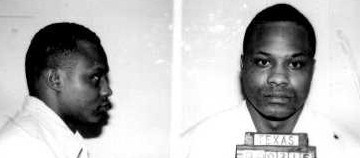
John Balentine
Murderer Dr. Wouter Basson
Murderer · 1992
Wouter Basson (born July 6, 1950) was a South African cardiologist and the form…
230 victims
Dr. Wouter Basson
Murderer · 1992
Wouter Basson (born July 6, 1950) was a South African cardiologist and the form…
230 victims
 Ershad Sikder
Murderer · Bangladesh · 1990
Ershad Sikder was an influential political figure in the south-western city of…
30 victims
Ershad Sikder
Murderer · Bangladesh · 1990
Ershad Sikder was an influential political figure in the south-western city of…
30 victims
 Russell Ellwood
Murderer · USA · 1991
Russell Ellwood was a former taxi driver. Authorities suspected him of killing…
20 victims
Russell Ellwood
Murderer · USA · 1991
Russell Ellwood was a former taxi driver. Authorities suspected him of killing…
20 victims
 Anisio Ferreira de Sousa
Murderer · Brazil · 1989
September 4, 2003 — Anísio Ferreira de Sousa was sentenced to 77 years in priso…
19 victims
Anisio Ferreira de Sousa
Murderer · Brazil · 1989
September 4, 2003 — Anísio Ferreira de Sousa was sentenced to 77 years in priso…
19 victims
 Umesh Reddy
Murderer · India · 1998
Umesh Reddy was sentenced to death on October 27, 2006. The Karnataka High Cour…
18 victims
Umesh Reddy
Murderer · India · 1998
Umesh Reddy was sentenced to death on October 27, 2006. The Karnataka High Cour…
18 victims
 Joel Diaz
Murderer · USA · 1997
Name: Joel Diaz · Date of birth: 06/13/73 · Case citation / opinion: Supreme Co…
1 victim
Joel Diaz
Murderer · USA · 1997
Name: Joel Diaz · Date of birth: 06/13/73 · Case citation / opinion: Supreme Co…
1 victim
 Doreen Starrish
Murderer · USA · 2012
Doreen Starrish was a Shoreline woman who stabbed her long-time boyfriend to de…
1 victim
Doreen Starrish
Murderer · USA · 2012
Doreen Starrish was a Shoreline woman who stabbed her long-time boyfriend to de…
1 victim
 Silvio Mangion
Serial killer · 1984
Silvio Mangion, known as Kalang, was sentenced to life imprisonment for the mur…
3 victims
Silvio Mangion
Serial killer · 1984
Silvio Mangion, known as Kalang, was sentenced to life imprisonment for the mur…
3 victims
 Angela Garcia
Murderer · USA · 1999
Angela Garcia was convicted in 2001 of setting a fire that killed her two young…
2 victims
Angela Garcia
Murderer · USA · 1999
Angela Garcia was convicted in 2001 of setting a fire that killed her two young…
2 victims
 Son Vu Khay Tran
Homicide · USA · 1997
Tran was sentenced to death on January 4, 2001. His sentence was commuted to li…
4 victims
Son Vu Khay Tran
Homicide · USA · 1997
Tran was sentenced to death on January 4, 2001. His sentence was commuted to li…
4 victims
 Terry Lyn Short
Murderer · USA · 1995
Terry Lyn Short was convicted in Oklahoma County of first-degree murder and fiv…
1 victim
Terry Lyn Short
Murderer · USA · 1995
Terry Lyn Short was convicted in Oklahoma County of first-degree murder and fiv…
1 victim
- Gender
- male
- Country
- —
- Location
- —
- Date of birth
- January 30, 1969
- Age at first offence
- 29
- Characteristics
- rape, kidnapping, abuse, drug addict, mentally ill, homeless
- Victim profile
- Mark Caylor, Jr., 17; Kai Geyer, 15; and Steven Brady Watson, 15
- Method of murder
- Shooting (.32 automatic pistol) Loca tion : Potter County, Texas, USA
- Date(s) of murder
- January 21, 1998
- Years active
- 1998
- Date of arrest
- —
- Status
-
Sentenced to death
Sentenced to death on June 11, 1999
Background
John Lezell Balentine (also listed as John Uzell Balentine and John Lezell Smith) was born on 01/30/1969. He received the case on 06/11/1999, at age 30. His education level was 10.
Balentine was an auto mechanic and laborer. He previously was convicted in Arkansas for Burglary and later had additional convictions and parole violations.
The offence
On 01/21/98, in Amarillo, Texas, Balentine fatally shot three white male victims once each in the head with a 32-caliber pistol while they were sleeping. The victims were 17-year-old Edward Mark Caylor, 15-year-old Kai Brooke Geyer, and 15-year-old Steven Brady Watson.
Balentine entered the residence during the night and committed the murders while the victims were sleeping.
Investigation
Officer Timothy Hardin of the Amarillo Police Department testified that he was dispatched on a shots-fired call at 2:26 a.m. on Wednesday, January 21, 1998. When Hardin arrived, the complainant stated that he thought he had heard .22 caliber shots to the east of his residence. Hardin looked around and found nothing in the complainant’s backyard or the alleyway behind the house.
Hardin observed a man later identified as appellant walking down the street two houses away from the complainant’s residence. Hardin testified that when he first saw appellant, appellant had his hands in his pockets, appeared to be nervous, and was constantly looking over his shoulder in Hardin’s direction. In addition, appellant was walking away from Hardin at a brisk pace.
Hardin ordered appellant to stop and raise his hands in the air. Hardin approached appellant and conducted a pat-down “Terry frisk” because he “didn’t know if [appellant] might be the person who had fired shots” and that he “wanted to make sure that there was no weapon on [appellant] while I was speaking to him.” Hardin did not feel any weapons during the pat-down.
Hardin suspected appellant may have been involved in the reported gunfire and escorted appellant to the back seat of his patrol car for questioning. When Hardin asked appellant why he was in the area, appellant stated that he was walking from a Wal-Mart, approximately five miles away, to his sister’s house located several miles across town. Appellant identified himself as “John Lezell Smith” and told Hardin that he was staying with his sister. Appellant initially stated that he did not know his social security number but later told Hardin five of the digits.
Appellant stated he had planned to visit a friend in the area and agreed to let Hardin ask this friend to identify appellant because appellant did not have a driver’s license or an identification card. Hardin drove appellant to his friend’s residence. Appellant’s friend identified him as “John” and stated that he lived a block away, contradicting appellant’s story that he was staying with his sister several miles across town. Appellant explained that his friend was unaware he had moved.
When Hardin asked appellant to show him where he used to live, appellant gave Hardin an address that turned out to be an empty lot. Hardin asked appellant if he had ever been arrested in Amarillo and appellant replied that he had not. Hardin contacted the police dispatcher to run a records check. According to the police dispatcher, “John Lezell Smith” had been arrested for traffic warrants.
Hardin placed appellant in handcuffs, had him exit the vehicle, and conducted a second, more thorough pat-down search. When he patted down the outside of appellant’s front pants pocket, Hardin felt what he thought was a small pocket knife. Hardin put his hand in appellant’s pocket and felt the object was actually a lighter. While Hardin was feeling the lighter, his hand touched an object that he immediately recognized as a bullet. He removed the object from the pocket and saw that it was a .32 caliber bullet.
Appellant told Hardin that he had recently been on a hunting trip and forgotten the bullet in his pocket. Hardin returned the bullet to appellant and offered him a ride to his sister’s house, which appellant accepted. The trip took five to ten minutes and Hardin dropped appellant off at the residence at 3:36 a.m. Hardin returned to the area where he had detained appellant to have another look around but found nothing. Later that day, officers for the Amarillo Police Department were called to the scene of a triple homicide at a residence fifty yards from where Officer Hardin encountered appellant.
The police identified appellant as a suspect the day the victims were discovered. Appellant was eventually arrested in July of 1998 in Houston.
The State introduced evidence that the three victims were killed by .32 caliber bullets and that three spent cartridge shells found at the scene of the murders were marked identically to the bullet found on appellant.
Arrest
Balentine was eventually arrested in July of 1998 in Houston. He gave a taped confession after being arrested in Houston on July 24, 1998.
Trial
Balentine was convicted of capital murder on April 19, 1999. The Texas Penal Code cited was Tex. Pen. Code Ann. §19.03(a)(7)(A) (Vernon 1994). Pursuant to the jury’s answers to the special issues set forth in Texas Code of Criminal Procedure Article 37.071, Sections 2(b) and 2(e), the trial judge sentenced appellant to death (Art. 37.071 §2(g)).
Balentine raised four points of error but did not challenge the sufficiency of the evidence at either stage of the trial. The appellate court affirmed.
Motion to suppress: detention and search
Balentine argued the trial court abused its discretion in denying his motion to suppress evidence obtained as the result of a detention and search that violated his rights under the Fourth Amendment, and also argued the investigative detention evolved into an arrest not supported by probable cause.
The appellate court addressed:
- Lawfulness of initial detention (a Terry stop)
- Weapons search (a second pat-down search and discovery of the .32 caliber bullet)
- Unreasonable detention (length of detention)
- Unlawful arrest (whether the detention evolved into an arrest)
The appellate court overruled Balentine’s first point of error and stated the trial court did not abuse its discretion in denying the motion to suppress evidence obtained as a result of the detention and search.
A noted factual detail in Hardin’s testimony included that Hardin admitted that he deviated from his training by failing to pat down appellant’s genital area during the initial search.
Motion to suppress: warrantless search of the residence
Balentine argued the trial court abused its discretion in denying his motion to suppress evidence and testimony obtained as a result of the warrantless search of the residence where he was staying on January 22, 1998, in violation of the Fourth Amendment. He argued he had a legitimate expectation of privacy and that the owner lacked authority to consent to the search.
Sergeant Paul Charles Horn testified at the suppression hearing that acquaintances of the victims identified “John Balentine” as a possible suspect. Investigators determined that “John Balentine” was the same individual as “John Lezell Smith,” which Officer Hardin encountered earlier that morning. They learned Balentine had been staying in a building owned by Mr. Michael Means, located at 308 North Virginia Street in Amarillo.
Lieutenant Edward William Smith arrived at 308 North Virginia Street the following day. Means told him that he was not renting the residence to appellant but that he had given him permission to stay there as a “guest” because “he felt sorry for him.” Means gave written consent to search the residence.
The police searched the residence and found a receipt for the purchase of .32 caliber ammunition from a local K-Mart store.
The appellate court overruled Balentine’s second point of error and concluded the trial court did not err in overruling Balentine’s motion to suppress the fruits of the warrantless search of Means’s building.
Jury instruction under Article 38.23
Balentine argued that the trial court erred by failing to instruct the jury to disregard illegally obtained evidence in accordance with Article 38.23. The appellate court held that an Article 38.23 instruction was required only if there was a factual dispute as to how the evidence was obtained. The court found the facts supporting the warrantless search were not controverted and concluded no instruction was required. The appellate court overruled Balentine’s third point of error.
Suppression of taped confession
Balentine argued the trial court erred regarding the admissibility of the taped confession that he gave after being arrested in Houston on July 24, 1998. He argued his arrest was illegal because the arrest warrant was based on a probable cause affidavit rooted in a sworn complaint by Sergeant Horn that was “replete with evidence reference to illegally obtained items.”
He challenged the probable cause affidavit because it detailed Officer Hardin’s stop and search and placed “great emphasis” on the fact that Hardin found a .32 caliber bullet in appellant’s pocket. He argued that because the arrest was illegal, the taped confession should have been suppressed under Article 38.23.
The appellate court overruled Balentine’s fourth point of error and found the argument without merit.
Sentencing
A Potter County jury sentenced Balentine to death in April 1999 for killing three youths. The procedural date given for sentencing was 04/19/99 by the Potter County 320th District Court. The outcome also stated the sentence to death was on June 11, 1999.
Appeals
On Direct Appeal from Potter County, the appellate court delivered a unanimous opinion and affirmed on April 3, 2002. The opinion addressed four points of error, and the appellate court stated it would affirm.
A procedural timeline also included:
- 04/03/02 — A U.S. Court of Criminal Appeals affirmed Balentine’s conviction and sentence, denying relief on four points of error.
- 12/04/02 — The Texas Court of Criminal Appeals denied habeas corpus relief on twenty-one claims based on findings and conclusions of the trial court and on the appellate court’s own review.
- 12/01/03 — Balentine petitioned for federal habeas relief on nine claims.
- 03/31/08 — A U.S. district court denied habeas relief and issued final judgment.
- 05/30/08 — The federal district court granted a certificate of appealability (COA) for Balentine to appeal two issues.
- 09/15/08 — Balentine appealed the federal district court’s decision and applied to the United States Court of Appeals for the Fifth Circuit for a COA.
- 04/13/09 — The appeals court affirmed the district court’s denial of habeas relief and denied COA.
- 07/16/09 — Balentine asked the United States Court of Appeals for the Fifth Circuit for a stay of execution, which was denied.
- 07/02/09 — Balentine petitioned the U.S. Supreme Court for certiorari review of the appeals court’s decision and applied for a stay of execution.
- 08/21/09 — Balentine filed a successive state habeas application with the trial court; it was transferred to the Texas Court of Criminal Appeals for a ruling.
- 08/21/09 — Balentine petitioned the Texas Board of Pardons and Paroles for clemency.
- 09/22/09 — The Texas Court of Appeals dismissed Balentine’s successive state habeas application and denied his motion to stay his execution and denied his motion for the court to vacate the judgment entered in his initial state habeas proceedings.
- 09/23/09 — Balentine filed for rule 60b relief and moved for a stay of execution in a U.S. district court.
The case was identified as: In the Court of Criminal Appeals of Texas No. 73,490 John Lezell Balentine, Appellant v. The State of Texas, with the opinion dated April 3, 2002 and authored by Meyers, J.
Outcome
The appellate court affirmed the trial court’s judgment. The appellate court stated it delivered the unanimous opinion and found no reversible error.
Balentine scheduled for execution after 6 p.m. on Wednesday, September 30, 2009, was described in a media advisory context, including that a Potter County jury sentenced Balentine to death in April 1999 for killing three youths.
Other details
Victims
The victims were:
- Mark Caylor, Jr., 17, white male
- Kai Geyer, 15, white male
- Steven Brady Watson, 15, white male
Relationship and residence details
Balentine used a residence he shared with Misty Caylor. Misty Caylor was identified as Mark Caylor’s sister. The residence was also owned by Means, and Balentine came to know Means in the time he lived with Misty Caylor. Appellant contacted Means a few days before New Year’s Day of 1998 and told Means that he had been thrown out of Misty Caylor’s house.
Means gave written consent to search, and the property at 308 North Virginia Street consisted of two buildings, “A” and “B.” Means allowed Balentine to stay in “B,” the rear house, which had utilities but was used for storage purposes. Means told appellant that the rear house “wasn’t worth renting” and that it was “just a place for him to seek haven until he found himself another place to live.” In lieu of paying rent, appellant cleaned up the property for Means. The utilities were in Means’ name and Means paid the utility bills while appellant was staying there. Both appellant and Means had keys to the lock on the front door.
Criminal history
In 1983, Balentine committed burglary and theft of property by breaking into a high school JROTC building and stealing several rifles and pairs of military fatigues. He was convicted and received a five-year prison sentence.
In December 1986, Balentine broke into a Wal-Mart store and attempted to steal a large quantity of firearms. He was convicted of burglary and attempted theft of property arising over the Wal-Mart incident and received a five-year prison sentence.
In 1989, Balentine was convicted of an additional robbery and received a five-year prison sentence.
In November 1996, Balentine broke into a Newport, Arkansas, home and abducted the female resident, forcing her into a two-door car. The resident escaped when Balentine stopped at a convenience store to get cigarettes.
In July 1998 while awaiting transfer to Potter County on the capital murder charge, Balentine became uncooperative and argumentative with Harris County sheriff’s deputies. He knocked down a female deputy’s hand and struck another officer in the mouth with his right elbow, knocking the officer into a wall. Several deputies were needed to restrain Balentine, who kept resisting, kicking, and throwing punches.


Spotted an error, or have more information about this case?