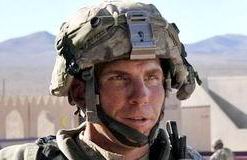
Robert Bales
Spree killer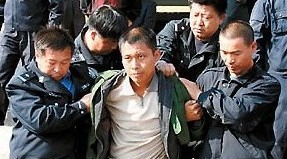 Shi Yuejun
Spree killer · China · 2006
Shi Yuejun (b. 1970 in Liuhe, China - d. December 20, 2006 in Tonghua, China) w…
12 victims
Shi Yuejun
Spree killer · China · 2006
Shi Yuejun (b. 1970 in Liuhe, China - d. December 20, 2006 in Tonghua, China) w…
12 victims
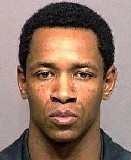 John Allen Muhammad
Spree killer · USA · 2002
John Allen Muhammad carried out the 2002 D.C. sniper attacks with his 17-year-o…
10 victims
John Allen Muhammad
Spree killer · USA · 2002
John Allen Muhammad carried out the 2002 D.C. sniper attacks with his 17-year-o…
10 victims
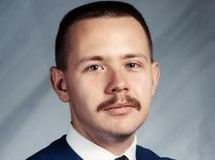 Michael McLendon
Spree killer · USA · 2009
Michael McLendon died of self-inflicted gunshot wound after shootout with autho…
10 victims
Michael McLendon
Spree killer · USA · 2009
Michael McLendon died of self-inflicted gunshot wound after shootout with autho…
10 victims
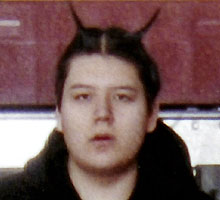 Jeffrey Weise
Spree killer · USA · 2005
Jeffrey Weise, a 16-year-old student at Red Lake High School in Red Lake, an un…
9 victims
Jeffrey Weise
Spree killer · USA · 2005
Jeffrey Weise, a 16-year-old student at Red Lake High School in Red Lake, an un…
9 victims
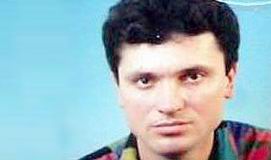 Nikola Radosavljevic
Spree killer · Serbia · 2007
Nikola Radosavljevic was taken to a prison mental hospital in Belgrade, where h…
9 victims
Nikola Radosavljevic
Spree killer · Serbia · 2007
Nikola Radosavljevic was taken to a prison mental hospital in Belgrade, where h…
9 victims
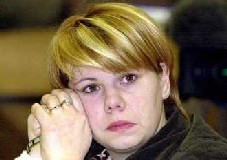 Christine Malèvre
Serial killer · France · 1997
Christine Malèvre Christine Malèvre (born 1970) was a French serial killer. She…
30 victims
Christine Malèvre
Serial killer · France · 1997
Christine Malèvre Christine Malèvre (born 1970) was a French serial killer. She…
30 victims
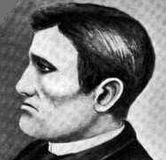 Patrick Prendergast
Murderer · USA · 1893
Patrick Prendergast was born in Ireland. His grandfather was reported to have d…
1 victim
Patrick Prendergast
Murderer · USA · 1893
Patrick Prendergast was born in Ireland. His grandfather was reported to have d…
1 victim
 Darrell Brooks
Mass Murderer · USA · 2002
Darrell Brooks was charged and convicted in federal court for an arson that res…
7 victims
Darrell Brooks
Mass Murderer · USA · 2002
Darrell Brooks was charged and convicted in federal court for an arson that res…
7 victims
 Donnie Lee Roberts
Murderer · USA · 1991
Donnie Lee Roberts was convicted in Texas of capital murder and was sentenced t…
2 victims
Donnie Lee Roberts
Murderer · USA · 1991
Donnie Lee Roberts was convicted in Texas of capital murder and was sentenced t…
2 victims
 Phillip Hallford
Murderer · USA · 1986
Phillip D. Hallford was convicted of capital murder arising from a murder commi…
1 victim
Phillip Hallford
Murderer · USA · 1986
Phillip D. Hallford was convicted of capital murder arising from a murder commi…
1 victim
- Gender
- male
- Country
- Afghanistan
- Location
- Panjwai, Kandahar, Afghanistan
- Date of birth
- June 30, 1973
- Age at first offence
- 39
- Characteristics
- alcohol, torture
- Victim profile
- Nine children, four men, and three women (Afghan civilians)
- Method of murder
- Shooting - Stabbing with knife
- Date(s) of murder
- March 11, 2012
- Years active
- 2012
- Date of arrest
- Same day
- Status
-
Life imprisonment
Sentenced to life in prison without parole on August 23, 2013; found guilty in a plea deal on June 5, 2013
Case overview
Robert Bales (born June 30, 1973) was a United States Army soldier.
He murdered sixteen Afghan civilians in Panjwai, Kandahar, Afghanistan on March 11, 2012. The incident was widely referred to in media reports as the Kandahar massacre.
He was formally charged on March 23, 2012 with seventeen counts of murder and six counts of assault and attempted murder.
He was held in detention at Northwest Joint Regional Correctional Facility at Joint Base Lewis-McChord.
Timeline
- March 11, 2012 — Robert Bales shot and killed sixteen Afghan civilians in the villages of Balandi and Alkozai near Camp Belamby in Panjwai, Kandahar, Afghanistan.
- March 16, 2012 — Bales was flown from Kuwait to the Midwest Joint Regional Correctional Facility in Fort Leavenworth, Kansas.
- March 23, 2012 — The U.S. government charged Bales with seventeen counts of murder, six counts of attempted murder, and six counts of assault.
- June 1, 2012 — One of the murder charges was dropped because one victim had been double counted; other charges were filed including abuse of steroids, alcohol consumption, and attempting to destroy evidence; assault charges were increased from six to seven.
- November 5–13, 2012 — An Article 32 hearing was held at Joint Base Lewis-McChord; it included eyewitness testimony from Afghanistan via live video link; Bales did not testify; prosecutors requested the death penalty.
- May 29, 2013 — It was reported that Bales would plead guilty in return for a life sentence, avoiding the death penalty.
- June 5, 2013 — Bales pleaded guilty in a plea deal to 16 counts of murder and six counts of assault and attempted murder; he was found guilty in the plea deal.
- August 23, 2013 — A six-person jury sentenced Bales to life in prison without parole.
- October 2012 — Bales was transferred to Northwest Joint Regional Correctional Facility at Joint Base Lewis-McChord.
- March 24, 2012 — U.S. Army investigators alleged Bales was the only person responsible for the shootings and split the killings into two attacks, returning to Camp Belamby after the first attack before leaving again an hour later.
- March 25, 2012 — The United States gave an equivalent of US$860,000 to the victims’ families allocated as $50,000 for each person killed and $10,000 for each person injured.
- March 14, 2012 — The United States flew the alleged shooter out of Afghanistan to Kuwait.
- August — A hearing was set for August to determine whether Bales would be eligible for parole after 10 years.
- September — A sentencing-phase trial was referenced as being set for August to determine parole eligibility; subsequent reporting also referenced a sentencing-phase trial set for September.
- December 2007 — Bales completed his Battle of Najaf service timing was described in background as occurring in 2007 (as part of his 2007 tour).
- 2008 — Bales underwent mental health screening required to become a sniper; he was charged with misdemeanor criminal assault after a 2008 incident, and the charge was dismissed after anger management classes (timeline included in background).
- 2010 — Bales was treated for traumatic brain injury after his vehicle was rolled in an accident; he was deemed healthy (as part of background).
The offence
On the night of March 11, 2012, sixteen Afghan civilians were shot and killed in the villages of Balandi and Alkozai near Camp Belamby.
The incident involved two villages identified as Balandi and Alkozai (also described as Najiban and Alkozai in parts of the account). According to U.S. Army investigators, Bales split the killings into two attacks, returning to Camp Belamby after the first attack before leaving again an hour later.
The victims included nine children and four women. The massacre included nine children as young as two years old, and four women.
In total, nine children were included among those killed; eleven members of Abdul Samad’s family were reported killed in a house in Najiban, including his wife, four girls between the ages of 2 and 6, four boys between 8 and 12, and two other relatives.
Witnesses described the perpetrator as wearing a headlamp and/or a spotlight attached to his weapon.
Witnesses stated bodies were set on fire, including reports that the bodies were gathered into one room and set on fire and that a pile of ashes was found on the floor of one victim’s house, with at least one child’s body found partially charred.
A U.S. official account described Bales as acknowledging the killings after capture and then asking for an attorney and refusing to speak with investigators about his motivations.
Detention and interrogation included that Bales was taken into custody after surrender, and that the surveillance video reportedly showed the soldier surrendering and raising his arms.
Victims and injuries
Killed
- Mohamed Dawood (son of Abdullah)
- Khudaydad (son of Mohamed Juma)
- Nazar Mohamed
- Payendo
- Robeena
- Shatarina (daughter of Sultan Mohamed)
- Zahra (daughter of Abdul Hamid)
- Nazia (daughter of Dost Mohamed)
- Masooma (daughter of Mohamed Wazir)
- Farida (daughter of Mohamed Wazir)
- Palwasha (daughter of Mohamed Wazir)
- Nabia (daughter of Mohamed Wazir)
- Esmatullah, age 16 (son of Mohamed Wazir)
- Faizullah, age 9 (son of Mohamed Wazir)
- Essa Mohamed (son of Mohamed Hussain)
- Akhtar Mohamed (son of Murrad Ali)
Wounded
- Haji Mohamed Naim (son of Haji Sakhawat)
- Mohamed Sediq (son of Mohamed Naim)
- Parween
- Rafiullah
- Zardana
- Zulhe
Investigation and evidence
U.S. Army investigators alleged that Bales was the only person responsible for the shootings.
Investigators described that Bales returned to Camp Belamby after a first attack, then left again before a second attack.
A senior military official said Bales had been drinking alcohol with two other soldiers on the night of the shootings, in violation of military rules in combat zones.
According to Defense Secretary Leon Panetta, Bales acknowledged the killings and “told individuals what happened” immediately after being captured.
Minutes later, he refused to speak with investigators and asked for an attorney.
Witness accounts included descriptions of a soldier breaking into homes and killing people, including accounts that he hit and kicked members of a family, gunned down old men, and set bodies on fire.
A surveillance video was described as showing the soldier walking up to his base covered in a traditional Afghan shawl, removing the shawl, laying his weapon on the ground, and raising his arms in surrender. The video was not released to the public.
There were conflicting early counts about the number killed, revised from sixteen to seventeen and later reduced back to sixteen. The number injured was initially reported as five and later increased to six.
An Afghan parliamentary probe team announced that up to 20 American soldiers were involved, with support from two helicopters. One member of the probe team said they were convinced that one soldier could not have killed so many people in two villages within one hour, and later the team said they could not confirm that multiple soldiers took part in the killings.
The United States showed Afghan authorities surveillance video footage as proof that there was only one perpetrator.
American officials declared there was “no evidence” that villagers had been lined up against a wall and threatened.
Arrest, custody, and detention
After the killings at Alkozai and Balandi, a U.S. soldier handed himself over into ISAF custody.
A patrol was dispatched to find the missing soldier before he returned to base after the killings, and he was reportedly taken into custody without incident.
The U.S. flew the alleged shooter out of Afghanistan to Kuwait on 14 March 2012, then to the United States Disciplinary Barracks at Fort Leavenworth in Kansas on 16 March.
The transfer from Kuwait was described as prompting diplomatic uproar, with Kuwaiti officials learning about the case from news reports before hearing from the U.S. government.
In custody at Fort Leavenworth, U.S. Army Colonel James Hutton, Chief of Media Relations, stated that Bales was being held in special housing in his own cell and was able to go outside the cell “for hygiene and recreational purposes.”
In October 2012, Bales was transferred to Northwest Joint Regional Correctional Facility at Joint Base Lewis-McChord.
Bales was later incarcerated at United States Disciplinary Barracks at Fort Leavenworth.
Charges
On March 23, 2012, Bales was charged with:
- seventeen counts of murder
- six counts of attempted murder
- six counts of assault
On June 1, 2012, one murder charge was dropped because one victim had been double counted.
Simultaneously, other charges were filed including:
- abuse of steroids
- alcohol consumption
- attempting to destroy evidence
- assault charges increased from six to seven, with the seventh charge being for an unrelated incident in February 2012.
During the plea, he pleaded guilty to 16 counts of murder and six counts of assault and attempted murder.
Trial process
Article 32 hearing
An Article 32 hearing was held at Joint Base Lewis-McChord on November 5–13, 2012.
The hearing included eyewitnesses’ testimony from Afghanistan via live video link, and Bales did not testify.
The hearing concluded with prosecutors requesting the death penalty.
Guilty plea
On May 29, 2013, it was announced Bales would plead guilty and describe the events of March 11, 2012.
On June 5, Bales pleaded guilty in a plea deal.
When asked by judge Col. Jeffery Nance, “What was your reason for killing them?”, he said:
“I asked myself that question a million times” and added: “There’s not a good reason in this world for why I did the horrible things I did.”
When asked about pouring kerosene on some of his victims and setting them on fire as charged, he said he did not remember the bodies being set on fire but conceded, given the evidence, “It’s the only thing that makes sense, sir.”
When asked about his illegal use of steroids, he said he had wanted to get stronger, stating he wanted to be “huge and jacked,” and he said: “Sir, it definitely increased my irritability and anger.”
The plea was described as removing the possibility of the death penalty.
Bales was asked for an explanation and was described as baffled when trying to explain his actions.
Sentencing
At the sentencing hearing, defense attorneys argued for life with the possibility of parole, describing him as a troubled man who snapped and not a “cold-blooded murderer.”
Bales took the stand to apologize to his victims, saying he would bring them back to life if he could.
The prosecution sought life without parole and closed with:
“In just a few short hours, Sgt. Bales wiped out generations. Sgt. Bales dares to ask you for mercy when he has shown none.”
On August 23, 2013, a six-person jury sentenced Bales to life in prison without parole.
He was also demoted to the lowest enlisted rank, dishonorably discharged, and ordered to forfeit all pay and allowances.
A commanding general overseeing the court-martial had the option of reducing the sentence to life with the possibility of parole.
Afghan villagers and the families of Bales’ victims were upset by the decision, saying he deserved death.
Appeals
The account included references to a response to judge questions about his appellate rights, with Bales responding with polite “yes, sirs” before being led away.
A hearing was set for August to determine whether Bales would be eligible for parole after 10 years.
Aftermath and reactions
Reactions from Afghan victims and families
A woman who lost four family members said, “We don't know why this foreign soldier came and killed our innocent family members. Either he was drunk or he enjoyed killing civilians.”
Abdul Samad, a 60-year old farmer who lost 11 family members, spoke about the incident:
“I don't know why they killed them. Our government told us to come back to the village, and then they let the Americans kill us.”
A grieving mother said:
“They killed a child, was this child the Taliban? Believe me, I haven't seen a 2-year-old member of the Taliban yet.”
A villager whose brother was killed stated:
“I don't want any compensation. I don't want money, I don't want a trip to Mecca, I don't want a house. I want nothing. But what I absolutely want is the punishment of the Americans. This is my demand, my demand, my demand and my demand”
More than 300 Panjwai locals gathered around the military base to protest the killings. Some brought burned blankets to represent those killed.
An elderly woman screamed:
“May God kill the only son of Karzai, so he feels what we feel.”
On March 13, hundreds of university students protested in Afghanistan’s eastern city of Jalalabad, shouting “Death to America – Death to Obama” and burning effigies of the U.S. president and a Christian cross.
On March 15, about 2,000 people took part in another protest in the southern province of Zabul.
Statements and reactions by Afghan authorities
Afghanistan’s President Hamid Karzai called the incident “intentional murder” and stated:
“this [was] an assassination, an intentional killing of innocent civilians and cannot be forgiven.”
He said the United States must pull back its troops from village areas and allow Afghan security forces to take the lead.
A spokesperson for the Afghan Interior Ministry condemned the act “in the strongest possible terms.”
The National Assembly of Afghanistan insisted that the U.S. soldier face a public trial in Afghanistan, stating:
“We seriously demand and expect that the government of the United States punish the culprits and try them in a public trial before the people of Afghanistan.”
It also condemned the killings as “brutal and inhuman” and declared:
“people are running out of patience over the ignorance of foreign forces.”
Abdul Rahim Ayobi said:
“the message that now the American soldiers are out of the control of their generals.”
Kamal Safai said that while it was the act of a single man, “the public reaction will blame the government of America, not the soldier.”
Statements and reactions by U.S. and ISAF/NATO officials
U.S. officials apologized and promised a full investigation.
Secretary of Defense Leon Panetta said the soldier “will be brought to justice and be held accountable” and said the death penalty “could be a consideration.”
President Barack Obama called the incident “absolutely tragic and heartbreaking” but said he was “proud generally” of what U.S. troops had accomplished in Afghanistan, and said:
“the United States takes this as seriously as if it were our own citizens and our own children who were murdered. We’re heartbroken over the loss of innocent life. The killing of innocent civilians is outrageous and it’s unacceptable.”
When asked whether the killings could be likened to the 1968 My Lai massacre, Obama replied:
“It's not comparable. It appeared you had a lone gunman who acted on his own.”
General John R. Allen issued an apology.
Adrian Bradshaw said:
“I wish to convey my profound regrets and dismay... I cannot explain the motivation behind such callous acts, but they were in no way part of authorised ISAF military activity.”
Taliban reaction
The Taliban said in a statement on its website that “sick-minded American savages” committed the “blood-soaked and inhumane crime.”
It promised the families of victims that it would take revenge “for every single martyr”.
The Taliban accused Afghan security officials of being complicit in the attack and called off peace talks in the wake of the rampage.
Personal background and military service
Early life and education
Robert Bales was born and raised in Norwood, Ohio, a Cincinnati suburb, as the youngest of five boys.
He attended Norwood High School, described as a “gregarious” captain of the football team and active in theater and numerous clubs and activities.
He was supplanted in his linebacker position by future NFL player Marc Edwards, whom he mentored.
After high school, Bales briefly enrolled at the College of Mount St. Joseph, then transferred to Ohio State University, studying economics for three years, and left without graduating in 1996.
Civilian career and financial fraud arbitration
After leaving college in 1996, Bales worked as a registered broker at five financial services firms in Columbus, Ohio.
The firms were interrelated, sharing employees and corporate offices, and were reputedly boiler room operations practicing pump and dump techniques in the penny stock market.
He moved to Florida and co-founded a financial company named Spartina Investments.
Soon after, an arbitrator found Bales liable for financial fraud related to the handling of a retirement account and ordered him to pay $1.4 million in civil damages.
Gary Liebschner said he “never got paid a penny” of the award.
Bales enlisted in the U.S. Army in the November after Spartina Investments went out of business in 2001.
The account said legal action against Bales had not been pursued to collect the judgement because the claimant was unable to locate Bales, who had joined the U.S. Army eighteen months after the arbitration case was filed.
Military assignments, deployments, and training
Bales enlisted in the U.S. Army in November 2001.
He was initially assigned to 2nd Battalion, 3rd Infantry of the 3rd Stryker Brigade, 2d Infantry Division at Fort Lewis.
He completed three tours in the Iraq War: twelve months in 2003 and 2004, fifteen months in 2006 and 2007, and ten months in 2009 and 2010.
In the 2007 tour he reportedly injured his foot in the Battle of Najaf.
During the 2010 tour, he was treated for traumatic brain injury after his vehicle rolled over in an accident, and he was described as deemed healthy after advanced traumatic brain injury treatment at Fort Lewis.
He underwent mental health screening to become a sniper in 2008.
Investigators described his ten-year Army career as “unremarkable” and found no evidence of serious traumatic brain injury or post-traumatic stress.
Public records showed minor run-ins with police while stationed at Fort Lewis.
In 2002, he got into a fight with a security guard at a Tacoma area casino and was charged with misdemeanor criminal assault; the charge was dismissed after he paid a small fine and attended anger management classes.
An alleged confrontation outside a bar in 2008 was reported to police, but no charges were filed.
Camp Belambay role and Kandahar assignment
On February 1, 2012, Bales was assigned to Camp Belambay in Kandahar Province, where he was responsible for base security for U.S. Army Special Forces and U.S. Navy SEALs engaged in village stability operations.
He was described as trained as a sniper and part of a front-line infantry unit.
Legal representation and courtroom roles
Bales’s civilian attorney was John Henry Browne, who also represented serial killer Ted Bundy.
Browne defended Bales alongside assigned military lawyers.
Emma Scanlan was described as another lawyer for Bales.
Lt. Col. Jay Morse, a member of the US Army Trial Counsel Assistance Program, was the lead prosecutor in the Bales case.
Judge Col. Jeffery Nance presided and asked Bales questions during the plea.
Awards and decorations
Bales received:
- Army Commendation Medal with one silver oak leaf cluster
- Army Achievement Medal
- Army Good Conduct Medal with three Good Conduct Loops
- National Defense Service Medal
- Iraq Campaign Medal with two service stars
- Global War on Terrorism Expeditionary Medal
- Global War on Terrorism Service Medal
- Army Service Ribbon
- Army Overseas Service Ribbon
- Meritorious Unit Commendation with one bronze oak leaf cluster
- Army Superior Unit Award
- Combat Infantryman Badge
Personal life
Bales was married and had two young children.
After the shootings, his family was moved from Lake Tapps, Washington to protect them.
Bales’s wife was named Karilyn.
Karilyn told People magazine: “...I know my husband didn't do that. That's not Bob.”
On CBS This Morning on July 2, 2012, Bales, captioned as Kari, said she had spoken often to her husband in detention and stated:
“We just talk about family matters.”
The property was listed for $50,000 less than the family paid in 2005 and less than they owed the bank.
Officials described that Bales may have had marital problems after returning from deployment in Iraq in 2010.
Karilyn blogged about disappointment after he was passed over for promotion to sergeant first class, noting “after all of the work Bob has done and all the sacrifices he has made for his love of his country, family and friends.”
She looked forward to the next duty station, listing Germany, Italy, Hawaii, Kentucky, or Georgia, describing the possibilities as opportunities for adventure.
Financial payments to victims’ families
On 25 March 2012, at the office of the governor of Kandahar province, the United States gave an equivalent of US$860,000 to the victims’ families, allocated as $50,000 for each person killed and $10,000 for each person injured.
The official who disbursed the payments said the money was not compensation but rather an offering to help victims and their families.
A member of the Kandahar provincial council described the payments as assistance, not legal compensation that would absolve the accused.
Spotted an error, or have more information about this case?