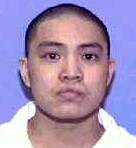
Son Vu Khay Tran
Homicide Jack Kevorkian
Homicide · USA · 1990
Jack Kevorkian (born May 26, 1928) was a controversial American pathologist. He…
130 victims
Jack Kevorkian
Homicide · USA · 1990
Jack Kevorkian (born May 26, 1928) was a controversial American pathologist. He…
130 victims
 David Koresh
Homicide · USA · 1993
David Koresh (born Vernon Wayne Howell; August 17, 1959 – April 19, 1993) led t…
79 victims
David Koresh
Homicide · USA · 1993
David Koresh (born Vernon Wayne Howell; August 17, 1959 – April 19, 1993) led t…
79 victims
 Todd Hall
Homicide · USA · 1996
Todd Hall was described by neighbors as "mentally slow" and was said to have su…
9 victims
Todd Hall
Homicide · USA · 1996
Todd Hall was described by neighbors as "mentally slow" and was said to have su…
9 victims
 Clinton Bankston
Homicide · USA · 1987
15 August 1987 — Ann Morris (63), her sister Sally Nicholson (59), and Sally’s…
5 victims
Clinton Bankston
Homicide · USA · 1987
15 August 1987 — Ann Morris (63), her sister Sally Nicholson (59), and Sally’s…
5 victims
 Joshua Jenkins
Homicide · USA · 1996
Joshua Jenkins was a 15-year-old American killer who killed five members of his…
5 victims
Joshua Jenkins
Homicide · USA · 1996
Joshua Jenkins was a 15-year-old American killer who killed five members of his…
5 victims
 John Martin Crawford
Serial killer · Canada · 1981
John Martin Crawford was a Canadian serial killer. · 1981 — John Martin Crawfor…
4 victims
John Martin Crawford
Serial killer · Canada · 1981
John Martin Crawford was a Canadian serial killer. · 1981 — John Martin Crawfor…
4 victims
 Luis Aguilar Perez
Murderer · USA · 1984
Luis Aguilar Perez was convicted of sexually assaulting and attempting to murde…
2 victims
Luis Aguilar Perez
Murderer · USA · 1984
Luis Aguilar Perez was convicted of sexually assaulting and attempting to murde…
2 victims
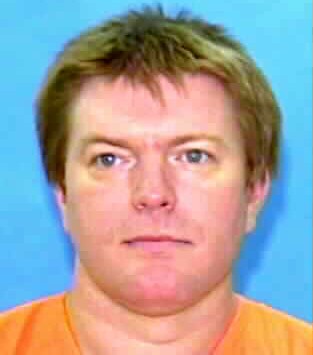 Jeffrey Lee Atwater
Murderer · USA · 1989
Jeffrey Lee Atwater was convicted and sentenced to death for the murder of Ken…
1 victim
Jeffrey Lee Atwater
Murderer · USA · 1989
Jeffrey Lee Atwater was convicted and sentenced to death for the murder of Ken…
1 victim
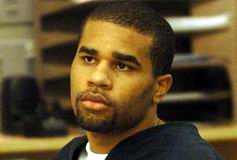 Derlyn Ray Threats
Murderer · USA · 2005
Derlyn Ray Threats was a former Camp Pendleton Marine sergeant. He was convicte…
1 victim
Derlyn Ray Threats
Murderer · USA · 2005
Derlyn Ray Threats was a former Camp Pendleton Marine sergeant. He was convicte…
1 victim
 Ynobe Matthews
Serial killer · USA · 1999
Ynobe Matthews was convicted of capital murder in June 2001 and was sentenced t…
6 victims
Ynobe Matthews
Serial killer · USA · 1999
Ynobe Matthews was convicted of capital murder in June 2001 and was sentenced t…
6 victims
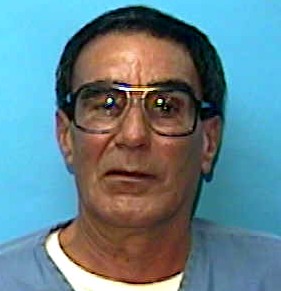 Joseph Spaziano
Murderer · USA · 1973
Joseph Spaziano was tried for the murder of a young woman that had occurred two…
2 victims
Joseph Spaziano
Murderer · USA · 1973
Joseph Spaziano was tried for the murder of a young woman that had occurred two…
2 victims
- Gender
- male
- Country
- USA
- Location
- Harris County, Texas, USA
- Date of birth
- May 11, 1980
- Age at first offence
- 17
- Characteristics
- juvenile (17), convicted rapist
- Victim profile
- 3 men and 1 woman
- Method of murder
- Shooting
- Date(s) of murder
- October 25, 1997
- Years active
- 1997
- Date of arrest
- —
- Status
-
Life imprisonment
Commuted to life in prison on June 22, 2005
Case record: Son Vu Khay Tran
Status and sentence
Tran was sentenced to death on January 4, 2001. His sentence was commuted to life in prison on June 22, 2005.
Timeline
- 10/25/1997 — Capital murder alleged to have occurred on or about this date.
- 10/25/1997 — Tran was 17 at the time of the offense.
- 10/26/1997 — Tran was riding in a car with Donnie Tran and two others; police stopped the car due to a warrant for Donnie Tran for murder.
- 10/27/1997 — Interview with Tran began at approximately 12:30 a.m.; Tran confessed to involvement in two murders.
- 12/03/2002 — A supplemental clerk's record containing findings and conclusions was filed with the Court of Criminal Appeals of Texas.
- 12/14/2000 — Tran was convicted of capital murder.
- 01/04/2001 — Trial judge sentenced Tran to death.
- 04/02/2003 — The Court of Criminal Appeals of Texas delivered a unanimous opinion affirming on direct appeal.
- 06/22/2005 — Sentence commuted to life in prison.
Background
Tran was identified as Son Vu Khai Tran. He had a TDCJ number of 999372. His date of birth was 05/11/1980. He was received on 01/04/2001 and was 20 at the time of receipt. His education level was 8. He was Black and male. His hair color was brown; his height was 5 ft 7 in; his weight was 164; his eye color was brown. His native county was Native County; his native state was Cuyahoga, Ohio. His prior occupation was laborer. His prior prison record was none. The county in the case was Harris.
Tran was convicted of capital murder for participation in murders resulting in the death of four people.
Co-defendants included Truc Thanh Hoang Dung Tran. The race and gender of the victim(s) were unknown males.
The offence
Tran participated in a series of murders involving four deaths.
Tran and three others lured a man to a club in Houston and murdered him because of his relationship with a woman who worked at the club. After Tran and the others learned that another woman who worked at the club was aware of their identities, Tran and two of the others drove that woman to a secluded beach and shot her in the head, resulting in her death.
Tran and two others then became concerned that a fourth person involved in the first murder might not keep their secret. That fourth person was lured to a meeting under false pretenses. He brought a friend along. Tran and one of the others shot and killed the fourth person and his friend.
The prosecution for the death of these last two murders resulted in the capital murder conviction for Tran.
Investigation
During the suppression proceedings related to Tran’s custodial statements, the State presented evidence that on October 26, 1997, Tran was riding in a car with Donnie Tran and two others. Police stopped the car because they had a warrant for Donnie Tran’s arrest for the offense of murder.
The police were not immediately able to determine which passenger was Donnie. Therefore, all occupants of the car were handcuffed as they exited the vehicle. After Donnie was identified, the officers removed the handcuffs from Tran and the other passengers.
Detective Todd Miller testified that after removing Tran’s handcuffs, he explained that Donnie was being arrested for murder. Miller told Tran he was not under arrest and was free to leave if he so desired. Miller asked if Tran would accompany him to the police station to discuss the murder for which Donnie was arrested and the instant capital murder.
At the police station, Miller took Tran to an interview room and asked if he wanted anything to drink or if he needed to use the restroom. Tran replied that he did not. Miller reiterated that Tran was not under arrest and asked if Tran understood that. Tran replied that he did. Miller read Tran his rights, asked if he understood, and Tran replied that he did. Tran agreed to waive his rights and speak to Miller.
The interview began at approximately 12:30 a.m. on October 27, 1997. Shortly after it began, Tran asked to use the restroom. Miller showed him where the bathroom was, and Tran left the interview room without being escorted by police officers. Upon his return, Tran confessed to being involved in the two murders in the case.
After Tran confessed, Miller placed him under arrest and asked if he would give a written or recorded statement. Tran agreed to give a statement and asked that it be written. Miller read Tran his Article 38.22 warnings again; Tran indicated he understood and agreed to speak. Tran then dictated his statement while Miller typed it. Tran reviewed the statement and indicated it was accurate, then signed it.
Before Tran signed his statement, Miller left the interview room and asked Officers Motard and Hale to interview Tran and present him with a questionnaire regarding voluntariness without Miller present. Tran responded to their questions and stated that he was Son Tran, that the statement was his, that he read the entire statement, that he was not promised anything in exchange, that no one forced him, that he was not physically abused, that Miller read him his rights and he understood them, that he agreed to give up his rights, that he made his statement of his own free will, and that he did not want to make corrections and had no questions. Tran also acknowledged orally that: "prior to and during the making of this statement I intelligently, voluntarily waived or gave up the rights set out above and gave the following voluntary statement."
In Tran’s written statement, he related that although he and two others were involved in luring the victims to the location of their deaths, it was Donnie who actually shot the victims. Miller relayed this information to the officers interviewing Donnie and the other passengers. After comparing notes, Miller discovered a discrepancy between Tran’s version and the version of one accomplice.
Miller brought Tran back from the jail to an interview room later that day. Miller read Tran his Article 38.22 rights again and asked if Tran understood. Tran replied that he did and agreed to speak with Miller. Miller then presented Tran with the accomplice statement that identified Tran as the actual shooter. Faced with the conflicting statements, Tran said he knew Miller would find out eventually, then confessed that he was, in fact, the actual shooter. Miller asked Tran to make a corrected written statement; Tran did. Officers Waters and Abbondandolo then conducted the same voluntariness questionnaire procedure. Tran initialed, acknowledged voluntariness, and signed his corrected statement.
Arrest
Police stopped the car on October 26, 1997 based on a warrant for Donnie Tran’s arrest for the offense of murder. All occupants were handcuffed at first until Donnie was identified, after which handcuffs were removed from Tran and the other passengers.
Tran’s testimony at the suppression hearing differed from the officers’ testimony. Tran testified that he was placed in an unmarked police vehicle and driven off with three officers while he was still handcuffed, without explanation of destination or the reason for the stop. He testified he did not believe he had any choice other than to comply with the officers’ instructions and that no one told him whether he was under arrest. He stated he knew where they were going only when he read "Police Station" on the building. When they entered and he was taken upstairs, one officer pointed out a sign that read "homicide." He testified that only after he was placed in a little interview room was he uncuffed. He testified that he was told he was arrested for murder right when he was placed in the interview room and that no one told him he was not under arrest or was free to go, nor that they asked if he would like to accompany them to answer questions. He testified: "No, sir. They told me I was under arrest in the beginning." He reiterated that he was not told that he was not under arrest or free to go.
An additional passenger testified that he believed he was under arrest, that he did not have any choice about getting in the police car, that he was transported to a police station, and that only after he was taken inside were the handcuffs removed.
Trial
Conviction and sentence
On December 14, 2000, Tran was convicted of capital murder for murdering two people during the same criminal transaction, alleged to have occurred on or about October 25, 1997, under Tex. Penal Code Ann. § 19.03(a). The trial judge sentenced Tran to death pursuant to the jury’s answers to the special issues set forth in Texas Code of Criminal Procedure Article 37.071, sections 2(b) and 2(e).
Evidence and suppression issues
Tran appealed on five points of error. The appeal was automatic for direct appeal to the Court of Criminal Appeals of Texas under Art. 37.071 § 2(h).
Point of error 1: findings of fact and conclusions of law
Tran claimed the trial court committed reversible error by failing to make findings of fact and conclusions of law regarding voluntariness of his statement pursuant to Article 38.22, section 6. On December 3, 2002, a supplemental clerk's record containing the required findings and conclusions was filed with the Court. Tran’s first point of error was dismissed as moot.
Point of error 2: admissibility of custodial statements
Tran contended that custodial statements were admitted in violation of constitutional provisions and Texas Code of Criminal Procedure provisions, claiming his confession resulted from an illegal arrest.
The trial court found that the officers who testified at the suppression hearing, including Miller and Ladd, were "truthful and credible" and that Tran’s oral statement and two written statements "were made voluntarily, knowingly, and intelligently."
The trial court specifically found that when Donnie was arrested: (1) Officer Miller explained to Tran that he was not under arrest and was free to leave if he so desired; (2) Officer Miller asked Tran if he would be willing to go with police to their offices to discuss his knowledge of the offense for which Donnie had been arrested; and (3) Tran agreed to accompany them to their offices. The trial court further found that no officer threatened, coerced, or compelled Tran to go to the police station, and that his decision to do so was solely the product of his free will.
The trial court concluded that Tran was not placed under arrest at the scene of the traffic stop and was not under arrest until after his first oral confession, when Officer Miller told him he was under arrest.
The Court of Criminal Appeals held that the record supported the trial court’s finding that Tran voluntarily agreed to accompany police to discuss the offense and that Tran was not under arrest at the scene. It held the trial court did not abuse its discretion in overruling Tran’s motion to suppress and in admitting his statements. Tran’s second point of error was overruled.
Points of error 3 and 4: co-defendants’ testimony
Tran alleged the trial court erred by failing to compel testimony of co-defendants Truc Hoang and Donnie Tran at the motion to suppress hearing and at trial. When the defense called them at the suppression hearing and at trial, both asserted their Fifth Amendment privilege against self-incrimination. The trial court ruled they could not be compelled to testify. Tran did not object to the ruling and did not make an offer of proof as to what Truc and Donnie would have testified.
The Court held error was not preserved because Tran did not preserve the issue. Tran’s third and fourth points of error were overruled.
Point of error 5: notice of intent to use extraneous offenses
Tran asserted reversible error because the trial court failed to require the State to provide notice of intent to use extraneous offenses or misconduct under Tex. R. Evid. 404(b).
The Court noted Tran did not specify any particular extraneous offense or misconduct evidence that was admitted without notice, and it limited its discussion to the two extraneous killings discussed when Tran objected at trial.
The Court addressed that Rule 404(b) provides for notice of intent for evidence of other crimes, wrongs, or acts admissible for non-character purposes, but that it exempts evidence arising in the same transaction. The Court also discussed that open file does not provide reasonable notice, and that delivery of witness statements can satisfy notice requirements if it follows a timely request and avoids surprise.
The Court described that Tran’s Motion for Discovery of Extraneous Offenses, requesting notice, was filed on August 15, 2000 and granted by agreement on August 24, 2000. The discussion about extraneous offense notice occurred on December 11, 2000. The Court concluded it could not conclude the trial court abused its discretion in finding Tran was provided reasonable notice of the State’s intent to use evidence of the two extraneous killings at the guilt/innocence phase. Tran’s fifth point of error was overruled.
Decision on direct appeal
The Court of Criminal Appeals affirmed the judgment of the trial court. The opinion was delivered on April 2, 2003 by Johnson, J., with a unanimous opinion.
Appeals
Direct appeal proceeded to the Court of Criminal Appeals of Texas under an automatic direct appeal procedure.
Tran raised five points of error:
- Point 1 dismissed as moot after supplemental findings and conclusions were filed on December 3, 2002.
- Points 2, 3, 4, and 5 were overruled.
Outcome
Tran’s direct appeal resulted in affirmation of his conviction.
Other details
Donnie Tran was arrested for a murder dubbed by police as the "Rose Club killing," which took place just days before the two victims in Tran’s case were killed. The Rose Club killing was related to the present case because the victims in this case assisted Donnie and Tran in killing the victim at the Rose Club. The two victims in this case were killed because Donnie and Tran were concerned they would admit to the Rose Club killing if questioned by police.
At the suppression hearing, Tran called two witnesses (co-defendants) to testify; they stated they would like to exercise their Fifth Amendment right not to testify. After Donnie was questioned and invoked his right not to testify, Tran stated: "I think he has the right not to incriminate himself ... I'm not sure he has the right not to testify." Tran did not object to the trial court’s ruling.
At trial, after the State rested, Tran stated he wanted to put the two co-defendants on the witness stand "and have them reiterate what they said." Outside the presence of the jury, the two witnesses again indicated they wanted to invoke their Fifth Amendment right not to testify.
Spotted an error, or have more information about this case?