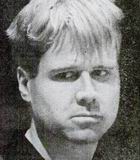
Herbert James Coddington
Murderer Ervil LeBaron
Murderer · USA · 1972
Ervil Morrell LeBaron (1925 to August 16, 1981) was the leader of a polygamous…
35 victims
Ervil LeBaron
Murderer · USA · 1972
Ervil Morrell LeBaron (1925 to August 16, 1981) was the leader of a polygamous…
35 victims
 Brian Kevin Rosenfeld
Murderer · USA · 1985
Brian Kevin Rosenfeld Brian Kevin Rosenfeld was sentenced to three concurrent l…
23 victims
Brian Kevin Rosenfeld
Murderer · USA · 1985
Brian Kevin Rosenfeld Brian Kevin Rosenfeld was sentenced to three concurrent l…
23 victims
 Marvin Gray
Murderer · USA · 1975
Marvin Gray was convicted killer who claimed responsibility for 23 slayings and…
23 victims
Marvin Gray
Murderer · USA · 1975
Marvin Gray was convicted killer who claimed responsibility for 23 slayings and…
23 victims
 Yahweh ben Yahweh
Murderer · USA · 1980
Yahweh ben Yahweh was born and legally named Hulon Mitchell Jr. (October 27, 19…
23 victims
Yahweh ben Yahweh
Murderer · USA · 1980
Yahweh ben Yahweh was born and legally named Hulon Mitchell Jr. (October 27, 19…
23 victims
 Russell Ellwood
Murderer · USA · 1991
Russell Ellwood was a former taxi driver. Authorities suspected him of killing…
20 victims
Russell Ellwood
Murderer · USA · 1991
Russell Ellwood was a former taxi driver. Authorities suspected him of killing…
20 victims
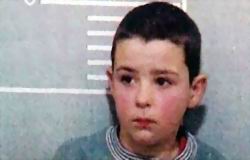 Robert Thompson
Homicide · United Kingdom · 1993
Robert Thompson (born 23 August 1982) abducted, tortured and murdered James Bul…
1 victim
Robert Thompson
Homicide · United Kingdom · 1993
Robert Thompson (born 23 August 1982) abducted, tortured and murdered James Bul…
1 victim
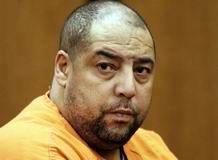 Elias Acevedo
Murderer · USA · 1994
Elias Acevedo Sr. was sentenced to 445 years to life in prison without parole o…
2 victims
Elias Acevedo
Murderer · USA · 1994
Elias Acevedo Sr. was sentenced to 445 years to life in prison without parole o…
2 victims
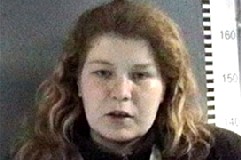 Olesya Mostovschikova
Murderer · Russia · 2009
Olesya Mostovschikova was a 27-year-old woman who was arrested in Russia after…
1 victim
Olesya Mostovschikova
Murderer · Russia · 2009
Olesya Mostovschikova was a 27-year-old woman who was arrested in Russia after…
1 victim
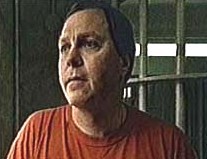 Edward Lee Harper
Murderer · USA · 1982
Edward Lee Harper Jr. was executed by lethal injection in Kentucky on May 25, 1…
2 victims
Edward Lee Harper
Murderer · USA · 1982
Edward Lee Harper Jr. was executed by lethal injection in Kentucky on May 25, 1…
2 victims
- Gender
- male
- Country
- USA
- Location
- Nevada/California, USA
- Date of birth
- 1959
- Age at first offence
- 22
- Characteristics
- kidnapping, rape
- Victim profile
- Sheila Keister, 12 / Maybelle Martin, 69, and Dorothy Walsh, 67
- Method of murder
- Strangulation
- Date(s) of murder
- August 18, 1981 / May 16, 1987
- Years active
- 1981–1987
- Date of arrest
- May 18, 1987
- Status
-
Sentenced to death
Sentenced to death in California on January 20, 1989
Case record: Herbert James Coddington
Background
Herbert James Coddington was accused of luring two teenaged models and holding them captive before killing two elderly female chaperones. His case attracted attention and the trial was held about 60 miles away in Placerville.
Coddington had worked at two casinos in Las Vegas during 1980. A warrant filed in Douglas County charged him with a cheating scam in April 1984. He was arrested in Las Vegas, released on $500 bail, and the case was still pending.
After his arrest, Coddington wrote a letter to his family in which he said he had been “crazy off and on for a long time,” that he had “always had the good in me to stop,” and that “This time I was too depressed and snapped.” He wrote: “I just want to get mental help and be better and someday lead a normal life . . . Pray for me as I pray for you. I’m very sorry my life has been such a mess. I was only trying to fix what was wrong with the world. I was only doing what God told me to do, but the Devil talked to me too, I guess . . . I haven’t lost faith. You must not lose faith. Don’t let this ruin your lives, please.”
The offence
On May 16, 1987, two teenaged models and their elderly female chaperones were reported missing after they failed to return from a trip to Lake Tahoe, on the California-Nevada border, for production of an anti-drug video program.
Missing were:
- Maybelle Martin, 69, operator of the Showcase Finishing and Modeling School in Reno, Nevada
- Dorothy Walsh, 67
- Alecia Thoma, 14, of Reno
- Monica Berge, age 12, from nearby Sparks
Investigators believed a “weird” man had tried to recruit local girls for anti-drug video projects. One of the girls recorded the man’s license plate number, which led investigators to the rural home of Herbert Coddington.
During the events at Coddington’s mobile home, federal agents rescued Thoma and Berge from a boarded-up bedroom where they were held captive. The bodies of Maybelle Martin and Dorothy Walsh were found in an adjoining room, bound up in plastic garbage bags.
Coddington was accused of luring the girls by posing as a film maker and arranging that the commercial would be shot after a stop at a mobile home across the state line in California.
Investigation and clues
A three-day search by fifty law enforcement officers, including agents of the FBI, centered on Lake Tahoe, after local girls complained of a man trying to recruit them for anti-drug video projects.
Information from youths led agents to the mobile home. Another model saw Coddington walk to his car the day of the audition and thought his license plate said “TV TEEN.” The police worked that plate but turned up nothing. Someone theorized the plate might have said TVETEN, the name of a used car dealer in South Lake Tahoe who put those promotional plates on cars he sold. Joe Tveten loaned Coddington a plate to use on his BMW.
At 11:30 a.m. Monday, the FBI and police showed Tveten a composite drawing of the man they were looking for. Tveten identified him as his friend and told them where Coddington lived.
Arrest and search of the mobile home
On May 18, 1987, federal agents armed with warrants raided Coddington’s mobile home, freeing Thoma and Berge from a boarded-up bedroom where they were held captive. The operation resulted in finding the two women’s bodies in plastic garbage bags in an adjoining room.
A subsequent account described how dozens of officers surrounded the house as FBI agents approached the door to interview Coddington. As the agents neared the door, the lights in the house went out and the agents retreated.
Baker called Coddington on the phone at 9:19 p.m. As they talked, agents and police stormed in. Coddington was in the hallway near the kitchen and got down on the ground as ordered. Police found three handguns and two rifles in the house.
Coddington said: “I’m sick” and “I don’t want to go to jail. I’m sick.” He also said to police: “I didn’t hurt the girls. I had to kill the women. I put them in bags so they didn’t make messies.”
During the raid, agents tried to calm the girls, who were scared and frantic. The police peeled back part of the plastic bags in the master bedroom after finding the chaperones. After the siege, Detective Steve O’Brien said Coddington was scared and crying.
Victims
The victims in the Lake Tahoe case were:
- Dorothy Walsh, 67, of Reno
- Alecia Thoma, 14, of Reno
In addition, links were made to another case involving:
- Sheila Jo Keister, 12, in Las Vegas, Nevada
Charges and allegations
On May 20, 1987, Coddington was arraigned on two counts of murder. Five other counts charged rape and acts of deviate sexual abuse against the teenaged victims.
A warrant later filed in Las Vegas also charged him with murder, first-degree kidnap and sexual assault of Sheila Jo Keister, 12. Authorities said an impression of his teeth was a “positive match” to a bite mark on Keister’s body.
Prosecutors filed an additional charge of homicide related to the Keister case.
The charges in the Tahoe case included an allegation of multiple murder as a “special circumstance,” which carried the death penalty.
Trial and jury findings
A judge agreed to move the trial about 60 miles away to Placerville so potential jurors were less familiar with the crime.
The trial involved three phases: first, a jury found Coddington had committed the crime; second, a jury determined his sanity. The jurors agreed Coddington had known what he was doing and knew it was wrong.
On Sept. 21, 1988, the jury voted for the death penalty partly because Coddington showed no remorse.
Sentencing and status
Coddington was sentenced to death in California on January 20, 1989.
He was described as being in San Quentin Prison on death row in a solitary cell. No date had been set for his execution.
Appeals and later legal status
Every capital case required an appeal, and Coddington’s execution date had not been set at the time of the later account.
Other details
During the events at the mobile home, Coddington was described as building a sound-proof sex chamber in his trailer’s guest room with “plywood and sheets of carpet.”
It was described that Coddington punched Alecia in the jaw and then began punching Martin and Walsh. He tied up the girls and threw their jackets over their heads so they couldn’t see. Alecia could see part of what was happening.
Martin stated: “Marc, please, it’s too tight,” and added: “I can hardly breathe.” Walsh pleaded: “Please don’t kill me, let me live,” and said: “I have a heart problem.”
Walsh clutched her purse, and Coddington grabbed it but she would not let go.
Coddington brought in an electrician’s flexcuff and tightened it around Dorothy Walsh’s neck. Alecia was reported to have sobbed: “Please don’t kill me.”
A letter from Monica Berge to the court said: “I don’t have a certain feeling on the sentence he got,” and added: “I guess I do feel sorry for him because that was such a waste of a life. I am just going to let the authorities sit back and do what they have to do.”
Coddington’s background included joining the Marines after he had finished boot camp at Parris Island. He returned home AWOL and the Marines decided he was mentally unfit and gave him an honorable discharge.
Detective Gene Hawkins examined notes Coddington had jotted down. Hawkins said Coddington wrote: “Young chicks smell, taste, feel better, even if not quite as built,” and another note said he “needed to find out if young chicks are what I need.” Hawkins also said Coddington charted the number of times he masturbated as many as 36 times a day.
Coddington was said to have told police he killed the women because they were making too much noise and were too hard to control, and that he planned the crime as a protest about too many people smoking cigarettes and laws against drunken driving being too lenient.
Coddington was described as believing traffic lights were messages: he said a red meant he shouldn’t do what he was planning to do, a yellow meant he should proceed cautiously, and a green meant he was to go ahead.
A dentist statement in the Keister case described dental impressions and a comparison: Ray Rossen “compared the impressions from Coddington with those of the victim and stated he had a positive match.”
On July 8, Coddington pleaded not guilty to two murder counts and other charges. The charges included a “special circumstance” allegation of multiple murder that carried the death penalty.
Coddington was scheduled to appear in El Dorado County Superior Court for an Aug. 7 hearing for pretrial motions, and a preliminary hearing in June was closed to the public.
A 3rd District Court of Appeal rejected an attempt by The Bee to overturn an order requiring Lake Valley Justice Court Judge Eugene Rasmussen to close the hearing and seal the transcripts.
In connection with the Keister case, Las Vegas Metropolitan Police Lt. Kyle Edwards said detectives would deliver the arrest warrant to Coddington at the El Dorado County Jail in South Lake Tahoe.
He was being held without bail on charges carrying the death penalty in connection with the May 16 slayings at Lake Tahoe.
Coddington was also described as having been excited to tell police details during the ride to the police station.
After the death verdict was announced, Judge Terrence Finney was required to confirm whether he thought the death penalty was appropriate. Coddington’s parents wrote to the judge, pleading for leniency. His mother wrote: “I feel now that his mental disease is what made Las Vegas and gambling attractive to him,” and added: “I’ve prayed and prayed that Herb might be able to get some mental help, but as I understand it, there is little at San Quentin. If Herb is allowed to live, he could perhaps help other inmates to learn to read or write. He could do anything he felt was a worthy cause because anything he believes in, he is so intense to see it materialize. God put us all on earth for a purpose, and I do not feel Herb has finished doing what God intended for him to do . . . God should decide when man’s life on earth should end. Herb may still be able to be helpful to his fellow man.”
Judge Finney said the letters from Coddington’s parents caused him “great emotional turmoil,” and also said: “ They're wonderful, fine, decent people, and I know they believe he was mentally ill,” “ He’s a tremendously egocentric individual who rejected his parents’ religion, who was completely and totally self-centered,” “ When he made his confession to police and talked to the detectives, no mention of God or any mental aberration was made. That wasn’t until later.” He added: “ I have to think that Mr. Coddington's conduct in this case is probably the most evil . . . that I have ever been involved in.”
Spotted an error, or have more information about this case?