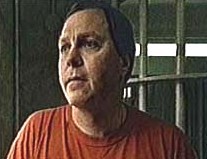
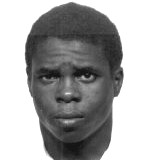
Edward Lee Harper
Murderer Ervil LeBaron
Murderer · USA · 1972
Ervil Morrell LeBaron (1925 to August 16, 1981) was the leader of a polygamous…
35 victims
Ervil LeBaron
Murderer · USA · 1972
Ervil Morrell LeBaron (1925 to August 16, 1981) was the leader of a polygamous…
35 victims
 Brian Kevin Rosenfeld
Murderer · USA · 1985
Brian Kevin Rosenfeld Brian Kevin Rosenfeld was sentenced to three concurrent l…
23 victims
Brian Kevin Rosenfeld
Murderer · USA · 1985
Brian Kevin Rosenfeld Brian Kevin Rosenfeld was sentenced to three concurrent l…
23 victims
 Marvin Gray
Murderer · USA · 1975
Marvin Gray was convicted killer who claimed responsibility for 23 slayings and…
23 victims
Marvin Gray
Murderer · USA · 1975
Marvin Gray was convicted killer who claimed responsibility for 23 slayings and…
23 victims
 Yahweh ben Yahweh
Murderer · USA · 1980
Yahweh ben Yahweh was born and legally named Hulon Mitchell Jr. (October 27, 19…
23 victims
Yahweh ben Yahweh
Murderer · USA · 1980
Yahweh ben Yahweh was born and legally named Hulon Mitchell Jr. (October 27, 19…
23 victims
 Russell Ellwood
Murderer · USA · 1991
Russell Ellwood was a former taxi driver. Authorities suspected him of killing…
20 victims
Russell Ellwood
Murderer · USA · 1991
Russell Ellwood was a former taxi driver. Authorities suspected him of killing…
20 victims
 Luis Cervantes Salazar
Murderer · USA · 1997
Luis Cervantes Salazar was executed by lethal injection in Texas on March 11, 2…
1 victim
Luis Cervantes Salazar
Murderer · USA · 1997
Luis Cervantes Salazar was executed by lethal injection in Texas on March 11, 2…
1 victim
 William Quentin Jones
Murderer · USA · 1987
William Quentin Jones was convicted in connection with a robbery and shootings…
1 victim
William Quentin Jones
Murderer · USA · 1987
William Quentin Jones was convicted in connection with a robbery and shootings…
1 victim
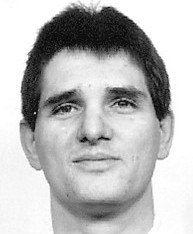 Michael Lee Lockhart
Serial killer · USA · 1987
Michael Lee Lockhart was a Texas death row inmate. He sought a certificate of p…
6 victims
Michael Lee Lockhart
Serial killer · USA · 1987
Michael Lee Lockhart was a Texas death row inmate. He sought a certificate of p…
6 victims
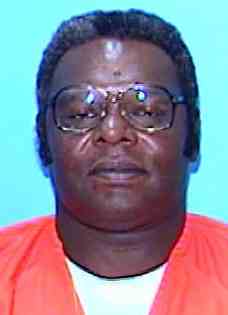 Johnny Robinson
Murderer · USA · 1985
Johnny L. Robinson was convicted of first-degree murder, kidnapping, armed robb…
1 victim
Johnny Robinson
Murderer · USA · 1985
Johnny L. Robinson was convicted of first-degree murder, kidnapping, armed robb…
1 victim
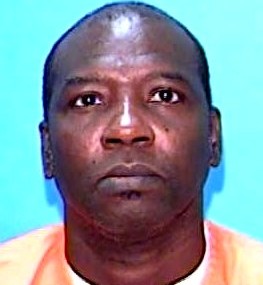 William Reaves
Murderer · USA · 1986
Name: William Reaves · Date of birth: 12/30/48 · Jurisdiction: Nineteenth Judic…
1 victim
William Reaves
Murderer · USA · 1986
Name: William Reaves · Date of birth: 12/30/48 · Jurisdiction: Nineteenth Judic…
1 victim
- Gender
- male
- Country
- USA
- Location
- Jefferson County, Kentucky, USA
- Date of birth
- 1948
- Age at first offence
- 34
- Characteristics
- parricide, attempt to collect insurance money
- Victim profile
- Alice and Edward Lee Harper Sr. ( his adoptive parents)
- Method of murder
- Shooting ( .38-caliber handgun)
- Date(s) of murder
- February 19, 1982
- Years active
- 1982
- Date of arrest
- —
- Status
-
Executed
Executed by lethal injection in Kentucky on May 25, 1999
Case overview
Edward Lee Harper Jr. was executed by lethal injection in Kentucky on May 25, 1999. He was convicted and sentenced to the death penalty for the 1982 murder of his adoptive parents.
Timeline
- February 19, 1982 — Harper shot his adoptive parents, Alice and Edward Lee Harper Sr., with a .38-caliber handgun while they were in bed.
- December 1981 — Harper was laid off from his job as a machinist.
- 1985 — A different psychiatrist evaluated Harper in June 1985 to determine his competence in response to Harper’s stated desire to waive remaining post-conviction proceedings.
- May 2, 1985 — The Kentucky Supreme Court upheld Harper’s conviction and death sentence.
- June 9, 1986 — The United States Supreme Court denied certiorari.
- August 27, 1986 — Harper filed a motion to vacate his conviction and death sentence under Kentucky Rules of Criminal Procedure 11.42.
- June 28, 1996 — Harper filed a supplemental motion.
- December 6, 1996 — The trial court denied the motion to vacate the conviction.
- September 3, 1998 — The Kentucky Supreme Court upheld the denial.
- April 5, 1999 — The United States Supreme Court denied certiorari.
- April 20, 1999 — The Governor of Kentucky signed a warrant scheduling Harper’s execution for May 25, 1999.
- April 13, 1999 — The Kentucky Department of Public Advocacy (DPA) filed a consolidated motion for Harper to proceed in forma pauperis and requesting pre-petition appointment as federal habeas counsel.
- April 22, 1999 — The district court granted the motion for appointment.
- April 25, 1999 — The Commonwealth of Kentucky filed a memorandum opposing the motion for appointment.
- April 28, 1999 — Harper wrote Judge McKinley personally to express his desire to waive all further proceedings.
- May 3, 1999 — Harper wrote Judge McKinley personally to express his desire to waive all further proceedings.
- May 5, 1999 — The DPA filed a Motion for Stay of Execution and a Motion to Disqualify the Attorney General and the Department of Corrections.
- May 7, 1999 — Following a telephonic conference, the district court entered an order setting an evidentiary hearing for May 18, 1999 to determine whether there was reasonable cause to believe Harper was presently suffering from a mental disease or defect rendering him mentally incompetent.
- May 18, 1999 — The district court held the hearing and ruled that the DPA failed to present evidence raising a reasonable doubt about Harper’s competence, discharged the DPA, and dismissed the case.
- May 22, 1999 — The Sixth Circuit appeal was submitted.
- May 24, 1999 — The Sixth Circuit decided the appeal.
- May 25, 1999 — Harper was executed by lethal injection in Kentucky. He died at 7:28 p.m. CDT at the Kentucky State Penitentiary.
The offence
Harper murdered his adoptive parents, Alice and Edward Lee Harper Sr., who had adopted him as an infant. After entering his parents’ home in the early morning hours of February 19, 1982, Harper shot them both with a .38-caliber handgun while they were in bed.
Harper had been unemployed after being laid off from his job as a machinist in December 1981. He hoped to inherit an insurance policy on his father’s life valued at about $85,000, including figures of $85,541 and $86,541 reported in the proceedings and narrative.
At trial, Harper testified that his father had asked him to shoot him and his wife because his mother was mentally ill and his father could not bear to put her in an institution. Harper also testified that he tried to make it look like a burglary gone awry and that his parents’ home was a misery-filled place.
Prosecutors undercut Harper’s description by presenting witnesses who said that in the nine weeks Harper remained free after the killings, he bragged about having money and discussed plans for spending that might seem lavish for a 33-year-old twice-divorced, laid-off machinist who was financially insecure and had been living with his parents. The prosecutor described Harper as a spoiled child who “killed both his parents in bed for the insurance money.”
Background and mental health-related proceedings
Harper had been evaluated by a psychiatrist before trial, and the trial court found Harper competent to stand trial based on that psychiatrist’s testimony.
In June 1985, a different psychiatrist, Dr. Richard Edelson, evaluated Harper to determine his competence in response to Harper’s stated desire to waive remaining post-conviction proceedings. Dr. Edelson concluded that Harper was schizophrenic and that he was incompetent to assist in his defense.
Investigation and arrest
No investigation or arrest details were provided.
Trial
Harper was convicted and sentenced to death for the 1982 murder of his adoptive parents. The Kentucky Supreme Court upheld Harper’s conviction and death sentence on May 2, 1985.
Sentencing
Harper was sentenced to death for murdering his adoptive parents, Alice and Edward Lee Harper Sr.
Appeals
The United States Supreme Court denied certiorari on June 9, 1986.
Harper filed a motion on August 27, 1986 under Kentucky Rules of Criminal Procedure 11.42 to vacate his conviction and death sentence; he filed a supplemental motion on June 28, 1996. The trial court denied the motion on December 6, 1996. The Kentucky Supreme Court upheld the denial on September 3, 1998, and the United States Supreme Court denied certiorari on April 5, 1999.
A federal habeas-related competence waiver issue arose before the scheduled execution date. The DPA represented Harper since 1982 and sought procedural relief concerning Harper’s desire to waive further proceedings.
In the Sixth Circuit appeal, the case was styled Eddie Lee Harper, Jr., Petitioner-Appellant, v. Phil Parker, Warden, Respondent-Appellee, No. 99-5686, United States Court of Appeals for the Sixth Circuit. The matter was submitted on May 22, 1999, and decided on May 24, 1999, before SILER, BATCHELDER, and MOORE, Circuit Judges. The opinion was authored by Circuit Judge BATCHELDER.
The Sixth Circuit held that the district court’s preliminary hearing on competence did not amount to error and affirmed the district court’s judgment. The court concluded that the DPA did not present evidence sufficient to raise reasonable cause to believe Harper was not competent to waive further litigation and therefore did not show a basis for a stay of execution.
District court competence hearing and related motions
On April 13, 1999, the DPA filed a consolidated motion for Harper to proceed in forma pauperis and requesting pre-petition appointment as federal habeas counsel. The district court granted appointment on April 22, 1999. On April 25, 1999, the Commonwealth of Kentucky opposed appointment, arguing Harper had received continuous representation by the DPA throughout appeal and state post-conviction proceedings and thus was not within the scope of 21 U.S.C. § 848(q)(4)(B).
Harper wrote Judge McKinley personally on April 28, 1999 and May 3, 1999 to express his desire to waive all further proceedings.
On May 5, 1999, the DPA filed a Motion for Stay of Execution and a Motion to Disqualify the Attorney General and the Department of Corrections. The DPA noted an issue regarding Harper’s competence to waive his habeas corpus remedy and the possibility that either a habeas petition or a next friend petition would be filed on his behalf.
On May 7, 1999, following a telephonic conference, the district court entered an order setting an evidentiary hearing for May 18, 1999 to determine whether there was reasonable cause to believe Harper was presently suffering from a mental disease or defect rendering him mentally incompetent. At the commencement of the hearing, the court reiterated that the purpose was to determine if there was reasonable cause to believe Harper was incompetent.
During the hearing, the district court stated:
“Mr. Harper has expressed his desires not to proceed with his petition that has been filed.”
The DPA confirmed that it wished to proceed and stated:
“The Department of Public Advocacy wishes to proceed with that petition advocating the position that there is reasonable cause to believe that the petitioner is incompetent and not--does not have the capacity to make that decision, correct?”
The DPA detailed evidence and testimony it intended to present and concluded:
“I think that what we do have would give you an overview of what could be put on in a full evidentiary hearing.”
DPA evidence
The DPA presented testimony from Dr. Edelman, a neuropsychologist, who had examined Harper in 1985 at the request of the DPA after Harper had expressed a desire not to continue appeals. Dr. Edelman testified that in 1985 he had been asked to determine whether Harper had brain damage, that he reviewed Harper’s records including psychological examinations performed by others, interviewed Harper, and concluded that Harper had no brain damage but was not competent to assist in his own defense and was schizophrenic at that time.
Dr. Edelman further testified he examined Harper again in September 1998 at the request of the DPA. Dr. Edelman testified that he concluded Harper did not evidence brain damage, but also concluded that Harper was neither incompetent nor schizophrenic at that time. Dr. Edelman also testified he had not been given or made aware of specific information about Harper’s biological family mental health history and said it was possible that information about a biological family history of depression and other mental illness could have enhanced the accuracy of his findings.
The DPA also presented testimony from three “mitigation specialists”, including Valerie Bryan, described in the proceedings as someone Harper was obsessed with. The DPA also presented testimony from Ms. Martin, one of the DPA counsel appointed by the district court to represent Harper. Harper cross-examined each of these witnesses.
The DPA presented numerous records, including adoption records of Harper and mental health records of individuals identified as members of Harper’s biological family, showing varying types and degrees of mental problems.
During the hearing, the DPA renewed its motion for funds to obtain an expert evaluation of Harper and orally renewed an earlier motion to disqualify the Attorney General and the Department of Corrections on the ground that attorneys involved in Harper’s defense in state proceedings had become employees of those offices. The district court deferred ruling on those motions until the close of the hearing.
State evidence
The State presented testimony from Ken Thomas, resident clinical psychologist at the Kentucky State Penitentiary for six years, and Dr. Lloyd Bentley, institutional psychiatrist at the Penitentiary. Thomas testified to having almost daily contact with Harper over the past several weeks and opined Harper was competent. Thomas also opined that Harper’s decision to discharge counsel and not proceed with filing a habeas petition was based on Harper’s desire not to live in prison for the rest of his natural life.
Dr. Bentley testified as well. The witnesses opined Harper’s decision did not appear to be based on feelings for any woman or on loss of privileges from a crackdown on the entire death row population.
The State also presented testimony from the Warden of the Penitentiary and the death row supervisor, who testified to their impressions of Harper and indicated Harper was competent. Harper questioned each of these State witnesses.
Harper testified on his own behalf and denied that he sought to end post-conviction litigation because of his love for Valerie Bryan, although he acknowledged that he loved her, or because agreeing to execution would offer a chance to see her again. He also denied that his decision was driven by loss of prison privileges. He stated:
he explicitly proclaimed that he seeks to end this litigation because he does not believe that he has any realistic chance of having his conviction overturned, and he does not want to live out his natural life in prison.
Harper also explained that he believed the DPA had not been honest with him when they convinced him to file the affidavit for in forma pauperis status and in their explanation for why he needed to file a habeas petition. He testified he sent his letter to Judge McKinley advising he did not wish to have counsel appointed or to proceed further with litigation.
District court ruling and dismissal
At the conclusion of the hearing, the district court ruled that the DPA failed to present evidence raising reasonable doubt about Harper’s competence, discharged the DPA, and dismissed the case.
The district court also determined that the DPA’s request for a full evidentiary hearing was not warranted because there was no reasonable cause to believe Harper was incompetent to waive further appeals. The Sixth Circuit affirmed this approach and found no abuse of discretion.
The Sixth Circuit included the district court’s concluding statement:
“Now, while perhaps the easiest decision that I could have made is to send you off for further evaluation, I simply have not been shown sufficient evidence or proof to raise a doubt in my mind that you’re incompetent. I believe that you are--there’s no indication that you are presently suffering from any mental disease, defect, or disorder which substantially affects your ability to make decisions on your own behalf.”
The Sixth Circuit concluded that because the district court found no reasonable cause, the DPA had no statutory right to a full evidentiary hearing. The Sixth Circuit also concluded that Harper’s waiver made his disqualification objections ineffective and denied the request for a stay of execution.
Execution
Harper was executed by lethal injection in Kentucky on May 25, 1999.
He died in the death chamber at the Kentucky State Penitentiary at 7:28 p.m. CDT. Another stated time placed the death at 8:15 p.m. EDT.
Harper had been scheduled to have a needle inserted in each arm. The execution team was unable to find an acceptable vein in his left arm and inserted the needle into a vein on the top of his left hand.
Public defenders and the state sought procedural maneuvers to stay the execution against Harper’s wishes. A 3-judge panel of the 6th U.S. Circuit Court of Appeals denied a request by the state Department of Public Advocacy for a stay of execution on the Monday preceding the execution. On Tuesday, the appeals court denied a request by the public defenders for a new hearing before a full judicial panel, and the United States Supreme Court denied an application for a stay of execution late Tuesday.
The application was filed with Justice John Paul Stevens, who referred it to the full court. There was no dissent. The court also denied a separate appeal.
Prison officials described the final day’s activities. Carol Czirr, a spokeswoman for the Department of Corrections, stated that Harper spent the morning and early afternoon visiting with his 27-year-old son, Ben Sheehan of Louisville. Sheehan was required to leave at about 2:45 p.m.
Harper gave Sheehan:
- a chain with a cross,
- a religious book,
- 17 photographs,
- and a written prayer.
After Sheehan left, Harper met with prison psychologist Ken Thomas until about 3 p.m.
Harper also spent much of the day with his spiritual adviser, lay minister Paul Stevens of Dawson Springs, who was to remain with Harper until the end. Harper asked both his son and Stevens to witness his execution and requested that his body be cremated. The ashes were to be buried in a cemetery at the Western Kentucky Correctional Complex in Eddyville.
Harper’s last words were a statement to his son:
“I love you and I'll be waiting for you on the other side. I'll be waiting for you, boy,” Harper said. “That's all I have to say.”
Harper had reportedly told a judge last month that he wanted to drop further appeals and fire his court-appointed lawyers and said he was “sorry for what I've done,” just before he was injected with the lethal dose of drugs.
Other named persons and relationships
- Alice — Harper’s adoptive parent and co-victim.
- Edward Lee Harper Sr. — Harper’s adoptive parent and co-victim; his life insurance policy was implicated in motive.
- Ben Sheehan of Louisville — Harper’s son, age 27.
- Ken Thomas — prison psychologist and State witness at the competence hearing; met Harper until about 3 p.m. before the execution.
- Paul Stevens of Dawson Springs — lay minister spiritual adviser who remained with Harper until the end.
- Valerie Bryan — identified in proceedings as someone Harper was obsessed with.
- Ms. Martin — DPA counsel appointed by the district court to represent Harper.
- Dr. Lloyd Bentley — institutional psychiatrist at the Penitentiary; testified for the State.
- Dr. Richard Edelson — psychiatrist who evaluated Harper in June 1985 and concluded Harper was schizophrenic and incompetent to assist in his defense.
- Dr. Edelman — neuropsychologist who testified in the competence hearing; examined Harper in 1985 and again in September 1998.
- Phil Parker — listed as Warden, Respondent-Appellee, in the Sixth Circuit case caption.
- Justice John Paul Stevens — referenced in connection with the Supreme Court stay application.
- Gov. Paul Patton — signed into law a bill making lethal injection the required method of execution and signed Harper’s death warrant.
- Justice John Paul Stevens — referred the application to the full court.
- Harold McQueen — noted as the last Kentucky execution before Harper; described as convicted of shooting and killing a Richmond convenience-store clerk in January 1980 and electrocuted on July 1, 1997.
Aftermath
Kentucky executed Harper as its first death-row inmate to be executed by lethal injection. It was also described that the state amended its laws in 1998 to allow condemned prisoners to choose between the electric chair and lethal injection, and that those sentenced to death after March 31, 1998 faced lethal injection.
The narrative also stated that demonstrations were expected outside the prison and that the prison was locked down at 6:30 a.m. and that inmates remained locked in cells during the day except at meal time under close watch. The lockdown was expected to end Wednesday morning, per Carol Czirr.
Spotted an error, or have more information about this case?