Jason Coday
Murderer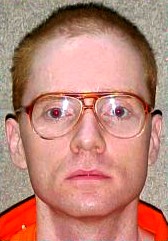 Robert Glen Jones
Murderer · USA · 1996
Defendant: Robert Glenn Jones (ADC#070566) · Co-defendant: Scott Nordstrom (ADC…
7 victims
Robert Glen Jones
Murderer · USA · 1996
Defendant: Robert Glenn Jones (ADC#070566) · Co-defendant: Scott Nordstrom (ADC…
7 victims
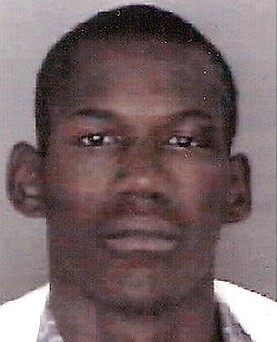 Joshua Wayne Andrews
Murderer · USA · 2000
Joshua Wayne Andrews was a serial killer accused of killing several people in V…
5 victims
Joshua Wayne Andrews
Murderer · USA · 2000
Joshua Wayne Andrews was a serial killer accused of killing several people in V…
5 victims
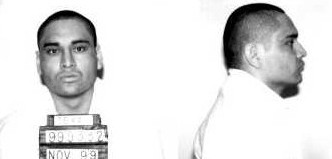 Juan Carlos Alvarez
Murderer · USA · 1998
Juan Carlos Alvarez, born on March 9, 1977, in San Luis, Mexico, was a Hispanic…
5 victims
Juan Carlos Alvarez
Murderer · USA · 1998
Juan Carlos Alvarez, born on March 9, 1977, in San Luis, Mexico, was a Hispanic…
5 victims
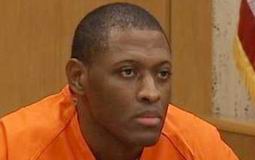 Leon Davis Jr.
Murderer · USA · 2007
Leon Davis Jr. was sentenced to death on April 29, 2011, for the execution-styl…
5 victims
Leon Davis Jr.
Murderer · USA · 2007
Leon Davis Jr. was sentenced to death on April 29, 2011, for the execution-styl…
5 victims
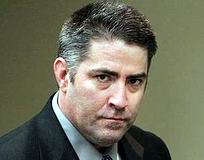 Raymond Lee Oyler
Murderer · USA · 2006
Raymond Lee Oyler was convicted for starting the 2006 Esperanza fire in Riversi…
5 victims
Raymond Lee Oyler
Murderer · USA · 2006
Raymond Lee Oyler was convicted for starting the 2006 Esperanza fire in Riversi…
5 victims
 Leonel Torres Herrera
Murderer · USA · 1981
Leonel Torres Herrera was executed by lethal injection in Texas on May 15, 1993…
2 victims
Leonel Torres Herrera
Murderer · USA · 1981
Leonel Torres Herrera was executed by lethal injection in Texas on May 15, 1993…
2 victims
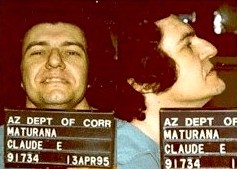 Claude Eric Maturana
Murderer · USA · 1990
Claude Eric Maturana was a French national in Arizona. He was held as an inmate…
1 victim
Claude Eric Maturana
Murderer · USA · 1990
Claude Eric Maturana was a French national in Arizona. He was held as an inmate…
1 victim
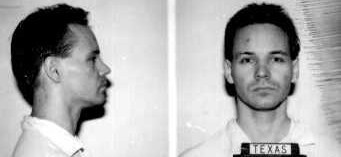 Michael Roy Toney
Murderer? · USA · 1985
Michael Roy Toney (December 29, 1965 – October 3, 2009) · Name as recorded: Mic…
3 victims
Michael Roy Toney
Murderer? · USA · 1985
Michael Roy Toney (December 29, 1965 – October 3, 2009) · Name as recorded: Mic…
3 victims
 Max Landon Payne
Murderer · USA · 1992
Max Landon Payne was convicted of capital murder arising from the robbery, kidn…
1 victim
Max Landon Payne
Murderer · USA · 1992
Max Landon Payne was convicted of capital murder arising from the robbery, kidn…
1 victim
 Tashia Stuart
Murderer · USA · 2011
Tashia Stuart was convicted in Franklin County Superior Court of first-degree m…
1 victim
Tashia Stuart
Murderer · USA · 2011
Tashia Stuart was convicted in Franklin County Superior Court of first-degree m…
1 victim
- Gender
- male
- Country
- USA
- Location
- Juneau, Alaska , USA
- Date of birth
- February 7, 1978
- Age at first offence
- 28
- Characteristics
- murder for hire, motive unknown
- Victim profile
- Simone Yung Kim, 26
- Method of murder
- Shooting ( sawed off .22-caliber rifle)
- Date(s) of murder
- August 4, 2006
- Years active
- 2006
- Date of arrest
- Same day
- Status
-
Imprisoned
Sentenced to 99 years in prison on August 10, 2007
Case overview
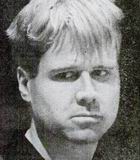
Jason Michael Coday was born February 7, 1978. He was a man from Vernal, Utah.
He was convicted of first-degree murder in the death of Simone Yung Kim.
He was convicted of misconduct involving weapons in the third degree.
Timeline
- August 2, 2006 — Coday came to Juneau on the Alaska Marine Highway System ferry M/V Matanuska.
- August 2, 2006 — Coday was believed to have illegally taken a gun from Rayco Sales, a Juneau gun store located across Egan Drive from Fred Meyer, leaving $200 on the counter; he also bought ammunition at the Fred Meyer store using cash.
- August 4, 2006 — Edward Buyarski and his employee Alexandra Griffin-Satre were working outside the Juneau Fred Meyer store; Simone Kim was working on the building.
- August 4, 2006 — A man in a dark rain jacket and pants approached and shot Simone Kim several times; Buyarski managed to take the gun away; the man ran uphill into the woods behind Fred Meyer; Griffin-Satre called 911.
- August 4, 2006 — Juneau Police Department Sergeant Thomas Bates arrived at approximately 2:44 p.m.; Simone Kim appeared gravely wounded and later appeared to be dead; Kim ultimately died from her wounds.
- August 4, 2006 — Coday was identified by SERT after being encountered on an overgrown trail in dark nylon rain gear; SERT confirmed Coday with identification; Coday was placed in handcuffs and taken back toward the police.
- August 4, 2006 — Sergeant Erickson formally arrested Coday at around 6:50 p.m.
- May 7, 2007 — The trial, State of Alaska v. Coday, began.
- May 8, 2007 — Jury selection began.
- May 9, 2007 — Jury selection concluded.
- May 10, 2007 — Testimony lasted from May 10.
- May 15, 2007 — Testimony ended; the jury began deliberation.
- August 10, 2007 — Coday was sentenced to 99 years in prison.
- July 31, 2008 — The Juneau Empire reported that Kim’s family filed a wrongful death lawsuit against both Coday and Coxe.
- August 12, 2007 — The Juneau Empire reported Coday was sentenced to serve the maximum sentence of 99 years in prison for the 2006 killing of Anchorage painting contractor Simone Kim.
- May 6, 2009 — The Court of Appeals of Alaska decided the appeal (Court of Appeals No. A-10018, No. 5478; 2009 Alas. App. LEXIS 72).
Background
Coday was a drifter doing odd jobs. The week before Kim’s death, he had worked in Ketchikan, Alaska at a fish processing plant and he had planned to do similar work in Juneau.
Two months prior to Kim’s death, he had been accused of a similar gun crime in Nevada. He allegedly harassed the Top family in Sandy Valley. When he was arrested, he was found with methamphetamine and marijuana, in addition to a sawed-off shotgun and ammunition. He was a registered felon in that state.
Coday skipped bail and a warrant for his arrest was issued in July 2006.
Coday also had questions raised about his mental state during the proceeding.
The offence
Simone Kim was an Anchorage painter involved in construction work occurring at the store building. On August 4, 2006, Buyarski and Griffin-Satre were working outside the Juneau Fred Meyer store and were talking with Simone Kim.
A man in a dark rain jacket and pants approached and shot Simone Kim several times. Buyarski managed to take the gun away from the man, but the man escaped into the woods behind the store. Griffin-Satre called 911.
The rifle, described as a sawed-off .22, was lying on the ground at the scene.
Coday was convicted of first-degree murder, and the jury found he had shot Kim multiple times.
In the appeal decision, the circumstances were described as a random killing in which Coday walked up to Kim and shot her four times in the back as she lay curled up on the ground.
Coday’s defense and Coday did not offer a motive. No motive was offered by Coday or his defense.
Investigation
Juneau Police Department Sergeant Thomas Bates arrived at approximately 2:44 p.m. He saw Simone Kim lying on the ground, and she appeared to be gravely wounded. Moments after Sergeant Bates arrived, she appeared to be dead. Kim ultimately died from her wounds.
The witnesses described the shooter as a white male approximately six-feet tall wearing dark-colored rain gear. Buyarski described the rain gear as the non-rubberized kind; both said the man ran uphill into the woods behind Fred Meyer.
At the evidentiary hearing, Griffin-Satre described the suspect as a white male six feet to six feet and two inches tall with short, curly blonde hair, wearing black rain pants and a “really dark” rain jacket with a hood. Buyarski described the suspect as wearing a dark greenish to black raincoat with nylon rather than rubberized fabric and dark rain pants. Buyarski stated the man was approximately six feet tall and in his mid- to late-twenties, possibly early thirties.
The Juneau Police Department obtained a helicopter, and Sergeant Bates was flown over the wooded area with a thermal imaging device in an attempt to locate the suspect. Sergeant Bates testified that even if they were unable to locate the suspect, the fact that the helicopter was over the area would keep the suspect from moving.
Troy Cunningham lived in a duplex on the hill directly behind Fred Meyer. On the afternoon of August 4, Cunningham saw “a suspicious-looking person” running near his house. Cunningham thought the man looked “guilty of something” and that the situation “just seemed wrong.” Cunningham ran to the window and yelled, “Private property.” The man turned toward Cunningham and said, “I'm leaving.” Cunningham saw the man climb a fifteen-foot rock retaining wall.
At the evidentiary hearing, Cunningham described the man as white, around thirty years of age, wearing black light-duty rain gear with a hood, with short curly hair and no beard. Cunningham said the man was climbing uphill in the mud, using both his legs and arms.
Paola Hannon, Cunningham’s tenant and resident of the other unit in his duplex, noticed the man when she heard Cunningham yell. She saw him go uphill into the forest. She described him as white and age twenty-five to thirty. She said the man had short brown hair and wore a dark coat, probably black. About an hour later, police knocked on her door and she gave them the man’s description.
Lieutenant Troy Wilson, team commander of the Special Emergency Response Team (SERT), met with Sergeant Hatch around 5:30 p.m. Sergeant Hatch pointed out the footprints behind Cunningham’s residence. Three members of SERT, including Lieutenant Wilson, followed “an overgrown trail” where the suspect had been headed. They were looking for a white male about six feet tall with a large build wearing dark clothing.
While investigating a sound in thick brush, SERT encountered a man running up the path in a dark nylon rain coat and pants. They stopped the man, identified themselves, and asked him why he was there. The man said he was looking for his backpack and eventually identified himself as Coday. SERT confirmed this with identification that Coday had on him. They placed Coday in handcuffs, walked him back to where Sergeant Hatch was, and turned Coday over to the uniformed officers waiting there. Lieutenant Wilson stayed in the area.
The officers cleared the area and did not find anyone else in the vicinity, although they found a tent that they later discovered belonged to Coday.
Sergeant Scott Erickson responded to the scene at about 3:00 to 3:15 p.m. He saw the rifle involved in the shooting and determined it matched the rifle that had been illegally obtained from Coxe’s gun store. Coxe’s description of the man who took the .22 was similar to the police description of the person who had shot Kim.
Sergeant Erickson made the decision to detain Coday and take him back to the police department. Sergeant Erickson did not want witnesses brought to identify Coday while he was standing next to a patrol car in handcuffs because it might prejudice Coday.
After witnesses identified Coday from a photo lineup and after he interviewed Coday, Sergeant Erickson formally arrested Coday at around 6:50 p.m.
The appeal also described the arrest issue. Coday argued that his arrest was illegal because it was not supported by probable cause, and that all evidence resulting from his arrest should be suppressed. Judge Thompson denied the motion to suppress, finding the police had probable cause to arrest Coday. The Court of Appeals affirmed.
Arrest
Coday was stopped by SERT after they encountered a man running up the path in a dark nylon rain coat and pants while following an overgrown trail behind Fred Meyer.
He was identified as Coday after he stated he was looking for his backpack and after SERT confirmed identification on him.
He was placed in handcuffs and was turned over to uniformed officers. Sergeant Erickson later formally arrested Coday at around 6:50 p.m.
Trial
The trial was State of Alaska v. Coday. It began on Monday, May 7, 2007.
Jury selection began on May 8 and concluded on May 9. Testimony lasted from May 10 and ended on May 15, when the jury began deliberation.
The prosecution used the testimony of two Fred Meyer workers who witnessed the killing.
Ray Coxe, the owner of Rayco Sales, testified that Coday had illegally taken a .22-caliber rifle from the store and left two $100 bills on the counter. The rifle was identified as the murder weapon.
DNA evidence pointed to Coday as the killer with odds of an error being about 1 in 49 billion. Tracks from Coday’s shoes at the crime scene were another factor.
Upon the reading of the verdict, Coday head-butted his own attorney, public defender David Seid, and he was taken out of the courtroom.
Coday was convicted of first-degree murder and misconduct involving weapons in the third degree.
Sentencing
On August 10, 2007, Coday was sentenced to 99 years in prison for Kim’s death.
He received an additional two years for weapons misconduct for sawing off the end of the murder weapon.
The Juneau Superior Court judge, Michael Thompson, described the sentence after hearing from all sides including Kim’s family.
Coday became eligible for parole in 2046.
Appeals
Sied intended to file an appeal.
Coday’s appeal (Jason Coday, Appellant, v. State of Alaska, Appellee) had Court of Appeals No. A-10018 and No. 5478. The Court of Appeals of Alaska issued a memorandum opinion and judgment dated May 6, 2009 (2009 Alas. App. LEXIS 72).
In superior court, Coday argued that his arrest was illegal because it was not supported by probable cause and sought suppression of all evidence resulting from his arrest. Judge Thompson denied the motion, finding the police had probable cause.
On appeal, Coday argued that Judge Michael A. Thompson erred in denying his motion to suppress. The Court of Appeals affirmed.
The appeal opinion described the probable cause reasoning: that witnesses described the shooter fleeing into the woods behind Fred Meyer, a helicopter search made it likely the shooter was confined, witnesses saw a person matching the description flee uphill into the woods, the police followed footprints to the trail, and Coday closely matched the witnesses’ descriptions. It concluded the trial court did not err in denying the motion to suppress.
Outcome
The superior court judgment was affirmed.
Aftermath
The Juneau Empire reported on July 31, 2008 that Kim’s family filed a wrongful death lawsuit against both Coday and Coxe.
Court documents filed in the suit alleged that Coxe should have known better than to leave Coday alone in the store with the firearm he wound up stealing.
Other details
Quotes and statements
Jason Coday, during a police interrogation, said: “I never really had one [job] to stick with.”
Cunningham yelled: “Private property.” The man responded: “I'm leaving.”
Lieutenant Wilson testified to an overgrown trail while following it: “an overgrown trail”.
Griffin-Satre described a rain jacket as: “really dark”.
Participants and roles
Ray Coxe was the owner of Rayco Sales and testified at trial.
Edward Buyarski and Alexandra Griffin-Satre were Fred Meyer workers who witnessed the killing.
Simone Kim was a painter from Anchorage.
Doug Gardner sought the most Alaska justice offered for first-degree murder, 99 years without parole.
District Attorney Doug Gardner’s sentencing comments included describing Coday as “a random, unpredictable killer” and stating, “He has a desire to hurt people,” and “He has a desire to hurt people.”
Gardner also described Coday as sitting yawning, eyes half closed, as he explained what Gardner said was a terrible man.
Las Vegas Metropolitan Police Officer Carl Boehmer testified that Coday rationalized terrorizing suburban Las Vegas families with a sawed off shotgun because the strangers were laughing and making fun of him, and Boehmer testified: “He wanted to show them how serious he was.”
Boehmer also testified that Coday fired two shots before standing in the street yelling, “Where are the ... cops,”.
Coday’s defense attorney David Seid argued that the first-degree murder charge and the circumstances of the random killing did not require a parole restriction. Sied said, “There are possible mental heath and substance abuse issues,” and that there was no evidence of premeditation or a motive, stating, “We only have speculation on why this happened.”
Kim’s sister, Anna Kim, told Thompson she was against rehabilitation ideas instead of locking up for life. Anna Kim said: “If the court believes in rehabilitation, they should bring back my brother,” and “I'd like him to share his future with his nieces and nephews.”
After handing down the sentence, Judge Michael Thompson described Coday as a “ticking time-bomb,” and said: “The only issues was when he would explode, and who would be around.”
Thompson said: “I'll not tell people what to do when Mr. Coday is 60 years old,” and: “I think he would do this again if given the chance,” and “I would not get his hopes up.”
When imposing sentence, Thompson said: “One year and six days ago Mr. Coday took Kim's life,” and “Today I'm effectively taking his.”
Gardner said Thompson’s decision effectively met the state's request: “More or less life in prison.
Spotted an error, or have more information about this case?