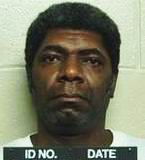
Nathaniel Code
Serial killer Carl Eugene Watts
Serial killer · USA · 1974
Carl Eugene Watts (born November 7, 1953; died September 21, 2007), also known…
100 victims
Carl Eugene Watts
Serial killer · USA · 1974
Carl Eugene Watts (born November 7, 1953; died September 21, 2007), also known…
100 victims
 Rodney Alcala
Serial killer · USA · 1977
Rodney James Alcala (born August 23, 1943) was also known as Rodrigo Jacques Al…
100 victims
Rodney Alcala
Serial killer · USA · 1977
Rodney James Alcala (born August 23, 1943) was also known as Rodrigo Jacques Al…
100 victims
 Glen Edward Rogers
Serial killer · USA · 1993
Glen Edward Rogers was a spree killer whose cross-country rampage in 1994-95 le…
70 victims
Glen Edward Rogers
Serial killer · USA · 1993
Glen Edward Rogers was a spree killer whose cross-country rampage in 1994-95 le…
70 victims
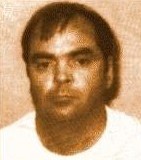 Donald Leroy Evans
Serial killer · USA · 1975
Donald Leroy Evans (born July 5, 1957) was an American serial killer who murder…
60 victims
Donald Leroy Evans
Serial killer · USA · 1975
Donald Leroy Evans (born July 5, 1957) was an American serial killer who murder…
60 victims
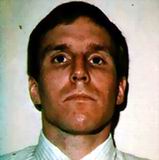 Michael Swango
Serial killer · USA · 1981
Michael Swango (Joseph Michael Swango) was a physician and American serial kill…
60 victims
Michael Swango
Serial killer · USA · 1981
Michael Swango (Joseph Michael Swango) was a physician and American serial kill…
60 victims
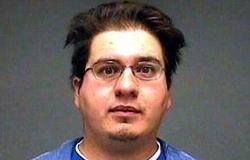 Efren Saldivar
Serial killer · USA · 1989
Efren Saldivar (born 30 September 1969) was an American serial killer who murde…
50 victims
Efren Saldivar
Serial killer · USA · 1989
Efren Saldivar (born 30 September 1969) was an American serial killer who murde…
50 victims
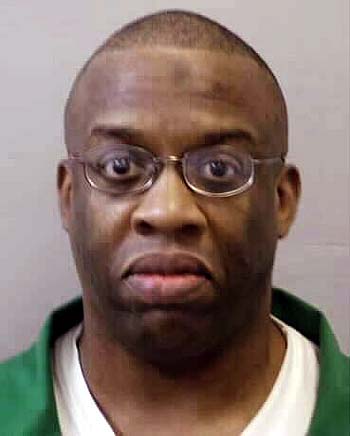 James Earl Reed
Murderer · USA · 1994
James Earl Reed was convicted of murdering Joseph Lafayette and Barbara Lafayet…
2 victims
James Earl Reed
Murderer · USA · 1994
James Earl Reed was convicted of murdering Joseph Lafayette and Barbara Lafayet…
2 victims
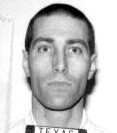 Robert Alan Fratta
Murderer · USA · 1994
Robert Alan Fratta was convicted of hiring hitmen to kill his estranged wife, F…
1 victim
Robert Alan Fratta
Murderer · USA · 1994
Robert Alan Fratta was convicted of hiring hitmen to kill his estranged wife, F…
1 victim
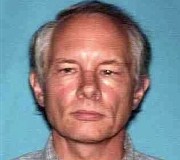 Andrew Joseph Stack
Murderer · USA · 2010
Andrew Joseph Stack III died in the crash on the same day, after he flew his Pi…
1 victim
Andrew Joseph Stack
Murderer · USA · 2010
Andrew Joseph Stack III died in the crash on the same day, after he flew his Pi…
1 victim
 Mark Spotz
Spree killer · USA · 1995
Mark Newton Spotz was sentenced to death on April 24, 1996. Mark Newton Spotz w…
4 victims
Mark Spotz
Spree killer · USA · 1995
Mark Newton Spotz was sentenced to death on April 24, 1996. Mark Newton Spotz w…
4 victims
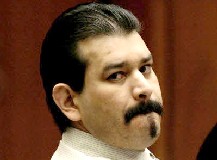 Juan Manuel Álvarez
Mass murderer · California · 2005
Juan Manuel Álvarez (born February 26, 1979) was a laborer from Compton, Califo…
11 victims
Juan Manuel Álvarez
Mass murderer · California · 2005
Juan Manuel Álvarez (born February 26, 1979) was a laborer from Compton, Califo…
11 victims
- Gender
- male
- Country
- USA
- Location
- Shreveport, L ouisiana, USA
- Date of birth
- March 12, 1956
- Age at first offence
- 28
- Characteristics
- domestic violence
- Victim profile
- Debra Ford, 25 / Vivian Chaney, 34; her daughter, Carlitha, 15; Vivian Chaney's brother, Jerry Culbert, 25; and her boyfriend, Billy Harris, 28 / William Code, 74 (his grandfather); Eric Williams, 8, and Joe Robinson, 12 (two grandsons of a friend)
- Method of murder
- Stabbing with knife - Shooting - Strangulation
- Date(s) of murder
- 1984 - 1987
- Years active
- 1984–1987
- Date of arrest
- —
- Status
-
Sentenced to death
Sentenced to death in 1989; death sentence was being appealed at the time of this writing
Case information
Nathaniel Code (Nathaniel R. Code Jr.) was born on March 12, 1956, in Shreveport, Louisiana.
Timeline
- August 8, 1984 — A 25-year-old black female was stabbed nine times in the chest and had her throat slashed.
- August 31, 1984 — 25-year-old Debra Ford was found murdered inside her home.
- July 19, 1985 — Code killed four people: Vivian Chaney, her boyfriend Billy Joe Harris, her brother Jerry Culbert, and her fifteen-year-old daughter Carlitha Culbert.
- August 5, 1987 — Code’s grandfather William and two grandsons of a friend, Eric Williams (8) and Joe Robinson (12), were found dead.
- 1989 — Nathaniel Code, Jr. was convicted of murder.
- May 30, 2003 — A hearing about stopping his execution by lethal injection was scheduled to take place in Caddo District courtroom in June.
- 2004-10-06 — “Shreveport 's first convicted serial killer was back in a Caddo courtroom” and his attorneys argued he had a mental disorder that was misdiagnosed and he shouldn’t be put to death.
- 1991 — He was convicted for the deaths of four people in the Shreveport area; he was on death row at the state penitentiary at Angola since 1991.
Background
At the age of twenty, Nathaniel Code was sent to prison on an aggravated rape conviction. He stayed in prison until 1984. After his release, he returned to Shreveport, got married, and lived the role of a reformed con.
At the time of his court proceedings in the early 2000s, Code’s attorneys argued he had a mental disorder that was misdiagnosed and he shouldn’t be put to death. Two witnesses testified during a hearing in Judge Emanuel’s courtroom. A pharmacist at Louisiana State Penitentiary testified. A neuro-psychiatrist testified that Code’s traumatic childhood led to his behavior as an adult.
In 1975, at the age of 19, Code was diagnosed with “border-line personality disorder” and was treated for it since that time. The neuro-psychiatrist said Code’s actual diagnosis was “Schizophrenia Form Disorder,” and Code’s defense team argued misdiagnosis could have caused misrepresentation by his defense during his trial.
The offence
Debra Ford murder (August 31, 1984)
On August 31, 1984, 25-year-old Debra Ford was found murdered inside her home. During the previous evening, an intruder entered through a bathroom window, bound Ford with an electrical cord, gagged her, stabbed her eighteen times, and cut her throat so severely that she was nearly decapitated. Code lived nearby and was one of many people crowded outside police crime scene tape the day Ford’s body was discovered.
Vivian Chaney and family murders (July 19, 1985)
On July 19, 1985, Code forced entry by forcing open the back door. Four people were found dead the next morning: Vivian Chaney, her boyfriend Billy Joe Harris, her brother Jerry Culbert, and her fifteen-year-old daughter Carlitha Culbert.
Billy Joe Harris had been shot twice in the head, twice in the chest, and his throat had been slashed. He had been bound by shoelaces and telephone cords.
Jerry Culbert was not bound but was fatally shot at close range in the head while sleeping.
Vivian Chaney was found bound with electrical cord and draped over the edge of the bathtub where she had been drowned. She also had been strangled and beaten.
Carlitha Culbert was found in the living room also bound with electrical cord and had been viciously slashed in the throat area.
The killer spared the lives of Chaney’s youngest girls, ages ten and seven.
Everyone in the home was either mentally retarded or visually impaired except for Harris.
A jogger who knew Code later recalled that he had seen Code on the night of the murders covered with blood.
William Code and two children (August 5, 1987)
On August 5, 1987, Code’s grandfather William was found dead in his home along with Eric Williams, eight, and Joe Robinson, 12. The three victims were grandsons of a friend who often stayed with William.
William Code was bound with electrical cord and gagged. He died as a result of thirteen stab wounds and a vicious beating.
Eric Williams was discovered in a guest bedroom strangled to death, and Joe Robinson was beaten and strangled before being left dead in the home’s living room. Both boys were clad only in their underpants and had also been bound and gagged.
Bruising on the top of Robinson’s shoulders and collarbones suggested a forced sexual assault had been at least attempted by Nathaniel Code.
A neighbor of William Code witnessed Nathaniel Code leaving his grandfather’s residence on the evening of the murders, even though it was well known that William Code did not welcome his grandson Nathaniel at the home. Code admitted being at the home late that night.
When suspected killer’s fingerprints matched those lifted from the Chaney murder scene, Code’s luck had officially run out and he was arrested for multiple homicides.
Investigation and arrest
Code was arrested for multiple homicides after fingerprints matched those lifted from the Chaney murder scene.
Code was tried and convicted in the four Chaney slayings.
Trial
Conviction for four deaths
Code was convicted and sentenced to death for the four Chaney slayings. The victims were Vivian Chaney, her daughter Carlitha, her brother Jerry Culbert, and her boyfriend Billy Harris.
During later proceedings, it was stated that Code was convicted by a Caddo Parish jury in the killings of Vivian Chaney, 34; her daughter Carlitha, 15; Vivian Chaney’s brother Jerry Culbert, 25; and her boyfriend Billy Harris, 28, in 1985 in Cedar Grove.
Code was convicted in four deaths and sentenced to die.
Debra Ford murder conviction
Code was also eventually convicted in Debra Ford’s murder.
No trial for other murders
Code was never put to trial for the murders of his grandfather, Joe Robinson, and Eric Williams.
Sentencing
He was sentenced to death in 1989.
Later material also stated that Code was convicted and “sentenced to die,” and that his death sentence was still being appealed at the time of this writing.
Code had been on death row at the state penitentiary at Angola since 1991.
Appeals and post-conviction proceedings
Lethal injection challenge
A hearing in Caddo District courtroom began in February in response to appeals filed to spare Code’s life. The hearing called into question whether lethal injection was cruel and unusual punishment and described a violation of the 8th Amendment of the U.S. Constitution.
The hearing was ordered by the state Supreme Court, and it began in February and entered its fourth month.
Nearly 20 witnesses were called to testify, and another 40 potential witnesses could be called. Code was represented by the Capital Post-Conviction Project of Louisiana.
A prosecutor said the question of lethal injection was one of several issues Code’s defense team was expected to raise.
The court hearing also included the issue of effectiveness of counsel. “In every death penalty case, the main issue is going to be a claim that the defense council was ineffective in the representation, no matter what they did,” Estopinal said. “I think the underlying assumption by a defendant is that if I got the death penalty, my lawyer did something wrong.”
Mental health hearing
In October 2004, Code’s attorneys argued that he had a mental disorder that was misdiagnosed and he shouldn’t be put to death.
The hearing continued Thursday in Judge Emanuel’s courtroom.
Other details
Victim count and characteristics stated in the record
Prosecutors said they proved at trial that Code killed eight people. A jury determined that on three separate occasions between 1984 and 1987, Code murdered a total of eight people. The jury returned a guilty verdict even though disparities existed among the three crime scenes.
It was stated that the offender gagged the first victim with a piece of material obtained at the crime scene, but brought duct tape to use on the seven victims in the other two incidents.
It was also stated that Code stabbed and slashed the first victim, whereas the victims of the other two crimes were also shot and showed signs of ligature strangulation.
The victims ranged in age from 8 years to 74 years and included both sexes, but all were black.
It was stated that the offender took money from one crime scene, but not the other two.
Additional crime-scene and method details
All eight killings occurred in single-family dwellings.
In each dwelling, the air conditioners and/or televisions were on, which drowned out noise as he entered through a door or window.
Code quickly gained and maintained control by separating victims in different rooms.
A distinctive “calling card” was described as involving injuries inflicted on the victims, use of bloody overkill, slashing throats with a sawing motion, and ligatures. It was stated that Code used electrical appliance or telephone cords acquired at the scene, looping the cord around each wrist and then the ankles, connecting them to the wrists by a lead going through the legs.
It was stated that for the first homicide, Code gagged the victim with material found at the scene; for the next time, he brought duct tape.
In the second killings, it was stated that he brought a gun to the scene to dispose of the males who posed the greatest threat to him, and since the last victims posed little threat, Code did not use a gun on them.
It was also stated that forensic tests found the daughter’s blood on the mother’s dress.
It was stated that Code positioned each victim face down and forced the mother to witness her daughter’s death as part of a ritual of control formed from rage.
Surveillance and admission
A jogger later recalled seeing Code covered with blood on the night of the murders.
Code admitted being at his grandfather’s home late that night.
Descriptive comparative reference
A description said Code, “like Ronnie Shelton, the serial rapist, selected victims he could control, manipulate, and on whom he could project his anger.”
Mentioned execution method issue
The lethal injection challenge was described as raising issues about cruel and unusual punishment and was also linked to questions about effectiveness of counsel.
Spotted an error, or have more information about this case?