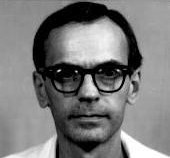
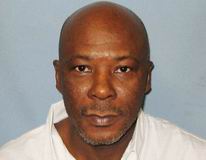
Larry Wayne White
Murderer Ervil LeBaron
Murderer · USA · 1972
Ervil Morrell LeBaron (1925 to August 16, 1981) was the leader of a polygamous…
35 victims
Ervil LeBaron
Murderer · USA · 1972
Ervil Morrell LeBaron (1925 to August 16, 1981) was the leader of a polygamous…
35 victims
 Brian Kevin Rosenfeld
Murderer · USA · 1985
Brian Kevin Rosenfeld Brian Kevin Rosenfeld was sentenced to three concurrent l…
23 victims
Brian Kevin Rosenfeld
Murderer · USA · 1985
Brian Kevin Rosenfeld Brian Kevin Rosenfeld was sentenced to three concurrent l…
23 victims
 Marvin Gray
Murderer · USA · 1975
Marvin Gray was convicted killer who claimed responsibility for 23 slayings and…
23 victims
Marvin Gray
Murderer · USA · 1975
Marvin Gray was convicted killer who claimed responsibility for 23 slayings and…
23 victims
 Yahweh ben Yahweh
Murderer · USA · 1980
Yahweh ben Yahweh was born and legally named Hulon Mitchell Jr. (October 27, 19…
23 victims
Yahweh ben Yahweh
Murderer · USA · 1980
Yahweh ben Yahweh was born and legally named Hulon Mitchell Jr. (October 27, 19…
23 victims
 Brian Keith Lord
Homicide/Murderer · USA · 1974
Name: Brian Keith Lord Birth year: 1961 Nationality: American In 1974, at the a…
2 victims
Brian Keith Lord
Homicide/Murderer · USA · 1974
Name: Brian Keith Lord Birth year: 1961 Nationality: American In 1974, at the a…
2 victims
 Patricia Ignacio
Murderer · USA · 2008
Patricia Ignacio was a 21-year-old woman of Nageezi accused of beating another…
1 victim
Patricia Ignacio
Murderer · USA · 2008
Patricia Ignacio was a 21-year-old woman of Nageezi accused of beating another…
1 victim
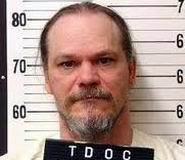 Richard L. Odom
Homicide/Murderer · USA · 1978
May 4, 1978 — Richard L. Odom killed Mary Rebecca Roberts in Pearl, Mississippi…
2 victims
Richard L. Odom
Homicide/Murderer · USA · 1978
May 4, 1978 — Richard L. Odom killed Mary Rebecca Roberts in Pearl, Mississippi…
2 victims
 Hoyt Bud Cobb
Murderer · USA · 1965
Hoyt Bud Cobb was an alcoholic and narcotics addict. He financed his expensive…
2 victims
Hoyt Bud Cobb
Murderer · USA · 1965
Hoyt Bud Cobb was an alcoholic and narcotics addict. He financed his expensive…
2 victims
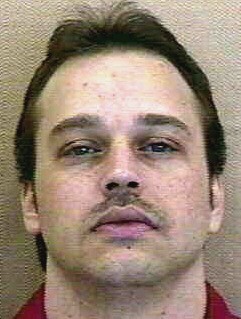 Edward Ernest Hartman
Murderer · USA · 1993
Defendant: Edward Ernest Hartman DOC Number: 0172549 Date of birth: 08/25/1964…
1 victim
Edward Ernest Hartman
Murderer · USA · 1993
Defendant: Edward Ernest Hartman DOC Number: 0172549 Date of birth: 08/25/1964…
1 victim
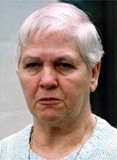 Marie Noe
Murderer · USA · 1949
Marie Noe was convicted in June 1999 of murdering eight of her children. Betwee…
8 victims
Marie Noe
Murderer · USA · 1949
Marie Noe was convicted in June 1999 of murdering eight of her children. Betwee…
8 victims
- Gender
- male
- Country
- USA
- Location
- Florida/Texas, USA
- Date of birth
- March 10, 1950
- Age at first offence
- 27
- Characteristics
- rape, robbery
- Victim profile
- 82-year-old woman / Elizabeth St. John, 72
- Method of murder
- Stabbing in the back with a screwdriver
- Date(s) of murder
- 1977
- Years active
- 1977
- Date of arrest
- March 8, 19 77
- Status
-
Executed
Executed by lethal injection in Texas on May 22, 1997
Case record: Larry Wayne White
Timeline
- March 1, 1977 — Larry Wayne White killed Elizabeth St. John at her apartment house, where White worked as a maintenance man.
- late February 1977 — Elizabeth St. John moved from the Austin area to return to Houston after her husband had died.
- late February 1977 — St. John moved in with Lavelle Wasson, her friend of 25 years, who owned apartment complexes.
- Monday, Tuesday and part of Wednesday of the first week in March 1977 — White and Lavelle Wasson spent their time painting St. John’s apartment while Wasson looked on.
- Wednesday afternoon (first week of March 1977) — As the three left the apartment, St. John pointed out a locking devise on her door that made it impossible to turn the knob or open the door from the outside.
- By Wednesday afternoon / before 8:30 or 9:00 p.m. (first week of March 1977) — White asked St. John if she were planning to stay up in the apartment that night; she told him “yes.”
- approximately 10:30 p.m. (March 3, 1977) — Tenant across the hall reported the mattress in the hall had been “completely engulfed” in flames.
- 8:30 or 9:00 a.m. (March 3, 1977) — Wasson returned to the apartment and found White’s car still there while St. John’s car was gone.
- about dusk (March 3, 1977) — Pat McGill and Lavelle Wasson went to St. John’s apartment door.
- March 4, 1977 — John L. Bonds went to the scene for follow up investigation; he checked the missing car, which belonged to the victim.
- March 8, 1977, 3:23 a.m. — Myrtle Beach police officer Donald Edge observed White near a closed restaurant and arrested him.
- March 21, 1996 — The United States Court of Appeals for the Fifth Circuit panel heard the case.
- June 1979 — White was convicted of the March 1, 1977 murder of Elizabeth St. John.
- late June 1981 — White’s state collateral attack filed in June 1981 was denied.
- June 1981 — White filed an application for state collateral attack.
- July 1, 1981 — White’s execution date was set after denial of state collateral attack.
- early 1984 — The appellate court’s mandate issued.
- August 1984 — On retrial, White was again convicted of murder and sentenced to death.
- March 22–24, 1994 — An evidentiary hearing was held on White’s claim of ineffective assistance of counsel.
- May 12, 1995 — White supplemented his petition with an eighth amendment claim of cruel and unusual punishment due to inordinate delay.
- July 1995 — The state court trial judge entered findings of fact and conclusions of law recommending denial of relief.
- December 1995 — The Texas Court of Criminal Appeals denied a state writ of habeas corpus.
- December 1995 — White filed the federal petition.
- January 4, 1996 — The district court denied relief.
- A few days later (after January 4, 1996) — The court granted a stay of execution pending consideration of White’s application for a certificate of probable cause.
- May 29, 1990 — The United States Supreme Court denied a petition for certiorari.
- March 9 (no year stated in record segment) — Lieutenant Mitchell Glen Kemp was the investigator on call in Myrtle Beach and arrived on the scene around 3:30 a.m.
- May 22, 1997 — White was executed by lethal injection in Texas.
Background
Larry Wayne White had worked as a maintenance man at the apartment house of Elizabeth St. John. St. John moved from the Austin area to return to Houston in late February of 1977, about a year after her husband had died, and she moved in with Lavelle Wasson, her friend of 25 years, who owned apartment complexes.
White had been condemned to death for killing Elizabeth St. John inside her Houston apartment. White’s final statement included an apology to his family and to his victim’s family and friends.
The offence
Elizabeth St. John’s upstairs apartment was apartment number three in the Airline complex in front of Lavelle Wasson’s house. White had been employed by the Wassons to do maintenance work at their Shepard apartment complex. In the first week of March 1977, White and Wasson painted St. John’s apartment while Wasson looked on; the furniture had already been moved and they “painted around it.”
St. John had installed a locking devise on her door that made it impossible to turn the knob or open the door from the outside, even with a key. After the three left the apartment on Wednesday afternoon of the first week in March, Wasson and her husband were awakened at approximately 10:30 p.m. by a tenant across the hall who reported the mattress in the hall had been “completely engulfed” in flames. The mattress was thrown down to the ground and more water was poured on it. At that point, Wasson noticed White’s white Valiant was still parked out front, while St. John’s Pinto was gone.
Lavelle Wasson became alarmed when she returned to the apartment at 8:30 or 9:00 a.m. and found White’s car still there and St. John’s car gone while the special lock remained on the door. There was no telephone installed in St. John’s apartment.
About dusk on March 3, McGill and Wasson went to the apartment door. Mrs. McGill crawled through a window accessible from the balcony and told Wasson, “Bell, she’s in there dead.” Dave Calhoun and L. E. Doreck of the Houston Police Department Homicide Division were the first officers on the scene. Because of the lock device on the door, the officers had to break it in.
At the scene, Calhoun discovered a gas floor heater was on as high as it would go. The apartment was neat and there was no sign of forced entry or a struggle. St. John’s body was clothed only in a bra, pullover blouse and stockings rolled to the ankle and was covered with a blanket. When the body was uncovered, Calhoun observed bruises on the chin, neck and throat. A screwdriver protruded from the lower back.
Eduardo Bellas, M.D., a Harris County assistant Medical Examiner who assisted in the autopsy, testified St. John had died as a result of “two mechanisms of death”: asphyxia due to strangulation, and penetration of the screwdriver four inches into the diaphragm, liver and right chest cavity. There was no evidence of defensive wounds.
Acid phosphates tests and microscopic study of vaginal swabs revealed sexual intercourse had occurred within 24 hours of the discovery of the body. Bellas opined St. John had been stabbed first, then strangled, and stated there was no way to be sure.
In addition to clothing, six gold rings and small diamond stud earrings remained on the body.
White’s inculpatory statement admitted before the jury included that he choked Ms. Elizabeth St. John and stabbed her in the back with a screwdriver, and that he took the stereo, $45-50, a lamp, and jewelry from the car. The statement also described that he met Ms. St. John through the manager of the apartments when he was working at the apartments, that he was in Houston for about a week before he killed her, that he killed Ms. St. John a week earlier on Tuesday, and that there had been intercourse on the couch before he killed her. The statement also said he left Houston that night and took the stereo and other items, and that he got to Myrtle Beach between 6:00 and 6:30 P.M. and went to Dorothy’s Green Bar or Green Lounge.
White’s state conviction summary described he committed the killing while inside her Houston apartment in 1977; it also described that after strangling her and driving a screwdriver deep into her back, he took jewelry, tools, stereo and clothing, put them in her car and fled Texas. The record stated his attack on St. John was at least his 3rd attack on elderly women, including that an 82-year-old woman was slain in Orlando, Florida, and that a 91-year-old blind woman survived a rape in his hometown of Lancaster, Ohio.
Investigation
At the crime scene, Calhoun was directed to the white Valiant in the parking lot, in which White had recently arrived after a trip to Florida. The National Crime Information Center (NCIC) computer indicated the car was “wanted.” Officer Joe Herrin, in charge of the mobile crime scene unit, attempted to lift finger prints off of things the suspect would touch, such as the front door, the screwdriver and the car “that was wanted in another homicide.” One print was lifted off a Coors beer can found in the white Valiant.
Homicide Sergeant D. R. James went through St. John’s purse found in the apartment. James testified he would have checked the purse for money and valuables and did not recall finding any money. Another Homicide Detective, John L. Bonds, went to the scene on Friday, March 4, to do follow up investigation. He checked out the missing car that belonged to the victim and found it registered to her. He entered it into NCIC requesting a hold on the vehicle and any occupant for examination of evidence.
Norbent L. LeBlanc, a senior latent print examiner, testified that none of the prints lifted from the apartment or the Valiant other than the one off the Coors can could be identified as White’s.
Arrest
On March 8, 1977 at 3:23 a.m., Police Officer Donald Edge of Myrtle Beach, South Carolina, was patrolling the south end of the deserted resort town. He observed White near a restaurant that was closed for the “off season.” About three feet away from White was parked a light green Fort Pinto station wagon bearing Texas tags. The driver’s door was open. Edge arrested White, warned and searched him.
Edge found a set of keys in White’s left front pocket; the keys fit the ignition and doors of the Pinto. Numerous objects were in the Pinto, “ranging from jewelry to tools to a stereo plus clothing.” The glove compartment was open, and Edge obtained the car registration papers from it. The car was registered to Elizabeth St. John of Leander, Texas.
Lieutenant Mitchell Glen Kemp was the investigator on call in Myrtle Beach on March 9. He arrived around 3:30 a.m. at the scene, then returned to the station around 4:00 a.m. For the next five hours, Kemp gathered information by computer and by telephone speaking with officers in Houston regarding White and a homicide in Houston. Kemp and his supervisor, Lieutenant Luke, interviewed White starting at around 10:00 a.m. White waived his rights and his inculpatory statement was reduced to writing.
Trial
In June 1979, White was convicted of the March 1, 1977 murder of Elizabeth St. White’s conviction and sentence were affirmed by the Court of Criminal Appeals originally affirming the conviction.
The facts of the crime were set out in the opinion of the Court of Criminal Appeals originally affirming White’s conviction.
White’s state conviction was affirmed on appeal (White v. State, 610 S.W.2d 504 (Tex. Crim. App. 1981)). The record states that White’s execution date had been set for July 1, 1981 after the denial of state collateral attack.
White later sought federal habeas relief, which was granted by the district court and affirmed by the Fifth Circuit.
On retrial in August 1984, White was again convicted of murder and sentenced to death. Five years later, the Texas Court of Criminal Appeals affirmed the second judgment and sentence (White v. State, 779 S.W.2d 809 (Tex. Crim. App. 1989)). An application for a writ of certiorari was denied by the United States Supreme Court on May 29, 1990 (White v. Texas, 493 U.S. 962 (1990)).
Sentencing
White was sentenced to death after the retrial in August 1984. The Texas Court of Criminal Appeals affirmed the second judgment and sentence (White v. State, 779 S.W.2d 809 (Tex. Crim. App. 1989)).
Appeals
White filed applications for relief after state proceedings, including state habeas relief in 1990. An evidentiary hearing was held on March 22–24, 1994 on White’s claim of ineffective assistance of counsel. White supplemented his petition on May 12, 1995 with an eighth amendment claim of cruel and unusual punishment due to inordinate delay between sentencing and execution of the death penalty.
After the petition had been pending for five years, the state trial judge entered findings of fact and conclusions of law in July 1995 recommending that a writ be denied. In December 1995, the Texas Court of Criminal Appeals found that the district court’s findings of fact and conclusions of law were fully supported by the record and denied White a state writ of habeas corpus.
White then filed a federal petition in December 1995. The district court denied relief on January 4, 1996. A few days later, the Fifth Circuit granted a stay of execution pending consideration of White’s application for a certificate of probable cause.
In the Fifth Circuit proceeding, White argued:
- that his pending execution would violate his eighth amendment right to be free from cruel and unusual punishment and fourteenth amendment right to due process of law,
- that he received ineffective assistance of counsel.
The Fifth Circuit panel decided to vacate its stay of execution and deny White’s application for a certificate of probable cause.
Outcome
The Fifth Circuit concluded that White’s eighth amendment and international law claims of cruel and unusual punishment were barred by Teague and controlled by its decision in Lackey. It also concluded that the evidentiary hearing was fundamentally unfair claim and the ineffective assistance of counsel claim were meritless and declined to issue a certificate of probable cause on those issues for the reasons given by the district court.
The Fifth Circuit vacated its stay of execution and denied White’s petition for a certificate of probable cause.
White was executed by lethal injection in Texas on May 22, 1997.
Aftermath
White delivered a final statement that included:
“I would like to apologize for all of the hurt, pain and disappointment I caused to my family and all my friends. I hope all the veterans and teenagers out there who have a drug problem will get help. I hope the lord will forgive me of all of my sins. I thank Jack and Kathy for being with me. I hope that those who support the Death Row inmates will continue to work and maybe we can get this resolved and do away with the Death Penalty. I hope this is a lot better place where I am going.”
The victim, Elizabeth St. John, was described as “in his final statement” and her family impact was referenced in the final statement attributed to White, including:
“I'd like to apologize for all the hurt, pain and disappointment that I have done to my family, my victim's family and my friends.”
Other details
People mentioned
- Larry Wayne White — offender.
- Elizabeth St. John — victim; age described as 72 in the background of the killing.
- Lavelle Wasson — St. John’s friend and co-occupant who owned apartment complexes; she looked on while White painted St. John’s apartment.
- Pat McGill — manager of Shepard Apartments and White’s boss; he called and then went with Wasson to the apartment.
- Dave Calhoun — first officer on the scene for the Houston Police Department Homicide Division.
- L. E. Doreck — first officer on the scene for the Houston Police Department Homicide Division.
- Eduardo Bellas, M.D. — Harris County assistant Medical Examiner who assisted in the autopsy.
- Officer Joe Herrin — in charge of the mobile crime scene unit.
- Homicide Sergeant D. R. James — went through St. John’s purse.
- John L. Bonds — detective who went to the scene on March 4 for follow up investigation.
- Norbent L. LeBlanc — senior latent print examiner.
- Lieutenant Mitchell Glen Kemp — investigator on call in Myrtle Beach.
- Lieutenant Luke — Kemp’s supervisor; interviewed White.
- Police Officer Donald Edge — Myrtle Beach officer who arrested White.
- Lieutenant Luke — supervisor in Myrtle Beach.
Other individuals included in the narrative:
- Jack and Kathy — thanked by White in his final statement.
- Dorothy’s Green Bar or Green Lounge — location White said he went to in his inculpatory statement.
Victim count and prior incidents described in the record
The record described that White’s attack on St. John was at least his 3rd attack on elderly women, including:
- an 82-year-old woman slain in Orlando, Florida,
- a 91-year-old blind woman who survived a rape in his hometown of Lancaster, Ohio.
White’s age and education as provided
The record described White as 47 years old and as a high school graduate or GED.
Verbatim inculpatory statement (as set out in the appellate opinion)
White’s salient content of inculpatory statement admitted before the jury included:
“The car that I was in this morning came from Houston, Texas. I took it from the Airline Apartments in Houston, after I choked Ms. Elizabeth St. John and stabbed her in the back with a screwdriver. I was drinking at the time and she had offered to give me a bonus of $20.00 for painting work I had done. I met Ms. St. John through the manager of the apartments when I was working at the apartments. I was in Houston for about a week before I killed her. I killed Ms. St. John a week ago Tuesday; it has been one week ago today, and I left the screwdriver there . . . . we had had intercourse on the couch before I killed her. I would say that she was 52 to 56 years old maybe . . . . After I choked her and stabbed her, I left Houston that night and I took the stereo that is in the car now, $45-50, a lamp, and jewelry that is in the toolbox on the front seat. I got to Myrtle Beach last night between 6:00 and 6:30 P.M. and went to Dorothy's Green Bar or Green Lounge.”

Spotted an error, or have more information about this case?