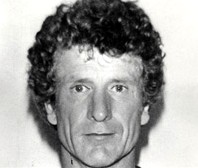
Arthur Hutchinson
Murderer John Cooper
Murderer · United Kingdom · 1985
John Cooper was a serial killer from Milford Haven, Pembrokeshire. Cooper was c…
4 victims
John Cooper
Murderer · United Kingdom · 1985
John Cooper was a serial killer from Milford Haven, Pembrokeshire. Cooper was c…
4 victims
 Andrew Walker
Murderer · United Kingdom · 1985
Royal Scots corporal Andrew Walker killed three Army colleagues in a payroll ro…
3 victims
Andrew Walker
Murderer · United Kingdom · 1985
Royal Scots corporal Andrew Walker killed three Army colleagues in a payroll ro…
3 victims
 Barry Prudom
Murderer · United Kingdom · 1982
Barry Prudom was the prime suspect in the killings of police officers after pol…
3 victims
Barry Prudom
Murderer · United Kingdom · 1982
Barry Prudom was the prime suspect in the killings of police officers after pol…
3 victims
 David McGreavy
Murderer · United Kingdom · 1973
David McGreavy was born in 1950 or 1951. He was an English convicted murderer w…
3 victims
David McGreavy
Murderer · United Kingdom · 1973
David McGreavy was born in 1950 or 1951. He was an English convicted murderer w…
3 victims
 John Cannan
Murderer · United Kingdom · 1986
John Cannan Susannah “Suzy” Lamplugh was a British estate agent reported missin…
3 victims
John Cannan
Murderer · United Kingdom · 1986
John Cannan Susannah “Suzy” Lamplugh was a British estate agent reported missin…
3 victims
 John Duffy
Murderer · United Kingdom · 1985
John Duffy was convicted of two murders and four rapes and was sentenced to lif…
3 victims
John Duffy
Murderer · United Kingdom · 1985
John Duffy was convicted of two murders and four rapes and was sentenced to lif…
3 victims
 Miguel Rios
Murderer · USA · 1992
Miguel Rios was sentenced to death on April 2, 1996 for the shooting death of M…
2 victims
Miguel Rios
Murderer · USA · 1992
Miguel Rios was sentenced to death on April 2, 1996 for the shooting death of M…
2 victims
 Joseph Lewis Clark
Murderer · USA · 1984
Joseph Lewis Clark was sentenced to death for the aggravated murder of David A.…
2 victims
Joseph Lewis Clark
Murderer · USA · 1984
Joseph Lewis Clark was sentenced to death for the aggravated murder of David A.…
2 victims
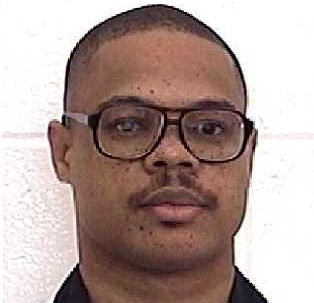 Kenneth Fults
Murderer · USA · 1996
Kenneth E. Fults was sentenced to death in Spalding County for killing a neighb…
1 victim
Kenneth Fults
Murderer · USA · 1996
Kenneth E. Fults was sentenced to death in Spalding County for killing a neighb…
1 victim
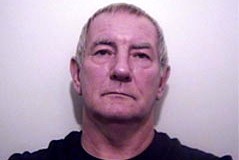 William Collis
Murderer · England United Kingdom · 2006
William Collis (also known as John Ryder) William Collis was a 60-year-old teac…
1 victim
William Collis
Murderer · England United Kingdom · 2006
William Collis (also known as John Ryder) William Collis was a 60-year-old teac…
1 victim
 Steven Renfro
Murderer · USA · 1996
February 9, 1998 — Steven Renfro was executed by lethal injection in Texas; he…
3 victims
Steven Renfro
Murderer · USA · 1996
February 9, 1998 — Steven Renfro was executed by lethal injection in Texas; he…
3 victims
- Gender
- male
- Country
- United Kingdom
- Location
- Sheffield, South Yorkshire, England, United Kingdom
- Date of birth
- February 19, 1941
- Age at first offence
- 42
- Characteristics
- rape, domestic violence
- Victim profile
- Basil Laitner, 59, his wife Avril Laitner, 55, and their son Richard Laitner, 28
- Method of murder
- St abbing with knife
- Date(s) of murder
- October 23, 1983
- Years active
- 1983
- Date of arrest
- December 1, 1983
- Status
-
Life imprisonment
Sentenced to life in prison on September 14, 1984
Case overview
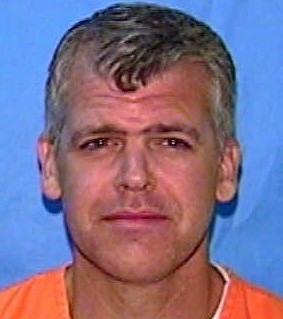
Arthur Hutchinson was an English murderer and rapist who committed three murders and a rape in 1983. He gatecrashed a wedding reception in 1983 at the home of a Sheffield solicitor and stabbed to death the bride’s mother, father and brother before raping her sister at knifepoint. A palm print on a bottle of champagne helped lead police to him. He was jailed in 1984.
Hutchinson carried out all of his murders and the rape during one combined attack on a family who had celebrated the marriage of one of their daughters on the previous day. Neither the victims nor their assailant had ever met each other before the attack.
Background
The family had celebrated the marriage of one of their daughters on the previous day, and a wedding reception was held at the family home in Dore. Suzanne Laitner married on October 23, 1983, and a reception was held afterwards at the family home in Dore, a suburb of Sheffield. The reception was attended by the close families of the bride and groom and numerous friends. The couple set off on their honeymoon at the end of the day before the guests dispersed.
Remaining at the house were Richard Laitner, Nicola Laitner, and Nicola’s parents: Basil Laitner and Avril Laitner.
The offence
During a confrontation that began in Richard Laitner’s bedroom, Hutchinson stabbed Richard Laitner to death. Hutchinson then inflicted fatal knife wounds on Basil Laitner, who had come upstairs to investigate the noise. Hutchinson then went downstairs and stabbed Avril Laitner 26 times, with Avril dying from her wounds.
Returning upstairs, Hutchinson attacked Nicola Laitner and repeatedly raped her at knifepoint before fleeing. Nicola Laitner raised the alarm immediately.
At the time of the crimes, Hutchinson was 42 years old. He attacked the Laitners’ home hours after they had hosted Suzanne Laitner’s wedding reception.
The victims were:
- Richard Laitner, 28, stabbed to death in his bedroom.
- Basil Laitner, a partner in a local firm of solicitors.
- Avril Laitner, described as a doctor and later as Basil Laitner’s wife.
- Nicola Laitner, the youngest daughter, who survived and was raped at knifepoint.
Investigation and identification
A palm print on a bottle of champagne from the earlier wedding reception helped lead police to Hutchinson. Police launched a search and matched a handprint found on a champagne bottle with a print on Hutchinson’s criminal file.
Hutchinson was previously known to police for petty thefts and violence. He was on the run after escaping from custody during an appearance before a magistrates court in Selby, North Yorkshire on a rape charge. He had previous convictions for indecent assault, unlawful sexual intercourse and fraud.
An appeal was made to locate Hutchinson, believed to have fled back to his native north east. Ten police forces throughout the north and midlands were briefed to search for him. A manhunt spanned nine northern counties and ended near Hartlepool.
Fewer than two weeks after the killings, Hutchinson was arrested in a field near Hartlepool, County Durham, after being spotted trying to call his mother from a telephone box. Hutchinson tried and failed to stab himself when he was apprehended. He already had a leg injury sustained during his escape from Selby Magistrates Court. He was taken to hospital for treatment and then into police custody for questioning before being charged with three counts of murder and one of rape.
During the search, an audio tape was found at one of Hutchinson’s squats in Darlington on which he bragged about his escape from custody, saying he was “also nicknamed The Fox because of my cunning ways.” Police also found an audio tape message that later proved vital.
Arrest and charging
Hutchinson was arrested in a field near Hartlepool, County Durham. After hospital treatment, he was taken into police custody for questioning and then charged with three counts of murder and one of rape.
Trial
On September 4, 1984, Hutchinson went on trial at Durham Crown Court.
Hutchinson claimed in his evidence that he was not at the house at the time of the killings, trying instead to implicate a journalist from the Sunday Mirror newspaper.
In court, Hutchinson said he knew of the Laitner family and their address after meeting Nicola Laitner in a bar, and that she had told him, “in innocence,” where she lived. Local gossip later strengthened this claim, but it was said to be false.
Forensic evidence included:
- The palm print on a bottle of champagne.
- Blood group matches.
- A bite mark from a piece of cheese.
A ten-day trial took place, during which the jury became the first ever to see an entire scene-of-crime video shot by the police. The jury found Hutchinson guilty. A trial judge sentenced him to life imprisonment.
Reporting restrictions were lifted at the outset of the trial, allowing media organisations to identify Nicola Laitner by name as a rape victim. Nicola Laitner gave evidence about the attack. Legal arguments were made and accepted to address the problematic issue of her anonymity when it was common knowledge from the initial reports of the massacre that Hutchinson had also committed an act of rape on a further family member. Representations were made that maintaining Nicola Laitner’s anonymity would also necessitate keeping the names of the three murder victims out of the trial. It was described as legally pointless because the case had attracted considerable public interest and the identities had been widely publicised and widely known.
At the trial, the judge recommended a minimum term of 18 years, qualified by being described as “a genuine life case.” It was noted as a point when he could have been paroled in 2002, depending on the tariff and subsequent decisions.
Sentencing
Hutchinson was found guilty and sentenced to life imprisonment.
His sentencing included discussion of tariffs:
- The trial judge recommended a tariff of 18 years.
- The Home Secretary later extended this to a whole life tariff.
Justice Tugendhat later reviewed the original tariff of 18 years and ruled that Hutchinson must never be set free.
At the time of the High Court hearing referenced in 2008, Hutchinson’s solicitors argued that a “whole life” tariff violated his human rights, and Mr Justice Tugendhat agreed with the Home Secretary’s decision that Hutchinson must die in prison.
“There is no reason at all for departing from the decision of the home secretary.”
— Mr Justice Tugendhat
Appeals
After sentencing, Hutchinson lost an appeal against all of his convictions. He was denied compassionate release to attend his father’s funeral in 1985.
In May 2008, Hutchinson failed in a High Court appeal for his whole life tariff to be quashed.
At a later Court of Appeal hearing, judges denied Hutchinson permission to appeal. Lord Justice Dyson, sitting with Mr Justice Henriques and Mr Justice Openshaw, said there was “no substance” in Hutchinson’s application.
“This was a truly shocking case. In the experience of all three members of this court we can say that none of us is aware of a case of greater gravity or more heinous than this case. “In our judgment Mr Justice Tugendhat was plainly correct in saying that this applicant should spend the rest of his life in custody without prospect of release.”
— Lord Justice Dyson
Outcome
Hutchinson remained incarcerated after being sentenced to life imprisonment on September 14, 1984. He had a whole life tariff and was described as one of a small number of UK killers with a “life means life” tariff.
The Laitner house was sold in 1984 and the firm of solicitors Basil Laitner co-partnered and bore his surname was bought out and the name changed.
It was believed that Nicola Laitner and her sister Suzanne, who was away on honeymoon when the crimes occurred, both assumed new identities and left Sheffield.
Other details
Arthur Hutchinson was born Hartlepool, County Durham, England, on 19 February 1941.
At the time of the killings, Hutchinson was on the run from police for another rape. He was described as “on the run from police for another rape” at the time of the murders.
In audio tape material and statements attributed to Hutchinson, he used the nickname “The Fox”:
“I’m making no comment on the triple killings, let the police do what they want. I’m saying nowt.”
— Arthur Hutchinson “I hurled myself through an upper window, crashing into a barbed wire net, ripping my leg to pieces.”
“I stopped in the bushes for hours then I see the helicopter hunt. So I dragged myself into the gutter, crawled along the gutter and forced myself into bramble bushes and stayed there till it got dark.”
“I spent four nights on the run, surviving on dandelions and roots before going to hospital in Doncaster.”
“Like playing cat and mouse - or should I say fox on the trot?”
“They knew I was finished but makes no difference whether they shoot me for this or anything else. If they think I’m dangerous, let them think that.”
“However crackers I might be, I’ve walked past them several times and they haven’t even noticed me. Like I say, I’m a master of disguise”
Hutchinson denied the killings and challenged his life sentence at the Court of Appeal in London. At the time of the Court of Appeal hearing mentioned in 2008, Hutchinson was described as 67.
Hutchinson was associated with “Teesside” notoriety as “The Fox.”
Hutchinson was defended by the same solicitor who represented Peter Sutcliffe. Hutchinson also challenged his life sentence and was described as refusing permission to appeal after a judge rejected his appeal bid in 2008.
Hutchinson’s father’s funeral denial for compassionate release occurred in 1985, and he later lost an appeal against all of his convictions.
The Laitner massacre involved killings at their home in Dore, Sheffield. Nicola Laitner was described as the only survivor and as being raped in her bedroom. Police made a video recording of the scene as evidence.
Spotted an error, or have more information about this case?